







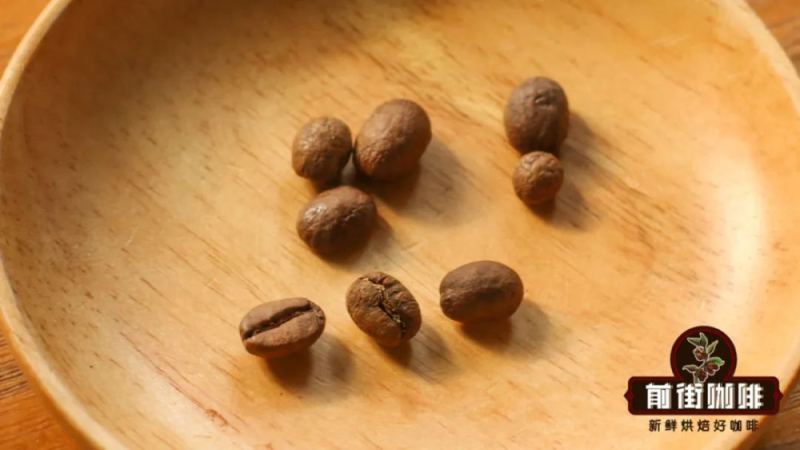
While browsing coffee-related knowledge, many people may have come across the claim that "coffee beans are divided into male and female." In reality, coffee beans have no distinction of male and female; the so-called "male beans" and "female beans" are merely the result of misinterpreting flat beans and round beans, which differ in appearance. This article will sort out the basic concepts of these three bean types: why flat beans and round beans appear on the same tree, how the rarity of round beans affects grading and pricing, and what exactly makes the famously large elephant bean so special. It will also discuss whether, for the same origin and variety, there is truly a huge difference in flavor between round beans and flat beans, while retaining Front Street Coffee's introduction to the flavor performance of elephant beans.
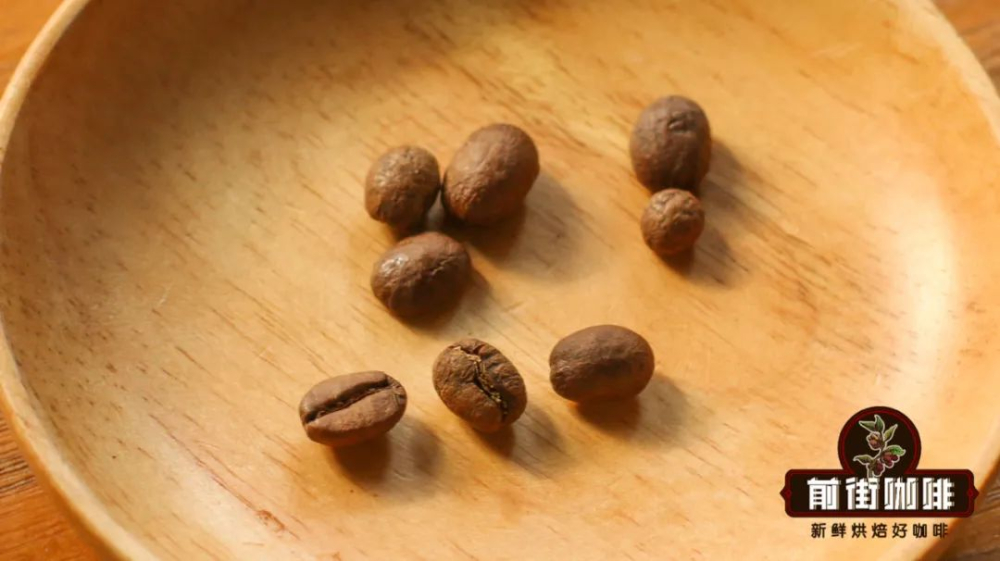
Many people have probably come across content like "coffee beans also have male and female distinctions" when looking up coffee information online. According to conventional understanding, a coffee fruit usually contains two green beans inside, so is there really any essential difference between these two beans?
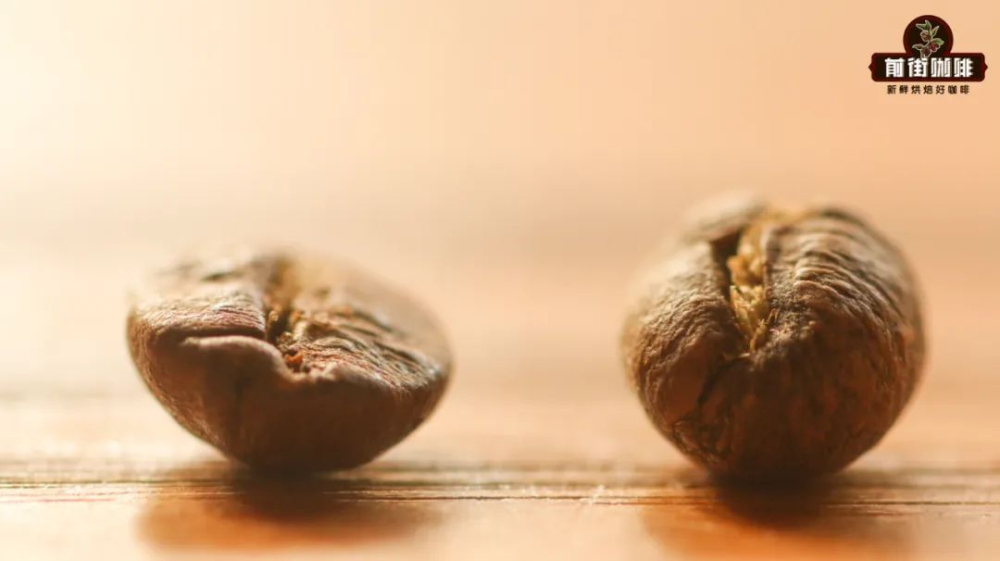
Do coffee beans really have a "male and female" distinction? First, let's look at the difference between the two beans below.
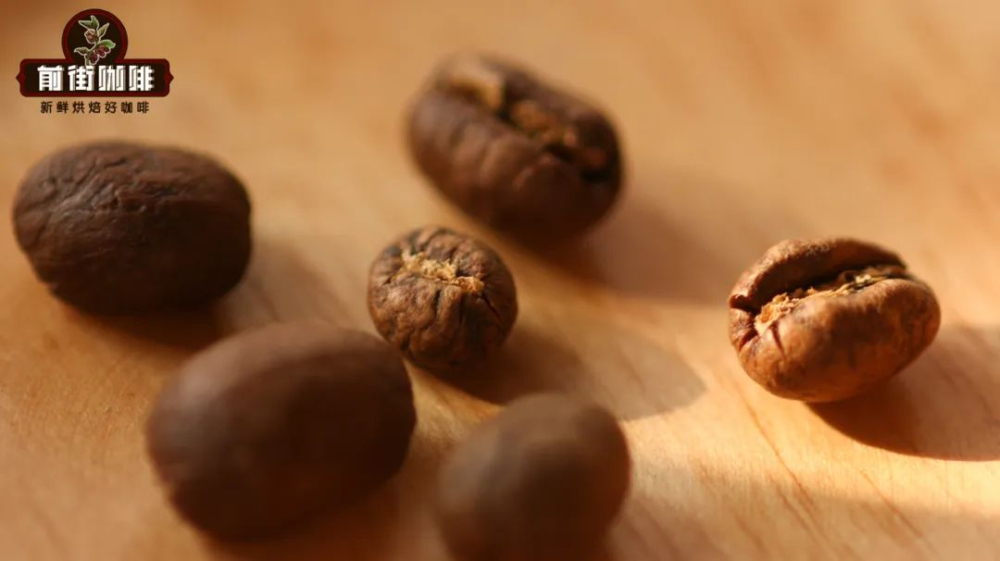
The oval-shaped bean on the right in the picture is called a "male bean" by those who claim coffee beans are divided into male and female; while the bean on the left with a flat side is called a "female bean" by them. But in fact, coffee beans simply do not have male and female distinctions. The "male beans and female beans" circulating online are merely the result of people discovering two differently shaped beans in a pile of coffee beans, not two different beans growing from the same fruit.
The origin of this claim can be traced back to merchants in Southeast Asia. In order to sell so-called "male beans" at a higher price, they fabricated this story and conveniently added the line that "male beans are extremely rare, accounting for only 5% of total beans," thereby driving up the price of coffee "male beans."
Although coffee beans have no distinction of male and female, and these two kinds of beans do not come from the same fruit, they do indeed come from the same tree; and the rare proportion of 5% is also real.
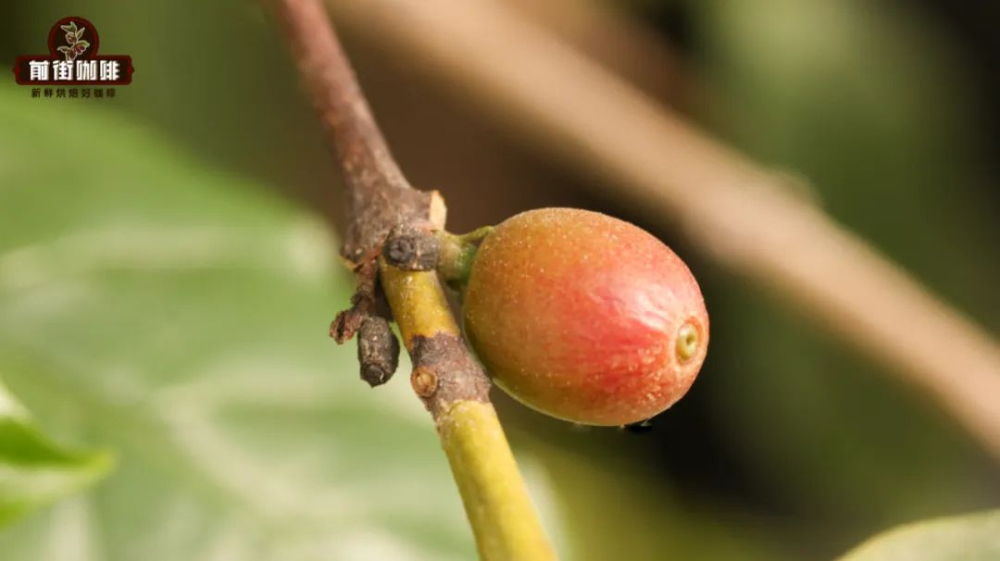
Under normal circumstances, a coffee fruit will nurture two green beans, which nestle together and are flat in shape. But sometimes, the coffee tree also produces fruit containing only one green bean. This is mainly because environmental influences or the action of its own genes cause one ovule inside the fruit to fail to be pollinated, so the other ovule gains sufficient growing space and eventually grows rounder than when two beans are squeezed together.
This kind of green bean is oval and has no flat side. To make it easier to distinguish, people call the independently growing oval bean "Peaberry" (round bean), while the bean with a flat side is called a flat bean.
Generally speaking, round beans are smaller in size than flat beans. Under the same variety, if flat beans are 16~18 screen size, then the particle size of round beans is about 14~15 screen size. Coffee beans are graded before sale, and the higher the grade, the higher the price naturally is. The standards for grade evaluation vary by production region. So here comes the question: why mention the grade of coffee beans here?
The reason is that in many countries that grade by screen size (size), the larger the coffee bean, the more expensive it sells, but round beans do not follow this rule.
How should this be understood? Take Kenya as an example: beans reaching 16~17 screen size are AA grade and sell at a higher price; next is AB grade, with coffee beans between 15~16 screen size and a price slightly lower than AA; further down is C grade, with coffee beans between 14~15 screen size and a price lower than AB. Round beans are about 14~15 screen size. By conventional standards, their price should fall within the C grade range, but they are round beans.
In other words, although the screen size of round beans falls far short of the requirements for a high grade, thanks to their unique and rare characteristics, their selling price can match that of AA grade beans.
Precisely because people give special treatment to round beans, consumers easily make associations: round beans must taste much better than those "unremarkable" flat beans.
But the fact is that, under the same origin, same variety, and same cultivation method, there will not be much difference between flat beans and round beans; they are merely relatively rare. Therefore, most production regions do not specifically pick out round beans, but simply ignore them.
In addition to round beans and flat beans attracting attention, there is another particularly eye-catching "standout" in the coffee world, namely the "elephant bean," famous for its huge size.
Compared with other coffee beans, the elephant bean can be called an anomaly; its volume is 3 times or even more larger than ordinary coffee beans. The taxonomic name of the elephant bean is Maragogipe (also written as Maragogype), originating from Maragogipe County in Bahia State, Brazil.
According to Front Street Coffee's understanding, elephant beans grown at an altitude of 700-800 meters have an ordinary taste with nothing special; but giant elephant beans grown above 1,500 meters above sea level have a charming sweet aroma and a strong fragrance. In addition to its eye-catching huge appearance, the giant elephant bean (Maragogype) is a variant of Typica (a native Arabica bean variety); its tree, leaves, and fruit are all much larger than ordinary Arabica, with plump fruit and hard bean texture. It is the only coffee in Central America without sharp acidity, and therefore enjoys the reputation of "Central American Blue Mountain," being quite close to elegant Blue Mountain coffee beans, with sweetness amid acidity, a full body, and great charm.
The above content is compiled by CoffeeHunters, a coffee news website.


