







As coffee brands proliferate, newcomers often feel lost when selecting coffee beans. Front Street Coffee's stores year-round display over 30 varieties of coffee beans from different origins, rotating selections with the harvest seasons. The goal is to let customers gradually build their own flavor cognition system through tasting and conversation. Today, Front Street Coffee has selected six single-origin beans that combine popularity with regional characteristics, categorized by flavor tendency into 'acid-focused' and 'full-bodied-focused' groups. We'll introduce each one's origin background, grading system, variety traits, processing methods, and cup flavor differences, helping coffee lovers find the cup that suits their taste.
For more specialty coffee knowledge, please follow: Front Street Coffee
With more and more coffee brands emerging, friends who have just fallen in love with coffee often don't know where to start when choosing beans. Front Street Coffee's store displays over 30 varieties of coffee beans from different origins, each with its own flavor characteristics. Front Street Coffee displays so many coffee beans and changes selections to match seasonal trends with each new harvest season, putting effort into coffee bean varieties. Front Street Coffee's most important goal is to let customers understand coffee beans from different origins more deeply, hoping customers can exchange coffee culture with us. This is a process of mutual growth — coffee drinkers can continuously enrich their coffee flavor cognition system, while Front Street Coffee also progresses in tandem, continuously exploring coffee beans from more origins so that more people can drink quality coffee.
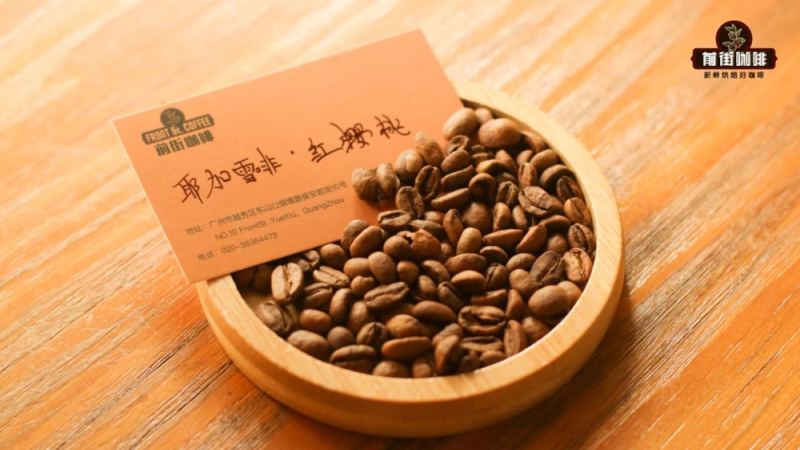
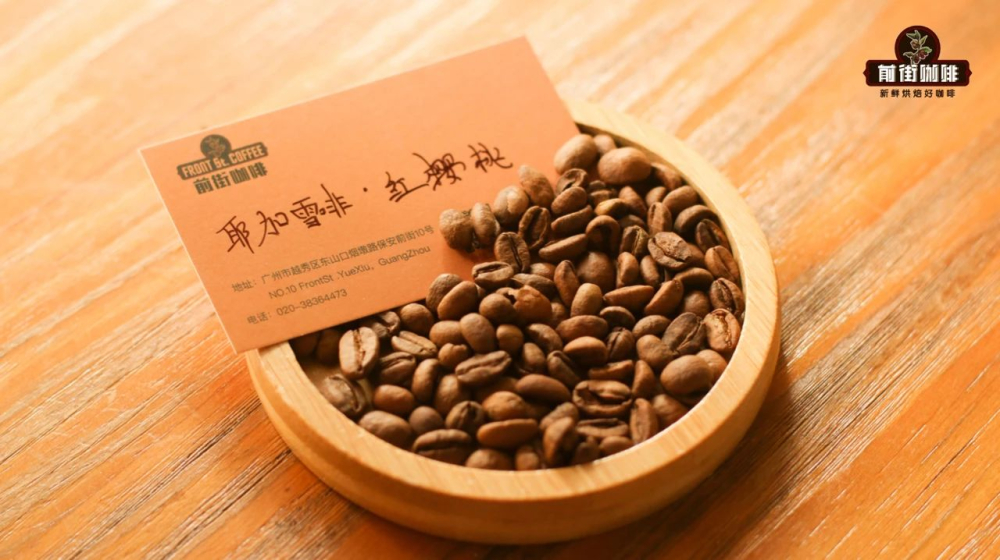
Today Front Street Coffee will introduce six popular single-origin coffee beans with unique regional characteristics. Front Street Coffee has roughly divided these six coffee beans into two major categories: coffee beans represented by acidity and coffee beans represented by full-bodiedness. Coffee Beans Represented by Acidity 1. Front Street Ethiopia Yirgacheffe Red Cherry
Ethiopia is located on the eastern side of the African continent. The Gedeo Zone, to which Yirgacheffe belongs, is situated in the Southern Nations, Nationalities, and Peoples' Region (SNNPR) in southwestern Ethiopia. Yirgacheffe is a small town in Ethiopia at an altitude of 1,700-2,100 meters. It is one of the highest coffee-growing regions in the world and is synonymous with Ethiopian specialty coffee. Lake Turkana, Lake Abaya, and Lake Chamo bring abundant moisture to this area.
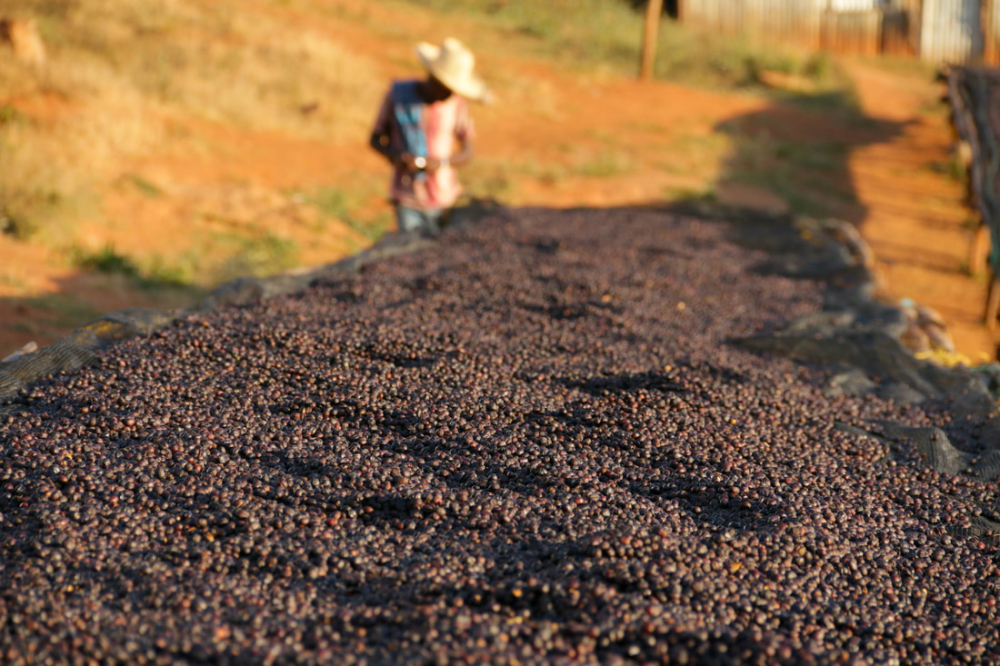
【Yirgacheffe Red Cherry Coffee Grade】 ECX (Ethiopian Commodity Exchange) has defined grades for coffee beans based on defect rate, namely G1 and G2. G1 means fewer than 3 defective beans per 300g of green beans, and G2 means 4-12 defective beans per 300g of green beans. 【Coffee Bean Variety】 This coffee bean's variety is heirloom. Most Ethiopian coffee varieties are named this way because there are simply too many varieties — it's like a natural gene bank of Arabica. On one hand, the numerous varieties make identification and classification difficult; on the other hand, the Ethiopian government, out of protective considerations, is unwilling and unable to disclose this variety information. However, Front Street Coffee has noticed that in this year's COE competition held in Ethiopia, Ethiopian beans have also begun to have different variety names, all named with numbers. 【Natural Processing Method】 The natural processing method, also called the dry method, involves hand-picking high-sugar coffee cherries and placing them on raised beds or open ground to sun-dry. During the drying process, they need to be turned and stirred at appropriate times to avoid uneven drying or excessive fermentation. After 2-4 weeks of complete drying until moisture content reaches 12%, the pulp and skin are removed with a hulling machine.
| Region | Yirgacheffe |
| Estate | Aricha Estate |
| Altitude | 1700-2200m |
| Grade | G1 |
| Variety | Heirloom |
| Processing Method | Natural |
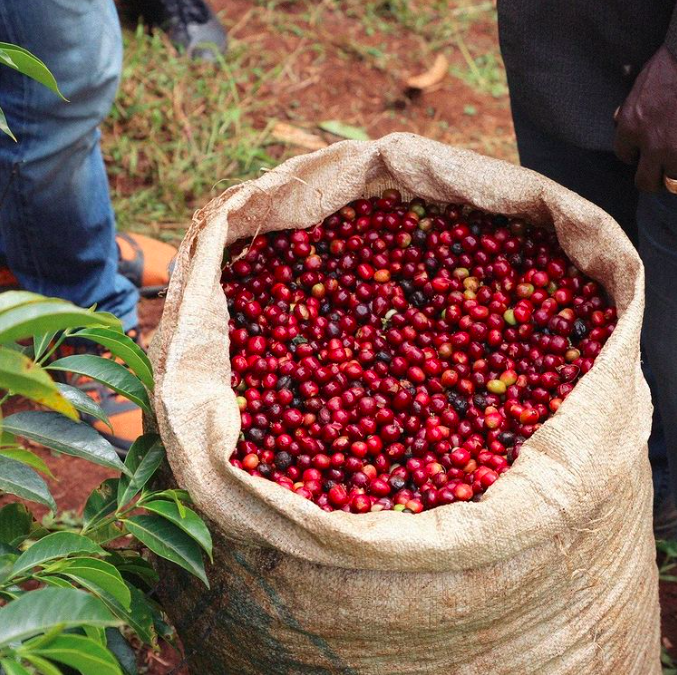
【Red Cherry Project】 The so-called Red Cherry actually refers to the Red Cherry Project, jointly initiated by Dutch trader Trabocca and local farmers, aimed at improving the quality of small-scale farms. When picking coffee cherries, not only must fully ripe red cherries be selected, but they must also be hand-picked entirely — yet this is merely the most basic requirement. There are corresponding requirements for coffee bean processing methods as well. The Red Cherry Project is also a reinforcement approach, making farms put more effort into the bean selection and sorting process. These coffees are relatively more expensive. The main implementing regions include Yirgacheffe, Sidamo, Bonga Forest, Lekempti, Kembata, Illubabor, Harar, Limu, etc. These all have unique flavors that can fully showcase Ethiopian coffee's character. But actually, today's specialty coffee all operates using the Red Cherry Project approach in coffee production — it's just that the exclusive term 'Red Cherry coffee' still belongs to Ethiopia. Red Cherry coffee output will have Trabocca printed on the jute bags.
【Aricha Estate】 Each small coffee farmer at Aricha Estate has an average planting area of about 0.6 hectares, composed of hundreds of coffee farmers. The planting altitude is nearly 2,000 meters, with large temperature differences and fertile soil, providing an excellent growing environment. The green beans themselves emit a rich aroma of raisins and fermented wine. 【Yirgacheffe Red Cherry Coffee Flavor Description】 Lemon, licorice, citrus, berries, sweet orange. Overall high sweetness, with caramel and cream in the aftertaste, and a finish carrying black tea aroma.
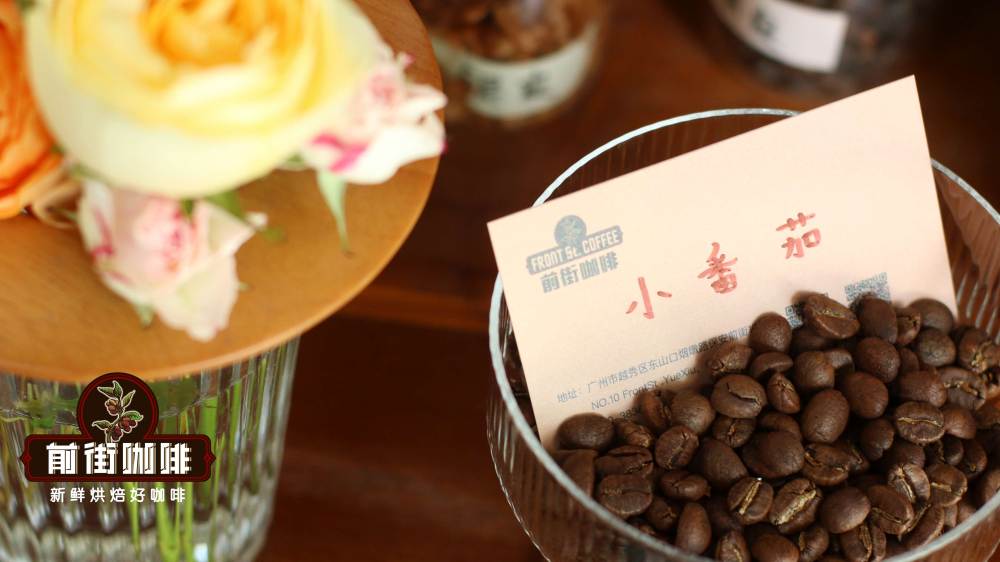
2. Front Street Kenya Little Tomato
Kenya is also located in East Africa, bordering Ethiopia. Kenya's coffee history is not as deep as Ethiopia's — coffee was only introduced near the 20th century. During this period, coffee had practically traveled all the way around the globe before returning to Africa, and at that time the coffee world was beginning to undergo new changes. Kenya can be said to be a witness and driver of this transformation. Unlike Ethiopia, Kenya's coffee was introduced by the colonial power — Britain. During the colonial period, the coffee economy was developed, and the entire coffee system leaned toward refined management. Kenya's coffee selection, breeding, grading, and processing methods far surpassed many coffee-producing countries at the time. It was only decades later that other countries also recognized the advantages of this refined management and followed suit, and Kenya's unique prominence gradually faded.
【Kenya Coffee Grades】 Kenya grades coffee by bean size and cup testing results. Based on bean size, shape, and hardness, from highest to lowest: E, AA or AA+, AB, PB, C, TT, T. For AA-grade and AB-grade green beans, an additional special grading based on cup testing results is applied (not officially recognized by the Kenyan government, but established by exporters), from highest to lowest: TOP, PLUS (+), FAQ. 【Coffee Bean Variety】 In 1922, Kenya established the Scott Agricultural Laboratories (Scott Labs) for coffee cultivation research. During the more than 10 years after its establishment, the lab selected SL28 and SL34 from 42 coffee varieties as suitable for cultivation in the region, providing a good start for the coffee industry's development. Both SL28 and SL34 were selected after multiple rounds of breeding. SL28 belongs to the Bourbon genetic group, carrying the original Bourbon's bright tonality and rich acidity. SL34's lineage is closer to Typica genetics, with acidity milder than SL28. These two varieties, SL28 and SL34, currently account for 90% of Kenya's production. South America is also actively introducing SL28 as a cultivation variety.
【K72 Washed Processing Method】 Kenya's washed method is world-famous, yet different from ordinary washed methods. Kenya's K72 processing method refers to a washing fermentation time of up to 72 hours. Ordinary washed processing methods rarely exceed 36 hours. This ultra-long fermentation time creates the unique acidity of Kenyan specialty coffee. The process begins by selecting highly ripe coffee cherries, removing the skin and pulp, then soaking in fermentation tanks to remove pectin — this process takes 72 hours — after which they are taken to dry until moisture content reaches 12%. 【Kenya Asali Coffee Flavor Description】 Cherry tomato, berry aroma. Noticeable acidity on entry with juicy mouthfeel, prominent sweetness in the mid-palate, tea-like finish.
3. Front Street Panama Butterfly
Panama is a Central American country, bordering Costa Rica to the west and Colombia to the east. Panama's coffee arrived with European immigrants in the 19th century, when Panama had already been independent from Spain for about 50 years. But as an agricultural product, Panama coffee only truly established itself in the past 20 years. In terms of climate, Panama is near the equator and has a tropical maritime climate, humid during the day and cool at night, with an average annual temperature of 23-27°C. The year is divided into dry and rainy seasons, with average annual precipitation of 1,500-2,500 mm.
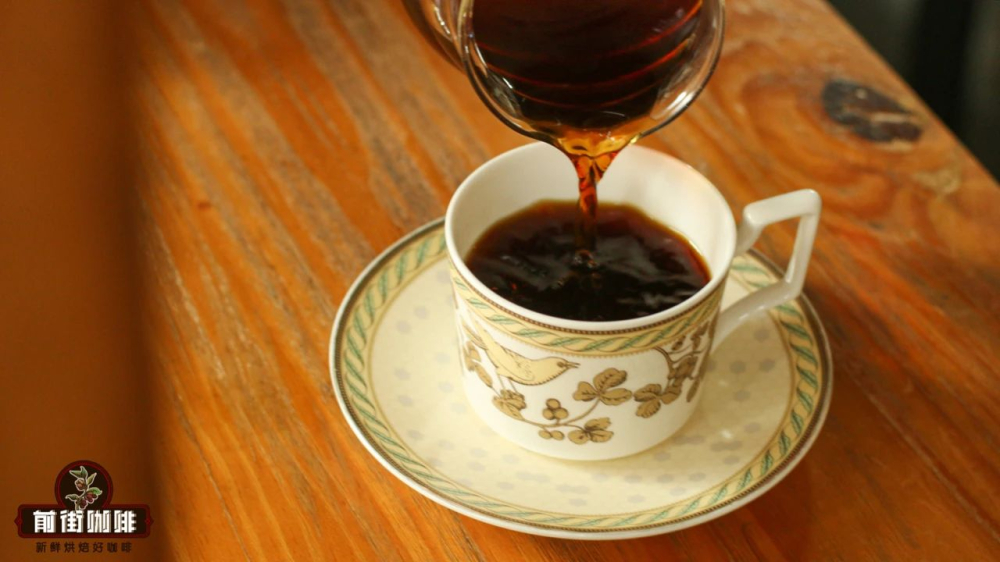
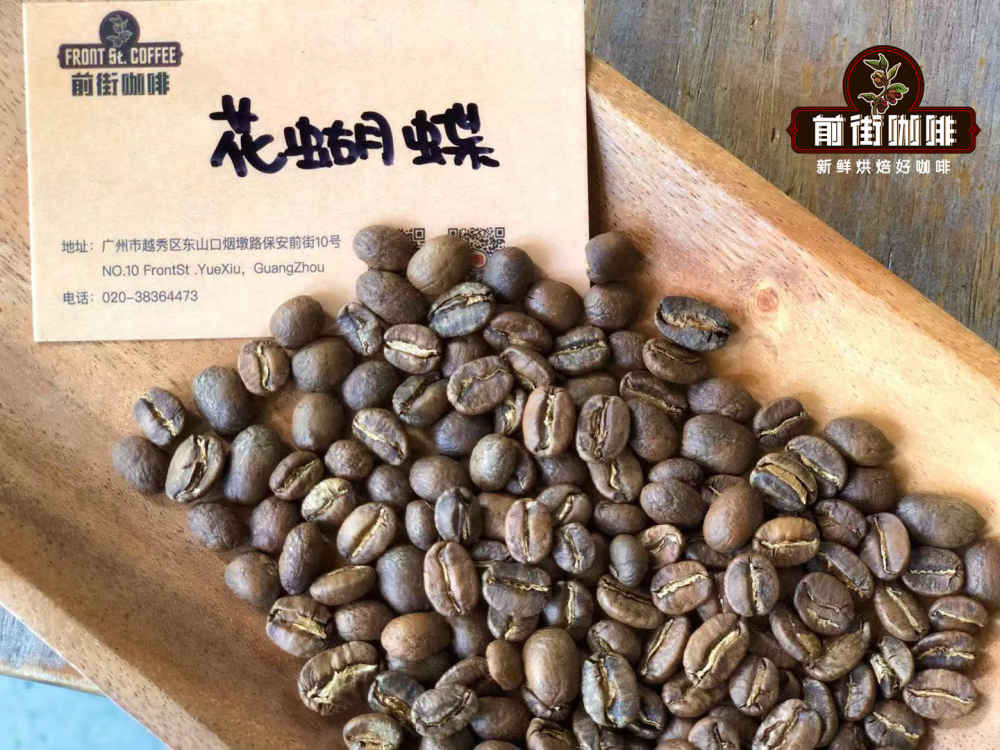
【Panama Coffee Grades】 SHG: Full name Strictly High Grown, grown at altitudes above 1,200 meters HG: Full name High Grown, grown at altitudes of 900-1,200 meters CS: Full name Central Standard, grown at altitudes of 600-900 meters 【Coffee Bean Variety】 Butterfly consists of 70% Geisha coffee variety, composed of three varieties: Geisha, Caturra, and Catuai. Surprisingly, on the basis of very excellent quality, the very accessible price makes this coffee bean's cost-performance ratio off the charts.
【Washed Processing Method】 After coffee cherries are harvested, floating beans are skimmed off, the skin and pulp are removed, and then the coffee beans are soaked in fermentation tanks where microorganisms break down and soften the pectin. This process is called fermentation. After fermentation is complete, the coffee beans are moved to drying beds to dry. During the drying process, the beans need to be constantly turned to ensure even drying, until moisture content reaches 12%. Front Street often encounters many customers asking about the difference between washed and natural. Simply put, washed highlights acidity, natural highlights sweetness, because the essential difference in their operations lies in whether the pulp is retained. Natural retains the flavor of the pulp, while washed does not. It's also very easy to tell from appearance — Front Street Coffee has a display area in the store specifically for distinguishing coffee beans processed by different methods. Washed coffee beans have a silver line in the center, which is residual silver skin, while natural coffee beans do not.
| Region | Thika |
| Processing Station | Asali Honey Processing Station |
| Altitude | 1550-1750m |
| Grade | AA TOP |
| Variety | SL28, SL34 |
| Processing Method | K72 Washed |
【Panama Butterfly Coffee Flavor Description】 Floral, black tea, berries, citrus, with a slight nutty finish. Smooth mouthfeel, low bitterness, moderate acidity, medium finish.
Coffee Beans Represented by Full-Bodiedness 4. Front Street Jamaica Blue Mountain
Jamaica is an island in the Caribbean Sea. Jamaica's Blue Mountains are the highest mountains in the western Caribbean (2,256 meters high). Blue Mountain coffee's unique flavor is related to the Blue Mountains' exceptional geographical location and climate conditions. The Blue Mountains are located in the coffee belt at 25 degrees north latitude, with fertile new volcanic soil, fresh air, no pollution, year-round rain, high humidity, and large temperature differences between day and night. The soil here is rich in nitrogen and phosphorus, very suitable for coffee growth. Fertile volcanic soil, regular rainfall, and the island's misty cloud cover shield it from the scorching sun. All these factors combined are what create Blue Mountain coffee.
【Jamaica Blue Mountain Coffee Grades】 Jamaica Blue Mountain coffee has three grades: Blue Mountain Coffee, Jamaica High Mountain Supreme Coffee Beans, and Jamaica Prime Coffee Beans. Blue Mountain Coffee and High Mountain Coffee are each further divided into two grades. By quality from highest to lowest: Blue Mountain No. 1, Blue Mountain No. 2, High Mountain No. 1, High Mountain No. 2, Jamaica Coffee. The Blue Mountain coffee selected by Front Street Coffee is the highest grade, Blue Mountain No. 1. By quality from highest to lowest: NO.1, NO.2, NO.3, and PB — PB being peaberry. According to CIB standards, the basic criteria for NO.1 Blue Mountain green beans are beans of 17 mesh or above, defect rate below 3%, moisture content around 13%, etc. 【Coffee Bean Variety】 Typica originated in Ethiopia and southeastern Sudan. It is one of the oldest varieties among Arabica species. Its top leaves are copper-red, hence called red-top coffee, also known as old-variety small-bean coffee. Due to low yield and cultivation difficulty, its price is much higher than ordinary small-bean coffee. But its flavor performance is excellent, making it a recognized specialty coffee variety.
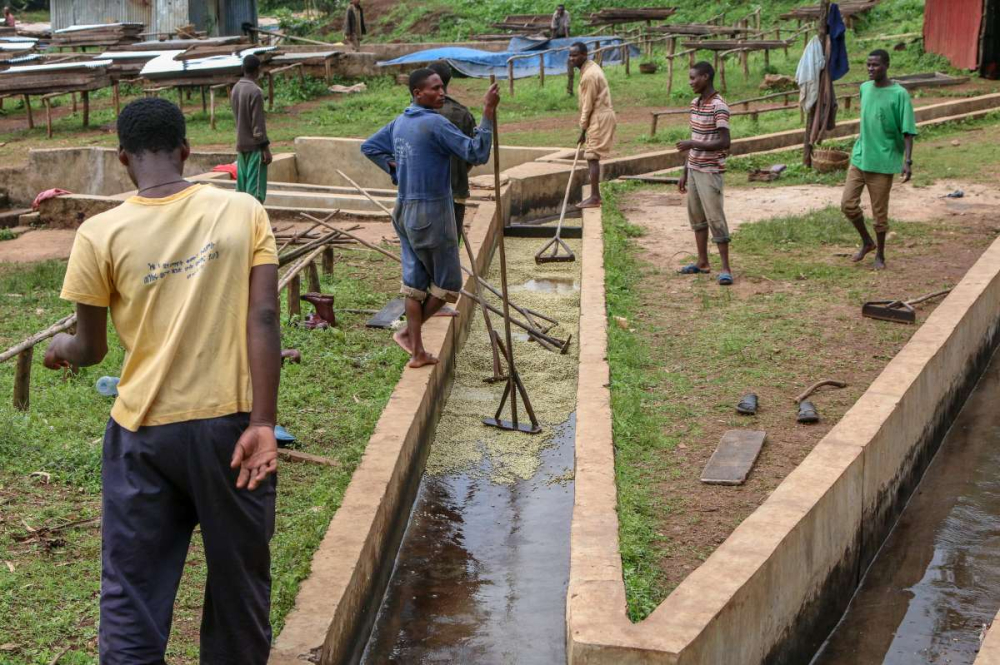
【Washed Processing Method】 After coffee cherries are harvested, floating beans are skimmed off, the skin and pulp are removed, and then the coffee beans are soaked in fermentation tanks to ferment and soften the pectin, with continuous washing and rinsing to remove pectin. The coffee beans are then moved to drying beds to dry. During the drying process, the beans need to be constantly turned to ensure even drying, until moisture content reaches 12%. 【Clifton Estate】 The Blue Mountain region is a small area with only 6,000 hectares of planting area — it's impossible for all coffee labeled 'Blue Mountain' to be grown there. Today, Clifton Estate is the largest estate in the region, though by international standards it still qualifies as small-scale. Many estate owners are small landholders whose families have worked this land for two centuries. Clifton Mountain is an ancient coffee-producing area in Jamaica that is still in normal operation, and Clifton Farm is the only one in Jamaica with the 'Rainforest Alliance' certification. The certification can only be obtained by meeting 'sustainable agriculture system standards,' and its barrels bear the rainforest certification mark. As early as the mid-18th century (around 1750), Clifton Estate began planting and producing coffee. The coffee planting and processing areas here are located at an average of 4,300 feet (1,310.64 meters). Sufficient altitude, gentle afternoon cloud cover shading the mountain forests, ample sunlight, and mineral-rich planting soil provide excellent growing conditions for coffee trees and also extend the ripening of coffee cherries.
【Jamaica Blue Mountain Coffee Flavor Description】 Rich and mellow mouthfeel, with sweetness, acidity, and bitterness in perfect balance, very strong body.
5. Front Street Indonesia Golden Mandheling
| Region | Boquete |
| Altitude | 1600-1650m |
| Grade | SHG |
| Variety | Geisha (70%), Caturra, Catuai |
| Processing Method | Washed |
Indonesia is located in Southeast Asia. Its coffee history dates back to 1696, when Dutch coffee farm owners sought broader coffee-growing lands. After extensive exploration, they finally settled on Indonesia's Java Island. Over 30 years, Indonesia established a sufficient foundation in the coffee market. However, today Indonesia's coffee representative is Mandheling — which is actually not a surprising result, because from the beginning, most of the Java coffee sold to Europe came from the Sumatra region, and Mandheling comes from Sumatra. So Sumatra can be said to be Indonesia's important coffee-producing region. 【Indonesia Coffee Grades】 Indonesian coffee beans use a defect bean ratio grading method. Indonesian beans are mainly divided into 6 grades, G1-G6. Fewer than 3 defective beans (per 300g green bean sample) qualifies as the highest grade, G1.
【Coffee Bean Variety】 Typica originated in Ethiopia and southeastern Sudan. It is one of the oldest varieties among Arabica species. Its top leaves are copper-red, hence called red-top coffee, also known as old-variety small-bean coffee. Due to low yield and cultivation difficulty, its price is much higher than ordinary small-bean coffee. But its flavor performance is excellent, making it a recognized specialty coffee variety. 【Wet-Hulling Processing Method】 Mandheling mostly adopts Sumatra's unique coffee bean processing method — wet-hulling. Because the local weather is often rainy with constant typhoons, it cannot achieve the good weather needed for natural processing. Also, the local economy is not strong, so it cannot afford the relatively expensive washed method either. This gave rise to the highly localized wet-hulling method. In the first stage, a wooden pulper removes the skin and pulp. After 3 hours of fermentation, drying begins, bringing moisture content down to 30-50% — half-dry, half-wet.
In the second stage, the pectin and parchment layer are removed, and drying continues for the later stage. The drying process takes 2-4 days, bringing moisture content down to 12-13%. Golden Mandheling adds additional rounds of sorting on this basis, with more than three rounds of manual sorting, giving Golden Mandheling its characteristics of uniform size and low defect rate.
【PWN】 PWN company (Pwani Coffee Company) registered Golden Mandheling, while a Japanese company registered 'Gold Top Mandheling.' In terms of flavor performance, the two are actually not very different, but due to different brands and different merchant marketing strategies, it's possible that public opinion shifted as a result. So which of the two Golden Mandhelings is better is a matter of opinion. PWN company was the first to export Golden Mandheling to Japan, and Front Street Coffee also purchases PWN's Golden Mandheling.
【Indonesia Golden Mandheling Coffee Flavor Description】 Layered and complex, full-bodied and clean, high balance, rich nutty and caramel aroma, with chocolate notes, persistent finish.
6. Front Street Brazil Queen Estate
Brazilian coffee beans were introduced from French Guiana (a country in northern South America) in 1720. Brazil was a Portuguese colony at the time, while many other South American countries were Spanish colonies. Therefore, most South American countries speak Spanish, while Brazil speaks Portuguese. A Portuguese military officer stationed in Brazil, in order to bring Guiana's coffee beans to Brazil (at the time, exporting coffee to other countries was strictly prohibited), won the heart of the Guiana governor's wife and successfully brought coffee seeds into Brazil. From then on, coffee rapidly adapted in Brazil, spreading from the north to the southeastern state of São Paulo. By 1845, Brazilian coffee beans already accounted for 45% of the world's total coffee beans and had become São Paulo state's most important economic source.
【Brazil Coffee Grades】 Among the many coffee-growing countries in Central and South America, Brazil's altitude is relatively low. Therefore, Brazil does not emphasize hard beans that can only grow at high altitudes like Colombia and other countries. Instead, it grades coffee beans by four criteria: bean size, defect rate, cup testing score, and flavor. Flavor grading: from highest to lowest — Strictly Soft (very smooth), Soft (smooth), Softish (slightly smooth), Hardish (not palatable), Rioy (iodine harsh taste). Defect rate grading: by number of defective beans per 300g of green beans — 6 defective beans qualifies as NY.2. Only beans with absolutely no defects can be NY.1, but beans with absolutely no defects are rare and cannot maintain a consistent supply. Therefore, among Brazilian green beans, the best is NY.2. Cup testing quality grading: from highest to lowest — Fine Cup, Fine, Good Cup, Fair Cup, Poor Cup, Bad Cup. FC (Fine Cup) and GC (Good Cup) are more common. Bean size grading: The largest mesh size for Brazilian coffee beans is 19 mesh, but production is limited, so 17 mesh and 18 mesh are the highest grades.
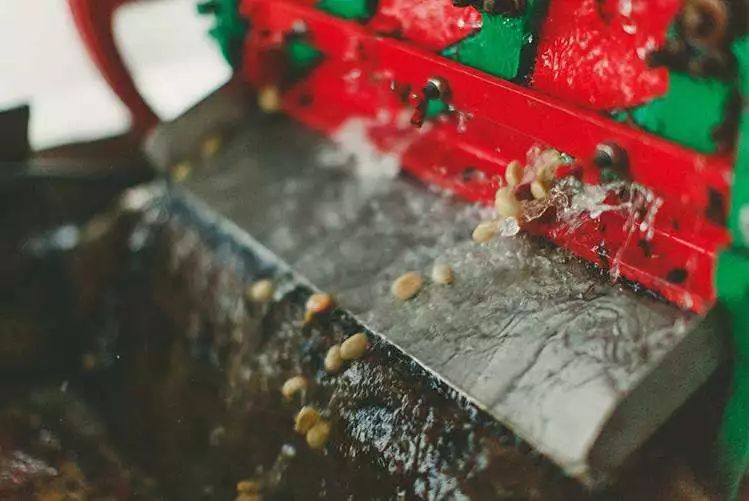
【Coffee Bean Variety】 The Bourbon coffee variety is a secondary species resulting from a mutation of the Typica coffee variety. Generally speaking of Bourbon coffee variety, it defaults to Red Bourbon, named for its red color when ripe. Yellow Bourbon does not refer to the unripe state of Red Bourbon, but rather is a cross between Bourbon and a yellow-fruiting Typica mutation. The fruit is yellow when ripe. Due to its lower yield and weaker resistance to wind and rain, it has not been widely planted. 【Natural Processing Method】 Select highly ripe coffee cherries, place them directly under the sun to dry, turning the coffee cherries from time to time to ensure even heat exposure and drying, until moisture content reaches 12%, then remove the skin and pulp.
【Brazil Queen Estate Coffee Flavor Description】 Rich nutty, dark chocolate flavors, fermented fruit, with noticeable sweetness, accompanied by a light lemon aroma. The overall impression is relatively rounded.
These are the six coffee beans recommended by Front Street Coffee. Even among the three acidity-representative coffee beans, there are differences between them: Kenya coffee beans have the strongest acidity, Panama Butterfly is next, and Ethiopia's is more gentle. Among the three full-bodied ones, Golden Mandheling is the most full-bodied, Blue Mountain has strong balance, and Brazil's full-bodiedness is the most gentle.
The above are the six coffee beans recommended by Front Street Coffee. Even among the three coffees known for their acidity, there are distinct differences: Kenyan coffee beans have the most intense acidity, followed by Panama Butterfly, while Ethiopian beans are gentler. Among the three full-bodied coffees, Golden Mandheling is the fullest-bodied, Blue Mountain has the strongest balance, and Brazil has the gentlest body.
The above content is compiled by CoffeeHunters, a coffee news website.


