







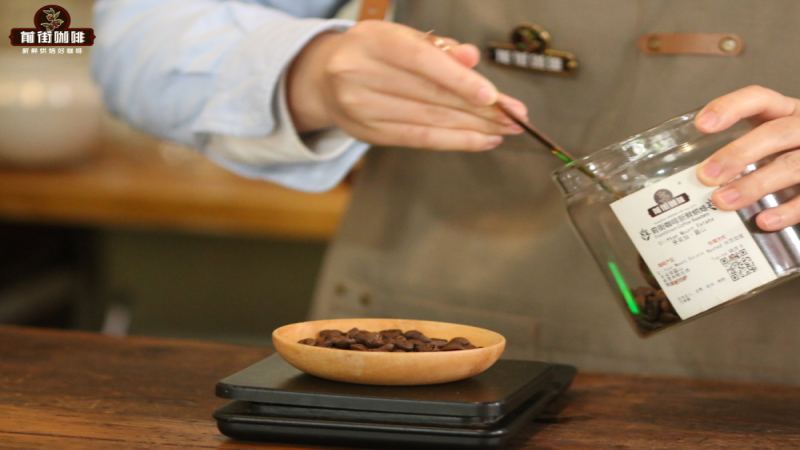
Blue Mountain coffee is one of the most famous names in the specialty coffee world, but do you know how Jamaica classifies it? From the production areas defined by the Jamaica Coffee Industry Board (CIB), to green bean specifications, defect rates, color, and cup testing through layers of screening, Blue Mountain coffee is divided into four grades: Blue Mountain No. 1, No. 2, No. 3, and Blue Mountain Peaberry. Among them, Blue Mountain No. 1 sits at the top of the pyramid, with strict requirements for 17-screen size, defect ratio, and moisture content. In this article, Front Street will walk you through this grading system, explain why Blue Mountain No. 1 earns the highest grade, and share the pour-over brewing parameters and flavor profile of a classic Blue Mountain cup.
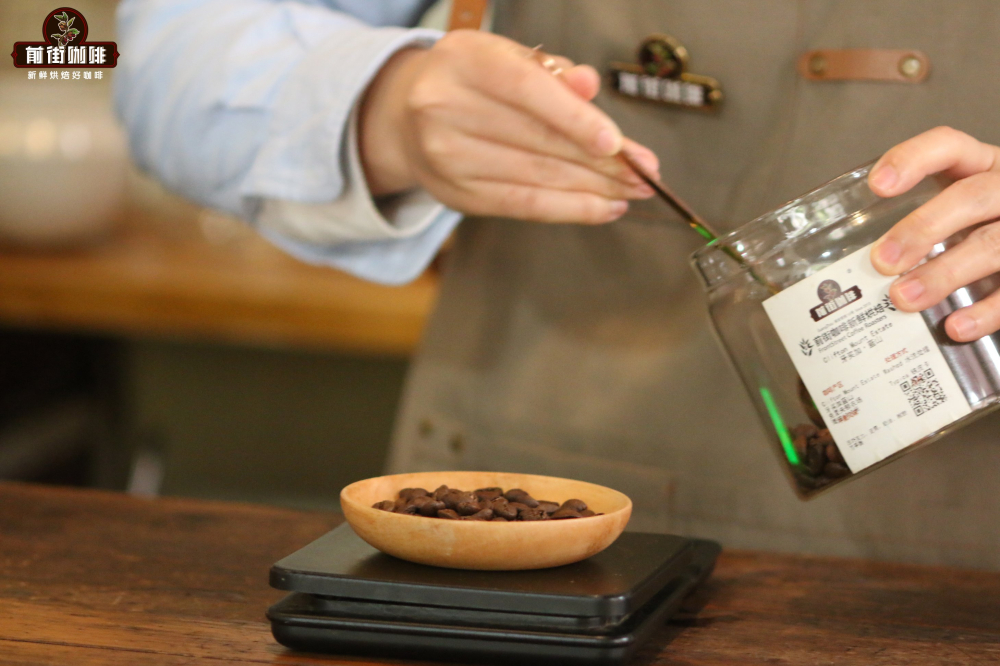
When it comes to the most famous beans in specialty coffee, Front Street Blue Mountain coffee definitely ranks among them. Back when coffee culture had not yet become widespread, even the grandparents' generation had heard of its name. Front Street stores always keep a bag of Front Street Blue Mountain No. 1 coffee beans on hand for customers to taste. Today's article will sort out how Jamaica grades Blue Mountain coffee, and exactly where Blue Mountain No. 1 stands.
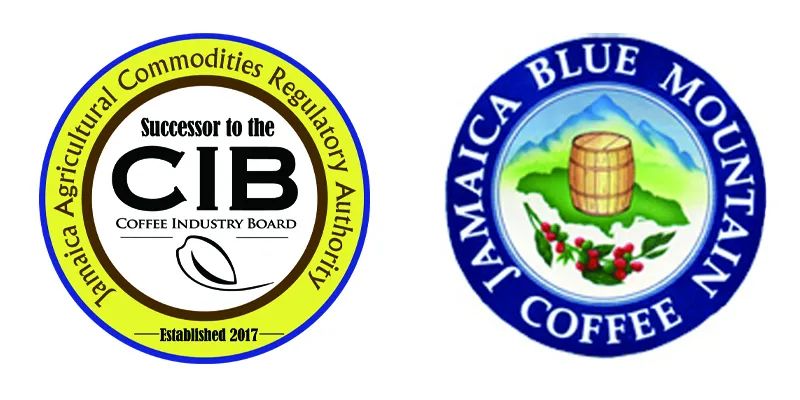
When it comes to Blue Mountain coffee grading, Front Street must first talk about the Jamaica Coffee Industry Board (CIB) — it plays a pivotal role in Jamaica's entire coffee industry. This institution was established by the Jamaican government in 1952, with the duty of improving, regulating, and maintaining the quality and reputation of Jamaican coffee. Shortly after its establishment, the CIB designated a range of about 6,000 hectares in the Blue Mountains, and made a strict rule: only Typica variety grown within this area is eligible to be called "Blue Mountain Coffee." Coffee outside this range can only be called High Mountain Coffee. High Mountain Coffee's output is quite limited, mainly supplying the local tourism market and domestic sales, and neither its reputation nor its price can compare with Blue Mountain coffee.
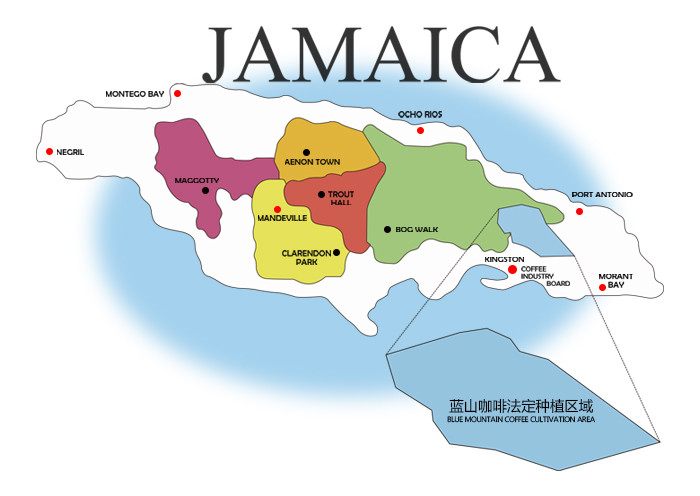
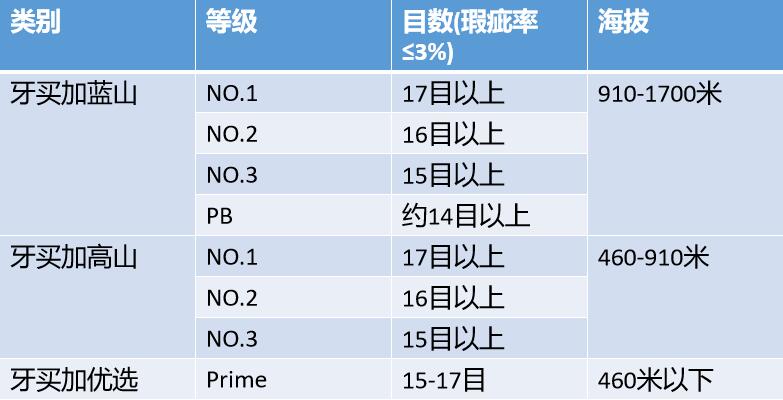
According to the production areas defined by the CIB, the forest regions growing Blue Mountain coffee are at an altitude of roughly 910 to 1,700 meters, mainly concentrated in St. Thomas, St. Mary, St. Andrew, and Portland. The high altitude gives Blue Mountain its unique terroir and climate, but the rugged terrain also makes field management and harvesting especially difficult. Every harvest season, locals hire skilled women who know the terrain to go up the mountain and hand-pick coffee cherries at just the right ripeness. In recent years, Blue Mountain coffee from this region accounts for less than 15% of production, showing just how rare it is — one reason for its high price.
In terms of green bean quality control, the CIB has set standards for the cultivation, production, and sales of Jamaican Blue Mountain coffee, in order to improve coffee quality, standardize production and processing procedures, and coordinate the marketing of Blue Mountain coffee. The CIB is also responsible for the grading and quality testing of coffee produced in the Blue Mountains. In other words, any Blue Mountain coffee sold anywhere in the world must pass CIB certification and bear its label.
Before export, Blue Mountain coffee beans are packed and sent for testing, and are graded according to green bean size, defect ratio, color, and cup test performance, from highest to lowest: Blue Mountain No. 1, Blue Mountain No. 2, Blue Mountain No. 3, and Blue Mountain Peaberry. Bean size is measured using screens with different hole diameters; only beans that cannot pass through the holes qualify for the corresponding specification. Jamaica was the first country in the world to use a cup testing form to evaluate coffee, and the only country to include color in its coffee quality standards.
The CIB believes that the color of green beans can reflect the health of the coffee beans — the brighter and more vivid the color, the longer the shelf life. Color evaluation combines visual observation with colorimeter readings, with blue-green being the highest grade. Top-grade Blue Mountain No. 1 green beans must meet several conditions at once: a screen size of 17 or above, a defect rate below 3%, a moisture content of about 13%, and in the cup test, they must show rich aroma, a smooth and balanced mouthfeel, low acidity, and a long, sweet finish.
After quality testing is complete, different grades of Blue Mountain coffee beans are shipped in containers made of different materials. Blue Mountain No. 1, No. 2, No. 3, and Blue Mountain Peaberry are the only coffees in the world exported in wooden barrels, available in three sizes: 70 kg, 30 kg, and 15 kg. Other grades of Jamaican coffee are exported in 60 kg burlap sacks. Compared with coarse burlap sacks, oak barrels can absorb and release internal and external moisture while blocking the escape of coffee aroma, keeping the beans' moisture content more stable and making them easier to control during roasting. Over time, the wooden barrel has also become one of the hallmarks of authentic Blue Mountain coffee.
In addition to the wooden barrel, Front Street's Clifton Mount Estate Blue Mountain No. 1 coffee also comes with a quality certificate issued by the Jamaica Coffee Board, an authorized sales certificate issued by the Blue Mountain coffee producer, and a certificate of origin for Jamaican Blue Mountain coffee. These documents are all on display at the Front Street Dongshankou store, so interested friends can take a look.
Some friends buy high-grade Blue Mountain No. 1 coffee beans but don't know how to brew the classic Blue Mountain flavor. Below, Front Street will demonstrate the pour-over process for Blue Mountain using the store's serving standards. Front Street believes that for brewing the delicately flavored Blue Mountain No. 1, freshness is key — roasted coffee beans have an optimal flavor window, and once the aroma peak has passed, the flavors become very difficult to extract. The beans Front Street ships are all freshly roasted within 5 days, precisely so everyone can enjoy the full flavor window.
When extracting medium-dark roasted coffee beans, Front Street usually chooses the KONO dripper. The upper part of the KONO dripper is a smooth curved surface that lets the filter paper fit better; compared with the v60 dripper, its extraction method is mainly immersion-based, which can increase the coffee's overall concentration and boost body. Besides KONO, common slow-flow devices such as the Kalita trapezoidal dripper and the flannel cloth are also suitable.
Also, medium-dark roasted coffee has undergone a certain degree of roasting, making the internal structure of the beans fluffier than light-roasted beans and better at absorbing water. To avoid over-extraction, Front Street chooses a grind size with a 75% pass rate on a No. 20 standard sieve, paired with a water temperature of 88°C, and follows Front Street's usual three-stage pouring.
Pour-over parameters: water temperature 88°C, grind size coarse sugar (75% pass rate on No. 20 standard sieve), 15 g coffee beans, 1:15 coffee-to-water ratio, three-stage extraction.
For the first stage, gently pour 30 g of water to bloom, and let it bloom for 30 seconds; for the second stage, pour water to about 125 g, circling outward evenly and steadily. When the coffee liquid drops to halfway, pour the final stage of water to 225 g, and wait for all the coffee to finish dripping; the total extraction time is about 2 minutes.
The flavor profile of Front Street Blue Mountain No. 1 coffee: at high temperature, the entry is a deep dark chocolate aroma, very full-bodied, with a clear almond-like sweetness in the finish. As the temperature drops, roasted hazelnut and creamy, silky sweetness emerge, mixed with a hint of soft acidity and caramel sweetness, and the aroma lingers in the mouth for a long time.
The above content is compiled by CoffeeHunters, a coffee news website.


