







Stockpiled too many coffee beans to finish drinking for a while—can you stuff them into the fridge? Should they go in the refrigerator or the freezer? This article revolves around the real goal of "freshness"—preserving aroma—and breaks down the five great enemies: strong light, high temperature, moisture, oxygen, and odors, while providing actionable home freshness-locking solutions. The article also incorporates the experimental conclusions of Swiss scientist SAMO SMRKE, explaining that freezing can significantly slow down coffee bean degassing and delay the peak flavor period, but improper handling can also lead to air leakage, moisture absorption, and odor transfer. At the end, Front Street's detailed freezing and thawing suggestions are attached to help you store your beans more reliably and have them taste better.
A customer stocked up on a batch of daily coffee beans before May Day, but then a friend returned from an overseas trip and brought back several bags of coffee beans as gifts. The quantity suddenly exceeded her consumption rate, so she came straight to Front Street with three questions: Can coffee beans go into the fridge? If so, refrigerator or freezer? What's the proper way to handle it?
To store coffee correctly, you first need to figure out what exactly we're preserving. What does so-called "freshness" mean? After how long is it considered not fresh? What factors accelerate its decline? Only by sorting through these questions and ruling out wrong practices can you find the coffee freshness-preservation plan that truly suits you.
The peak flavor period—what exactly are we savoring?
Coffee products sold through proper channels on the market all have a "shelf life" printed on the packaging—this is information manufacturers must provide under food labeling regulations. But for people who truly drink coffee, what we worry about has never been spoilage in the food safety sense, but aroma escaping. Therefore, the core purpose of all storage methods is only one: keep as much of the precious aroma in the beans as possible—in other words, extend the optimal peak flavor period as much as possible.
Freshly roasted beans are not only full of aroma but also accumulate a large amount of carbon dioxide inside. So when coffee beans are still within their optimal peak flavor period, even without looking at the roast date, we can find evidence of their freshness during the brewing process.
For example, during the blooming phase of pour-over, bubbles will puff up, and water flows through smoothly, making it easier for us to control the extraction time (stale beans usually drain faster); if making espresso, there will be a beautiful golden layer of crema on the surface, and the flow rate is more stable—the coffee releases rich and positive aromas at every stage.
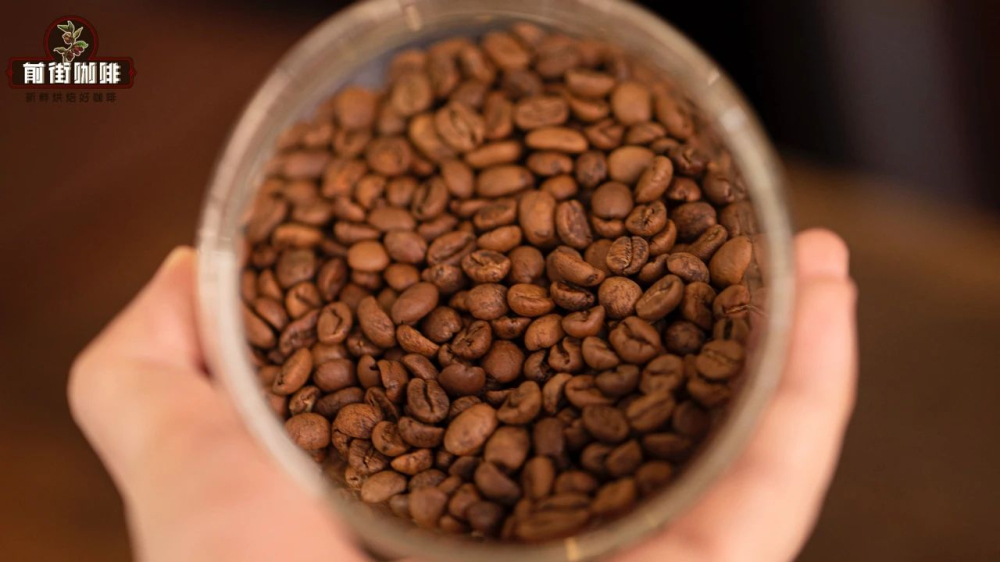
Excluding external interference, over time, these essence components will gradually dissipate within 40–50 days after roasting until they are exhausted. So to extend the peak flavor period, you first need to avoid its "natural enemies" during this time: strong light, high temperature, moisture, oxygen, and odors.
To preserve coffee aroma, you must guard against these five "harmers"
Before the packaging is opened, heat and light are the two biggest "culprits" that accelerate the dissipation of flavor gas molecules in coffee. Based on the principle of aroma preservation, when storing coffee, keep it as far as possible from direct sunlight and places that generate or dissipate heat;
Once opened, coffee beans come into direct contact with air, and moisture, oxygen, and surrounding odors all take the opportunity to sneak into the packaging. Unfortunately, coffee is a "never refuses" character, always accepting these components wholesale. So if you frequently open the seal, the beans will either absorb moisture, accelerate oxidation, or even take on odors, and the brewed coffee will naturally be greatly compromised.
Generally speaking, after fresh coffee beans arrive, Front Street recommends storing them in a sealed, cool, dry, and light-blocking place, and reducing the number of times the seal is opened during use. I believe clever friends have already noticed that these practices are simply preventive management against the above five "natural enemies." So as long as you ensure the coffee beans are kept in a cool, ventilated, odor-free, and dry place, you can get a relatively long peak flavor period.
Can coffee beans be "preserved" through low temperature?
For other ingredients, life experience tells us we can put them in the fridge for low-temperature preservation—so can coffee beans be handled the same way?
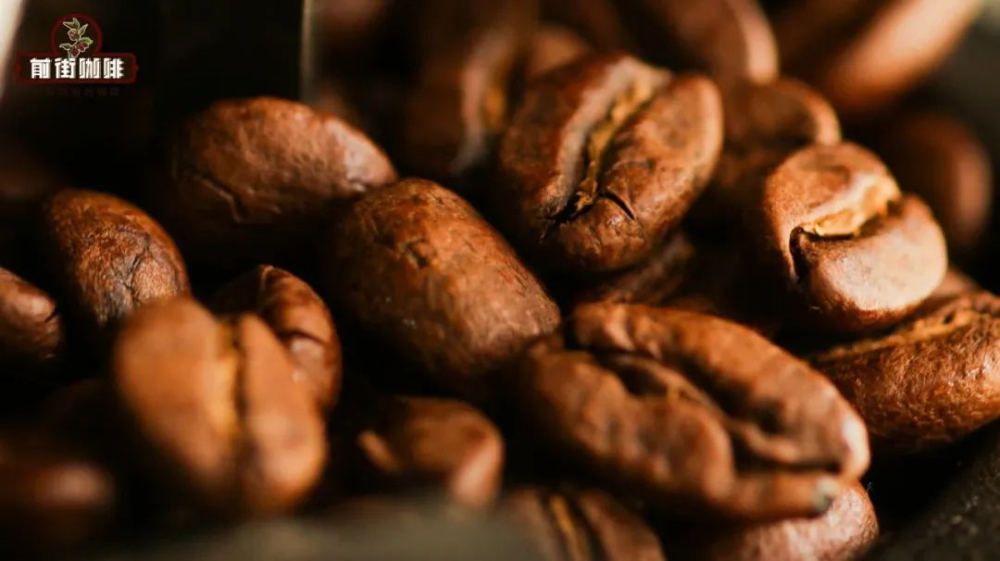
Swiss scientist SAMO SMRKE reached a conclusion through experiments: frozen storage can extend the degassing rate of coffee beans by 12.5 times, and to a certain extent it can inhibit the internal aroma from moving outward. So theoretically, freezing can indeed "delay" the peak flavor period of coffee.
So for the friend's situation mentioned at the beginning by Front Street, if you want roasted beans to still taste good and be drinkable after three or four months of storage, freezing should be a relatively safe and effective method. However, note that even in a freezing space of minus十几 degrees, it only slows down the rate of aroma dissipation and cannot completely prevent its loss. Moreover, improper handling can lead to problems such as air leakage, moisture absorption, and odor transfer, and all the effort spent will be wasted.
What should you pay attention to when refrigerating coffee beans?
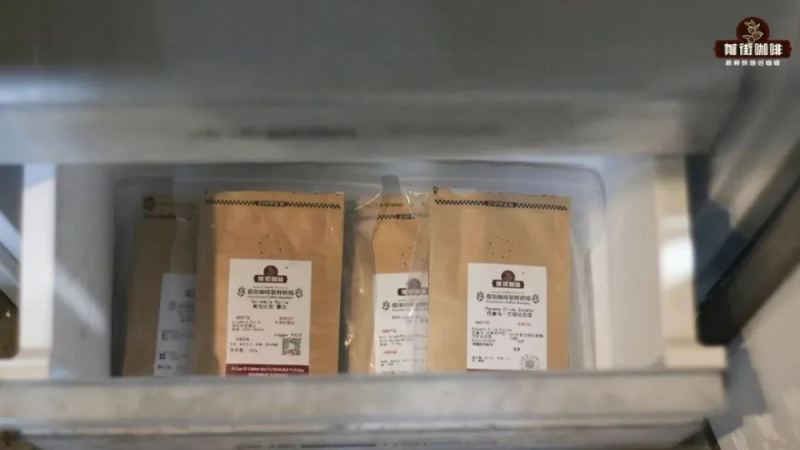
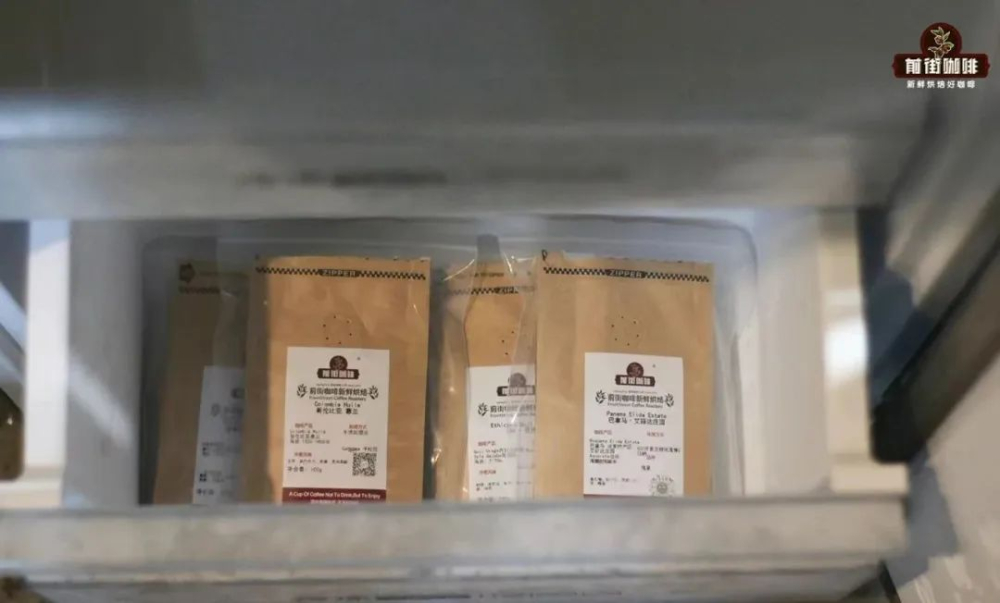
1. For coffee storage, packaging is undoubtedly a key part. To keep coffee beans completely isolated from the air in the fridge and the smells of other foods, Front Street recommends first bagging and sealing or vacuum-packing, then putting them into the freezer.
2. When we take the beans out of the fridge, don't rush to open them. Wait until the vacuum bag has thawed and returned to room temperature before pouring out the coffee beans for use. This avoids the risk of getting wet from condensation.
3. For coffee beans that have been thawed, it's best not to put them back into the fridge, and drink them as soon as possible, because coffee beans stored at low temperature for a long time will decline faster in flavor after returning to room temperature. And if you can't consume the whole bag quickly, you can weigh out the beans in single doses or small multiple portions before freezing, then make them into individual vacuum packs, opening them as needed.
Whenever I see someone unable to control their urge to buy and frantically stockpiling beans, Front Street still earnestly nags: don't buy too much—there will be more deals next time~
The above content is compiled by CoffeeHunters, a coffee news website.


