







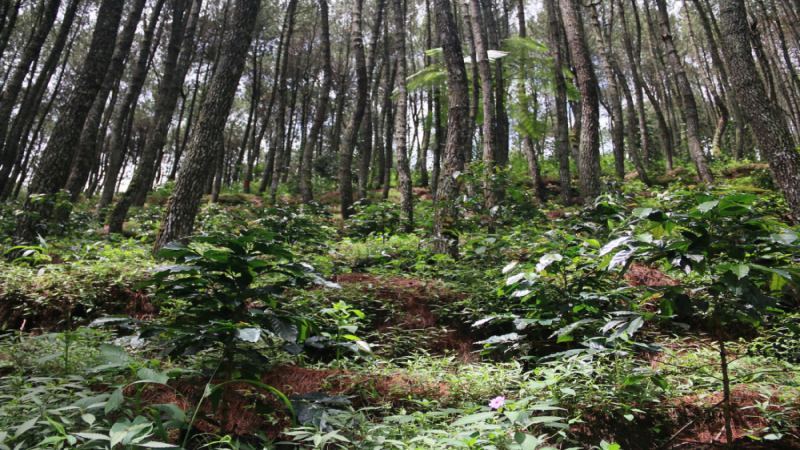
Sumatra is one of Indonesia's most iconic coffee-producing regions, and its Mandheling coffee is world-famous for its rich, full-bodied flavor. This article will systematically outline the distribution of Sumatra's main producing areas, detailing the Mandheling varieties and processing methods of Lintong, Aceh Gayo Mountain, Lake Toba, and other locations, including the flavor differences brought about by the wet-hulling method and sun-dried processing. At the same time, Front Street Coffee will share the regional information, flavor descriptions, and pour-over brewing parameters of five Mandheling coffee beans, helping coffee enthusiasts gain a more comprehensive understanding of the charm of Sumatra coffee and master the brewing techniques for Mandheling at different roast levels.
For more specialty coffee knowledge, please follow the WeChat public account: Front Street Coffee
Sumatra coffee uses the Sumatran tiger as its packaging image, and there are good reasons for this choice. The Sumatran tiger is the only tiger species that inhabits an island far from the mainland, found only on the Indonesian island of Sumatra, ranging from lowland forests to high mountain areas. Currently, only about 400 to 500 wild individuals remain, mainly concentrated in five national parks within Indonesia.
Sumatra coffee beans are also one of Indonesia's most iconic coffees. Front Street focuses on fresh-roasted good coffee and offers five Mandheling coffee beans. Due to differences in producing regions or processing methods among the various beans, their flavor profiles also show subtle distinctions.
Sumatra is mainly divided into two core producing regions. The more southerly region, centered on Medan, Lake Toba, and Lintong, is the traditional home of "Mandheling," and the commonly seen Mandheling G1, Golden Mandheling, Tiger Mandheling, and others all come from here.
Mandheling from the Lintong region is basically pure Arabica, though it is said that in recent years some Robusta lineage has been mixed in—however, the exact situation remains uncertain, and judging by bean shape, it is still relatively close to pure Arabica. Processing is mainly the traditional washed method, but in recent years processing stations such as WHANA have begun introducing sun-dried and semi-sun-dried techniques, significantly improving quality.
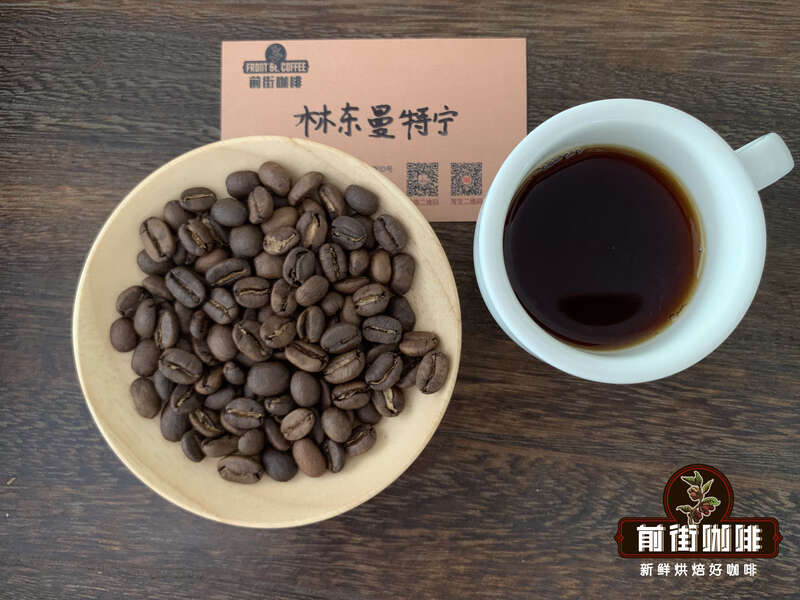
Front Street Coffee Lintong Mandheling comes from the Lintong producing region of Sumatra, grown at an altitude of 1,100–1,600 meters. The Typica and Caturra varieties are processed using Indonesia's commonly used wet-hulling method. The flavor profile is: baked toast, nuts, caramel, pine, herbs.
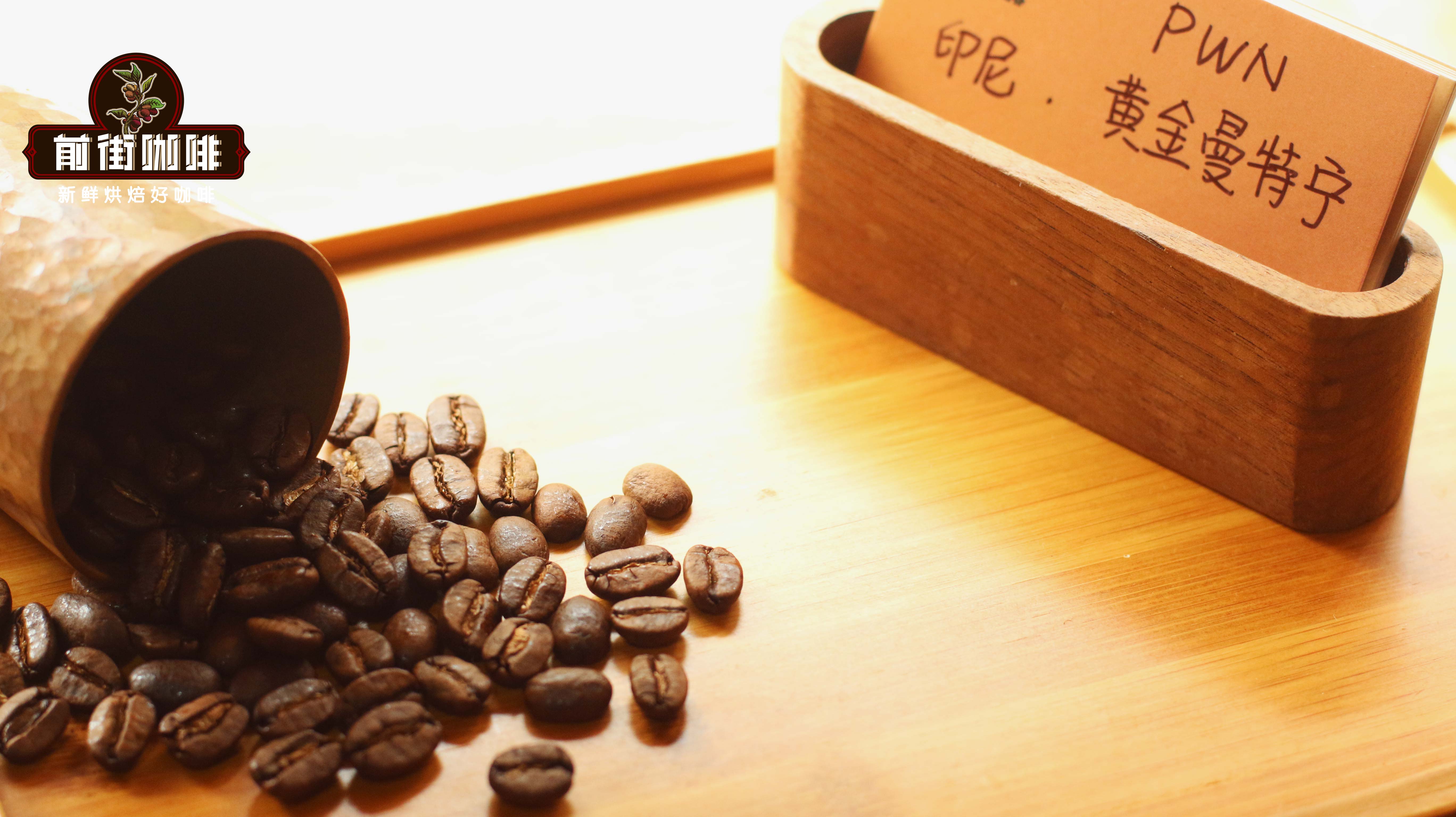
Front Street Coffee Golden Mandheling comes from Gayo Mountain, Aceh, Sumatra, grown at an altitude of 1,100–1,600 meters. The coffee variety is Ateng, processed using the wet-hulling method. The flavor profile is: spices, herbs, caramel, pine, nuts, chocolate.
What sets Golden Mandheling apart from other Mandheling coffees is that the green beans undergo G1 selection and three rounds of hand sorting, so the beans of Golden Mandheling appear very uniform in size. Golden Mandheling's specification is 18 screen or above, with fewer than 3 defective beans (in a 300g green bean sample), belonging to the highest grade, G1. The color is on the darker green side, and the shape is a neat flat bean. After strict screening, Golden Mandheling not only loses the earthy, off-flavors characteristic of ordinary Mandheling but also tastes cleaner and more transparent, with a more intense sweetness.
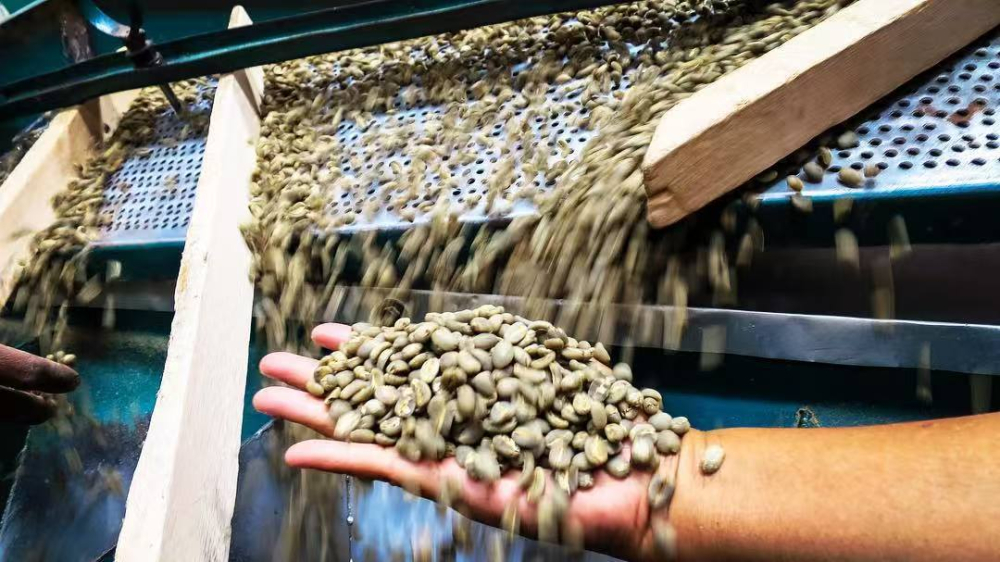
Front Street Coffee Tiger Mandheling comes from the Sumatra producing region, grown at an altitude of 1,500 meters. The Caturra, Typica, and Sidikalong varieties are processed using the wet-hulling method. The flavor profile is: nuts, butter, dark chocolate, caramel, pine. Front Street Coffee Aged Mandheling comes from the Sumatra producing region, grown at an altitude of 1,500 meters. The Caturra and Typica varieties also use the wet-hulling method. The special processing of Aged Mandheling gives it a rounder, deeper flavor, as intoxicating as Pu-erh tea.
Aged coffee actually has a long history in Indonesia. Because early shipping was not so developed, transporting coffee from Indonesia to other countries required a considerable amount of time. As time passed, the originally moisture-rich fresh coffee beans gradually dried and, combined with the blowing of sea breezes, took on a rather special flavor. Due to the progress of modern shipping, transportation time has been greatly reduced, so coffee with this special flavor has become a specially processed type of coffee bean.
It is worth noting that those with a thorough understanding of Mandheling should know that Mandheling coffee beans are mostly dark-roasted. The reason the Mandheling we commonly see is dark-roasted is twofold: first, because its processing method and the mixed nature of its varieties result in a relatively high defect rate, and dark roasting can perfectly conceal this flaw; second, because Mandheling was first discovered mainly by the Japanese, and the Japanese tend to prefer mouthfeel-oriented coffee in their tasting, so it is not hard to understand why Mandheling is roasted so dark~
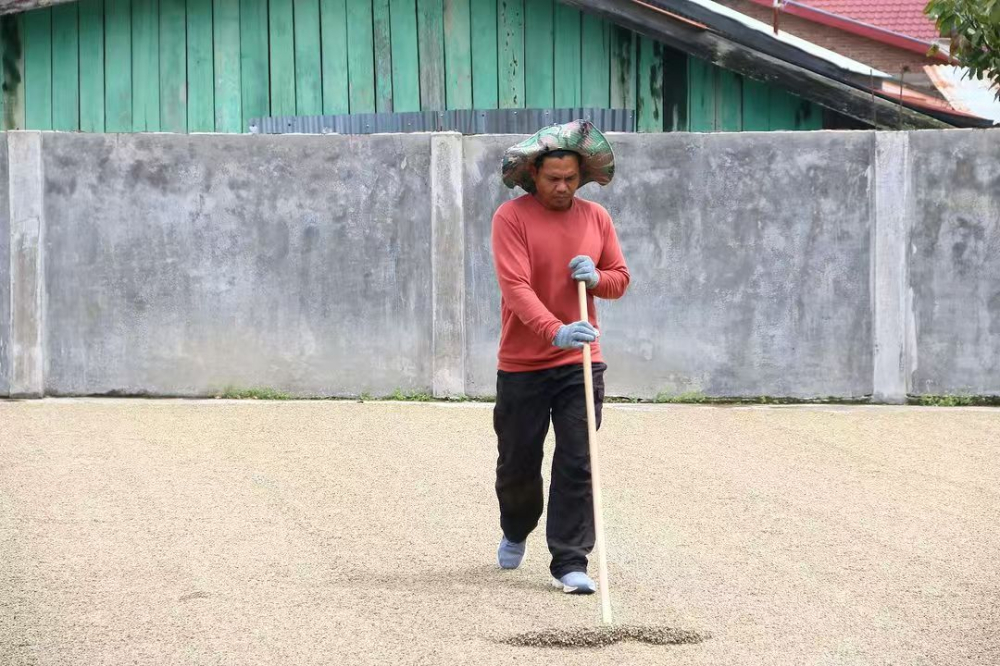
Besides the four wet-hulled Mandheling coffees mentioned above, Front Street Coffee also has another "uncommon" Mandheling coffee bean—Sun-Dried Mandheling. Sun-Dried Mandheling comes from Lake Toba, Sumatra, from Wahana Estate, where the growing altitude is 1,000–1,700 meters. The Bourbon and Typica varieties are processed using the sun-dried method. In terms of roast level, Front Street Coffee experimented with a medium-light roast for the Sun-Dried Mandheling coffee. The flavor profile is: melon, fermented aroma, mango, tropical fruit, peach.
Front Street Coffee's recommended ways to enjoy Sumatra coffee:
Front Street Coffee's recommended brewing method: [Pour-over method] Front Street Coffee recommends using a Kalita trapezoidal dripper, a KONO dripper, or a flannel dripper—drippers that emphasize immersion extraction—to brew these four wet-hulled Mandheling coffees.
Pour-over water temperature: 86–88°C (because the roast level is dark, too high a temperature easily causes over-extraction.) Pour-over grind size: medium grind (slightly coarser than the grind for brewing light-roasted beans, to lower the extraction rate of the beans) Pour-over coffee-to-water ratio: 1:13–1:14 (use a smaller coffee-to-water ratio to highlight the rich mouthfeel of Sumatra coffee)
Front Street Coffee's pour-over brewing parameters for four Mandheling coffee beans: Brewing parameters:
1. Dripper: KONO
2. Water temperature: 86–88°C
3. Grind size: Fuji Royal grinder setting 4
4. Roast level: dark roast
5. Bloom time: 30 seconds
Brewing technique:
15g coffee, 1:15 coffee-to-water ratio, Fuji Royal ghost-tooth burr setting 4, KONO dripper, 86–88°C water temperature. First pour 30g of water and bloom for 30s. Second pour up to 125g of water. When the water level drops to halfway, continue pouring up to 225g. Total extraction time ends at 2 minutes.
What is special is that because Sun-Dried Mandheling uses a medium roast level, its brewing technique differs from that of medium-dark roasted Mandheling coffee beans. Through the accumulated experience of many experiments in brewing technique, Front Street Coffee ultimately strives to keep brewing parameters as unified as possible for coffee beans of different roast levels. For example, Front Street Coffee's brewing parameters for light-medium roasted coffee beans are: V60 dripper, 1:15 coffee-to-water ratio, 15g coffee dose, 90 °C water temperature, grind size (80% passing rate on a No. 20 standard sieve), while the brewing parameters for medium-dark roasted coffee beans are: Kono dripper, 1:15 coffee-to-water ratio, 15g coffee dose, 88°C water temperature, grind size (70–75% passing rate on a No. 20 standard sieve).
Sun-Dried Mandheling coffee brewing parameters:
Brewing parameters: 1. Dripper: Hario V60 #01 dripper 2. Coffee dose: 15 grams
3. Ratio: 1:15
4. Water temperature: 90 °C
5. Grind size: fine granulated sugar Brewing technique:
First pour 30g of water and bloom for 30 seconds. Second pour, adding 95g of water (scale reads 125g), completed in about 1 minute. Third pour, adding 100g of water (scale reads 225g), completed in about 1 minute 40 seconds. Extraction time is 2 minutes 10 seconds. Remove the dripper to finish brewing.
Summary of pour-over Mandheling flavor descriptions:
Golden Mandheling: complex layers, mellow and clean, high balance, rich nut and caramel aroma, with chocolate notes, long-lasting finish. Lintong Mandheling: herbal and medicinal notes on entry, dark chocolate, caramel, sweet aftertaste.
Tiger Mandheling: pine and spice aromas, relatively balanced mouthfeel, with obvious butter, dark chocolate, and nut flavors.
Aged Mandheling: aromas of wood, malt, and caramel rush forth. On the palate, it has less of the wildness of traditional Mandheling and more mellowness and finesse, with a sense of mature steadiness. Acidity is relatively low, and on entry there are flavors of ripe Pu-erh, caramel, herbs, and chocolate, with abundant sweetness.
The above content is compiled by CoffeeHunters, a coffee news website.


