







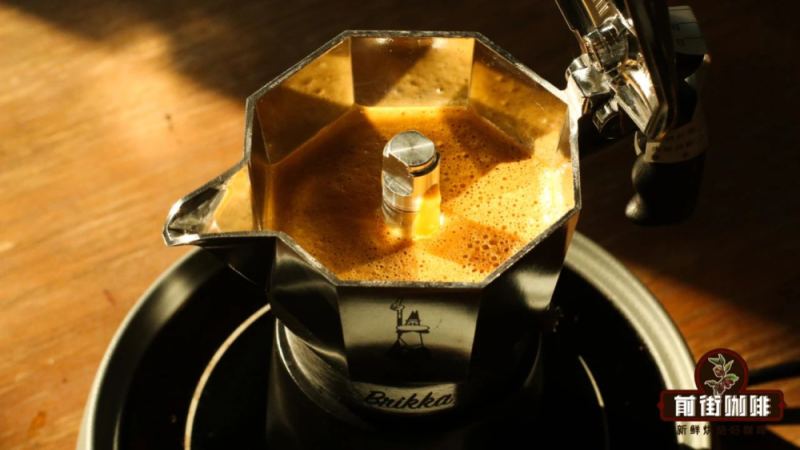
As an iconic device of Italian coffee culture, the moka pot has become the first brewing equipment for many coffee enthusiasts to get started with, thanks to its unique design and wide applicability. This article will take the moka pot commonly kept in stores as an example to comprehensively introduce its structure and principles, key points for purchasing, and the complete operating process from preparation to extraction, helping you easily master the use of this classic device. At the same time, the article also particularly recommends several Front Street Coffee beans suitable for the moka pot, so you can make a rich and mellow cup of Italian-style coffee at home.
For more specialty coffee knowledge, please follow the WeChat official account: Front Street Coffee (FrontStreet Coffee)
The moka pot is an iconic symbol of Italian coffee culture and one of the most widely recognized brewing devices worldwide. Its highly recognizable appearance, relatively low entry threshold, and wide range of applicable scenarios have made it the first stop for many coffee enthusiasts in coffee brewing. Today, Front Street will use the moka pot commonly kept in stores to explain in detail the characteristics of this device and its specific method of use.
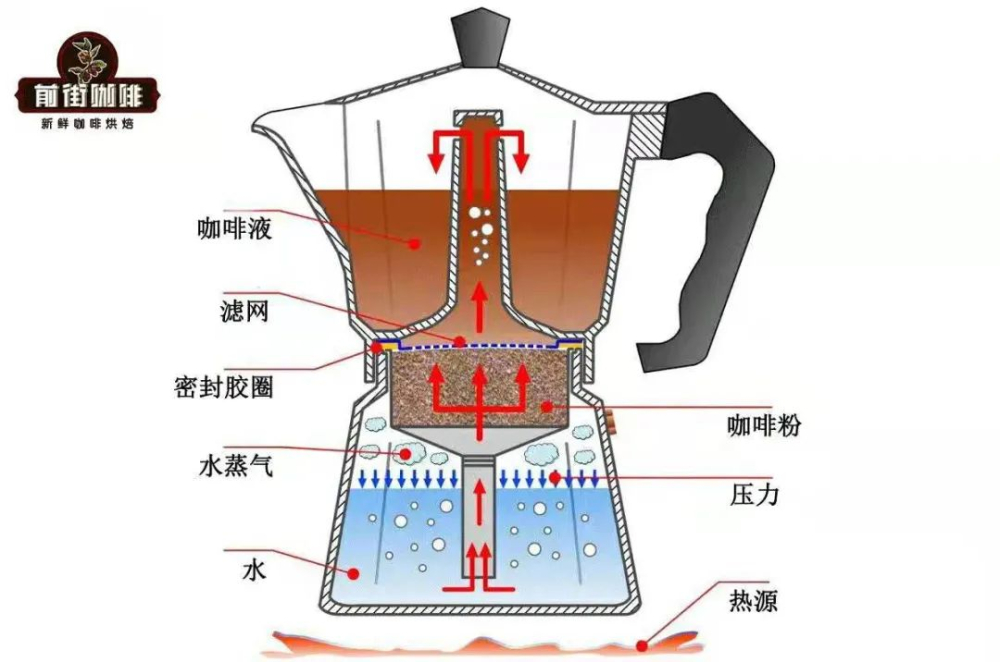
Unlike most brewing tools on the market, the moka pot works by generating pressure through heating to extract strongly flavored coffee. In 1933, Italian Alfonso Bialetti invented this device, and since then it has mainly become popular in European countries, especially in its birthplace Italy, where almost every household owns a moka pot. Early traditional moka pots were made of aluminum alloy and could only be heated over an open flame. Most products currently on the market have changed to stainless steel material, which can be placed directly on an induction cooker for heating and extraction. When purchasing, you can also choose different capacity styles according to actual needs, among which the most common is the small size for 2 to 3 people.
As can be seen from the picture above, the moka pot is structurally divided into upper and lower parts, and the whole consists of three core components: the upper chamber that holds the coffee liquid, the filter basket that holds the coffee grounds, and the lower chamber that holds water. When extracting coffee with a moka pot, the heat source first heats the water in the lower chamber. After the water boils, steam pressure is generated. When the pressure accumulates to a certain level, the hot water is pushed upward, passes through the coffee grounds layer, carries out soluble aromatic substances, and continues to rise, ultimately producing a cup of richly flavored coffee liquid. When drinking, it can be adjusted with water or milk according to personal preference.
Before starting extraction, you need to prepare a bag of coffee beans within their optimal flavor period, a gas stove or induction cooker for heating, a grinder for grinding coffee beans, and clean water.
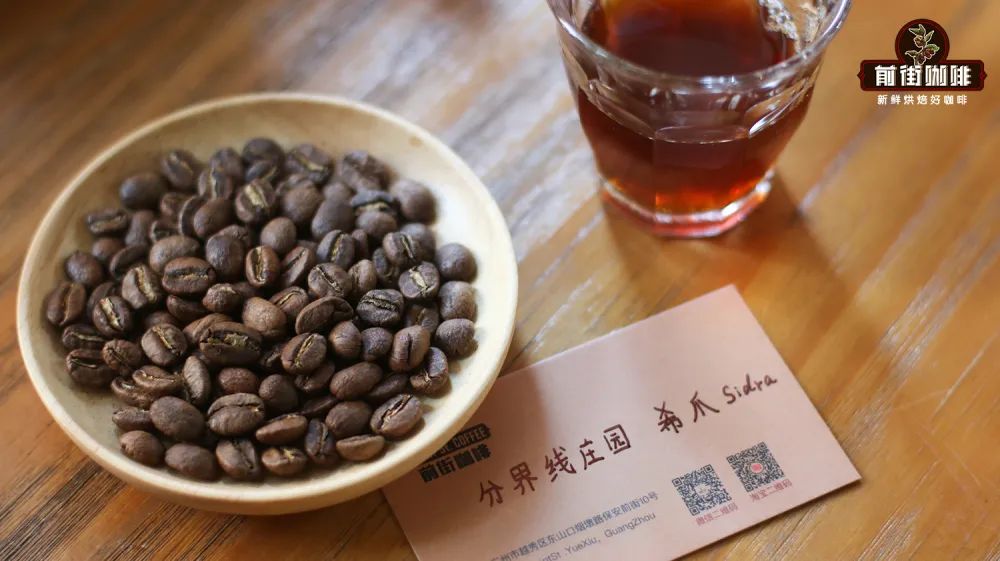
Since the French press uses immersion extraction, Front Street believes it is more suitable to use medium-roast or medium-dark roast coffee beans. If you want to drink French press coffee with floral and fruity aromas, Front Street Strawberry Candy Coffee, Front Street Mozart Coffee, and Front Street Sidra Coffee are recommended; if you like coffee with a rich nutty aroma, it is recommended to buy Front Street Queen's Estate, Front Street Golden Mandheling, and Front Street Huila. All the above coffee beans can be purchased at the Front Street Tmall flagship store or Front Street Taobao store, and orders will be shipped within 24 hours after placement.
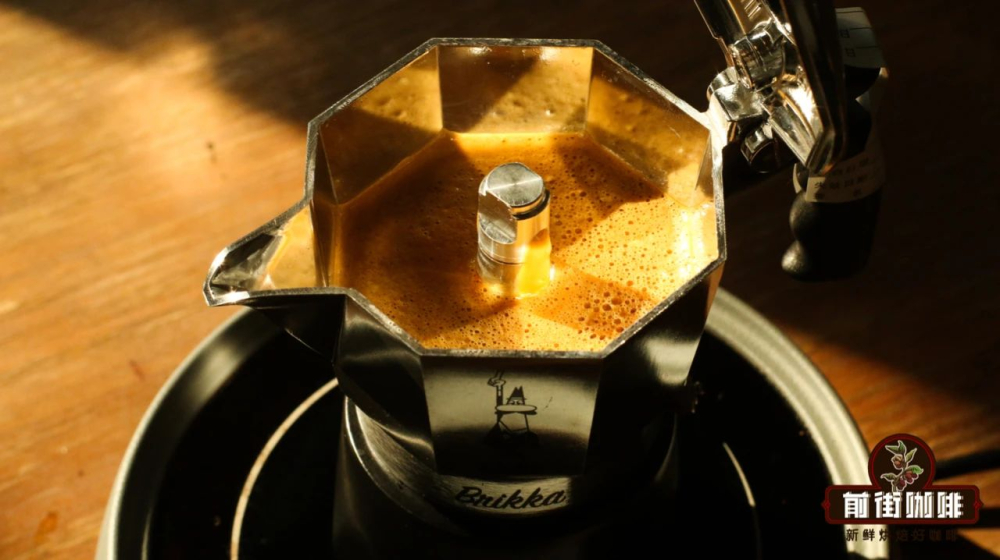
In order to show the crema performance of moka pot coffee, Front Street Classic Italian Blend (composed of Brazilian coffee, Indonesian Mandheling coffee, and Vietnamese coffee) was selected this time. This bean is a medium-dark roast, and the espresso extracted has a solid and full-bodied taste, making it very suitable for blending with milk to make a latte. The heating equipment is an electric ceramic stove, and the grinder is the EK43s used for store production.
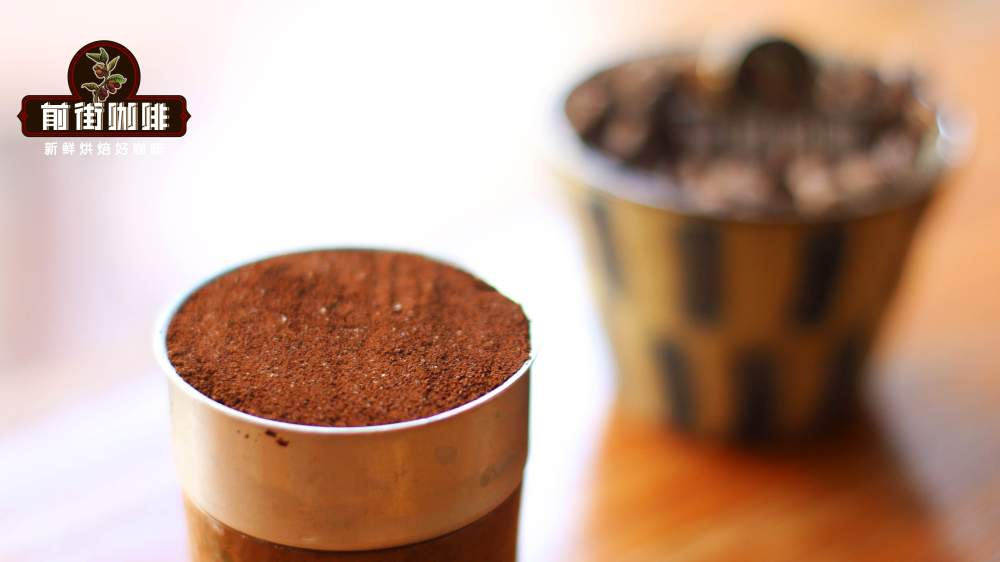
The grind size required for a moka pot is usually slightly coarser than espresso powder, but much finer than pour-over coffee. If the grounds are too coarse, the contact area between water and coffee grounds will be reduced, not only causing under-extraction and a weak taste, but also possibly causing spraying due to too little resistance to the upward flow of liquid, with the risk of splashing and scalding. Front Street recommends a grind size of EK-43s #3-3.5 setting, which feels finer than fine granulated sugar.
1. Pour hot water into the lower chamber, keeping the water level as close as possible to 0.5 cm below the pressure relief valve (safety valve). Front Street has actually measured that the amount of water corresponding to this position is about 100 g. When the coffee grounds are leveled in the filter basket, it is about 20 g, so the coffee-to-water ratio falls at about 1:5. Note that using cold water will prolong the contact time of the coffee grounds, leading to over-extraction and bitterness, so Front Street recommends using hot water, which can also shorten the time required for extraction.
2. The grind size of the coffee grounds needs to be finer than pour-over coffee and coarser than espresso. You can refer to the size of the gaps in the filter screen of the basket to ensure that the coffee particles can be filtered out. Slowly pour the coffee grounds into the filter basket, and use your fingers to tap and level them evenly.
3. Put the filter basket back into the lower chamber, tighten the upper chamber, place it on the electric ceramic stove, and begin heating, waiting for the moka pot to heat up.
4. When you hear a hissing sound from inside the moka pot, turn the stove temperature to low heat and open the lid of the upper chamber. At this point, you can see the coffee liquid and crema slowly flowing out.
5. When the coffee liquid in the upper chamber is half full, turn off the heat source and move the pot to the table, using the residual heat and remaining pressure inside the pot to continue extracting the remaining coffee liquid. It should be noted that the moka pot is made of metal, so try not to touch the body when it is heated at high temperature to avoid burns.
6. The extracted coffee liquid can be drunk directly, and the taste is very rich and on the heavier side. It can also be mixed with milk or other additions according to personal preference. The moka pot coffee extracted from Front Street Classic Italian Blend beans has rich caramel aromas, almond and chocolate aromas, and a black cocoa aftertaste. After pairing it with heated milk to make milk coffee, it presents a dense, sweet, and creamy chocolate-like taste.
If you want the espresso liquid extracted from the moka pot to have a thick layer of crema, Front Street recommends using freshly roasted medium-dark roast coffee beans. As the roast level deepens, the coffee beans undergo caramelization and produce a large amount of gas, which is released under pressure during extraction. As storage time increases, the gas inside the beans dissipates in large amounts, making it difficult to extract rich crema. The coffee beans shipped by Front Street are all freshly roasted within 5 days, so everyone can enjoy them within the optimal flavor period.
The above content is compiled by CoffeeHunters, a coffee news website.


