







On October 1, 2015, the world welcomed the first International Coffee Day, and the enthusiasm in China's coffee community even overshadowed the National Day holiday. Although China has not yet joined the International Coffee Organization, Yunnan, as the largest Arabica coffee-growing region in China, has a development momentum that cannot be ignored. This article starts with the origins of International Coffee Day, reviews the century-long history of coffee cultivation in Yunnan, analyzes its true position in China's coffee landscape, and, by combining consumer growth data, corporate initiatives, and industry recommendations, explores whether Yunnan's small-bean coffee can lead China onto the world coffee stage in the future. At the same time, the article also retains Front Street Coffee's recommendations and product information for Yunnan beans for coffee lovers' reference.
Coffee Aroma Introduction: On October 1, 2015, the world's first International Coffee Day arrived as scheduled, and the liveliness in China's coffee community almost surpassed that of National Day itself. Although China has not yet joined the International Coffee Organization, Yunnan beans, as the fastest-growing domestic producing region, may one day lead China into the world coffee landscape. It is worth looking forward to~
It is not difficult to drink a cup of Yunnan coffee in China, because 99% of domestically produced coffee comes from Yunnan. Yunnan is China's largest Arabica coffee-growing region. In addition, there is also a small amount of cultivation in Panzhihua, Sichuan; the Leizhou Peninsula in Guangdong; Fujian; Guangxi; and Hainan.
Coffee has been cultivated in Yunnan for more than a century, and this is also the earliest region in mainland China to introduce coffee cultivation. Taking advantage of the coincidence of National Day and International Coffee Day, let's talk about "things you may not know about Yunnan coffee."
First, Yunnan coffee is by no means the worst coffee in all of Asia. After all, Indonesian robusta beans and East Timorese hybrid beans are still at the bottom.
Second, Yunnan coffee is not the worst in China either, because Hainan Xinglong's robusta beans are still behind it. (All right, let's not compare it with robusta beans.)
Third, Yunnan coffee is of course not the best in China either. The best is in Taiwan (an inalienable part of our country).
However, these comparisons are not really meaningful. You only need to remember that my name is Yun(nan) cof(fee).
Ethiopian beans say: Our coffee may not be good at anything else, but whatever is on the flavor wheel, we can produce it.
Jamaican Blue Mountain says: Auction beans costing more than two thousand per kilogram are the real Blue Mountain. I do not compare myself with flavor-wheel beans costing just a few dozen yuan.
Yunnan beans say: I have nothing I am supposed to have, but as a cup of local coffee, I have a hundred ways to make it undrinkable.
China is currently one of the countries with the fastest-growing coffee consumption in the world. Coffee consumption has reached 90,000 tons and is increasing at more than 20% per year, far above the world average growth rate of 3%. The development trend of Yunnan beans far exceeds what everyone sees. Nestle established purchasing and processing bases in Yunnan long ago, Starbucks has also cooperated with Yunnan Aini, and many Yunnan coffee companies generate tens of millions in revenue, with an average gross profit margin of about 20%. These are all substantial advances; at least an industry has risen because of it.
Most of this coffee in Yunnan follows the mass-market route, while very little follows the specialty route. As domestic coffee demand continues to expand, Yunnan coffee is also working toward specialty coffee. Some netizens have organized cupping events in Yunnan online, as well as origin visit-and-study activities. These have greatly changed people's impressions of Yunnan coffee.
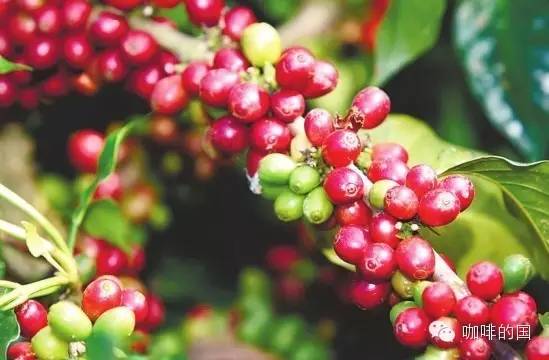
Regarding Yunnan's coffee industry, Xiong Xiangren, chairman of Hogood Coffee Co., Ltd., once said: "From the elegant little white flowers to the ripe coffee cherries, it must go through peeling, fermentation, drying, hulling, roasting, grinding, and brewing, and finally becomes a cup of mellow coffee. This is a long process of transformation. Isn't building a national brand also like this?"
Regarding the current development status of Yunnan coffee, the recommendations are as follows:
1. Secure raw materials: stabilize cultivation resources, strengthen base construction, and form a "enterprise + base + farmer" model.
2. Focus on production: gradually move from primary products to deeply processed products, increase product added value, pay attention to product research and development, and build independent brands.
3. Focus on the market: actively open up domestic and international markets, establish an international marketing network, and enhance product competitiveness.
4. Strengthen industry associations: fully leverage the guidance and coordination role of industry associations, and lead enterprises and farmers to make full and good use of relevant incentive policies for the further development of highland-characteristic agriculture.
Some text comes from the public account "Coffee Forum (cafelake)"
The above content is compiled by CoffeeHunters, a coffee news website.


