







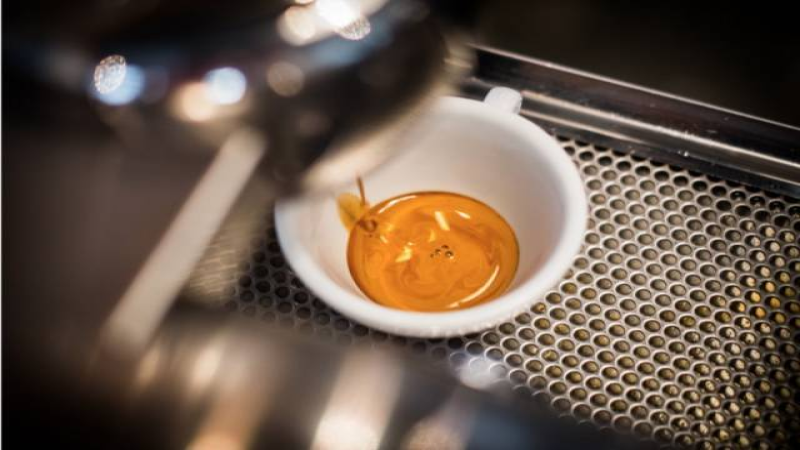
Espresso concentrates the essence and flavors of coffee into a highly intense cup. Its taste is strong, and for most people the bitterness is prominent, so outside of Italy it is not commonly drunk on its own. People are more used to diluting it with water or milk, which gave rise to classic drinks such as Americano and latte. This article focuses on espresso: first explaining where its bitterness comes from, then tracing the evolution of the espresso machine and the birth of crema, followed by an analysis of how crema forms and advice on resting beans, and finally offering suggestions on how to drink it and in what consumption scenarios, while retaining Front Street Coffee's espresso blend recommendation and extraction perspective.
For more specialty coffee knowledge, please follow the WeChat public account: Front Street Coffee (FrontStreet Coffee)
Espresso brings together various essence and flavor compounds in coffee. It is rich in taste and intense in mouthfeel, and for many people it is "too bitter," so aside from Italians, few people drink it on its own. People usually dilute it with water or milk, gradually giving rise to popular drinks we commonly see, such as Americano and latte. In this article, Front Street will talk about what espresso is.
Why is espresso so bitter?
Espresso, as the name suggests, comes from Italy in Europe. The development of espresso was aimed at increasing the speed of making coffee. Originally, espresso referred to a method of making coffee; "espres" means "fast," meaning a cup of black coffee can be made in a very short time.
In 1884, the Italian Angelo Moriondo designed the first espresso machine, featuring two independent brewing boilers, 1.5 bar of pressure and steam. The extracted coffee liquid was relatively viscous, with a richer mouthfeel than drip coffee. As coffee machines were continuously improved, factors such as water temperature and pressure were better controlled. In 1948, Achille Gaggia, a café owner in Milan, invented a lever-driven coffee machine that could produce what we now call crema through high pressure. From then on, crema was regarded as one of the indicators of espresso quality, and espresso came to specifically mean a highly concentrated coffee with abundant crema made through pressurized extraction.
Because Italians prefer espresso with a mellow, rounded mouthfeel, they are accustomed to roasting coffee beans very dark, sometimes even adding robusta coffee beans, to make the crema richer, the aroma more concentrated, and the taste more intense. Nowadays, however, consumers are pursuing more diverse flavor variations, and many coffee beans with fresh, bright flavors are also being used in espresso. For example, the espresso served at Front Street stores uses "Front Street Sunflower Warm Sun Espresso Blend Coffee Beans," presenting fermented wine aromas, berry-like sweet acidity, an obvious vanilla note on the entry, accompanied by soft fruit acidity, with a elegant yet full-bodied taste.
What is crema in espresso?
We can observe that freshly extracted espresso has a delicate, dense layer of golden-brown foam floating on top, often called coffee crema.
Freshly roasted coffee beans produce a large amount of gas (carbon dioxide, etc.). Commercial espresso machines generally can reach a pressure of 9 bar or more. Under the high pressure of the boiler, carbon dioxide gas is squeezed out to the surface of the cell walls under thermal expansion and cold contraction, while the hot water extraction of coffee also contains some oily substances, which can allow the coffee liquid to wrap and squeeze out the gas through emulsification, thereby producing dense bubble substances. The lighter group of bubbles floats on top.
The amount of crema is mainly related to the coffee beans' roast level and roast date. The darker the beans are roasted, the more bubbles the coffee beans have; the fresher the packaging date, the more carbon dioxide, and the richer the crema. A moderate amount of abundant crema not only adds considerable aroma to the coffee, but is also very helpful for creating latte art patterns when making hot milk coffee. However, too much carbon dioxide will hinder the release of coffee substances during extraction, so "resting the beans" is needed to allow part of the gas inside the beans to escape, which is more conducive to stable extraction during brewing. Front Street recommends a resting period of 7–10 days for espresso coffee beans, that is, it is better to start using them 7 days after roasting.
How do you drink espresso?
As consumers, we may rarely go to a café and order an espresso. After all, not everyone can accept that bitterness, but friends who enjoy "heavy flavors" will still order an espresso and sit down to savor it slowly.
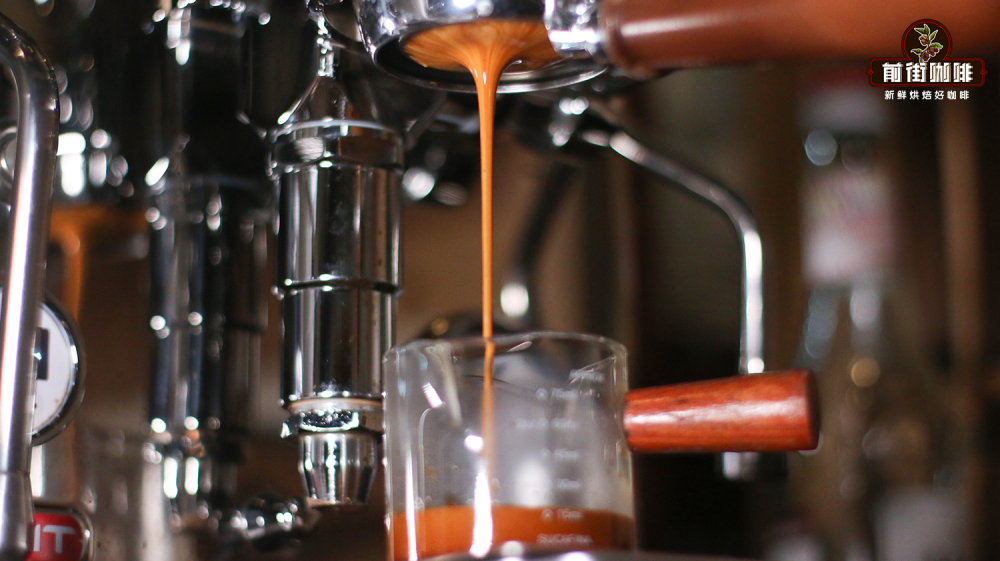
If you are also curious about this intense taste, next time you go to a café, you might as well order an espresso. Observe and feel the coffee liquid's color, aroma, texture, and aftertaste, and experience a bit of Italian tradition. But if we truly cannot accept the heaviness and stimulation of espresso liquid, then choose classic styles such as Americano, latte, cappuccino, and flat white, which can also let us feel the charm of coffee.
Front Street believes that although espresso is rarely served on its own, and some stores do not even offer it, as the soul of a coffee shop, all kinds of fancy coffee drinks use an ideally extracted espresso as their base. Whether the coffee in the cup can highlight the flavor characteristics of the coffee beans used, whether the extraction is stable, and whether the taste has defects all need to be considered by the barista, who must quickly adjust based on their own experience to ensure stable output for each type of coffee.
The above content is compiled by CoffeeHunters, a coffee news website.


