







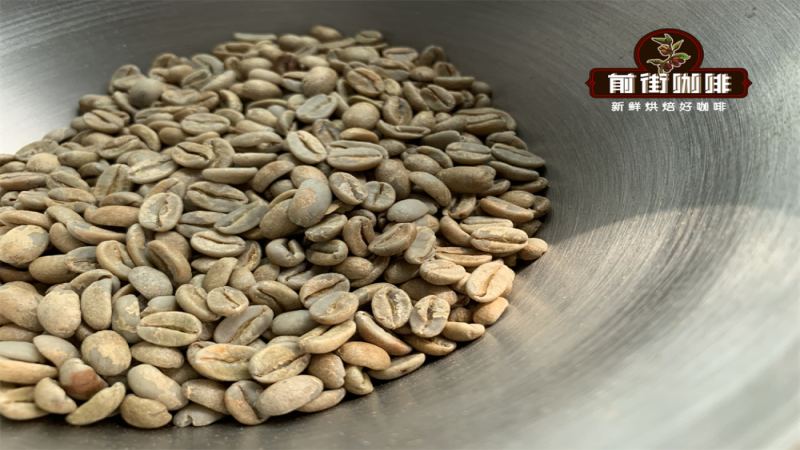
There are many varieties of coffee trees, but there are three main cultivated varieties used for drinking: Arabica (small bean), Robusta (medium bean), and Liberica (large bean). They differ in plant morphology, fruit size, flavor expression, growing conditions, and commercial value. This article will systematically sort out the differences among these three types of coffee beans from the perspectives of botanical classification, appearance characteristics, flavor traits, and origin distribution, and answer the question of the species and genus of Yunnan small-bean coffee, helping coffee lovers more clearly understand the source of the coffee they drink every day.
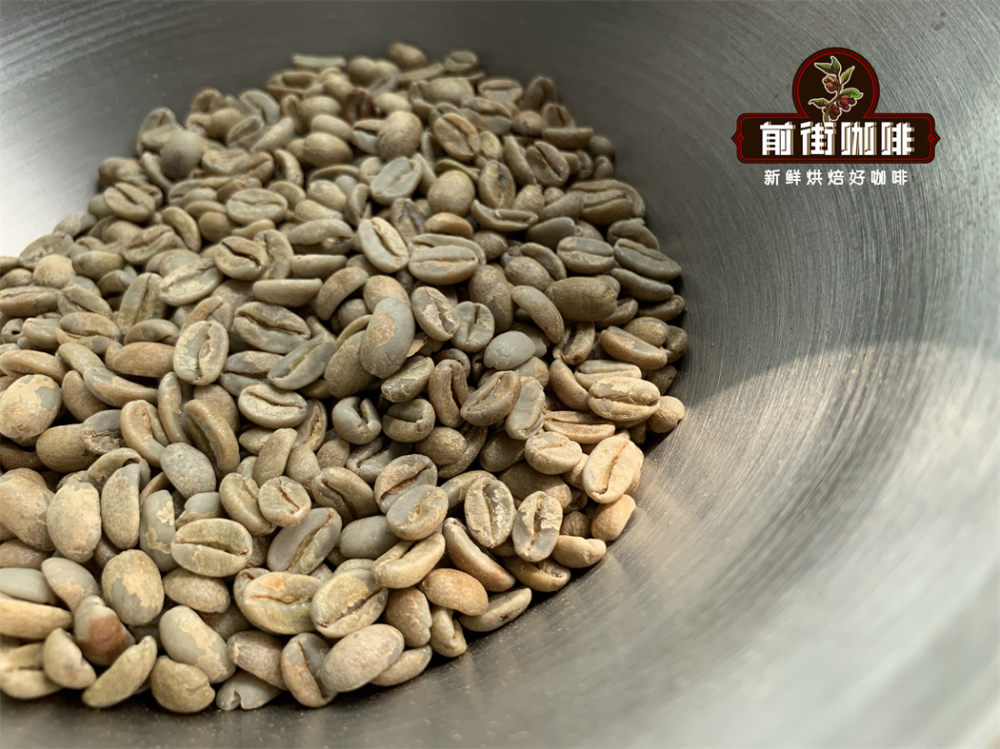
(Geisha green beans) For professional coffee knowledge exchange and more coffee bean sharing, please follow Front Street Coffee (FrontStreet Coffee)
The variety of coffee trees is so great that it can be described as all-encompassing, and their flavor expressions are also extremely diverse. However, there are not many varieties actually cultivated as drinking coffee. These coffee trees, native to Africa, each hide what secrets, and what differences do they have? Today, let Front Street Coffee (FrontStreet Coffee) take everyone to find out.
From the perspective of plant taxonomy, coffee belongs to the Rubiaceae family, under which there are at least more than one hundred species, and about eighty coffee tree varieties have been confirmed. Among them, there are three main varieties cultivated for drinking coffee: Arabica, Robusta, and Liberica.
Coffee beans are divided into three major categories: Arabica (small bean), Robusta (medium bean), and Liberica (large bean).
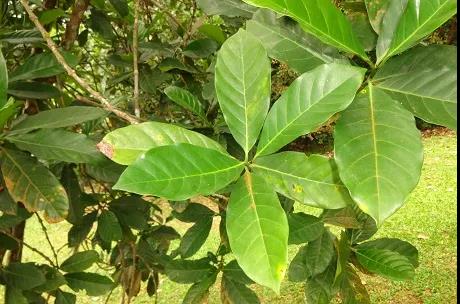
Large-bean coffee Also known as Liberica, it is an evergreen tree. The plant is tall, reaching more than 10 meters, with thick, hard branches that grow diagonally upward and have the fastest rate of lignification. The leaves are elliptical or round, with glossy leathery surfaces, relatively pointed tips, and smooth, waveless edges. The fruit is large and oblong, with hard and thick skin and pulp, and a large, protruding navel. This species has a deep taproot, is relatively drought-tolerant, has medium wind and cold resistance, and is light-tolerant, but is most susceptible to rust disease. Yield per plant is high, but yield per unit area is low. The flavor is intense and strongly stimulating.
Large bean: leaves elliptical or round
Liberica was first discovered in Liberia in West Africa. Its coffee tree is taller than Arabica and Robusta, and its disease resistance and environmental adaptability are also stronger. In appearance, Liberica's leaves are larger than those of ordinary coffee tree species; the fruit is also much larger than ordinary coffee beans, and the outer skin is thick, making it relatively difficult to remove the skin and pulp, and rather troublesome in post-processing.
At present, coffee trading is mostly dominated by Arabica and Robusta, while Liberica accounts for only 1% of the world's total economically cultivated coffee production. The quantity is extremely small, and it is almost only grown in small amounts in Malaysia. Because its commercial value is not high, it is rarely specifically discussed, and it is almost never seen circulating on the market.
Large bean: fruit large, oblong
Medium-bean coffee Refers to Canephora coffee, which accounts for less than 30% of total world production, but it has relatively few sub-varieties, the most representative of which is Robusta. Robusta is native to Congo in central Africa and belongs to the medium-bean coffee species.
Just as the Geisha we often hear about belongs to the Arabica species, among the Canephora species only Robusta has been commercially cultivated and promoted, so Robusta has almost become synonymous with the Canephora species. Varieties such as Tim and Catimor, derived from natural hybridization between Robusta and Arabica, are now also widely planted and are classified under the broad Arabica category.
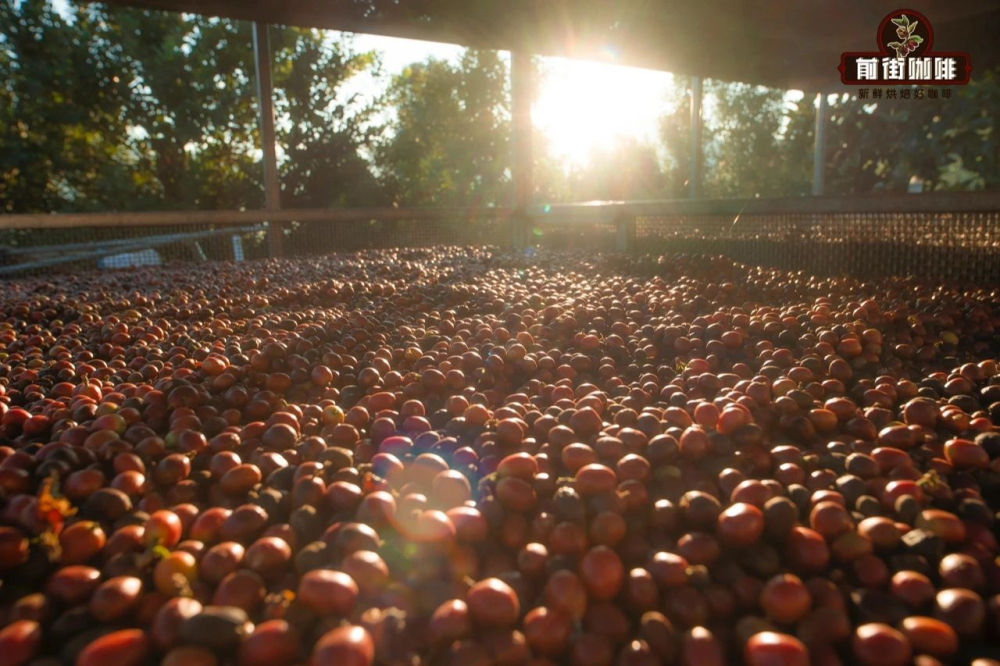
From a cultivation perspective, Robusta coffee trees can tolerate high temperatures, cold, drought, and moisture, with an extremely high survival rate and high caffeine content (1.7%~3.0%), about twice that of Arabica. Caffeine, as a plant's natural pesticide, protects Robusta from most insect damage. A single Robusta plant has a very high fruit yield, and the fruit is slightly rounder and smaller than Arabica, with a flat, round bean body and a straight central crease.
Precisely because Robusta has strong vitality, high yield, fast maturation, and strong environmental adaptability, it can generally be planted on low-altitude plains and can be directly managed and harvested uniformly by machine. Therefore, the production cost invested in Robusta cultivation is lower, making it more suitable for commercial mass production, and its selling price is naturally cheaper. For example, most of what is grown in Hainan in our country is Robusta.
Small-bean coffee Arabica coffee accounts for about 70% of total world production. Arabica is the most famous, originally from Ethiopia, belongs to small-bean coffee, and is also one of the synonyms for "high-end coffee" on the market.
Initially, after Ethiopians discovered coffee, they would pick coffee leaves and chew them to refresh themselves, and the fruit was also used as food and medicine. Later, through research by Arab scholars, people developed the habit of roasting it for drinking. In the sixteenth century, Arabs spread it around the world through trade, and only then did it gradually develop into today's popular beverage. Many of the specialty coffee beans we know well belong to the Arabica variety, such as Front Street Jamaica Blue Mountain coffee beans, Front Street Panama Geisha coffee beans, Front Street Yirgacheffe coffee beans, and so on, all classified within the scope of this variety.
Ethiopia is Africa's largest coffee-producing country. Here, coffee is not only an important source of income for the Ethiopian people, but has also been integrated into the entire country's culture and life. In addition to being used for export sales, a large portion of the coffee produced in Ethiopia is consumed by its own people. Here, whether rich or poor, every household has a set of coffee-making utensils, and drinking coffee is a very ceremonial and important social activity for Ethiopians.
In Ethiopia alone, the Arabica variety already has more than 2,500 sub-varieties. Arabica has a mild and elegant flavor, and its caffeine content is also relatively low, accounting for about 0.9%~1.5% of coffee bean weight. It has higher commercial value and is the main species in today's coffee industry, accounting for 60%~70% of global coffee production and sales.
However, to express diverse flavors, Arabica needs to be planted in frost-free highlands at 800–2200 meters. The higher the altitude, the more significant the temperature difference, thereby delaying the ripening of coffee fruit, which is more conducive to the accumulation of flavor substances in coffee and fuller aroma development. The microclimates of various coffee-producing regions provide Arabica with diverse growing conditions and form unique flavor profiles. At the same time, the higher the altitude, the more susceptible coffee is to pests and climate effects. Generally, when planted at higher altitudes, the fruit produced is fewer and the ripening period is slower. High-quality Arabica coffee requires more manual management and picking, and production costs are also higher.
Is Yunnan small-bean coffee a small-bean coffee species?
Most of the coffee grown in Yunnan is Arabica and its variants, introduced varieties, or cultivated varieties. In terms of lineage, Arabica accounts for the majority, so they are collectively called "Arabica" coffee beans.
Arabica coffee (Arabica), that is, small-fruit coffee, also known as "small-bean coffee," originated from wild coffee produced in Africa, and later spread to Europe through Arabia and became widely known, hence the name. Arabica coffee beans account for more than 70% of the world's coffee production.
As the "face" representative of our country's coffee industry, Yunnan coffee also belongs to the Arabica species. In order to distinguish it from Hainan's medium-bean coffee, farmers call it "small-bean coffee," and adding the place name makes it exactly "Yunnan small-bean coffee."
For more specialty coffee knowledge sharing, please follow the WeChat public account: Front Street Coffee (FrontStreet Coffee)
The above content is compiled by CoffeeHunters, a coffee news website.


