







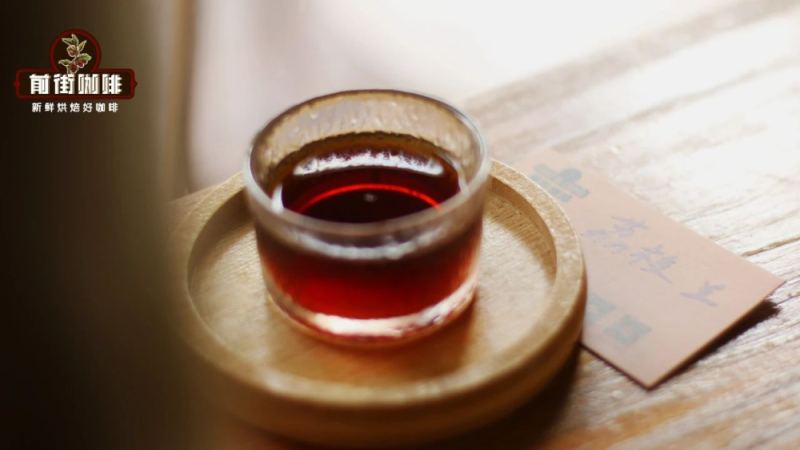
Mandheling coffee is famous for its rich, full-bodied character with caramel and dark chocolate notes, making it a classic representation of Indonesian coffee. It has low acidity and a pronounced bitterness, making it a favorite among coffee lovers who prefer a heavy mouthfeel. Have you ever wondered about the origin of the name Mandheling? Behind it lies an amusing story from the Japanese occupation period. Its signature goat-hoof-shaped beans come from Sumatra's unique wet-hulling process. This article, from the perspective of Front Street Coffee, walks you through the naming origins of Mandheling, the characteristics of the Lintong growing region, and Front Street's recommended pour-over parameters and three-pour method to help you brew a rich, full-bodied Mandheling with caramel sweetness and nutty flavors.
For more specialty coffee knowledge, follow our WeChat public account: Front Street Coffee (FrontStreet Coffee).
Indonesian Mandheling coffee has won the hearts of many coffee lovers with its rich, thick mouthfeel and caramel, dark chocolate-like flavor characteristics, which is precisely the key to why it is considered delicious. These coffee beans are typically medium-dark roasted, with extremely low acidity and pronounced bitterness, making them perfect for those who pursue a full-bodied texture—the Japanese are especially fond of it. Speaking of Japan, there is a story behind its connection with Indonesian Mandheling. Let Front Street tell you all about it.
Indonesia's first encounter with coffee cultivation was in 1696, when the Governor of Malabar presented Arabica seeds as a gift to the Dutch Governor in Batavia (present-day Jakarta, Java). Unfortunately, the first batch of seedlings was destroyed by floods. In 1699, the Governor of Malabar in India sent a second batch of seedlings, and in 1701, the first coffee harvest was finally achieved, opening a new chapter in Indonesian coffee.
Where does the name Mandheling come from?
Mandheling was originally the name of an ethnic group in the Lintong region of Aceh Province, an area primarily known for rubber production rather than coffee cultivation. So how did the name Mandheling come to be associated with coffee today? Let us reveal it for you below.
Legend has it that during the colonial period, a Japanese soldier once tasted an exceptionally delicious coffee and asked the department then responsible for rubber production in North Sumatra (the PWN company at the time) to help find this coffee. The head of PWN then visited multiple growing regions and collected a large number of quality coffee beans to send to Japan for tasting, one of which the Japanese fell in love with. When they asked what coffee this was, the head of PWN originally intended to explain that the rubber department was located near Mandailing, but out of consideration for not revealing the commercial source, he said the name MANDHELING. Thus the name Mandheling came to be.
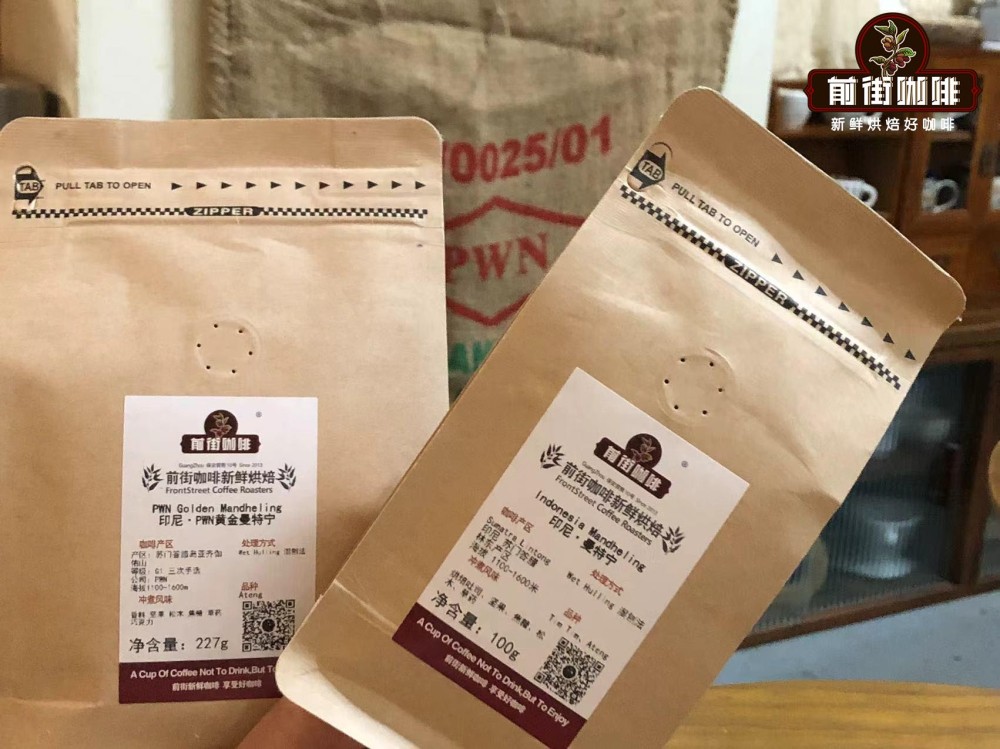
Indonesia has a long history of coffee cultivation and is a traditional growing region, where the coffee has developed a distinctive regional flavor. Mandheling coffee beans are a classic representation of Indonesian coffee. In Front Street's Staple Bean Series, Front Street selected Mandheling from the Lintong origin as the flavor representative of Indonesian coffee.
[The Front Street Staple Bean Series is a group of high-value regional beans. While they may not match beans from famous estates in certain aspects, this series allows you to taste the main flavors of major growing regions at a high value, enabling coffee beginners to determine their preferred regions at a very low price. For the same growing region, washed beans represent the primary flavor of a bean, while natural process adds aroma on top of the washed base. Therefore, Blue Mountain is recommended as washed, and aromatic beans are recommended as natural, such as Geisha. Front Street Staple Beans express the basic flavors of a growing region, so except for Brazil semi-natural, all are washed. Washed processing represents the most basic flavor of an origin, which is also why the Staple Bean Series are all washed.]
Characteristics of Lintong Mandheling Lintong Mandheling comes from the Lintong highlands in north-central Sumatra, near Lake Toba. Front Street Coffee (FrontStreet Coffee)'s entry-level staple bean from the Indonesian Mandheling growing region originates from here. Lintong Mandheling also uses the local unique wet-hulling process, giving it its low acidity and high body characteristics.
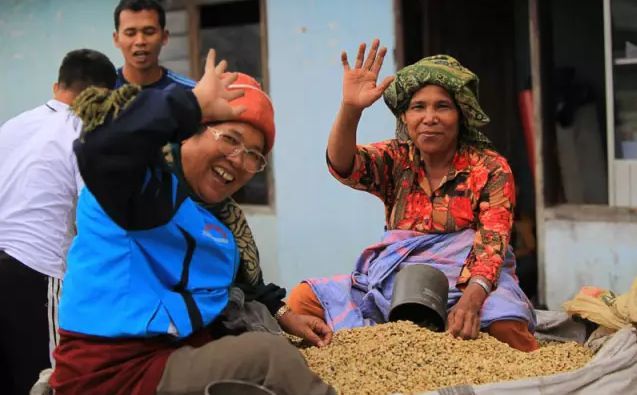
Indonesia has year-round high temperatures and high humidity, lacking prolonged sunshine, with humidity maintained between 70% and 90% year-round, so relying solely on pure sun-drying is clearly unrealistic. For the unpredictable weather of Sumatra, even with washed processing, it is difficult to find a continuous week of clear weather to complete drying, so the wet-hulling process came into being. After completing the initial washing stage, the coffee beans with parchment are sun-dried for one to two days, reducing the moisture content to 30% to 50%, then the parchment is removed before further sun-drying, which speeds up drying and greatly shortens the time required.
Mandheling coffee is very easy to recognize, whether by flavor or bean appearance. Because wet-hulling removes the parchment when the beans are still in a semi-soft, semi-hard state, the beans tend to crack under strong sunlight, forming a "goat hoof" shape, hence they are also called goat hoof beans—these are not defective beans.
Recommended Pour-Over Method for Mandheling
Mandheling coffee beans are typically dark roasted, presenting a rich and full-bodied mouthfeel. Therefore, Front Street recommends using a Kono Meimon dripper, or a flat-bottom dripper that primarily uses immersion extraction, as these better enhance Mandheling's caramel aroma and full-bodied mouthfeel. If you don't have these two, you can use other drippers as alternatives. Here Front Street recommends the V60, whose spiral rib design is suitable for extracting all kinds of beans, and it is affordable and versatile.
For the coffee dose, we follow Front Street's usual single-serving standard of 15 grams. The Mandheling coffee beans selected are recommended to rest for 3 to 5 days (with the roast date as day one), so the brewed coffee tastes better with a fuller aroma.
For grind size, brewing Mandheling requires a slightly coarser grind than light-roasted coffee beans. Because Golden Mandheling is dark roasted, its structure is looser and it absorbs water and releases coffee compounds more easily. If ground to the fineness of light-roasted beans, it easily produces a burnt bitter taste; if ground coarser, the coffee becomes thin and tasteless, with a mouthfeel as thin as water. The ideal coarseness is a 70% pass-through rate on a No. 20 sieve.
For water temperature, Front Street recommends brewing at 87 to 88°C. Many cases of burnt bitterness stem from water temperature being too high. Of course, water temperature that is too low will also make the coffee flat and bland.
For the coffee-to-water ratio, Front Street recommends 1:15. Although some brewing methods recommend 1:13 or a smaller ratio for a richer taste, such reduced ratios are partly intended to avoid the bitter, muddy flavors of the tail end, which correspondingly affects the aftertaste. Front Street believes that as long as you manage the relationship between water temperature and grind size, using a 1:15 ratio better showcases the overall flavor layers of Mandheling.
Use the commonly used three-pour method when brewing. Pouring in three stages better presents Mandheling's full-bodied mouthfeel and caramel sweetness. The specific water distribution is: first pour—30 ml for blooming, which should fully saturate the coffee grounds and allow degassing, preparing for better extraction of coffee flavor compounds; second pour—100 ml, mainly to flush out all of Mandheling's golden foam.
The final pour is a gentle center pour of 95 ml, which enhances the coffee's sweetness, overall expressing a thick, full-bodied mouthfeel along with caramel sweetness and chocolate, nutty flavors.
The above content is compiled by CoffeeHunters, a coffee news website.


