







Can coffee beans still be drunk after being stored for a long time? This is a real problem that many coffee lovers encounter. Starting from the impact of freshness on flavor, this article explains the criteria for judging the peak flavor period of coffee beans, and provides specific brewing adjustments for stale coffee beans, including practical suggestions such as grind size and the pouring method during blooming. At the same time, Front Street has also compiled three environmentally friendly ways to reuse expired coffee beans, covering deodorizing, cleaning, and plant fertilizer, so that every coffee bean can be put to full use.
For more specialty coffee knowledge, please follow: Front Street Coffee (Frontsteet Coffee)
Although it is said that "people who truly love coffee would never let their beans sit around until they are stale and unfinished," in reality exceptions are unavoidable—you may suddenly feel tempted during a promotion and buy too many, or be delayed from enjoying them because of illness and other reasons, and by the time you realize it, the coffee beans are already past their best state. So here comes the question: can these not-so-fresh beans still be brewed and drunk?
The reason we now emphasize freshness in coffee is that fresh beans have a fuller and richer flavor profile. As day after day passes, the carbon dioxide inside the coffee beans gradually escapes, and the aroma and flavor are lost along with it. When the gas in the beans is almost completely released, it declares that they are no longer fresh. Brewing with this kind of "stale" coffee bean makes the taste become very flat, completely different from the good flavor before.
Generally speaking, a roast date more than 60 days ago is considered the upper limit of the peak flavor period for coffee beans, and some more demanding enthusiasts even think that 30 days after roasting already counts as "not fresh." According to Front Street's actual tests, as long as you usually pay attention to sealing, avoiding light, and preventing moisture, most coffee beans still perform quite well in flavor within 40 to 50 days, without obvious off-flavors. But if the bag is opened and not sealed properly in time, after about 30 days the coffee will begin to change flavor, and it will no longer expand during blooming. This is precisely a sign that the beans are not fresh.
Front Street wants to make one point especially clear: stale coffee beans do indeed compromise flavor, but from a food safety perspective, they are still safe to drink. Generally speaking, roasted coffee beans have a shelf life of one year, so everyone can rest assured about their edibility. As for the problem of poorer flavor, although we cannot make the beans return to their original state, we can improve the taste by adjusting the extraction plan, making the coffee easier to drink.
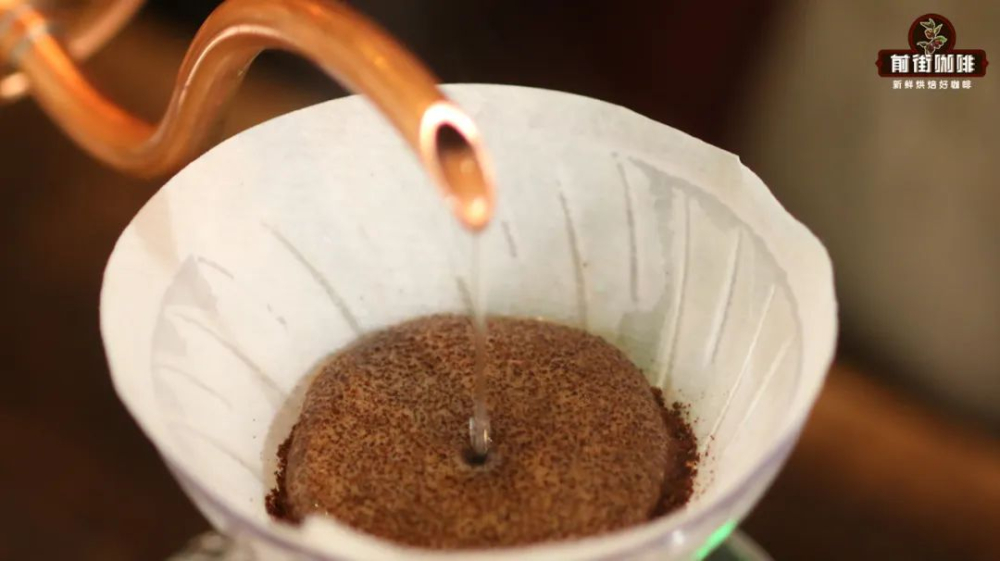
As mentioned earlier, stale coffee beans do not expand during blooming, and after pouring water there is almost no reaction in the coffee bed. Many friends think the purpose of blooming is just degassing, so when brewing stale beans they simply skip this step. But in fact, when brewing stale coffee beans, even more attention should be paid to the pouring method during the blooming stage.
Because although blooming appears to be about degassing, what it really needs to do is allow water to saturate all the coffee grounds—whether on the surface or inside. When gas is released, the coffee grounds expand, the gaps between particles are compressed, and the speed at which water flows down into the server slows, so that the water has enough time to penetrate into the inner core of the coffee grounds.
But stale coffee beans show no reaction after water is poured, and the water quickly passes through the gaps in the coffee bed and flows down into the server, with no time at all to seep inside. The result is that the surface of the coffee grounds looks wet, but the inside is still dry, and the coffee finally brewed naturally has a weak flavor.
In the subsequent pouring stages, due to the lack of gas release, the foam will appear very thin, and most of the coffee grounds tend to settle at the bottom, clogging the drainage holes, which in turn easily causes bitter and muddy flavors from over-steeping.
So to sum up, when facing stale coffee beans, you can adjust as follows. First is the grind size. Front Street suggests grinding coarser than usual, for example, if Front Street normally uses a 10 setting on the EK, now adjust it to 10.5, which can avoid the bitter and muddy flavors caused by clogging.
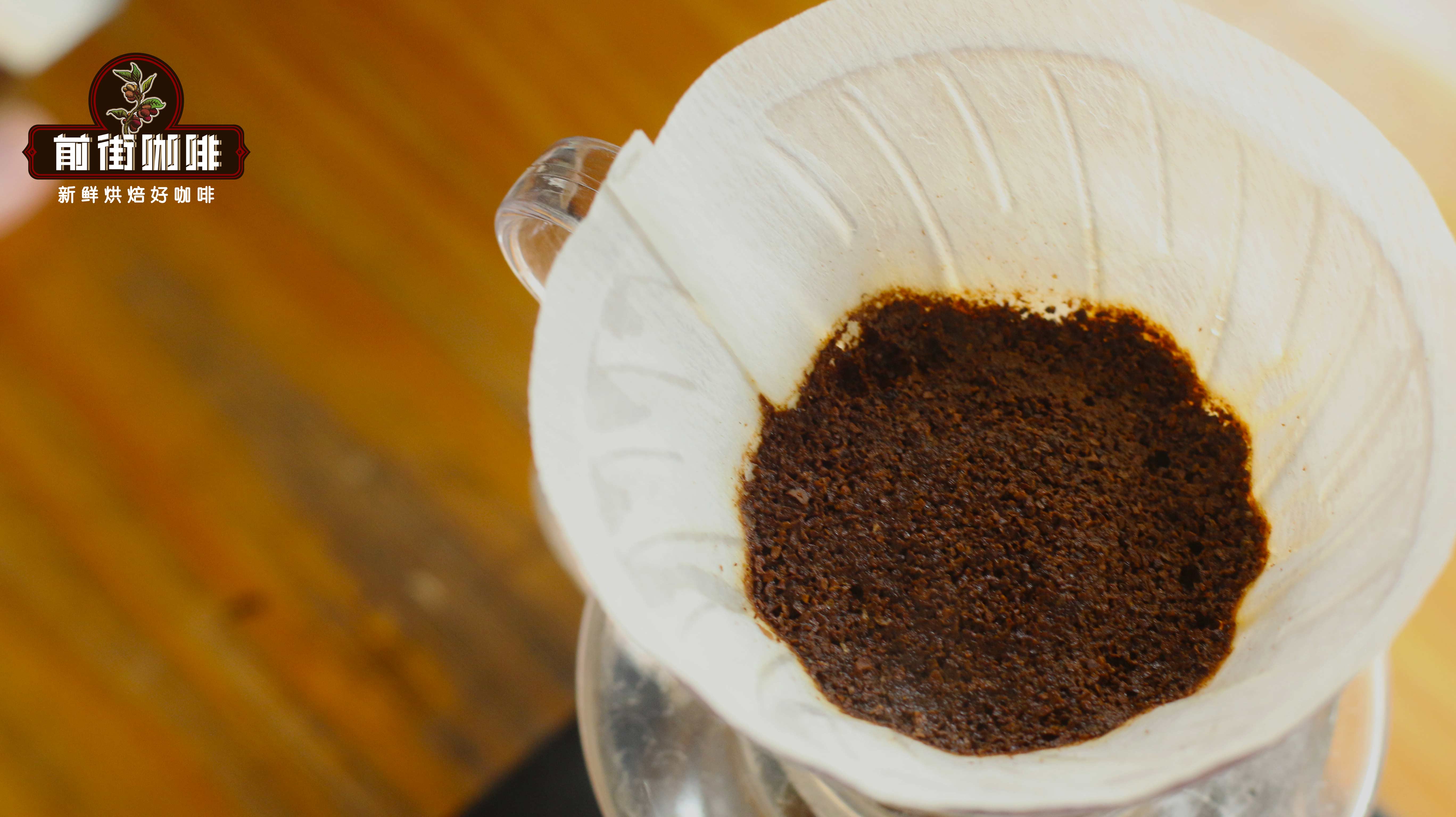
During the blooming stage, try to extend the pouring time as much as possible, for example by using a smaller stream of water so that the water has enough time to saturate the coffee grounds. However, the soaking time should not be too long either. Taking Front Street's experiment as an example, pour 30 ml of water onto 15 g of grounds, taking 13 seconds to finish pouring, then wait 5 to 7 seconds before continuing to pour, making the entire blooming process about 20 seconds.
Next, just pour water as usual, but there is one thing to keep in mind: when pouring in circles, do not go too far outward, otherwise it is easy to push the already scant coffee bed wall back to the bottom, which instead "adds blockage." In addition, do not raise the water level too high, because stale coffee grounds mostly have little "vitality" and will quickly sink. When the water level is raised, there are not enough coffee grounds to serve as a bed wall, and part of the water will flow away directly along the ribs, which is also one of the reasons the coffee tastes weak.
This method only makes corresponding adjustments according to the changes in the brewing state. Compared with usual techniques, it does indeed improve things, but the part of the flavor that dissipates because the coffee beans have lost freshness cannot be restored by technique.
Then if the coffee beans in your hands are not just past their peak flavor period, but have already passed their shelf life, you cannot handle them the way Front Street described above. The best approach is to use them for other purposes. Here Front Street has summarized three practical and environmentally friendly recycling methods for everyone to choose from.
The first: deodorizing
Putting coffee grounds in an ashtray can remove the smell of smoke, and when stubbing out cigarette butts you can also smell the aroma of coffee. Many coffee shops do this, and it also makes it easier to extinguish cigarette butts. Ovens are often used to bake delicious food, and after repeated use the interior becomes covered with grease and mixed odors. Place a plate of coffee grounds in the oven and heat it, and it can effectively remove the lingering smells of food left inside. For people who keep pets, the biggest headache is often the odor after cleaning up pet waste. In fact, as long as you put some coffee grounds there after cleaning, you can reduce the trouble caused by the odor.
The second: cleaning
Wrap ground coffee powder in gauze and wipe the stove and pot lids to effectively remove dirt; rinsing the sink and toilet pipes with boiled expired coffee also has a cleaning effect. Similar items can all be cleaned using expired coffee beans.
The third: plant fertilizer
Coffee beans contain nutrients needed for plant growth. As long as you crush expired coffee beans and pour them into flower pots, they can serve as fertilizer without producing odors. If you spread them in a ring around the plant roots, they can also help keep insects away.
The above content is compiled by CoffeeHunters, a coffee news website.


