







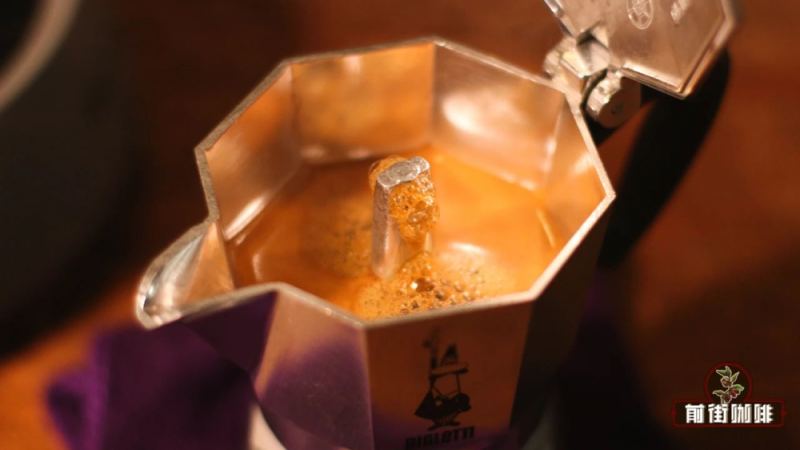
To easily make a cup of espresso with rich crema at home, the moka pot is a classic piece of equipment you can't avoid. It has a low barrier to entry, yet it can extract a satisfying espresso-like taste. From the perspective of Front Street, this article systematically explains the working principle of the moka pot, the difference between single-valve and double-valve models, the types of coffee beans that pair well with it, how to judge grind size, water temperature and tamping techniques, and daily cleaning and maintenance tips. The article also recommends three coffee beans for different taste preferences: Front Street Classic Espresso Blend, Brazil Queen Estate, and Strawberry Candy, helping you consistently produce a fragrant moka pot coffee at home.
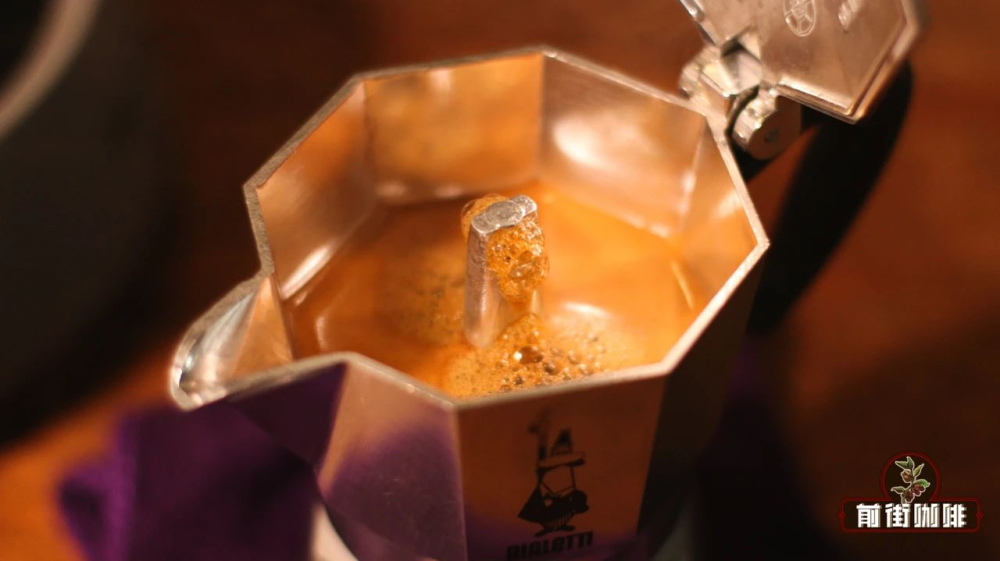
Nowadays, coffee lovers' pursuit of coffee has long gone beyond pour-over, and more and more people are trying to make espresso at home. When walking into a café, many people directly order espresso-based drinks like lattes or cappuccinos, while more knowledgeable friends often choose a single-origin specialty coffee. Today Front Street wants to talk about a type of espresso equipment with a relatively low barrier to entry—although the coffee it makes is not as heavy as espresso, nor as clear and bright as pour-over, it is the espresso brewing method closest to the general public.
First, let's get to know what a moka pot is.
The moka pot is a steam-brewing coffee maker and is almost a standard item in Italian households. In 1933, Alfonso Bialetti invented this device. He had worked in aluminum processing in France for many years, and later returned to Italy to open his own aluminum workshop.
Since the moka pot can make delicious coffee, let's first understand its working principle.
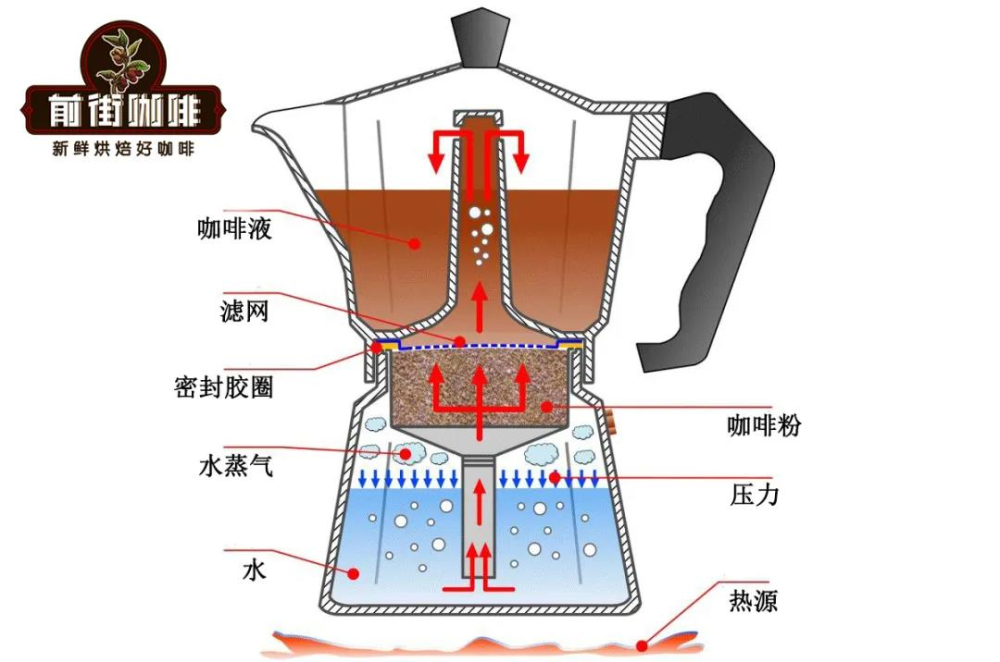
A moka pot consists of two bodies, upper and lower. After the water in the lower chamber is heated to boiling, steam pressure pushes the hot water upward, through the filter basket filled with coffee grounds, and finally into the upper chamber. When the coffee liquid begins to flow into the upper chamber, reduce the heat in time, because too high a temperature will give the coffee a burnt, bitter taste and ruin the original flavor. The Japanese siphon method uses a similar principle.
Moka pots also come in single-valve and double-valve types. A double-valve moka pot can extract more crema than a single-valve one. Single-valve means the coffee liquid flows directly out from two small holes at the top of the hollow tube; double-valve adds a pressure-collecting valve on the hollow tube. This valve normally blocks the outflow hole and must be pushed open by a certain steam pressure before the coffee liquid can spray out. The flavor of the coffee also differs between the two: single-valve is lower in concentration with less crema; double-valve is higher in concentration and richer in crema.
Should a moka pot be brewed with coffee beans or coffee grounds?
Are all coffee beans suitable for a moka pot? The answer is no. Coffee brewed in a moka pot has obvious crema, and crema is actually made up of a large number of tiny carbon dioxide bubbles. Medium-dark roasted coffee beans retain enough carbon dioxide gas inside, so they more easily form a rich crema. Light-roasted beans can hardly achieve this effect. Therefore, Front Street suggests that when brewing with a moka pot, give priority to medium-dark roasted coffee beans, and the taste will also be mellow.
If you like rich-tasting moka pot coffee, Front Street Classic Espresso Blend coffee beans are recommended. This bean is a blend of Brazil, Indonesia, and Vietnam, using a medium-dark roast, maximizing the coffee's mellow aroma and easily extracting a rich, dense crema;
If you prefer a balanced taste, Front Street Brazil Queen Estate coffee beans are recommended. Its acidity is not obvious, and it has aromas of roasted nuts, cream, and creamy chocolate, with a noticeably sweet aftertaste;
And if you like floral and fruity flavors, Front Street Strawberry Candy Espresso coffee beans are recommended. This one is prepared for friends who cannot accept bitterness well. After extraction with a moka pot, it presents flavors of roses, strawberry gummies, grapes, dried apricots, and nuts, with moderate sweetness and sourness and almost no bitterness.
The grind size for a moka pot: medium to fine.
What grind size is suitable for a moka pot? Front Street suggests controlling the coffee particle size between 0.3 mm and 0.55 mm, which is slightly coarser than the grounds used in an espresso machine and finer than pour-over coffee grounds.
During brewing, if you see the coffee liquid in the upper chamber gushing out like a fountain, it means the coffee grounds are ground too coarse, the water flow resistance is too small, and the crema will be relatively thin; if you hear a low "woooo" sound and the coffee liquid is slow to rise, immediately remove the moka pot from the heat source and take safety precautions. This means the grind is too fine, the hot water resistance is too great, and it is difficult for the water to rise smoothly.
What water temperature is suitable for a moka pot?
Some people add cold water directly when using a moka pot, while others use warm water. So should you use cold water, warm water, or what temperature of water is suitable?
Front Street believes that using hot water that is about to boil is more suitable. Because if you heat room-temperature or cold water, as the temperature gradually rises, water vapor keeps increasing, and water that has not yet reached the proper temperature has already come into contact with the coffee grounds and begun extraction, which affects the coffee's flavor.
Now that you understand the operating principle of the moka pot, let's look at the steps Front Street Coffee (FrontStreet Coffee) uses to brew coffee with a moka pot:
1. Pour an appropriate amount of hot water that is about to boil into the lower chamber
2. Pour the ground coffee into the filter basket
3. Attach the filter basket to the lower chamber, then screw the upper chamber on tightly
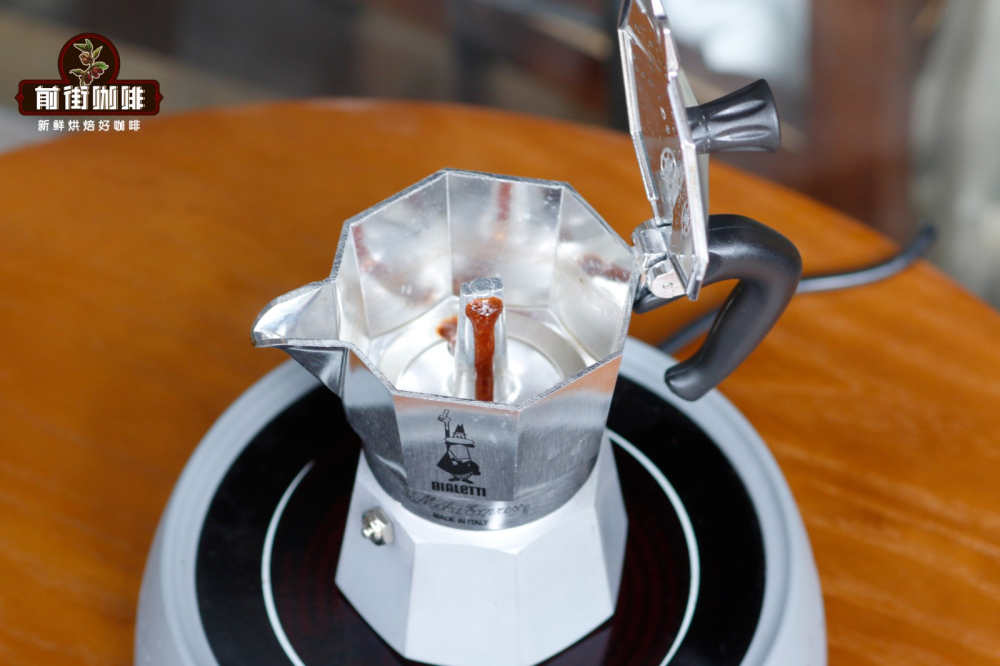
4. Keep the upper chamber lid open and begin heating
5. When coffee liquid emerges in the upper chamber, remove the moka pot from the heat source
Why does coffee brewed this way have crema? Front Street tells you: when the lower chamber is heated, hot water in a boiling state produces a large amount of steam in a limited space, forming a certain steam pressure that squeezes the hot water upward through the central metal tube, thereby extracting the crema components from the coffee.
Of course, moka pot brewing sounds simple, at least it does not require preparing as many utensils and precautions as pour-over, but Front Street still reminds you that to brew good coffee with a moka pot, you still need to master some techniques. The following are the details and precautions summarized by Front Street:
1. The amount of coffee grounds can be adjusted according to personal preference. Each moka pot has a different capacity and filter basket size, so you need to try a few times to find the amount that suits you. If you like it stronger, when filling the grounds, you can use the pressure-reducing plate to press lightly, then fill the flattened space and press lightly again.
2. The size of the filter cloth must not exceed the surface of the coffee grounds, otherwise it will create excessive pressure and cause steam to escape.
3. The main function of the pressure-reducing plate is, when using a larger moka pot to brew a small amount of coffee, to be placed on top of the filter cloth to make it easier to control the number of cups and the amount of grounds. Here it acts as a tamper. The steam pressure produced by a moka pot is relatively low, so generally speaking it does not require a dedicated tamper like an espresso machine does.
4. You can adjust the taste by the amount of time the coffee stays in the pot. For example, when using lighter-roasted beans (the color is close to light brown, with no shiny oil on the surface), after extraction is complete, you can let the coffee stay in the pot for an extra one to one and a half minutes; conversely, if you use dark-roasted beans (dark coffee color, sometimes with shiny oil on the surface, and most common Italian blend coffee beans on the market belong to this category), no extra resting is needed—just pour it directly into a warmed cup.
5. When making hot cappuccinos and lattes, you can heat the milk to about 70°C; cold milk foam can be made directly with a milk frother. Cold milk foam takes about a dozen pumps, while hot milk foam is harder to make and may require fifty pumps to succeed. It is best to choose whole milk, because only milk fat can form dense foam.
Also, do not add more water just to drink a little more coffee. Front Street reminds you: the lower chamber is designed with a pressure relief valve, which is the protruding hole in the picture. The function of the pressure relief valve is to prevent accidents caused by excessive pressure inside the lower chamber due to certain factors, and these factors include coffee grounds being ground too fine. So when adding water, never let the water exceed the valve. Once water covers the pressure relief valve, the pressure relief function will fail, bringing serious safety hazards.
As long as you practice more according to the above steps and techniques, Front Street believes everyone can brew delicious espresso.
Finally, here is how to clean a moka pot:
1. After the coffee has cooled, unscrew the upper chamber, remove the funnel, and discard the coffee grounds; gently wash the filter funnel of the upper and lower bodies, and they must be wiped dry. Do not use abrasive materials or soda water to clean it, otherwise it will damage the shiny surface. Over time the bottom will inevitably discolor—that is caused by hard water, and a mixture of vinegar and water can remove it.
2. For an aluminum alloy coffee pot, all parts should be disassembled and placed separately, allowing them to stay dry in the air; the coffee pot must not be placed in a dishwasher for cleaning.
For more specialty coffee knowledge, please follow: Front Street Coffee (Frontsteet Coffee)
The above content is compiled by CoffeeHunters, a coffee news website.


