







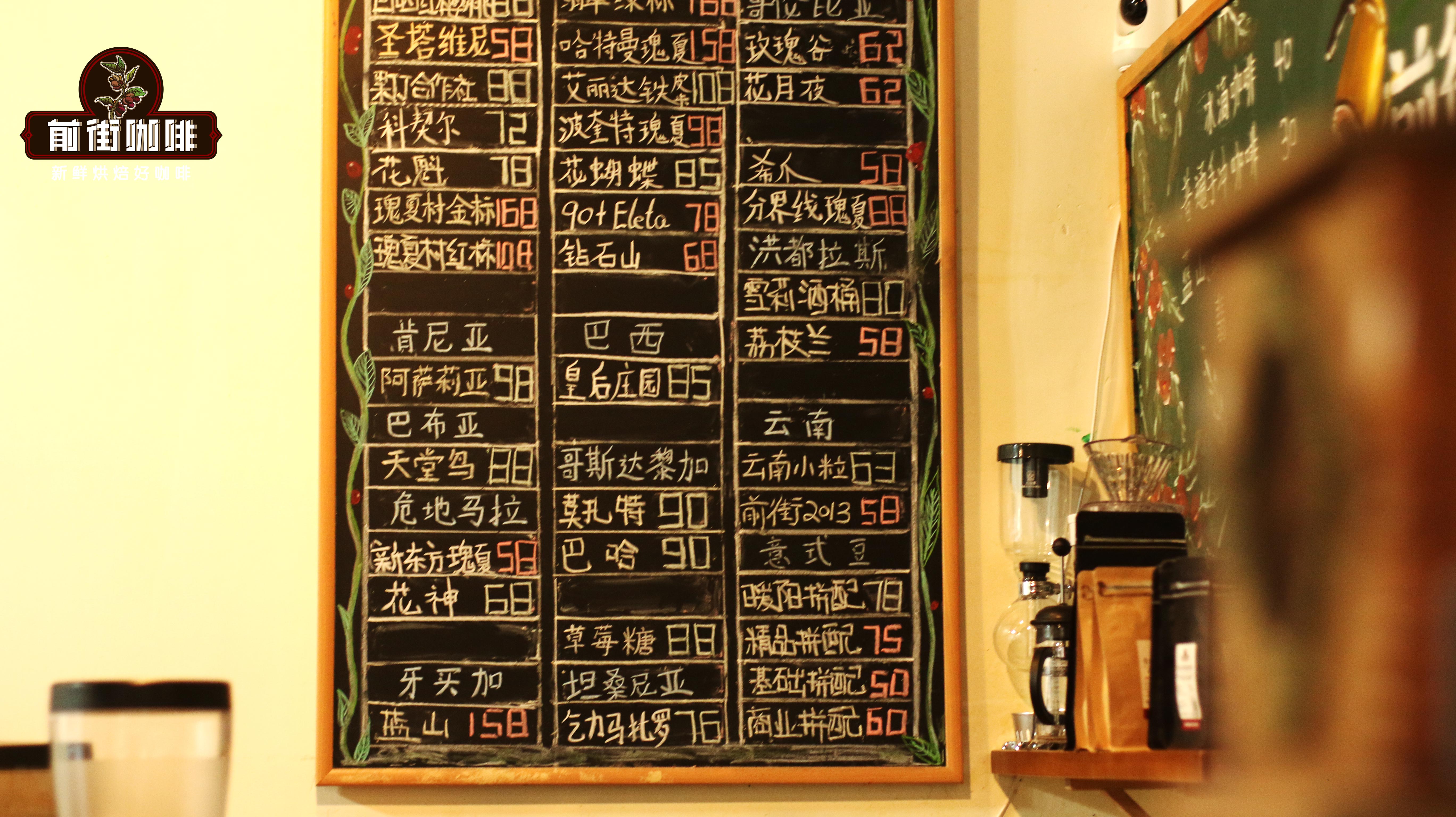
Africa is the continent where coffee originated, and it is also the most recognizable flavor landmark in the world of specialty coffee. From the floral and citrus notes of Ethiopia and the berry and smoked plum notes of Kenya, to the washed Bourbon of Burundi and Rwanda and the cocoa sweetness of Tanzania's Kilimanjaro, this land has won over countless coffee lovers with its bright fruit acidity and lively aromas. Front Street Coffee will guide you through the regional characteristics, cultivation models, processing methods, and representative beans of Africa's major coffee-producing countries, helping you gain a deeper understanding of the unique charm of African beans and key tasting points.
For more specialty coffee knowledge, please follow our WeChat public account: FrontStreet Coffee
When it comes to the African continent, anyone familiar with coffee history will immediately think of Ethiopia—widely recognized as the birthplace of coffee. Since coffee spread to the world from here, the flavors presented by African beans naturally retain a rather primitive genetic character.
When it comes to flavor expression, the first thing Front Street thinks of is the signature floral and fruity qualities of African coffee. Front Street Ethiopian coffee usually has fairly pronounced citrus aromas, while Front Street Kenyan coffee shows rich berry notes, along with the acidity of smoked plum juice and grapefruit as well as a sugarcane-like clean sweetness. The citrus aroma of Front Street Ethiopian coffee and the berry aroma of Front Street Kenyan coffee form the two most distinctive calling cards of African beans, and they are also two classics that coffee lovers keep returning to.
In Front Street's view, the common traits of African coffee are rich aromas and captivating fruit acidity—an acidity that is bright and lively enough to refresh the spirit. However, African beans often have a relatively thin body, and their sweetness is not especially prominent either. This is related to Africa's long-term natural conditions of drought and water scarcity. Most green beans are processed by the natural method, so the bean shape is often uneven, the appearance is not neat enough, and the defect rate is relatively high.
Next, Front Street will introduce the major coffee-producing countries and regions across the African continent one by one.
1. Ethiopia
Coffee has long been deeply embedded in Ethiopia's social structure and cultural economy, nourishing this land continuously for hundreds of years. In Ethiopia, coffee is both a cultural core and an important source of income for most households. As the widely recognized birthplace of coffee, Ethiopia enjoys an extremely high reputation in the specialty coffee market. Ethiopian coffee can be found on the menus of cafes all over the world, and Front Street Coffee is naturally no exception. So why has Ethiopian coffee earned so much praise? Front Street Coffee believes that although the regions of Ethiopia differ greatly from one another, no matter which region it comes from, as long as it is Ethiopian Arabica coffee, it leaves countless people unable to forget it after just one sip. Front Street Coffee will now take everyone into this birthplace of coffee.
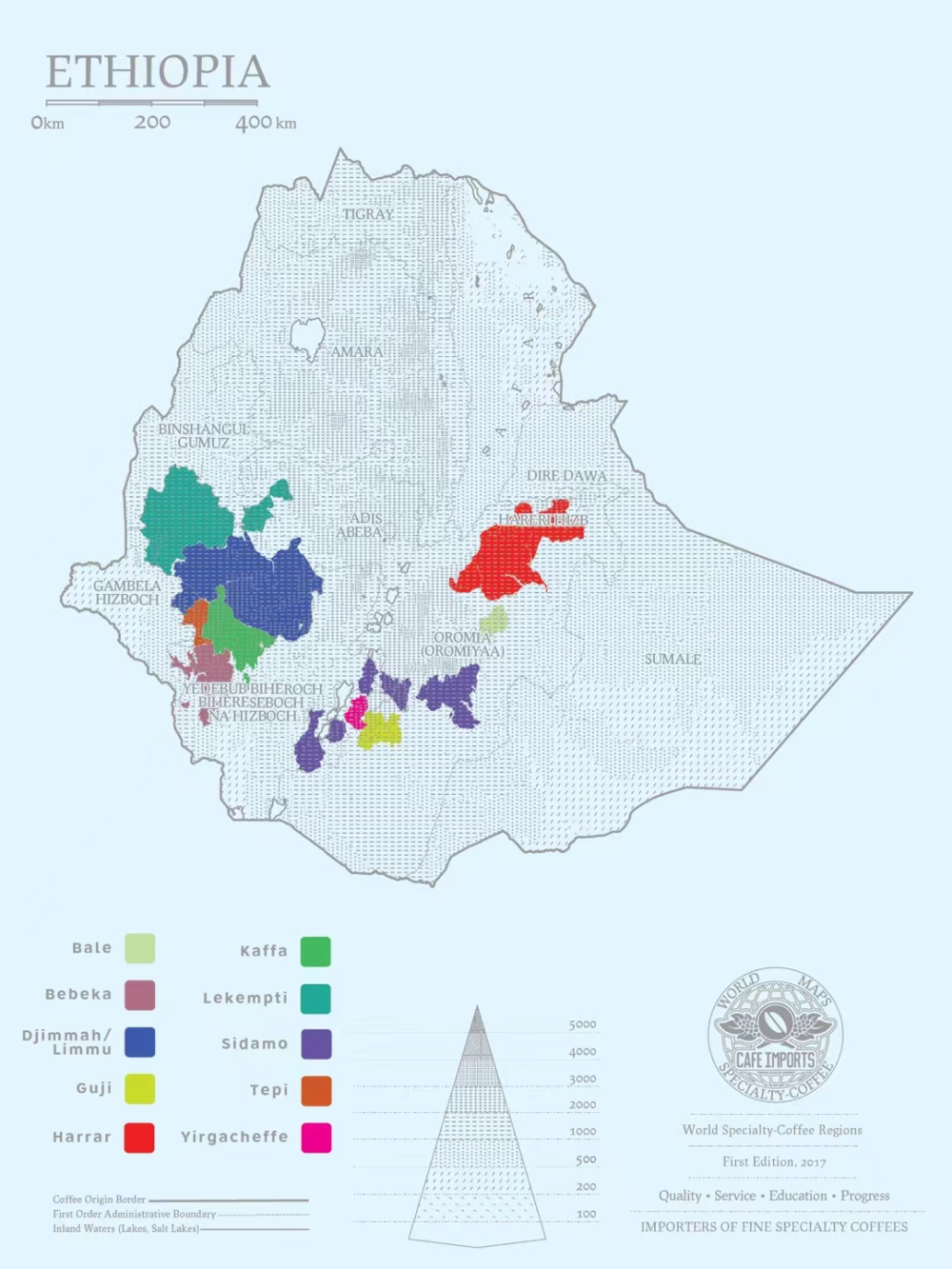
Coffee cultivation in Ethiopia is mainly concentrated in the southwestern region. Smallholder families account for 90% of all growers, with nearly 1.2 million smallholder families making a living from coffee. Each household cultivates less than 4 hectares, at elevations averaging between 1,000 and 2,300 meters, with a planting density of about 1,000 to 1,800 coffee trees per hectare, producing nearly 600 kilograms of coffee beans.
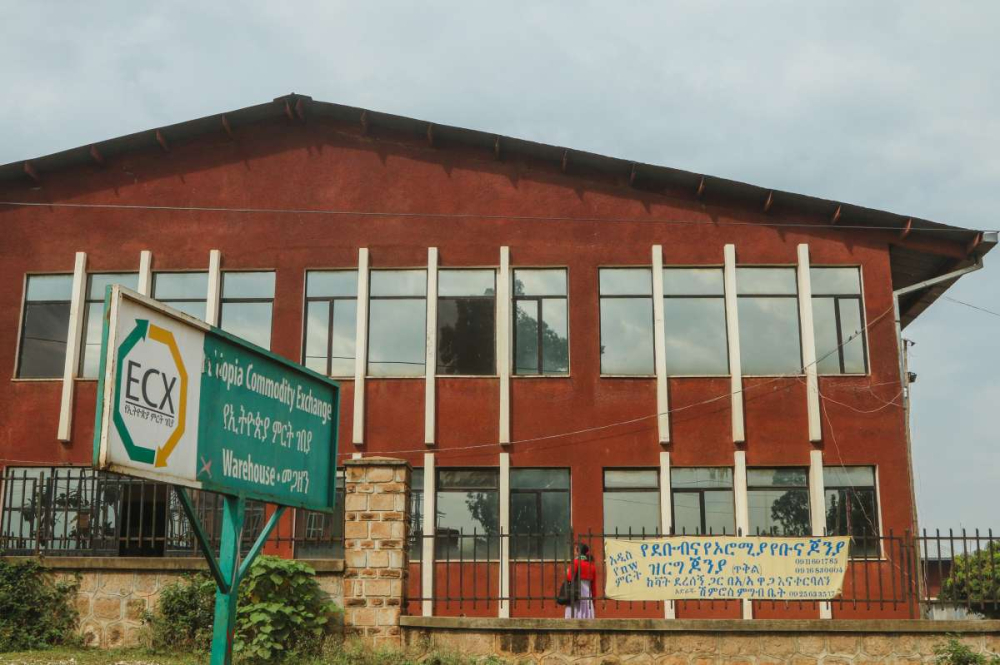
Ethiopia's main producing regions include Yirgacheffe, Sidamo, Kafa Forest, Lekempti, Kembata, Illubabor, Harar, and Limu. Yirgacheffe is a small town in Ethiopia and also one of the highest coffee-producing regions in the world, at an elevation of 1,700 to 2,100 meters, shrouded in mist year-round, with spring-like weather in all four seasons, gentle breezes, and a cool, humid climate. During the harvest season, the Ethiopian coffee trading company goes to the town to purchase coffee beans collected by farmers, which are ultimately auctioned and exported under the brand "Yirgacheffe." In pursuit of high-quality fruit, the local area implements the "Red Cherry Plan," picking 100% fully red cherries entirely by hand, allowing coffee farmers to devote more energy to sorting and selecting beans. These coffees also command relatively higher prices.
In Ethiopia, the cultivation models Front Street has learned about are mainly the following:
Forest coffee (8-10%): coffee trees coexist with other crops in primary forest, with no artificial management, and farmers go regularly to pick coffee cherries.
Semi-forest coffee (30-35%): the coffee tree planting areas lie between the forest and the surroundings of farmers' living areas. As with forest coffee, the coffee trees are naturally occurring varieties, but farmers manage the planting areas and grow other cash crops as well.
Garden coffee (50-55%): coffee trees are planted around farmers' living areas, mostly coffee that farmers plant themselves.
Plantation coffee (5-6%): large private growers who possess more processing facilities and production capacity.
Among the many beans Front Street Coffee offers, many coffee varieties from Ethiopian producing regions are labeled as Heirloom native varieties, which in some places is translated as "heirloom."
It should be understood that in Ethiopia, the garden cultivation system is the model on which the vast majority of smallholder coffee farmers depend for their livelihood, and Heirloom native varieties are the "unnamed varieties" from their backyards. The coffee trees may have been left behind by a previous owner of the land, or obtained through sharing among neighbors, or they may possibly have been grown from seeds from another producing region. All kinds of coffee plants are intercropped with other cash crops on the land, and only when they mature are they picked and sold.
Therefore, Heirloom does not refer to a single type of coffee variety. It represents a green bean blend from the place of origin: the coffee brings together the harvests of multiple smallholders from the same period and is assembled by combining them. A single lot may contain dozens or even hundreds of varieties that have not been subdivided. Precisely because there are differences among the varieties and the blending method is different each time, these coffees vary in bean size, dimensions, and shape—some large, some small, some long, some round—and can be understood as a "blended-type lot."
Ethiopia's main processing methods are natural and washed. Only in recent years have small lots of honey processing or anaerobic processing gradually increased. Below, Front Street will introduce the influence of different processing methods on flavor.
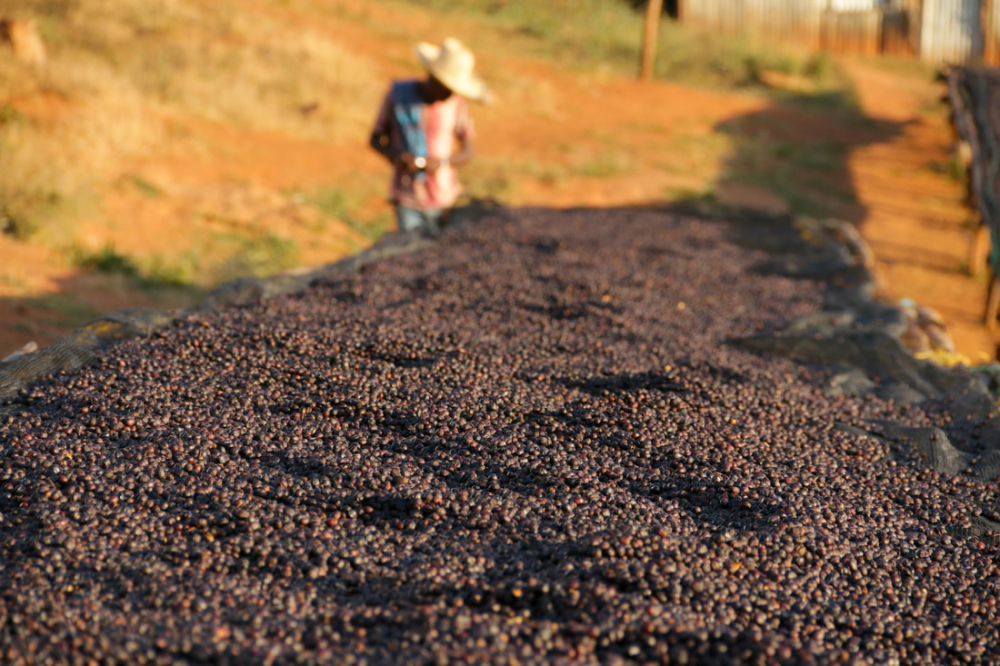
Natural: Natural is the most traditional processing method. Because the Harrar region is especially dry and lacks the water resources for washed processing, all of its output is naturally processed. Other regions such as Sidama, Yirgacheffe, Guji, and Jimma also produce natural coffees. Flavor: ripe fruit aromas, similar to apricot, peach, cherry, strawberry, cranberry (dried), blueberry (dried), plum, etc., often accompanied by varying degrees of vinous notes resembling rum, whiskey, or even red wine.
Washed: Compared with the equipment requirements of natural processing, washed processing requires a stable water supply and places higher demands on the processing station's environment and equipment, but it can also produce high-quality coffee relatively consistently at scale. All producing regions except Harrar use washed processing. Flavor: citrus fruits such as lemon, mandarin, orange, grapefruit, and sweet pomelo. The intensity of the flavor ranges from more pronounced citrus (peel) aroma to fruit acidity of varying strength, from soft little mandarin to medium-intensity orange, and further to the more refreshing acidity of lemon and grapefruit.
Honey: In the past two years, items labeled Kochere honey processing have appeared on the market one after another. This is a green bean processing method between natural and washed, and both its aroma and mouthfeel tend to show round, clear qualities. Flavor: obvious floral notes, delicate mouthfeel, and a long juicy finish. Red pomelo, citrus, sugarcane, honey; the flavor is clean and soft.
The following are the Ethiopian coffee types currently offered by Front Street and their regional characteristics.
Front Street Ethiopia Yirgacheffe Red Honey Red Cherry
Country: Ethiopia Region: Yirgacheffe Altitude: 2000-2200m Variety: Local heirloom Processing method: Red honey Flavor: Jasmine, citrus, honey, berries, almond, fermented red wine
In fact, so-called honey processing refers to the process of making green beans by drying them in the sun with mucilage still attached. After the coffee cherries have their outer pulp removed, a sticky gelatinous substance remains. Traditional washed processing uses clean water to wash it off, but because some high-altitude producing regions face water resource limitations, this method of direct sun-drying came into being.
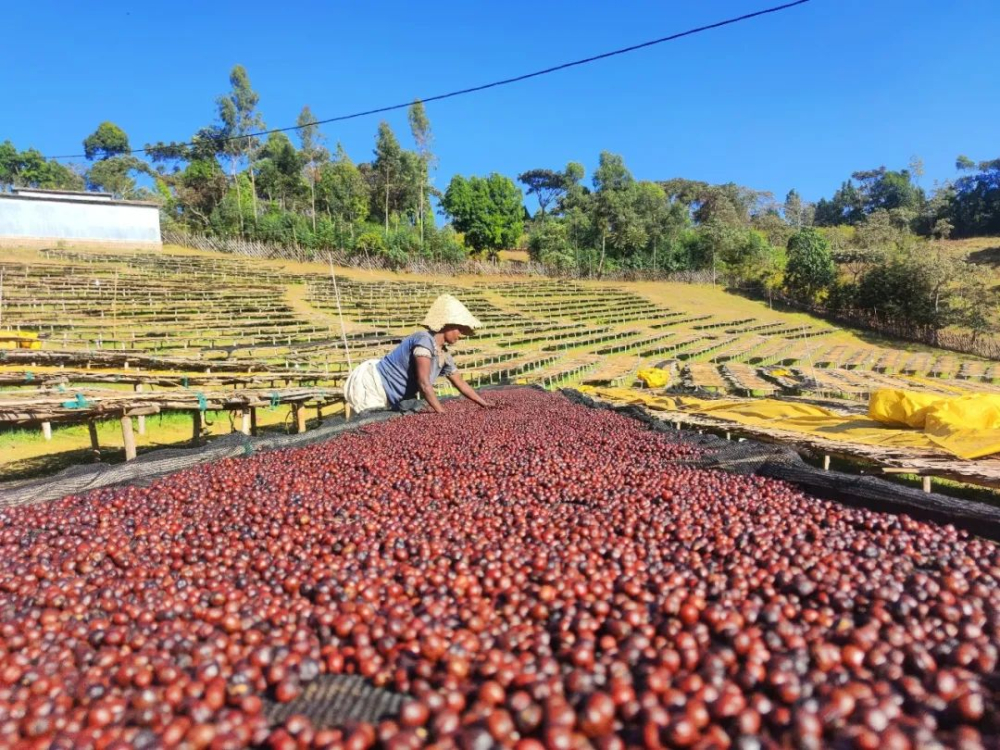
The pectin mucilage portion is the part of the coffee cherry with the highest sugar content and is also an important component of coffee processing and fermentation. It can be said that this part determines 80% of the nutrient supply during processing. Yellow honey retains 60% of the pectin, red honey retains 75%, and black honey removes almost no pectin. Front Street Coffee believes that red honey processed coffee beans smell of ripe fruit and have a faint red wine fermentation note.
Front Street Ethiopia Yirgacheffe Natural Red Cherry
Country: Ethiopia Region: Yirgacheffe Altitude: 2300m Variety: Local heirloom Processing method: Natural Flavor: Berries, lemon, strawberry, fermented vinous aroma
Natural processing is the oldest and most primitive method for coffee beans. This Front Street Natural Red Cherry that Front Street sourced places whole coffee cherries, with the pulp and skin kept intact, on raised beds for sun-drying, isolating them from contact with the ground to prevent the earthy off-flavors caused by direct exposure to the sun. After more than two weeks of sun-drying, the dark brown coffee fruits are stored to await the maturation of the overall flavor. Only before shipment does the processing station remove the coffee beans from the coffee cherries. This natural processing method gives the beans lower acidity, noticeable sweetness, and body, but not the same high level of cleanliness as washed processing.
Front Street Ethiopia Gotiti
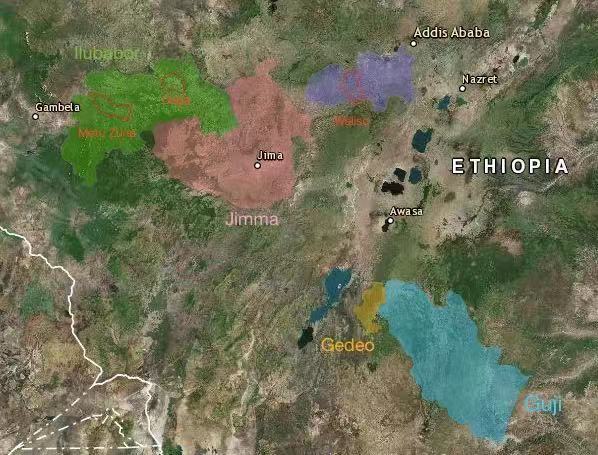
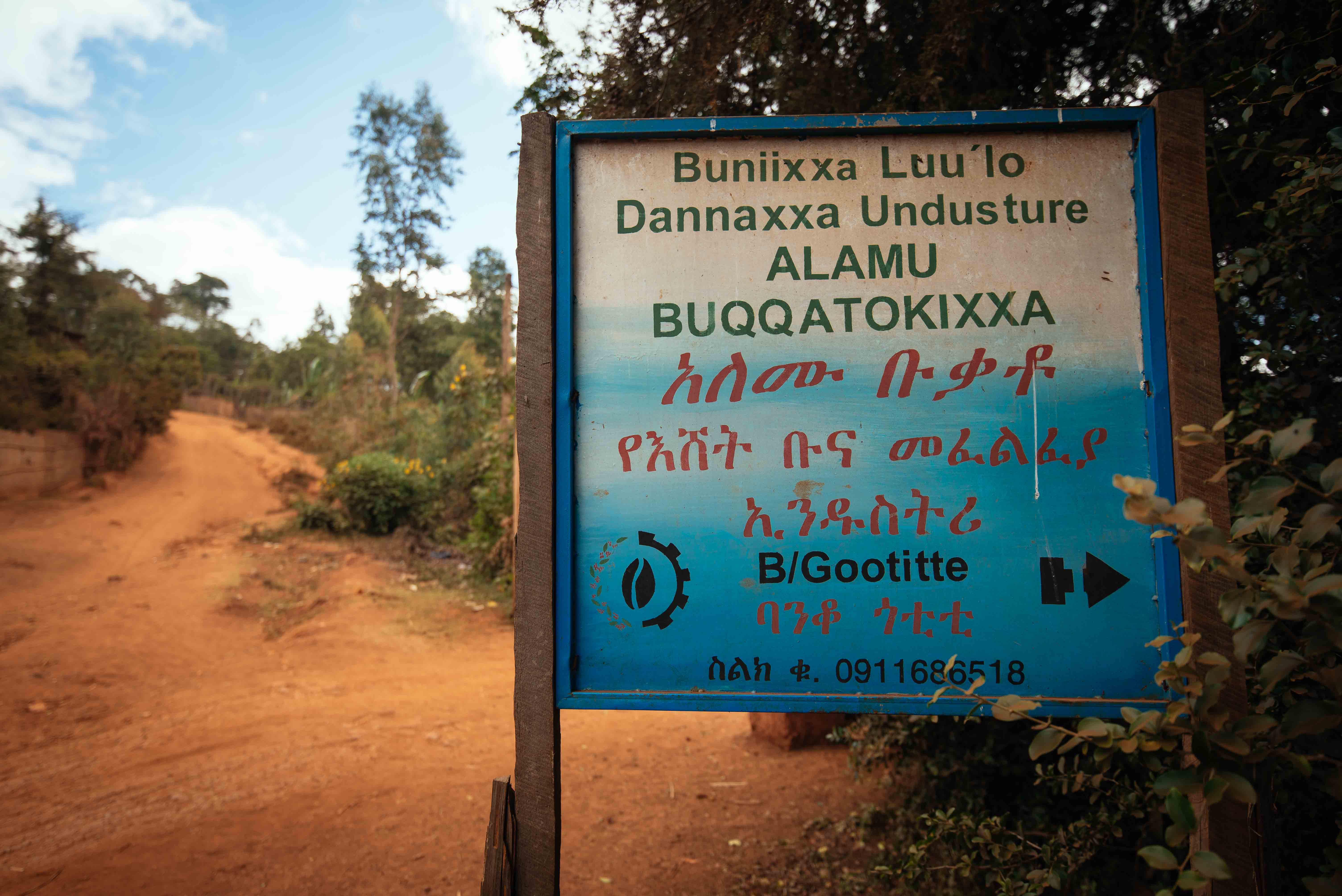
Country: Ethiopia Region: Yirgacheffe Altitude: 1900-2300m Variety: Local heirloom Processing method: Washed Flavor: Tropical fruit, cream, honey, berries, citrus
The name Gotiti actually comes from the fact that this coffee cherry is produced by the Gotiti Cooperative. According to Front Street's understanding, the Gotiti Cooperative was originally part of the Worka Cooperative under the Yirgacheffe Coffee Farmers Cooperative Union (YCFCU) and became independent as the Gotiti Cooperative in 2012. It currently has more than 300 smallholder members.
Gotiti village was one of the earliest village areas to become independent. Many small farmers were also members of the original Worka Cooperative, so their coffee-producing skills are beyond question. The Gotiti Cooperative is called the last pure land of Yirgacheffe, so the green bean processing methods it uses are also very traditional (washed and natural processing).
Front Street Ethiopia Kochere
Country: Ethiopia Region: Yirgacheffe Altitude: 2000m Variety: Kochere Processing method: Washed Flavor: Jasmine floral notes, lemon, bergamot, honey, black tea
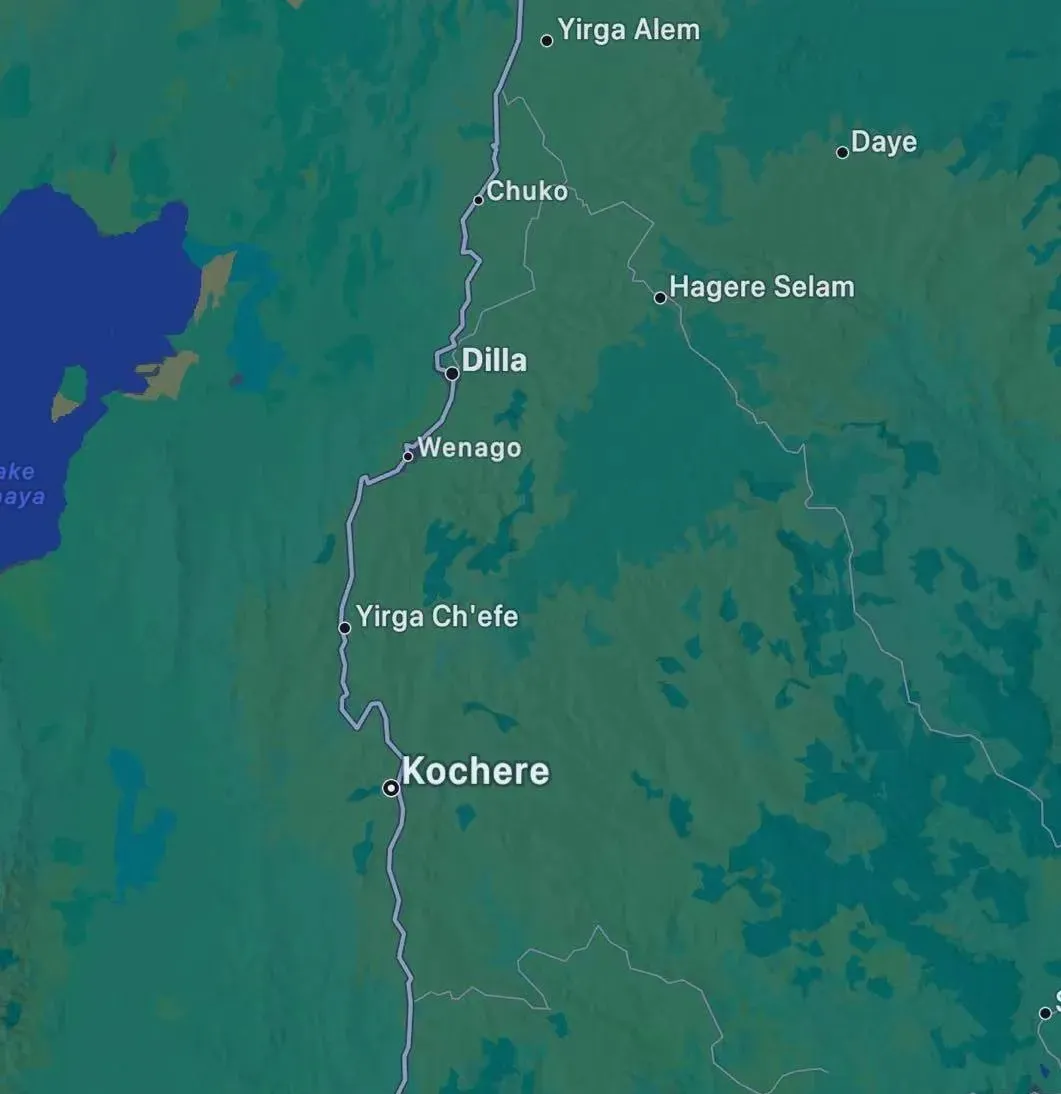
Kochere is a small producing region 25 kilometers southeast of Yirgacheffe in Ethiopia. It is an area made wealthy by coffee production and is also one of Yirgacheffe's three famous micro-regions. The local population is about 100,000, and coffee beans are the main source of income. The local standard of living is considerably better than that of many Ethiopian villages, with well-equipped health facilities and higher schools. It is precisely this advanced processing equipment that has allowed coffee from the Kochere area to consistently perform at a high level in washed processing, with a clean sweetness carrying the complex notes of molasses and citrus.
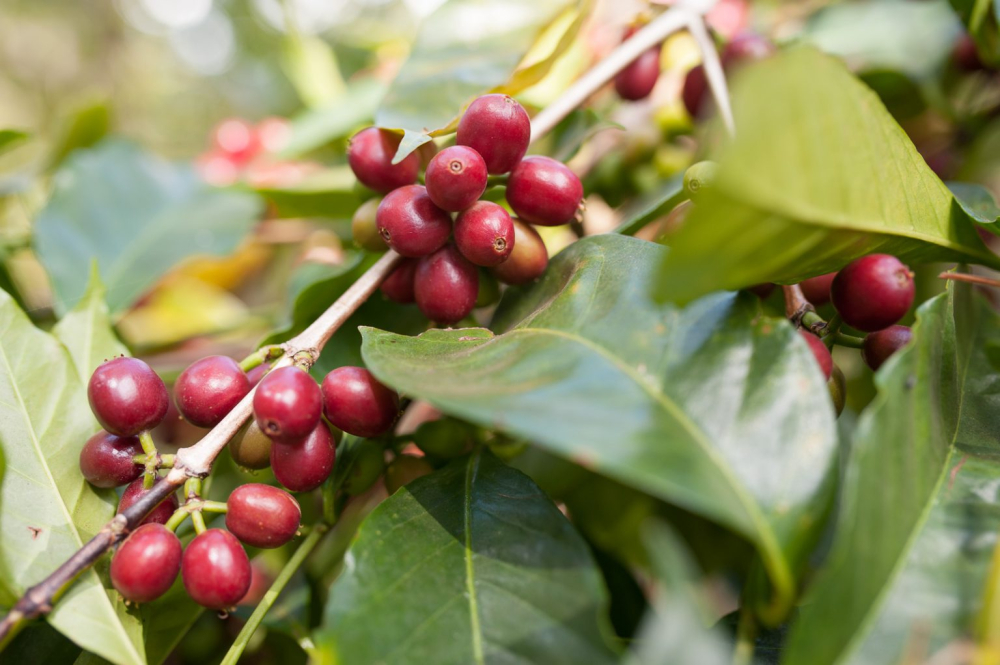
Moreover, according to Front Street's understanding, the well-known coffee review website Coffee Review gave Kochere washed coffee beans a high score of 94.
Front Street Ethiopia Worka
Country: Ethiopia Region: Yirgacheffe Altitude: 1650-1800m Variety: Local heirloom Processing method: Washed Flavor: Lemon, jasmine tea, black tea, cane sugar
Worka is located in the Yirgacheffe producing region at an altitude of 1,800–2,000 meters. The Worka Cooperative was established in 2005 and joined the famous Yirgacheffe Coffee Farmers Cooperative Union (YCFCU) that same year. It is known for producing high-quality natural Yirgacheffe. This Front Street washed Worka that Front Street sourced comes from here.
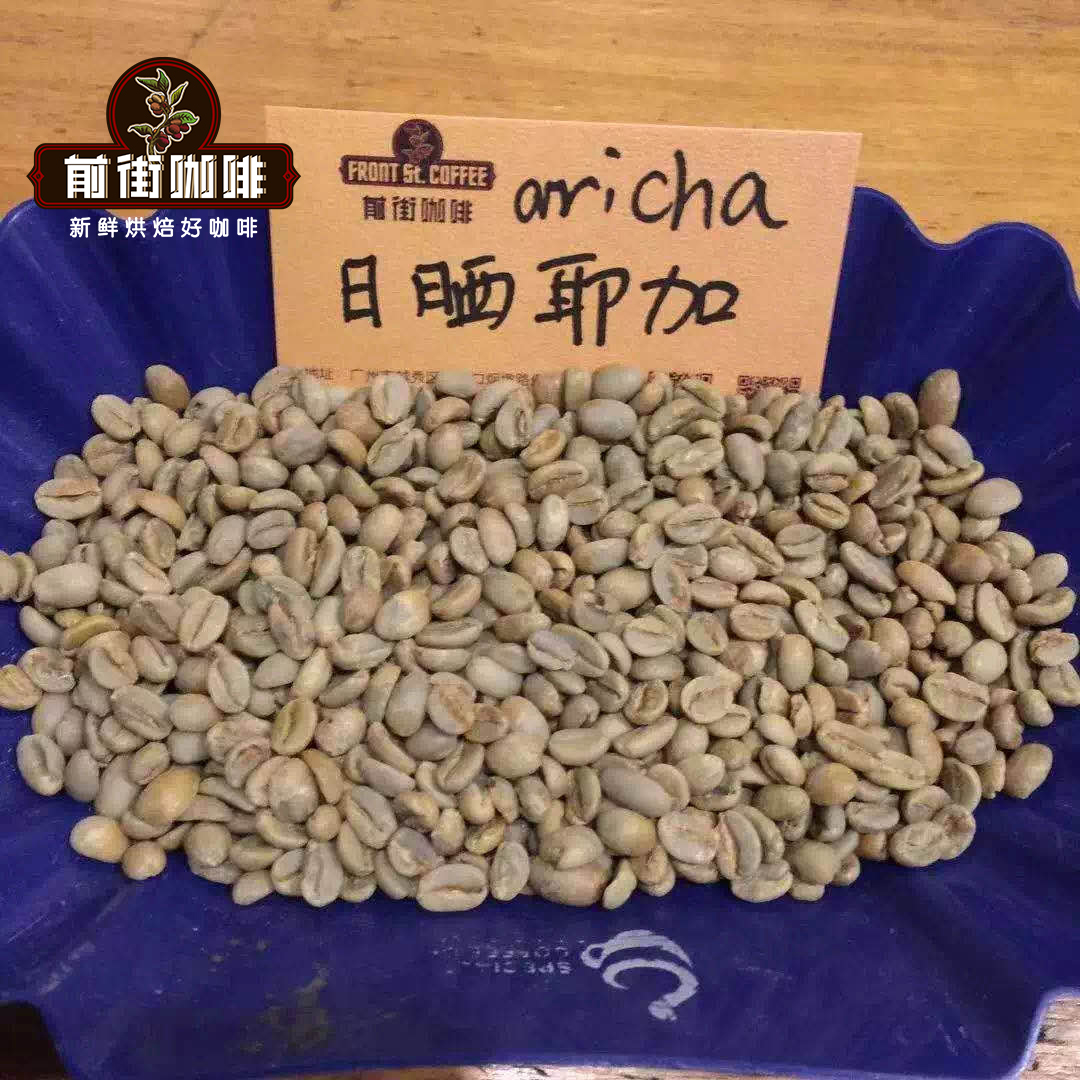
Front Street Ethiopia Natural Aricha
Country: Ethiopia Region: Yirgacheffe Altitude: 1900-2100m Variety: Local heirloom Processing method: Natural Flavor: Light fermented vinous aroma, sweet orange, spice, honey sweetness
Front Street Natural Aricha is produced at the Kebel Aricha processing station. There are about 650-700 smallholder coffee farmers nearby, and farmers bring ripe coffee cherries here for processing in exchange for cash. After the processing station screens the usable cherries, they are placed directly on raised beds to sun-dry. During the first few days of drying, they are turned once every 2-3 hours to prevent over-fermentation. After four to six weeks of sun-drying, workers remove the outer pulp with machines depending on the weather and temperature conditions, and then transport the beans to Addis for storage. Usually, naturally processed beans are stored in parchment form, and only shelled before export to ensure green bean quality.
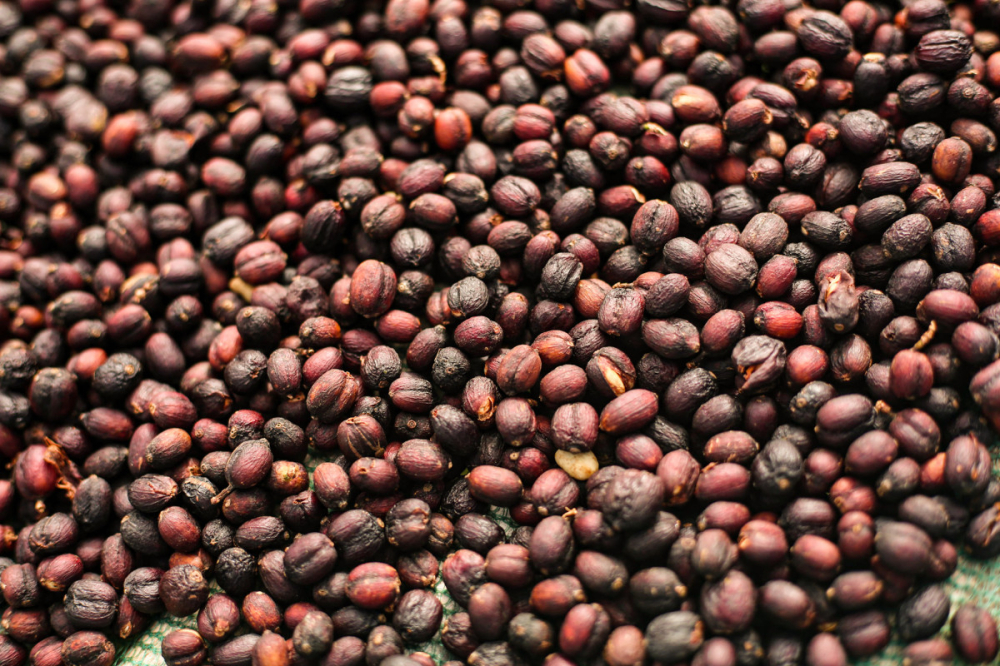
This batch of Front Street Natural Aricha was rated by ECX as the highest grade, G1. From green bean appearance, consistency, and freshness to dry aroma and flavor, it is quite outstanding. Coffee lovers who enjoy bright acidity and rich berry flavors absolutely must not miss it!
Front Street Ethiopia Sidamo Huakui
Country: Ethiopia Region: Sidamo Altitude: 2250-2350m Variety: Local heirloom Processing method: Natural Flavor: Berries, floral tea, honey, lemon, black tea
The reason "Huakui" is called "Huakui" is that in 2017, the Ethiopian green bean company DW sent their coffee beans to the TOH (the Taste Of Harvest) competition hosted by the African Coffee Association, and the natural lot won the TOH Ethiopia championship in one go. This lot of green beans was named "Huakui" in its capacity as champion.
Huakui is located in Hambella. Hambella is in Guji, Ethiopia's largest coffee-producing region, and administratively belongs to Oromia. To the west, Hambella faces Yirgacheffe's Kochore across the mountains, and to the southeast and north it borders the Guji sub-regions of Shakiso, Uraga, and Kercha respectively. It is Ethiopia's highest-altitude coffee sub-region (Harar is Ethiopia's highest-altitude main producing region).
Front Street Ethiopia 90+ Drima Zede
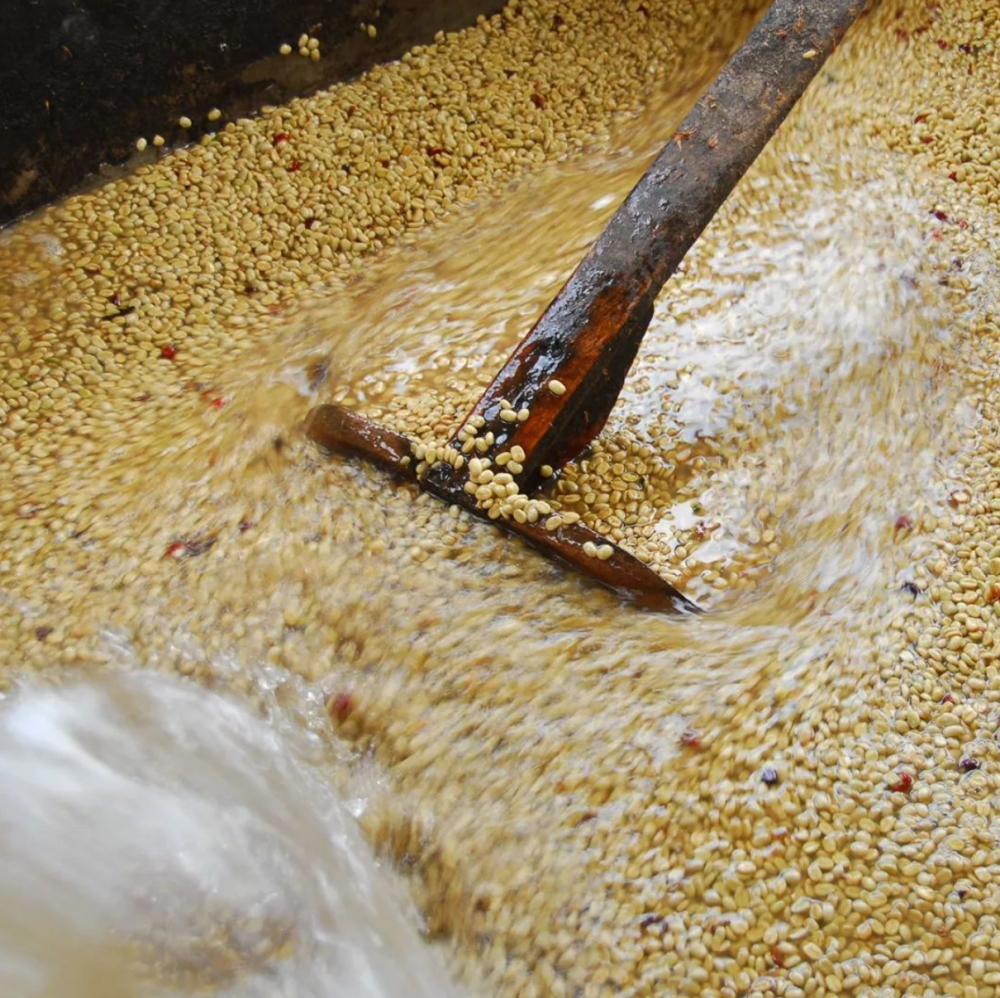
Country: Ethiopia Region: Ethiopia Altitude: 1750-2000m Variety: Local heirloom Processing method: Natural Flavor: Nectarine, tropical fruit, cream, mango, citrus
The story of Ninety Plus Drima Zede coffee beans: Drima Zede (Front Street Drima Zede, the name of this Yirgacheffe coffee) means "Best Approach" in the local dialect. According to materials provided by the producer, this Front Street Yirgacheffe is a specially developed product series based on 90+'s many years of experience. With the ancient natural processing method, it is very difficult to obtain pure flavors, but under 90+'s technical support, Drima Zede selects only the most mature coffee cherries by hand, and during the sun-drying process it is stirred tirelessly to ensure uniformity. The final result is a very transparent and clean mouthfeel with dramatic changes between hot and cold, and highly captivating aromas of fruit, flowers, and oak barrel.
90+ refers to a top-tier coffee series of 13 flavors. 90+ is the pursuit of ultimate flavor and is highly admired. This Front Street 90+ Drima Zede that Front Street sourced has a flavor profile of nectarine, mango, and cream. Front Street believes that coffee lovers who like mango will definitely also fall in love with this Front Street 90+ Drima Zede.
Front Street Ethiopia Cup of Excellence 22
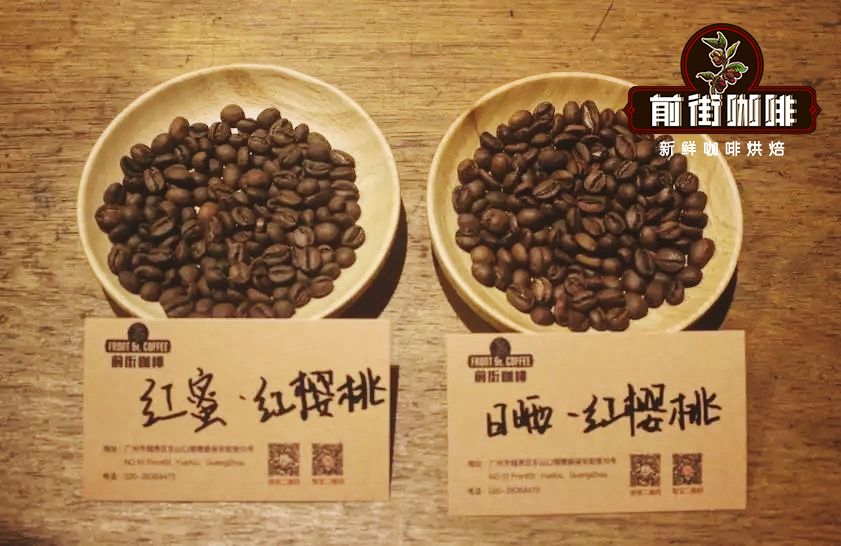
Country: Ethiopia Region: Sidamo Altitude: 2200m Variety: Typica Processing method: Natural Flavor: Citrus, honey, lychee, honey, cream, fermented vinous aroma, mango, strawberry
At the first Ethiopia Cup of Excellence (COE), Front Street Coffee purchased the coffee beans that ranked 22nd.
This coffee comes from Adem Baneta Sulte, a 60-year-old father with 28 children (12 girls). When he heard his result in the Cup of Excellence competition, he was extremely happy. His coffee received 87.64 points and placed 22nd. Adem said: "He produced 4,500 kilograms of coffee on his 6 hectares of land and sold it to local traders. I have never entered the export market because I had no opportunity, and this competition may introduce me to the global market. This is a great hope for me and my family."
Front Street Ethiopia Washed Yirga
Country: Ethiopia Region: Yirgacheffe Altitude: 1600-2500m Variety: Local heirloom Processing method: Washed Flavor: Jasmine, orange, berries, lemon, caramel
Yirgacheffe is a small town in Ethiopia. Because its exceptional climate conditions produce a specialty coffee of outstanding quality, the coffee beans produced locally are named after the town, and it is also synonymous with specialty coffee beans.
Also from Yirgacheffe, naturally processed and washed coffees each have their own distinctive flavors. Under the same processing method, Front Street Natural Yirgacheffe coffee beans carry an obvious dry red wine aroma, while Front Street Washed Yirgacheffe coffee beans offer citrus and honey fruit aromas.
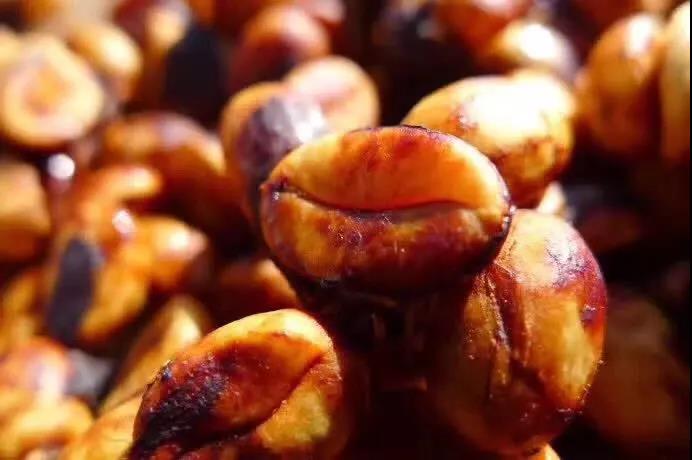
On first tasting, both show obvious fruit acidity similar to lemons and citrus fruits, but natural beans are fuller in body.
Front Street believes that the acidity of washed processing is brighter, like citric acid, with a fresher aroma and more pronounced citrus notes; natural processing is fuller, with a slightly heavier bittersweet note and a much richer mouthfeel.
Front Street Ethiopia Gesha Village Gold Label
Country: Ethiopia Region: Bench Maji Altitude: 1909-2069m Variety: Geisha Processing method: Natural Flavor: Citrus, lemon, tropical fruit, cream, nuts, tea-like quality
According to Front Street's understanding, Gesha Village Coffee Estate is completely different from the vast majority of Ethiopian farms. It is not a small farm but a large 500-hectare estate with its own washing station and laboratory, located in the southwest near the Sudanese border. What makes it most special is that the entire estate grows only the Geisha variety, rather than the usual Ethiopian heirloom varieties whose exact identity cannot be determined. Gesha Village divides the estate into 8 blocks and 3 main Geisha varieties. The Geisha seeds were all collected from nearby forests, not from Panama.
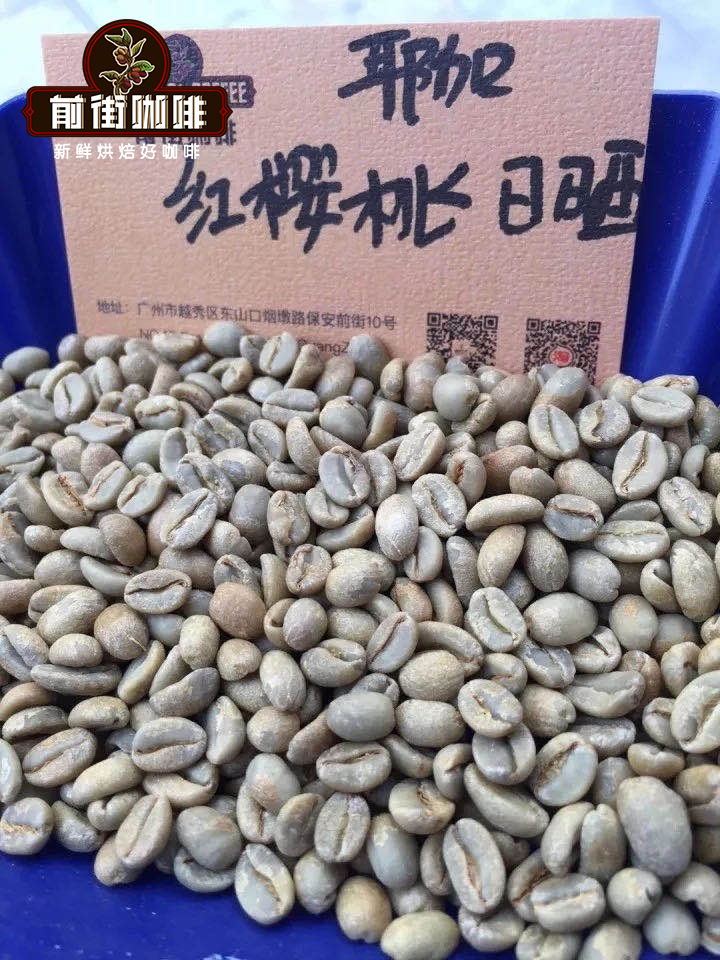
The western part of Gesha Village Estate is relatively higher in elevation, with the SHEWA-JIBABU block slightly higher in altitude, while the southern part has a relatively higher proportion of shade, and the northern part receives longer sunlight exposure. Among the estate's eight blocks, the estate managers choose the most suitable variety for each block based on microclimatic differences such as altitude, soil conditions, and shade conditions, ensuring that each major block develops a distinctive character.
Gesha Village's coffee classifications include: Auction, Gold Label, Red Label, Green Label, and CHAKA. The grade of this Front Street Gesha Village coffee bean that Front Street sourced is Gold Label.
Front Street's Gold Label lot of Gesha Village accounts for only 5% of Gesha Village's annual production, and it is the lot usually chosen by competition contestants around the world. Roasters with high quality requirements also purchase it. It has complete traceability, and each lot has outstanding flavor and high complexity. It is the estate's finest label after the auction lots.
Front Street Ethiopia Gesha Village Red Label
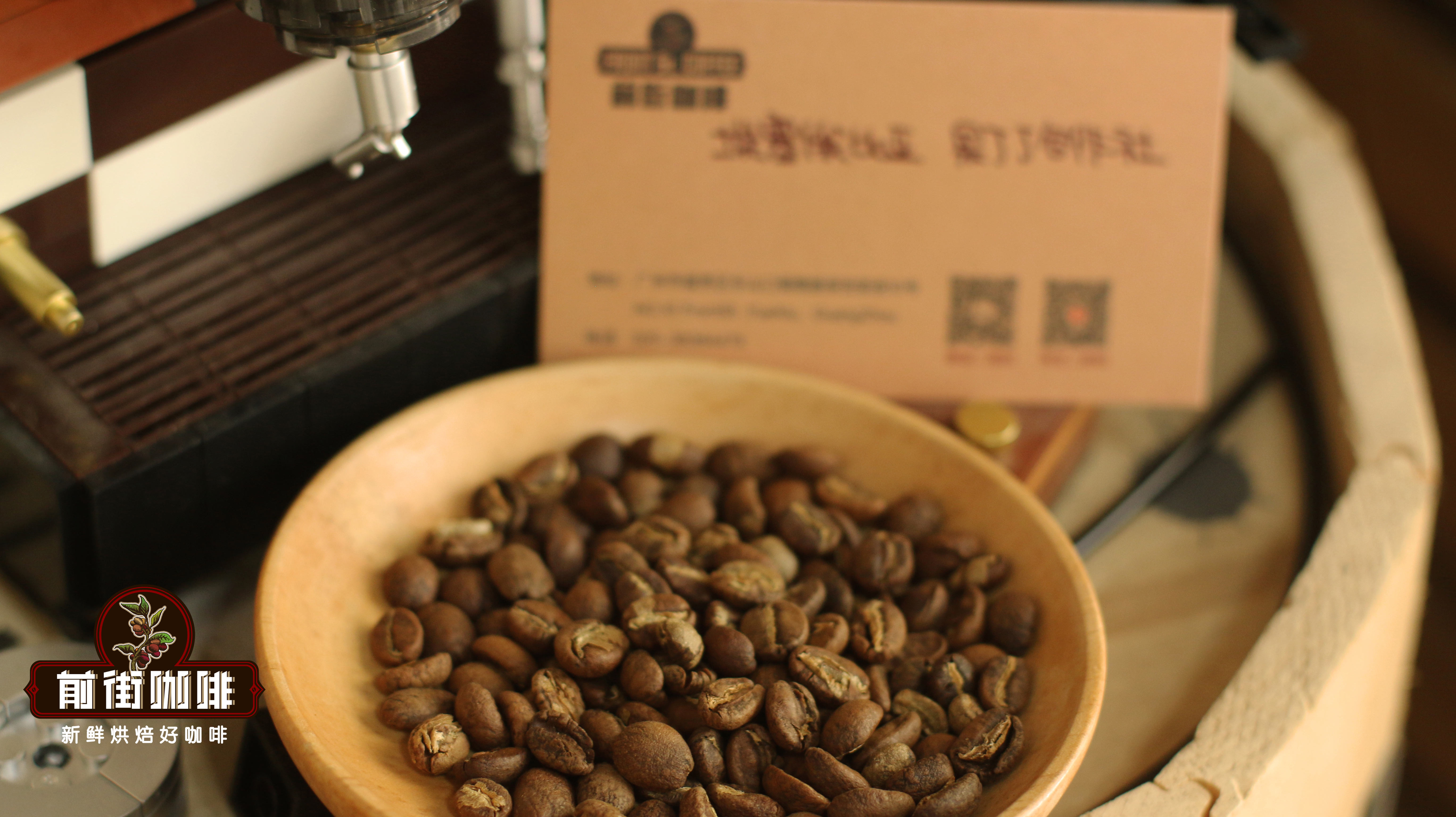
Country: Ethiopia Region: Bench Maji Altitude: 1909-2069m Variety: Geisha Processing method: Natural Flavor: Tropical fruit, cream, bergamot, fermented vinous aroma, lemon, nuts
Compared with the Front Street Gold Label lot of Gesha Village mentioned above, the Front Street Red Label lot is a fully traceable lot with typical Gesha Village flavor. Its flavor intensity and complexity are slightly weaker than the Front Street Gold Label lot, making it a very cost-effective single-origin lot.
Front Street Ethiopia Gesha Village Chaka
Country: Ethiopia Region: Bench Maji Altitude: 1909-2069m Variety: Geisha Processing method: Washed Flavor: Strawberry, citrus, floral notes, tropical fruit
According to Front Street's understanding, the Gesha Village Chaka lot blends coffee from all blocks of the estate and the entire production season. Front Street Gesha Village Chaka contains three coffee varieties from Gesha Village Estate: Geisha 1931, Gori Gesha, and Illubabor. Based on Front Street's cupping, Front Street Gesha Village Chaka smells of light fermentation and drinks with the acidity of citrus and grapefruit, carrying flavors of cream, chocolate, and caramel, with a soft profile. Coffee lovers who are interested may as well give it a try.
The following are all the Burundi coffees currently offered by Front Street.
2. Burundi
Burundi is a very beautiful landlocked country located on the steep East African Rift, with complex terrain. The dramatic ridge that suddenly rises on the eastern shore of Lake Tanganyika is the watershed between Africa's two major river systems, the Nile and the Congo, and it is known by the elegant title "Heart of Africa." Burundi's coffee production model is relatively close to Ethiopia's, with smallholder production predominating. They all send their harvested ripe cherries to processing stations for unified processing.
For example, the Rutana town origin is a cooperative organized jointly by family-style smallholder coffee farmers, with a total of 539 smallholder coffee families, 148 of whom are women. On average, each family grows 10–200 coffee trees (at least 1,000 coffee trees can be planted per hectare), which shows how weak their annual income is and marks them as a typical poor smallholder coffee family.
Generally speaking, Burundi coffee is mainly Bourbon, with some other variant varieties (such as Jackson and Blue Mountain). Its cultivation ranges from 700 to 2,700 meters above sea level. Higher altitudes produce brighter acidity and lemon notes, along with flavors such as passion fruit, pineapple, floral notes, and honey, and the quality can reach SCA 86 points or above; lower-altitude coffee has a slightly thinner texture and carries more chocolate and hazelnut flavors.
Front Street Burundi Heart of Africa
Country: Burundi Region: Bubanza Altitude: 1400-1700m Variety: Bourbon Processing method: Washed Flavor: Kumquat, lemon, dried fruit, caramel, light acidity
According to Front Street's understanding, the origin of the name Front Street Burundi Heart of Africa comes from the fact that, according to World Bank statistics in 2011, about 600,000–800,000 households in Burundi depend on coffee for their livelihood, and coffee is the core of Burundi.
Burundi's "Heart of Africa": through introduction by the Belgians, Burundi began growing coffee in 1930. As in neighboring Rwanda, the varieties are mostly Bourbon series varieties, and the coffee grows on high mountains at altitudes of 1,750 to 2,000 meters.
3. Kenya
Kenyan coffee mostly grows at altitudes of 1,500–2,100 meters and is harvested twice a year. Its main characteristic is distinct fruit aromatics, with citrus being a common fruit note. Kenyan coffee has layered flavors and juicy acidity, perfect grapefruit and wine notes, and a medium body, making it a single origin favored by many coffee industry professionals. Kenyan coffee further rose to fame with the sensation caused by the Hollywood film Out of Africa.
According to Front Street Coffee's understanding, in Kenya it is illegal to cut down or destroy coffee trees. Buyers of Kenyan coffee are all world-class buyers of high-quality coffee, and of course, according to Front Street's understanding, no other country can grow, produce, and sell coffee as consistently as Kenya.
All Kenyan coffee beans are first purchased by the Coffee Board of Kenya (CBK), where they are appraised and graded, and then sold at weekly auctions, with no further grading at auction.
The Coffee Board of Kenya only acts as an agent, collecting coffee samples and distributing them to buyers so they can determine price and quality. The Nairobi auction is held for private exporters, and the Coffee Board of Kenya pays growers less than the market price. The best coffee grade is Peaberry (PB), followed by AA++, AA+, AA, AB, and so on in order.
Generally, top-grade coffees are bright, delicious, and slightly vinous, and organizing auctions also serves the needs of blenders. Such auctions usually involve relatively small volumes (3-6 tons per lot), with samples bearing the grower's mark available for buyers to taste. After the auction, exporters package according to different flavors, different qualities, and the quantities required by blenders. This provides blenders with great flexibility. Quality-focused Germans and Northern Europeans have long been buyers of Kenyan coffee.
Moreover, according to Front Street's understanding, Kenyan coffee farms fall into two types. One is large plantations of more than five acres, though their average altitude is relatively low; as far as Kenyan coffee is concerned, the coffee beans from large farms can only be considered average in quality. Top Kenyan beans come from small farms, mostly located on mountain slopes or volcanic hillsides above five or six thousand feet. Each smallholder produces only about twenty to seventy bags per season and cannot afford to invest in an expensive washing station. But the smallholders are very united and gather by the hundreds or thousands to form cooperative farms, with the government funding the construction of washing stations. The coffee cherries picked by the smallholders are sent to the cooperative farms for unified processing: first removing half-ripe or rotten cherries, then pulping, fermenting, and breaking down the mucilage, removing the coffee beans, and then drying and polishing. The entire process is supervised by the official coffee authority and is quite rigorous, ensuring the quality of Kenyan coffee. Therefore, Kenya's washed processing technology and high-standard quality control have long been a model for coffee-producing countries.
Front Street Kenya coffee has its distinctive bitterness and vinous note, which are also what it is most praised for. The coffee beans it grows are also high-quality Arabica. The beans are medium to large in size, very rich and flavorful, with moderate acidity. In most producing regions, there is a small-tomato aroma, which is the biggest characteristic of Kenya's producing regions.
The following are all the Kenyan coffees currently offered by Front Street.
Front Street Kenya Sasini
Country: Kenya Region: Sasini Altitude: 1900m Variety: SL28, SL24, Ruiru Processing method: Washed Flavor: Tomato, fruit, berries
Sasini Estate is located in the KIAMBU area around Mount Kenya, at an altitude of about 1,800 meters. The scenery here is beautiful, the climate is pleasant, sunlight is abundant, and soil conditions are excellent. It is fertile acidic red soil, loose in texture, with deep soil layers and good drainage, and a pH value between 5.5 and 6.5. Sasini Limited was originally founded in 1952 and was among the first coffee and tea companies established after Kenya's independence. It has received multiple certifications including UTZ, Rainforest Alliance, and the Kenya Bureau of Standards Diamond mark.
Moreover, Front Street believes that high-quality Front Street Kenyan coffee has bright fruit acidity and also gives off an intoxicating fruity sweetness. The sweet-acid amplitude is relatively large, with a refreshing, sweet finish and a hint of blackcurrant in the aftertaste.
Front Street Kenya Asali
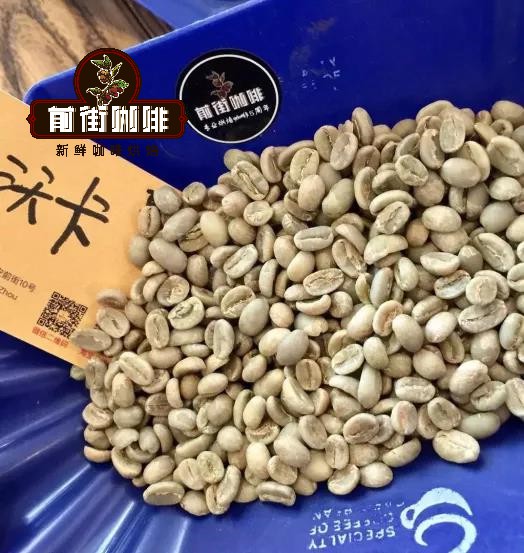
Country: Kenya Region: Asali (honey processing station) Altitude: 1550-1750m Variety: SL28, SL34 Processing method: Washed Flavor: Snow pear, smoked plum, yellow sugar, cherry tomato, plum
According to what Front Street knows, SL-28 and SL-34 are two of the 40 experimental varieties produced by a research program led by Guy Gibson of Scott Laboratories, and the Bourbon variants (SL-28) and (SL-34) have long been frequent winners in expert cuppings and at the Nairobi auction.
4. Rwanda
Rwanda is located in central Africa and is a standard landlocked country, with neighboring countries that are all major coffee producers. In the early 20th century, Rwanda successively became a colony of Germany and Belgium, and coffee was first introduced by German missionaries. During the colonial period, coffee production increased substantially, but the exploitation of labor, suppression of coffee crop prices, and high export taxes meant that the quality of the coffee beans produced was not ideal. This was also a normal phenomenon in the development of commercial coffee at the time. Front Street Coffee has found that Brazil, which also experienced colonial rule, once produced coffee beans with an emphasis on quantity rather than quality, causing it to carry a reputation for poor coffee quality for a period of time.
It was not until after Rwanda gained independence and established its first official coffee organization, OCIR, that attention gradually began to be paid to coffee bean production. Rwanda's coffee production continued to grow from the 1960s to the 1980s and reached an unprecedented peak in 1986, until domestic political instability in the early 1990s (the Rwandan genocide) brought the coffee industry to a halt. Front Street Coffee has also recently sourced several batches of Rwandan coffee beans from different producing regions. First, Rwanda's coffee industry is developing rapidly and coffee quality can be guaranteed; second, Rwanda has gradually developed distinct regional flavors that differ from Ethiopia and Kenya.
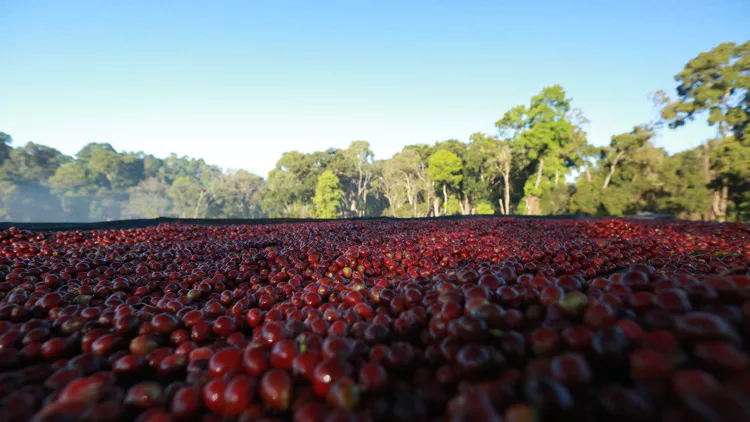
In the early 20th century, Rwanda was a German colony. Around 1904, German missionaries first introduced coffee cultivation, and by around 1930 coffee production had increased substantially. Rwanda was once Africa's ninth-largest exporter of Arabica coffee, with nearly 450,000 smallholders. Each small estate had an average planted area of less than 1 hectare (about 165 coffee trees per coffee farmer), for a total planted area of about 28,000 hectares. Coffee production areas are mainly distributed in the western half of the country and in the central region near the capital, Kigali.
In 2000, Rwanda, having just gone through internal turmoil, received funding from the United States Agency for International Development (USAID) for two major coffee development programs, PEARL and SPREAD, aimed at supporting Rwanda's reconstruction. After the programs were implemented, Rwanda successively built 46 coffee washing stations, allowing Rwanda's economy to achieve significant growth under strong coffee bean exports.
Therefore, Rwandan coffee beans currently mainly use the washed processing method. Ripe coffee cherries are selected by hand, the skin and pulp are removed, and washing fermentation is carried out for 12–18 hours to wash the pectin clean, followed by drying until the moisture content is below 14%. Front Street Coffee believes that when Rwanda's coffee beans were first developing, establishing washed processing as the main method was a choice that could clearly highlight coffee flavor. This is because washed processing is the method that best reflects the essential flavor of coffee. When Front Street Coffee recommends a coffee-producing region, it also first recommends washed coffee beans to customers, so that they can understand the flavor characteristics of that region relatively clearly.
In the 2008 annual top coffee competition held by the Specialty Coffee Association of America (SCAA), Rwanda Aromec top washed Bourbon beans defeated the simultaneously entered Jamaica Blue Mountain No.1 and Sumatra Mandheling G1 Special Grade to win the 2008 COE championship, and from then on it opened up its fame and price in the coffee world.
Front Street Rwanda Gaseke
Country: Ethiopia Region: Nyamasheke Altitude: 1500m Variety: Caturra, Catuai, Bourbon Processing method: Washed Flavor: Citrus, berries, plum, nuts, honey, tea-like quality
Gaseke washing station is located in the Nyamasheke district in western Rwanda.
According to Front Street's understanding, Fidele Ndagijimana, a young trader in the Nyamasheke area, saw the development potential of Rwanda's specialty washed coffee, so he applied to the government to build this processing station. In the first year, he successfully produced 170 tons of coffee cherries. This was because he used the off-season to improve and expand production equipment, so that when the next harvest season arrived he could provide better production machinery and a better storage environment. In the end, this outstanding trader also secured more land near the processing station for himself to cultivate. Gaseke washing station later became famous for this as well.
5. Tanzania
Mount Kilimanjaro, Africa's highest peak, stands in Tanzania in the northeast of the country. After World War I it was a mandate territory and was once under British colonial rule, only gaining independence in 1964.
What makes Tanzanian coffee unique is that it is a composite of three different plantations located in northern Tanzania. One of these plantations is even located in the Kilimanjaro mountain range. Kilimanjaro is Africa's highest mountain and the largest free-standing mountain mass on Earth. The coffee grows at altitudes between 1,150 and 1,500 meters.
In 1898, Bourbon coffee was introduced to Tanzania's Kilimanjaro region by Catholic missionaries. Then Kent was also introduced in 1920. So far Tanzania has Kent and Bourbon varieties. According to Front Street's understanding, Bourbon coffee cherries are short and round, and the density of the pulp and seeds is very high. Therefore Bourbon coffee usually has high sweetness and bright acidity. This coffee's yield is 20-30% higher than Typica, but it is still regarded as a low-yield bean variety because it is likewise susceptible to leaf rust disease.
Tanzanian coffee beans also have a grading system, which is the same as Kenya's: graded by screen size, with AA, AB, PB, and so on.
Front Street Tanzania Kilimanjaro
Country: Tanzania Region: Mount Kilimanjaro Altitude: 1300-2000m Variety: Bourbon Processing method: Washed Flavor: Citrus, berries, honey, tea-like quality
According to Front Street's understanding, Front Street Tanzania Kilimanjaro Coffee is produced in Mount Kilimanjaro, Africa's highest mountain range, in northeastern Tanzania. Its coffee is of excellent quality, with a rich aroma and prominent acidity, and is suitable for blending in coffee blends.

Front Street Tanzania Kilimanjaro coffee is an important lifeline of Tanzania's economy. About 17% of foreign exchange is generated by coffee. The main production areas are concentrated around Mount Kilimanjaro near Arusha in the northeast, which is the Kilimanjaro volcano, Africa's highest peak with year-round snow. Front Street Tanzania Kilimanjaro coffee is one of the top representatives of Tanzanian AA coffee beans. Nurtured by volcanic ash and shaped by nature, the coffee carries a unique cocoa fruity aroma and has a strong, sweet, full-bodied character.
The above content is compiled by CoffeeHunters, a coffee news website.


