







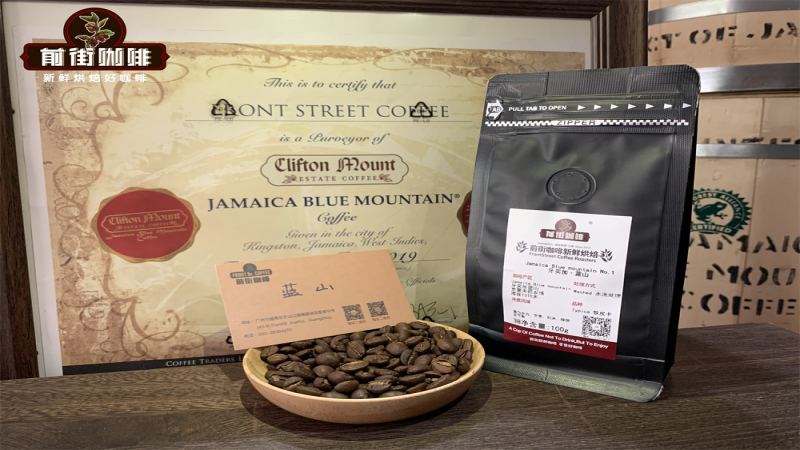
Blue Mountain coffee is one of the most famous coffees in the world, with scarce production and demand exceeding supply year-round, and counterfeit products keep emerging on the market. This article systematically reviews methods for identifying authentic Blue Mountain coffee, from pre-purchase qualification checks, oak barrel packaging, and official certification certificates, to post-purchase judgments based on aroma, taste, appearance, and texture. It also introduces the origin environment, variety characteristics, and washed processing techniques of authentic Blue Mountain, as well as the medium-dark roast flavor performance at Front Street stores and KONO dripper brewing parameters, helping coffee lovers have a basis for both purchasing and brewing.
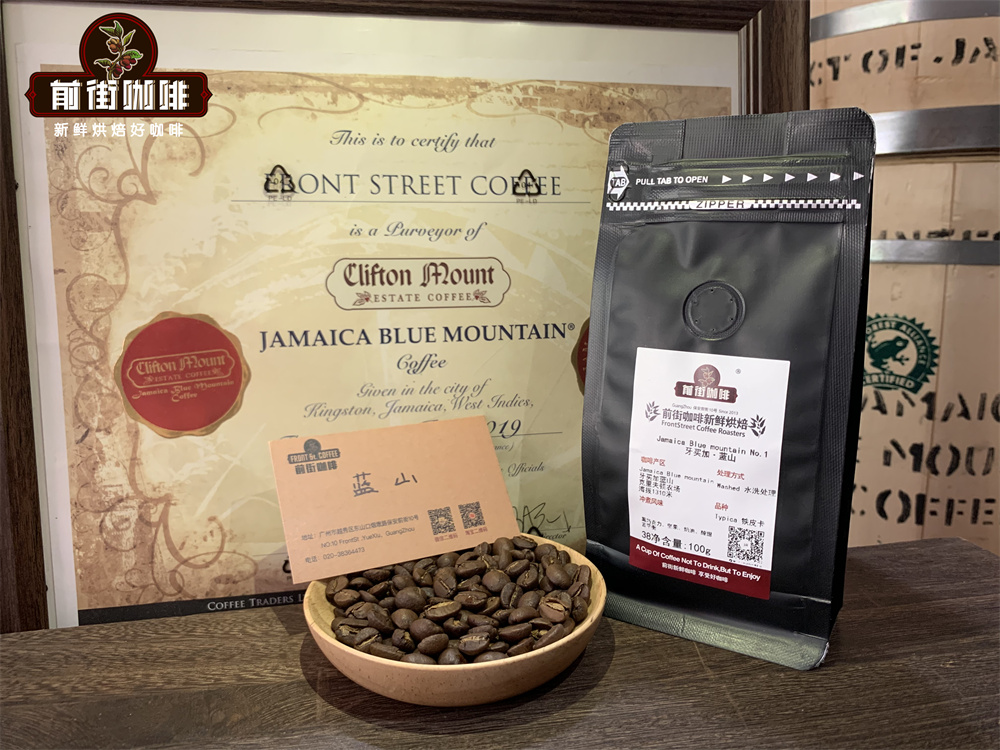
Blue Mountain coffee enjoys an extremely high reputation in the global coffee landscape, but due to its extremely low production, the market has long been in a state of demand exceeding supply. Tempted by huge profits, counterfeit products keep emerging. For those who truly understand coffee, the biggest worry is spending a large sum of money only to drink something that is not authentic Blue Mountain. So how exactly can one distinguish authentic Blue Mountain coffee from fake?
How to judge before placing an order
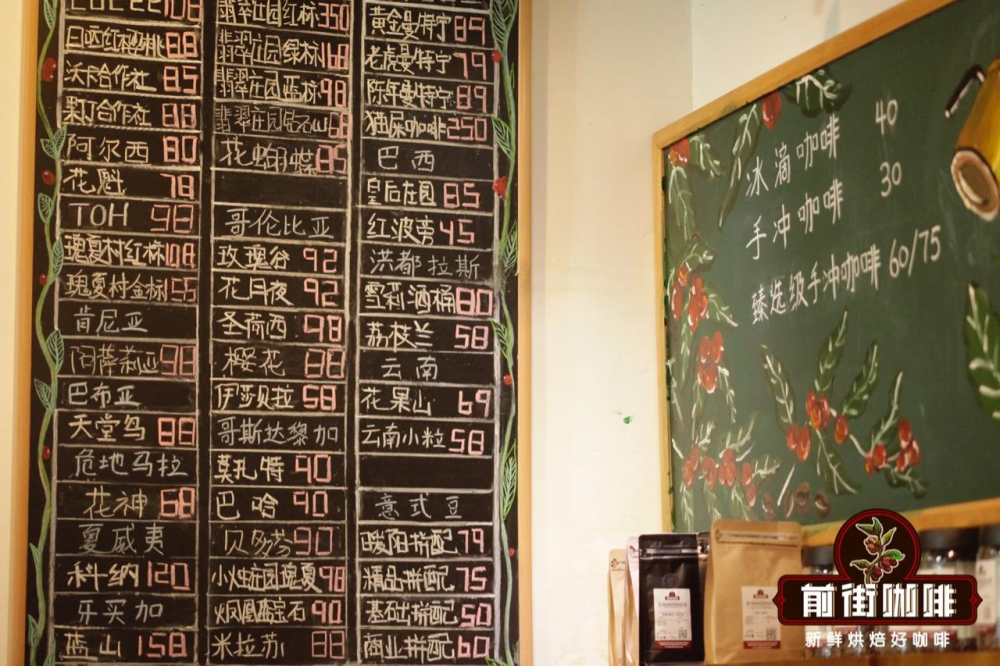
On major e-commerce platforms, we often see products like Blue Mountain flavor coffee, Blue Mountain blend coffee, Blue Mountain roasted coffee... Products with the words "Blue Mountain" in their names either contain only a small amount of Blue Mountain coffee mixed into a blend, or have nothing to do with Blue Mountain at all. In terms of price, truly high-quality Blue Mountain coffee cannot be sold very cheaply. If the listed price is only a few dozen yuan, Front Street can tell you clearly that it must be fake. As a price reference, the Blue Mountain No. 1 coffee beans sold at Front Street stores are priced at 158 yuan/100 grams per bag.
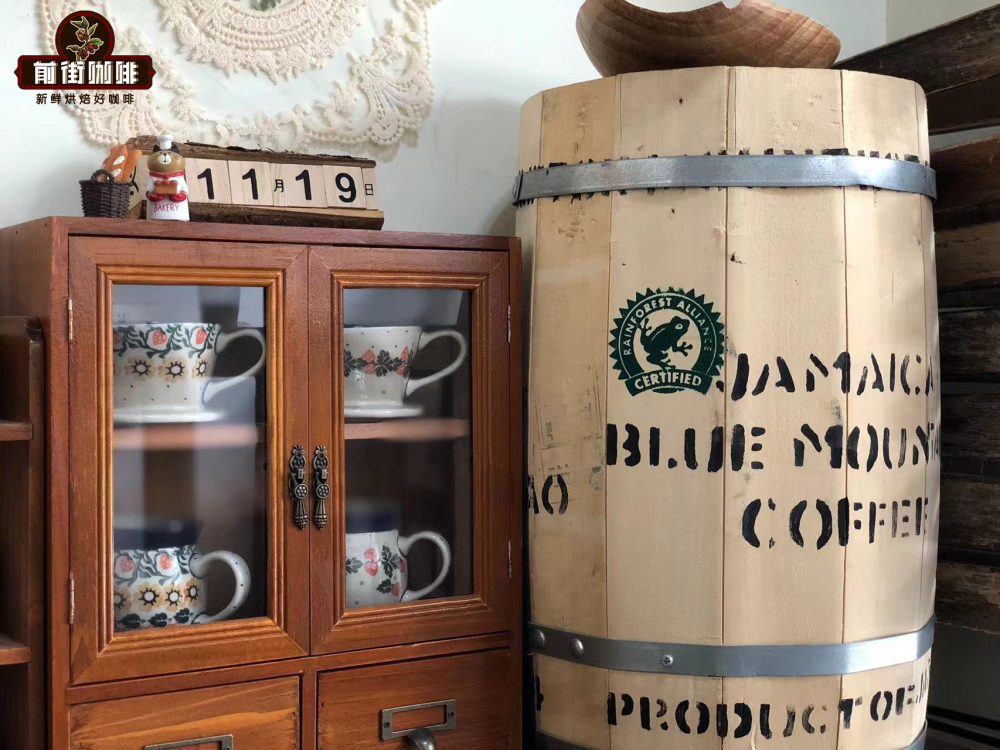
From the consumer's perspective, you can observe whether the seller has handmade oak barrels used for transporting Blue Mountain green beans. Jamaica is the only origin in the world that uses oak barrels as coffee transport containers. The barrels come in three specifications: 70 kg, 30 kg, and 15 kg. Compared with ordinary coarse cloth sacks, oak barrels can absorb and release internal and external moisture while preventing coffee aroma from escaping outward, keeping the moisture content of the coffee beans more stable and thus making the roasting process more controllable. Over time, oak barrels have also become one of the important symbols for identifying authentic Blue Mountain coffee.
In addition, producers and distributors of Blue Mountain coffee must obtain permission from the Jamaican government and authorization from the Jamaica Coffee Board. All Blue Mountain batches exported from the region must undergo quality testing and certification by the Coffee Board and carry corresponding labels. Therefore, we can ask the seller to present relevant Blue Mountain certification documents to confirm whether it is truly Blue Mountain coffee.
Front Street's Blue Mountain No. 1 coffee is produced by Clifton Mount Estate and has a quality certificate issued by the Jamaica Coffee Board, an authorized sales certificate issued by the Blue Mountain coffee producer, and a Jamaican Blue Mountain coffee certificate of origin. The Dongshankou store also displays oak barrels used to hold Blue Mountain green beans.
After receiving roasted Blue Mountain coffee
If you already have a bag of roasted Blue Mountain coffee beans, you can judge them from the dimensions of aroma, taste, appearance, and texture.
In terms of aroma, authentic Blue Mountain coffee gives off a rich, dense, and lasting chocolate and roasted hazelnut scent, a level that ordinary dark-roast blends find hard to reach. In terms of taste, real Blue Mountain coffee balances acidity, sweetness, bitterness, and aroma, with no single flavor standing out too much, and both body and sweetness are just right.
Before export, Blue Mountain coffee undergoes extremely strict screening and evaluation. The CIB's assessment standards for Blue Mountain green bean quality involve multiple aspects: green bean size, defect rate, color, uniformity, and post-roast cupping performance (including dry fragrance, wet aroma, acidity, flavor, body, cleanliness, etc.). The final Blue Mountain coffee appears bright in color, neat in shape, uniform and plump in bean size, and feels crisp and smooth when ground.
Why is authentic Blue Mountain coffee so precious?
The high quality of Blue Mountain coffee is inseparable from the superiority of its growing environment. The Blue Mountain range is surrounded by the waters of the Caribbean Sea, forming a unique island tropical rainforest microclimate, with concentrated rainfall in the rainy season and good drainage. Volcanic ash from active volcanoes enriches the soil with nutrients, so coffee trees do not need much irrigation or fertilization. Here there is abundant sunshine year-round, misty surroundings, and a cool and comfortable high-altitude growing area very suitable for various crops. Local residents usually plant coffee trees together with banana trees on the slopes of the Blue Mountains.
The CIB has designated an area of about 6,000 hectares in the Blue Mountain range and strictly stipulates that only Typica coffee produced within this area can be called "Blue Mountain Coffee." Coffee from other areas is called High Mountain Coffee. According to the boundaries set by the CIB, the forest areas growing Blue Mountain coffee are at an altitude of about 910 to 1,700 meters, mainly distributed in St. Thomas, St. Mary, St. Andrew, and Portland, accounting for one third of the entire Blue Mountain growing area.
The variety of Blue Mountain coffee is Typica. The higher the growing altitude, the more prominent Typica's flavor expression becomes. However, the Typica variety has weak disease resistance and is highly susceptible to infection. Combined with low fruit yield per tree, it requires more manpower for careful care. At the same time, the high-altitude Blue Mountain areas have rugged terrain, making management and picking very difficult and placing extremely high demands on the skill of harvest workers, which further limits production. In recent years, less than 15% of coffee beans produced in Jamaica can carry the Blue Mountain coffee label, about only 900 tons. After picking, the fresh coffee cherries are immediately transported to processing plants, where they are washed to remove the skin and pulp and then dried.
Washed Blue Mountain coffee
Hand-picked coffee cherries are placed in water, and impurities and unripe fruits are removed by flotation. Then the skin and pulp are removed, and the coffee beans are fermented in tanks for 12 to 18 hours, then spread out under the sun to dehydrate and dry, and finally packed and left to rest in warehouses before being sent for quality inspection prior to export. The washing step not only reduces the defect rate but also restores the aroma of the Blue Mountain coffee beans themselves, making the mouthfeel cleaner.
Front Street uses a medium-dark roast to maximize the classic Blue Mountain flavor, highlighting chocolate and nut aromas while retaining soft acidity and sweetness, bringing the overall taste into balance. After fresh roasting, Front Street immediately cupped the Blue Mountain coffee beans: the dry fragrance showed nuts, melon, and chocolate, and after pouring in hot water, aromas of oolong tea, caramel, honey, and dark chocolate could be smelled. When tasted, there were rich flavors of dark chocolate, roasted hazelnut, cream, and brown sugar, with a clean and clear mouthfeel, full body, and lasting aroma.
How should authentic Blue Mountain No. 1 coffee be drunk?
As the coffee atmosphere in China continues to heat up, now even without going to a coffee shop, you can brew a cup of fragrant Blue Mountain coffee at home. After purchasing Blue Mountain No. 1 coffee beans, many friends ask Front Street how to brew it more deliciously. Below, Front Street shares its extraction approach based on the way it is served in stores.
When brewing coffee beans with a mainly bitter profile, Front Street usually gives priority to the KONO dripper, with the aim of highlighting the coffee's full-bodied texture. The upper part of the KONO dripper allows the filter paper to fit better. Compared with the V60 dripper, its extraction method is mainly immersion-style, which can increase the overall concentration of the coffee and thereby enhance body. Likewise, the KONO dripper is also suitable for brewing Brazil Queen Estate coffee beans and Golden Mandheling coffee beans.
The parameters for brewing Blue Mountain No. 1 at Front Street stores are as follows:
Dripper: KONO dripper
Water temperature: 88°C
Coffee-to-water ratio: 1:15
Coffee grounds: 15g
Grind size: EK43s - setting 10.5 (75% passing rate on No. 20 standard sieve)
Front Street's procedure is to first wet the KONO dripper, then align and place the filter paper so that it fits the dripper more closely. After pouring out the water in the server, add 15g of coffee grounds, bloom with 30g of water for 30 seconds, then start pouring in a small stream in circles from the center until reaching 125g, at which point begin staged pouring. When the coffee bed drops to half the height of the dripper, pour the second stage in the same manner until 225g. After all dripping is complete, remove the dripper.
For professional coffee knowledge exchange and more coffee bean information, please follow Coffee Workshop (WeChat public account: cafe_style)
For more specialty coffee beans, please add the private WeChat of Front Street Coffee (FrontStreet Coffee), WeChat ID: qjcoffeex
The above content is compiled by CoffeeHunters, a coffee news website.


