







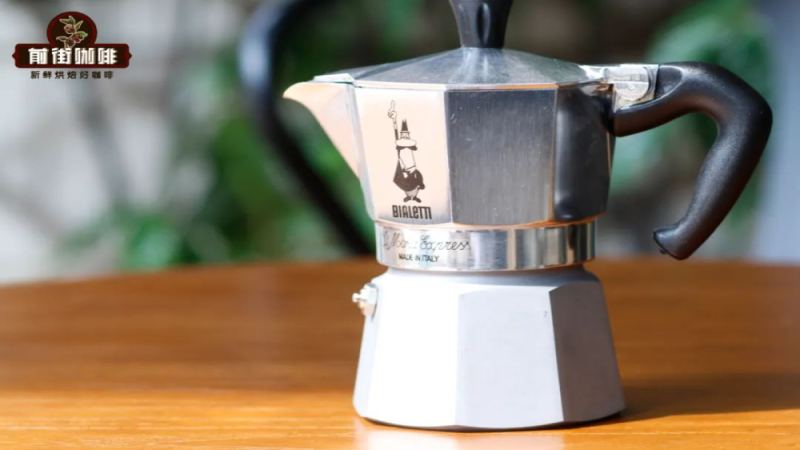
The moka pot, as a household pressure-extraction device, is almost a must-have in every Italian home thanks to its convenient operation and rich flavor. This article provides a detailed analysis of the moka pot's structure and working principles, its differences from espresso, and a step-by-step guide to proper use, including water volume control, grind size selection, and heating techniques. At the same time, in response to the moka pot's extraction characteristics, Front Street Coffee recommends three suitable coffee beans: the Classic Blend, Brazil Queen's Estate, and Colombia Huila, which respectively satisfy the needs for rich crema, balanced flavor, and dark cocoa aroma. Whether you are a beginner or an advanced enthusiast, you can gain practical guidance from this.
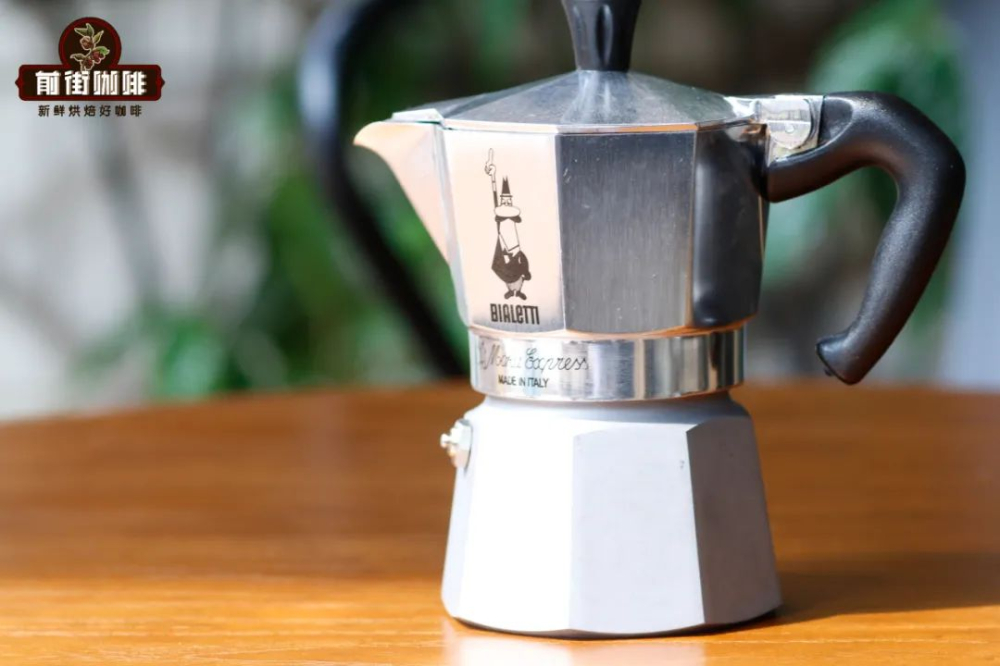
The moka pot extracts coffee through high-temperature pressure, similar in principle to an espresso machine but at lower pressure. With the help of pressure, the coffee's aromas and flavors are released in a more concentrated way, so the coffee brewed with a moka pot tastes rich and full-bodied.
The Structure and Components of a Moka Pot
In 1933, Bialetti invented the world's first moka pot. It generates steam pressure through heating, quickly extracting the essence of the coffee. Its working pressure is about 1-2 bar, so it can be seen as a scaled-down espresso machine. Because it is simple to operate, almost every Italian household keeps one.
A moka pot consists of three parts: the upper chamber, the filter basket, and the base. There are different sizes on the market, and by structure they are also divided into single-valve and double-valve types. The one Front Street uses is a Bialetti three-cup single-valve moka pot.
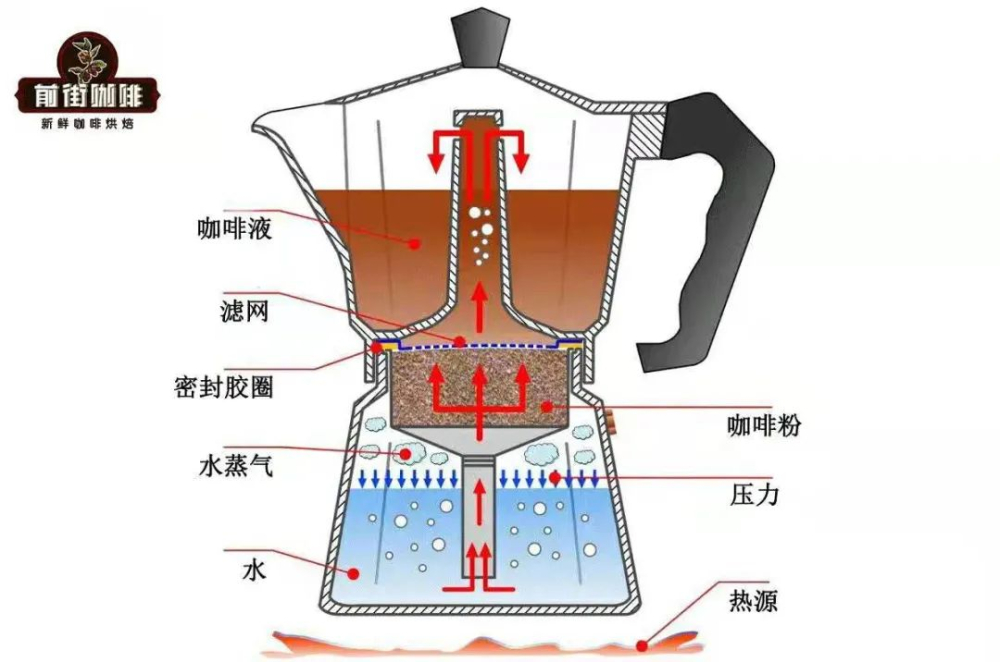
The lower chamber holds water, the filter basket holds ground coffee, and the upper chamber collects the brewed coffee. After the water in the lower chamber is heated, steam pressure pushes the hot water upward through the layer of coffee grounds in the filter basket. The coffee bed obstructs the water flow, and when the hot water breaks through the resistance and surges into the upper chamber, a rich coffee liquid is obtained.
Does a Moka Pot Make Espresso?
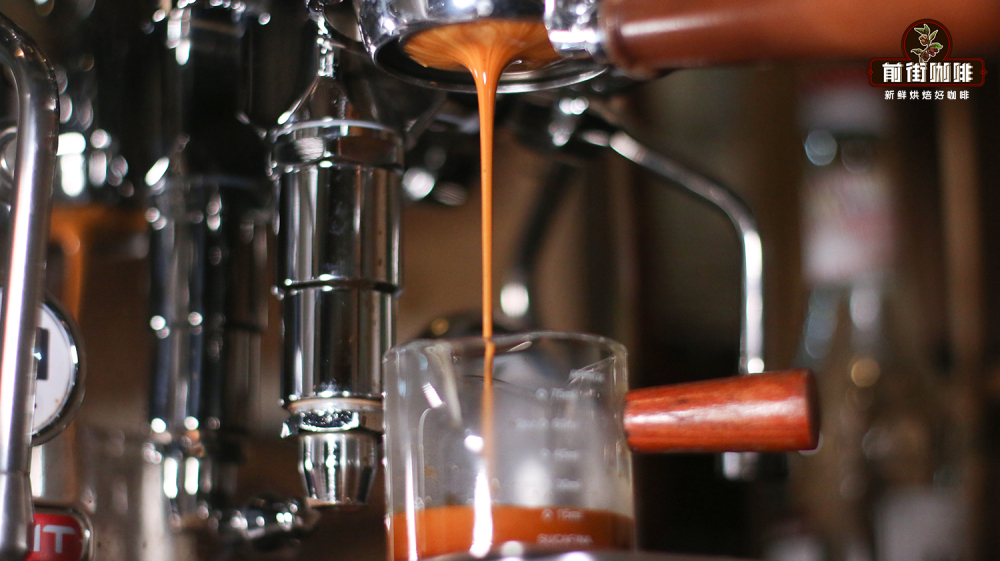
Both the moka pot and the espresso machine use the principle of pressure extraction. Although the coffee from a moka pot tastes strong, it is still different from common espresso. What is now called espresso requires more than 9 atmospheres of pressure to extract, producing a coffee that is rich, viscous, and full of fine crema. The maximum pressure of a moka pot, however, is only about 2 bar, far lower than a commercial espresso machine, so the coffee is relatively thin, and its flavor and body are also inferior to espresso.
Espresso can have its flavor and mouthfeel changed through tiny adjustments, but a moka pot can only be adjusted through two variables: grind size and extraction time, making it hard to reach espresso's refined level. In a coffee shop, freshly made espresso has a layer of golden crema floating on the surface, while moka pot coffee is thinner because of lower pressure, so it cannot be fully called espresso. Still, if you want to quickly drink a cup of rich coffee at home, Front Street believes the moka pot is still a very good choice.
The Correct Steps for Using a Moka Pot
Front Street first removes the base of the moka pot and fills the lower chamber with warm water, which shortens heating time and also prevents the coffee grounds from developing a burnt, bitter taste due to too-rapid heating. The water volume should be kept below the pressure relief valve line. The purpose of the safety valve is to prevent an explosion caused by too-fine coffee grounds blocking the channel. If the safety valve is submerged in water and the extraction channel is also blocked, the consequences of the lower body exploding under high temperature are extremely serious.
To extract a rich black coffee, the grind size should be finer than pour-over but coarser than espresso. Too coarse will lead to under-extraction and sputtering, while too fine makes over-extraction easy, giving the coffee a heavy burnt bitterness that is hard to swallow. The Front Street store uses an EK-43s grinder, with the setting adjusted to a grind size of 3.
With a moka pot, there is actually no need to worry too much about dose and ratio. Simply pour the ground coffee into the filter basket, level it and fill it, smooth it with your finger, and then place it into the base. Do not tamp it hard; tamping too firmly will hinder the upward flow of water and affect extraction. If there is not enough coffee, the water in the lower chamber cannot fully extract when it enters the coffee bed under steam pressure, causing violent sputtering into the upper chamber.
Then screw the upper chamber tightly onto the lower chamber and place it on a gas stove or induction cooker to heat. When using an open flame, be careful that the flame does not extend beyond the base of the pot. Wait for the moka pot to heat up, and after hearing a hissing sound, turn to low heat, and the coffee and crema will flow out slowly. When the coffee in the upper chamber is half full, you can turn off the heat source, move the pot to the table with a wet towel, and use the residual heat and internal pressure to continue extracting the remaining coffee.
If you hear a whining sound during extraction but no coffee ever flows out into the upper chamber, the outlet is very likely blocked. At this point, you should first turn off the heat to avoid dry heating causing excessive internal pressure and bursting, which would create a safety hazard.
Finally, pour the extracted coffee into a cup and add warm water at a 1:1 ratio. A moka pot americano is then complete.
Daily use of a moka pot requires regular cleaning and maintenance. Front Street cleans it promptly after every use to avoid residual coffee grounds causing off-flavors or burnt bitterness. If old coffee stains remain on the filter plate, gasket, or extraction channel, they may cause blockages and affect normal extraction.
Which Coffee Beans Are Suitable for a Moka Pot?
Pressure extraction is different from drip extraction, so bean selection should be based on its characteristics. Imagine the same light-roasted single-origin bean: pour-over can bring out floral, fruity, sweet, and bright notes, while pressure extraction may highlight a sharp acidity. Therefore, Front Street recommends choosing medium to medium-dark roasted coffee beans.
If you like moka pot coffee with rich crema, you can buy Front Street Classic Blend: Front Street Classic Blend pays tribute to the once-popular "Mamba coffee," combining Indonesian Mandheling and Brazilian espresso beans. It has both the wild aroma of Mandheling and the smooth mouthfeel of Brazilian beans, with complementary and harmonious flavors. Adding Robusta to the Mamba recipe significantly enhances the crema, giving the coffee a stronger body. It is suitable for home brewing and can also be used for latte art.
If you like moka pot coffee with a balanced flavor, you can buy Front Street Brazil Queen's Estate: The variety at Brazil Queen's Estate is Yellow Bourbon, naturally clean and sweet. The natural process brings a sweet-and-sour taste, good balance, and tropical fruit aromas. After medium-dark roasting, it shows the mellow flavors of nuts and chocolate. After pressure extraction, the coffee is full-bodied, with a lasting caramel aroma.
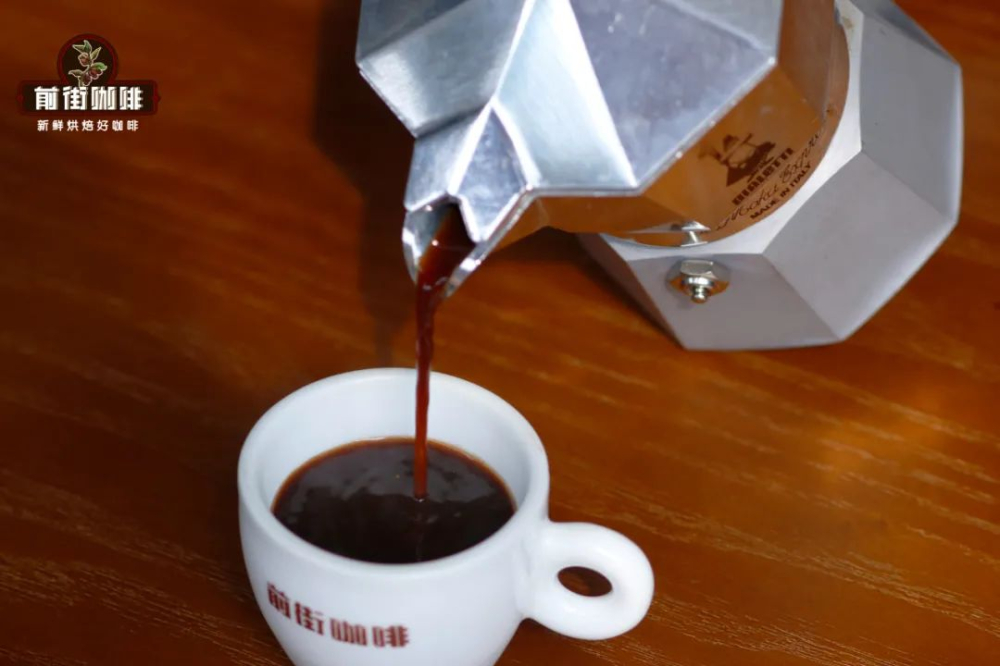
If you like moka pot coffee with dark cocoa aromas, you can buy Front Street Colombia Huila: Colombian coffee is famous for its soft mouthfeel and rich nutty, chocolatey mellowness. This uses the high-quality Caturra variety from the well-known Huila region, where a unique microclimate creates rich aromas. The washed Huila coffee has chocolate, caramel, and pleasant, smooth fruit acidity, and when made into moka pot coffee it presents a balanced, clean, and mellow aroma.
The above content is compiled by CoffeeHunters, a coffee news website.


