







In the process of making Americano coffee, the grinding step is often overlooked by most people, yet its impact on the final flavor is extremely critical. Many coffee enthusiasts focus on water temperature, coffee dosage, or equipment type, but rarely delve into the coarseness of the coffee grounds. This article will start from the differences between freshly ground and pre-ground coffee, systematically explain the suitable grind size for Americano coffee machines, the grinding requirements for different extraction methods, as well as the origins and flavor differences between espresso and Americano coffee. It will also combine recommended beans from Front Street Coffee to help you more comprehensively master the essentials of making Americano coffee.
For more specialty coffee knowledge, please follow: Front Street Coffee (Frontsteet Coffee)
In the entire coffee-making process, the importance of the grinding step is often underestimated. Most guests who come to Front Street to taste coffee will ask the barista about the suitable water temperature for extraction, the appropriate coffee dosage, or raise questions about different coffee beans and pour-over equipment, but almost no one cares about how coarse or fine the coffee is ground.
Although many people nowadays buy pre-ground coffee for convenience, those who truly understand coffee know that the flavor performance of pre-ground coffee is far inferior to freshly ground coffee. For this reason, more and more merchants are using "freshly ground coffee" as a selling point to attract customers.
Regarding why freshly ground coffee is superior, Front Street would like to provide a brief explanation here:
Even vacuum-packed pre-ground coffee cannot match the freshness of freshly ground coffee. There are three main factors that cause coffee quality to decline: moisture, oxidation, and the loss of carbon dioxide. Coffee beans contain some unstable compounds that will change and decompose within a short time. The grinding action itself has already initiated the oxidation process.
In addition, grinding in advance greatly increases the surface area of the coffee beans, which means moisture in the air is more likely to come into contact with the coffee grounds. Water can dissolve the oils in coffee beans, so grinding accelerates the loss of precious oils. The effect of carbon dioxide on coffee beans is similar to that of water. Therefore, if you grind coffee in advance, it will more or less lose some of its flavor and aroma. Front Street recommends that you grind and drink freshly as much as possible; if conditions really do not allow, pre-ground coffee should be stored in a vacuum, odor-free, and light-proof environment.
Grinding coffee yourself not only better preserves the flavor but also allows you to control the coarseness of the coffee grounds more precisely. Friends who have some pursuit of coffee should know that grind size is one of the key factors determining whether coffee tastes good, and different extraction methods have different grinding requirements.
There are many types of home coffee grinders, which can be broadly divided into two categories: hand grinders and electric grinders. Electric grinders can be further subdivided into three types, which will not be elaborated here. Those interested can check the Front Street Coffee (FrontStreet Coffee) official account or search on coffee websites themselves.
In earlier years, there was also a blade-type or propeller-type grinder, which has now been eliminated by the market; its only advantage was its low price. This type of grinder cannot adjust the setting and can only control coarseness through grinding time, resulting in very uneven coffee particle sizes. If the budget is limited or conditions are restricted, it can be used as a makeshift option, but it is not recommended. Of course, the grounds produced by this grinder are not suitable for espresso, but they can be used for French press or American drip machines and other equipment with lower grinding requirements.
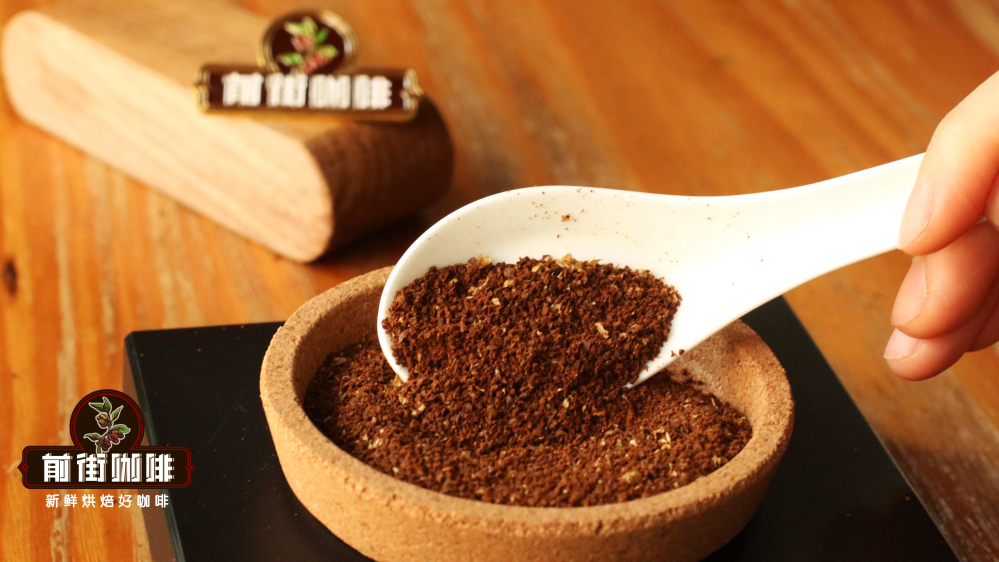
Returning to the issue of grind size for Americano coffee, although today's coffee world has divided the correspondence between grind size and equipment very meticulously, classifying it into extra coarse, coarse, medium-coarse, medium, medium-fine, fine, extra fine, and so on to match different extraction equipment, Front Street will simplify grind size into three levels here for easier understanding: fine, medium, and coarse.
For drip or immersion equipment represented by Americano coffee machines, we usually use a medium grind. The reason is that during the brewing process, grind coarseness greatly affects the extraction effect of the coffee.
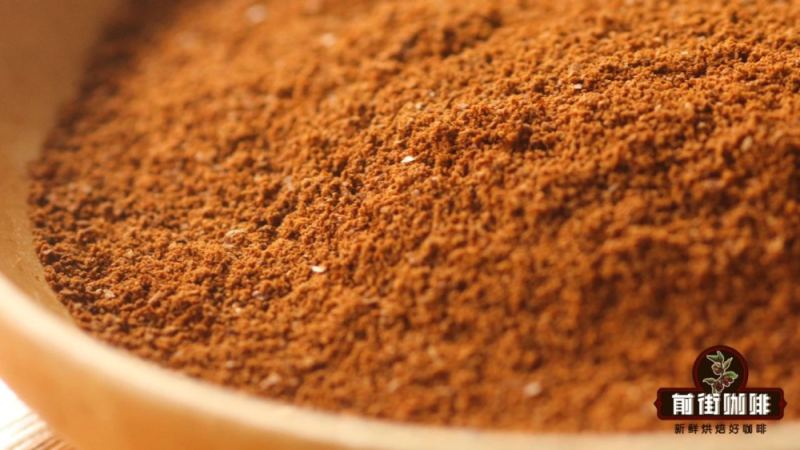
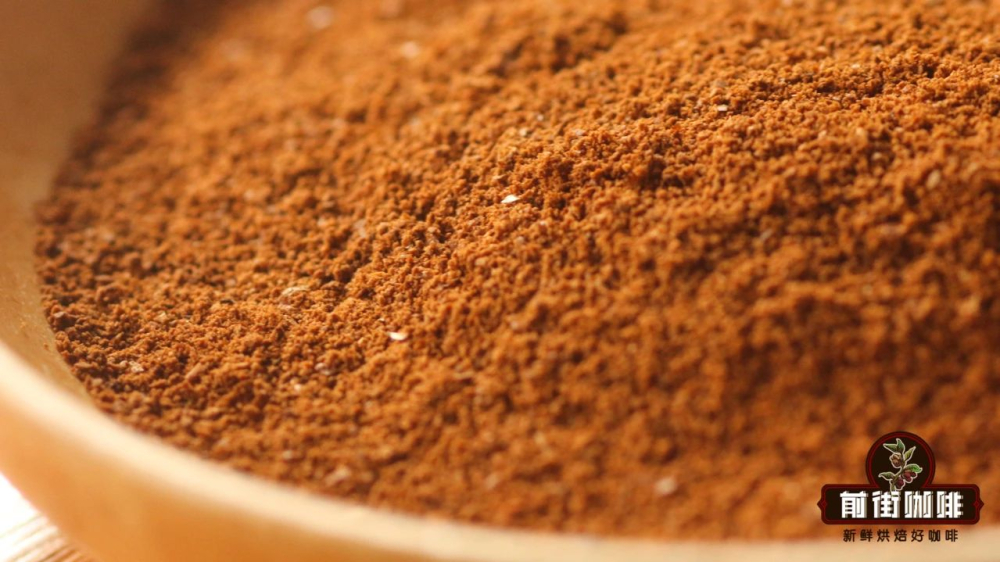
Drip and immersion coffee-making methods allow the coffee to remain in contact with water for a long time. If a fine grind is used, the contact area between water and coffee is too large, making it easy to produce a bitter "over-extracted" taste; at the other extreme, using an extremely coarse grind will produce coffee with a strong "watery" feel. So how coarse should the grounds be for Americano coffee? Just sift it and you will know. Front Street recommends testing with a No. 20 standard sieve; a passing rate between 70% and 80% can be collectively called a medium grind.
Espresso pursues richness, balance, body, and speed, extracting the essence of coffee within just 20 to 30 seconds. In such a short time, the extraction force must be increased by adjusting grind coarseness, so the fineness of espresso grounds is close to flour (as a metaphor only), while the grounds used by Americano coffee machines are similar to coarse salt. Friends who often come to Front Street for coffee should have noticed that when Front Street makes coffee with a pour-over dripper, the coffee grounds still have a certain gritty texture. This is because the extraction time for pour-over is about 2 to 3 minutes, similar in principle to an American drip machine, with a slightly longer extraction time.
So what is the difference between Americano coffee made with these two different grind sizes? Front Street believes that to understand this question, one must first understand the differences between espresso and Americano coffee.
Modern Americano coffee evolved from espresso, which everyone should know. During World War II, American soldiers drank espresso in Europe, and its strong taste was hard for them to accept, so they added water to espresso to imitate the flavor of traditional American drip machines. This practice spread among American soldiers. Because this way of drinking was mainly popular among Americans, while traditional Italians and Europeans disapproved of it, Europeans called this coffee Americano. However, American drip machines can only make hot coffee; iced Americano still has to be made with espresso extracted from an espresso machine plus a mixture of ice and water.
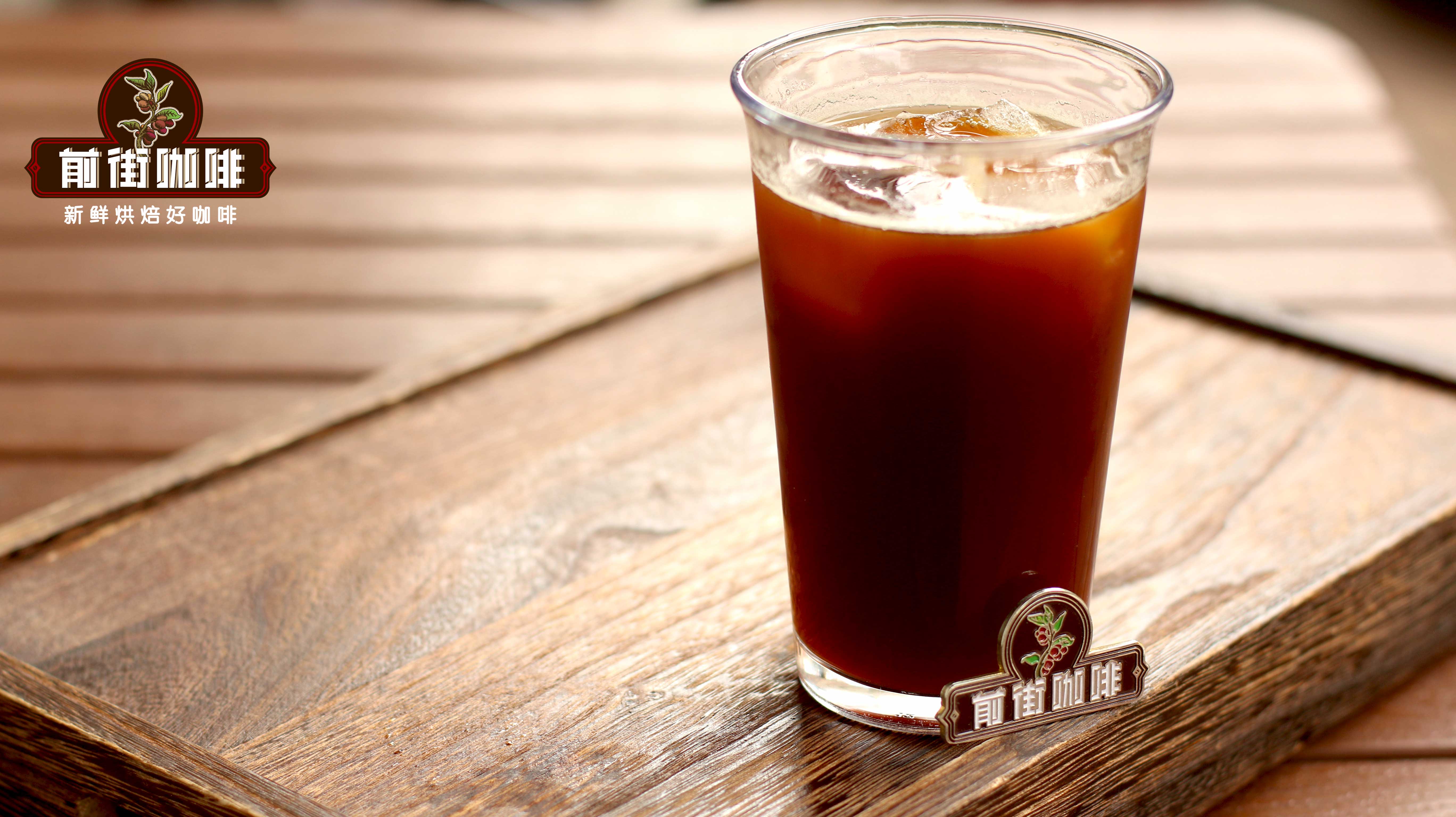
As for the flavor differences among Americano coffees, Front Street believes the key still depends on the coffee beans used. If you prefer fruity flavors, we recommend Front Street Colombia Sidra coffee, which can be ordered directly through the Front Street Taobao store or Front Street Tmall flagship store. This coffee comes from Finca La Divisa in the Huila region, grown at an altitude of 1,700 meters, and processed with double anaerobic natural. It has rich flavors of grape, passion fruit, and citrus. Made into Front Street Sidra Americano coffee, it presents a refreshing and clear grape juice profile, cool and pleasant.
Front Street Coffee (FrontStreet Coffee) — Colombia Sidra Coffee Beans
Region: Colombia, Finca La Divisa
Altitude: 1,700 meters
Variety: Sidra
Processing Method: Double Anaerobic Natural
Drip coffee machines have no restrictions on the roast level of coffee beans, while espresso machines are best used with dark-roasted coffee beans. Dark-roasted beans, after a longer roasting period, have richer flavors, significantly reduced acidity, and release more oils, giving the espresso liquid a thicker, fuller texture in the mouth. This is also the direction generally pursued by espresso today.
Coffee beans of other roast levels can actually also be used to make espresso, but the resulting drink may taste a bit strange, because the high-temperature and high-pressure characteristics of espresso machines amplify the features of the coffee beans. Light-roasted beans will bring obvious acidity, while over-roasted beans will give the espresso a burnt taste.
The above content is compiled by CoffeeHunters, a coffee news website.


