







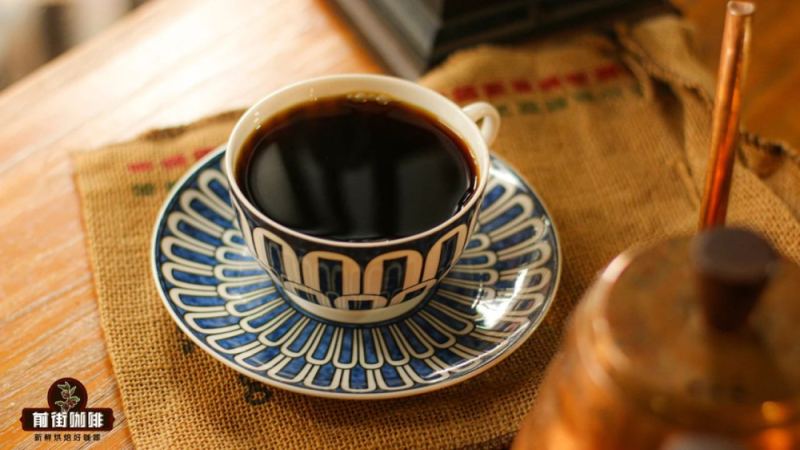
What kind of beverage is kopi luwak, really? Is it truly made from cat feces? Why does it remain so expensive? Can in-vivo fermentation actually change the flavor of coffee beans? This article will discuss the origins, digestion process, flavor characteristics, price factors, and brewing methods of civet coffee from the objective perspective of Front Street Coffee, while sharing Front Street's Indonesian kopi luwak roasting and pour-over parameters. The article will also offer advice on whether it is worth buying, and recommend alternatives such as Front Street Panama Geisha, Ethiopian Hualei, Brazilian coffee beans, and Golden Mandheling for coffee lovers with different taste preferences.
For more specialty coffee knowledge, please follow the WeChat public account: Front Street Coffee (FrontStreet Coffee)
When people mention "kopi luwak," many feel both curious and hesitant—they want to try what it tastes like, but worry whether it really has anything to do with cat excrement, whether it is unclean, and whether it is hard to swallow. Front Street Coffee (FrontStreet Coffee) can first make one thing clear: there is absolutely no need for such concerns. Its flavor is quite full-bodied and smooth. Below, Front Street Coffee (FrontStreet Coffee) will discuss kopi luwak from as objective a standpoint as possible.
First, let's address the most frequently asked question: is kopi luwak really made from feces excreted by cats?
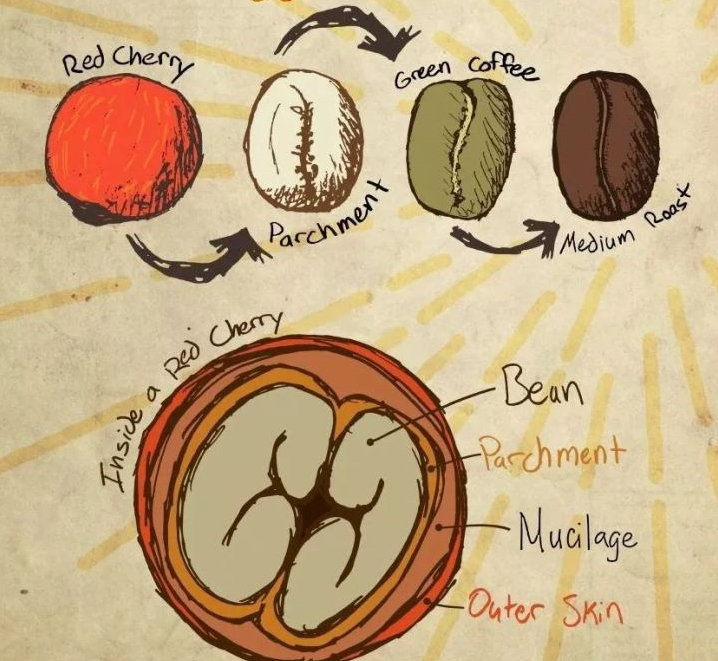
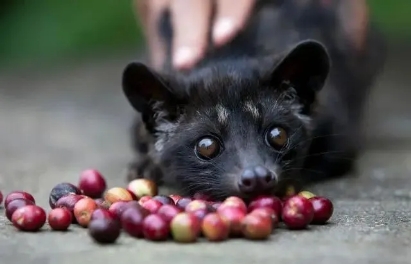
In principle, it is indeed related to the excretion process of the civet. But note that what the civet eats is not shelled coffee beans, but a whole complete coffee cherry. In previous articles, Front Street introduced the structure of the coffee cherry in detail: from outside to inside, it consists of the skin, pulp, pectin, parchment (endocarp), silver skin, and finally the coffee bean at the center.
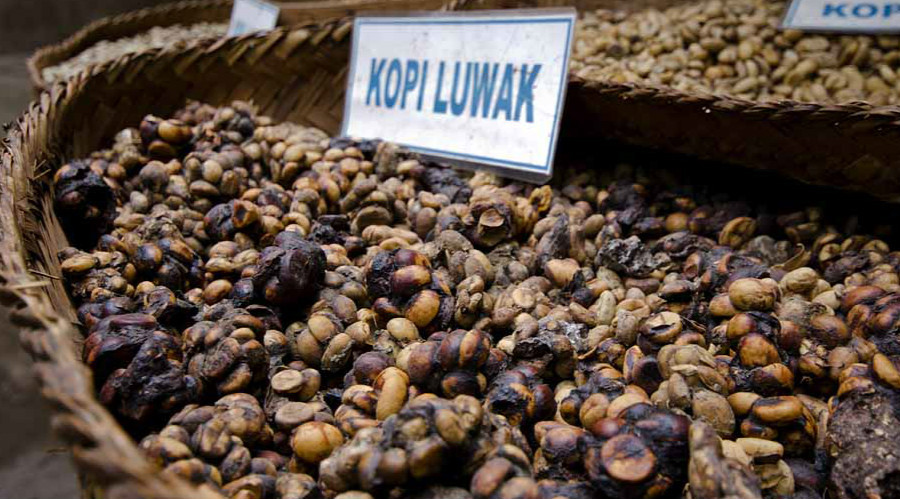
When coffee cherries pass through the civet's digestive tract, they undergo a round of fermentation. Sugars and acidic substances in the pulp and pectin penetrate into the coffee beans. This process does not destroy the hard coffee beans and parchment. After the civet excretes the coffee beans, people collect them, wash them clean, dry them, and finally remove the parchment. Front Street can responsibly say that the coffee beans have almost no direct contact with the excrement itself, and after complete processing, kopi luwak beans are much cleaner than most people imagine.
Why is kopi luwak so expensive?
Ultimately, it is because rarity drives up value. Kopi luwak can only be obtained by having civets eat coffee cherries and then excrete them. Wild civets are omnivores, mainly feeding on meat and insects in their daily diet, and coffee cherries are more like dessert after a meal for them. But after kopi luwak inexplicably became sought after by wealthy people, some merchants began breeding and keeping civets in captivity, feeding them only coffee cherries every day and giving them no other meat. The acidity of coffee cherries speeds up the civet's gastrointestinal motility, thereby shortening excretion time and increasing yield. However, large-scale artificial feeding, sorting, and fine processing all require manpower, so the cost may actually be higher than that of wild sources.
Can kopi luwak really change the original flavor of coffee beans through the digestive system?
The answer is: unlikely, especially for those produced by captive civets. Front Street often emphasizes that whether a cup of coffee tastes good fundamentally depends on the coffee variety itself. Civets naturally inhabit the forest-edge shrublands and grassy areas of tropical rainforests or subtropical evergreen broad-leaved forests in Indonesia's low-altitude hills and mountains. A low-altitude environment simply cannot satisfy the growing conditions for high-quality Arabica coffee beans. In other words, the coffee cherries that civets eat are either Robusta or lower-quality Arabica, and the former accounts for the majority.
Front Street also mentioned earlier that when civets eat only coffee cherries for a long time, the acidity of the fruit prompts accelerated gastrointestinal motility, and in most cases the coffee beans are excreted about two hours after eating. You can imagine: what decent fermentation can be completed in two hours? In other words, the coffee fruit is excreted before it has had time to fully ferment in the digestive tract, so the resulting coffee beans can naturally only present the inferior coffee flavor they originally had. Low-altitude Indonesian Robusta coffee already has earthy and herbal medicine notes, and is also high in body, so this type of kopi luwak carries the musty, earthy smell of aged beans, has a body close to syrup, and a very distinctive aroma.
Is kopi luwak worth buying to try?
If you ask Front Street Coffee (FrontStreet Coffee) whether kopi luwak is worth buying, Front Street's view is this: the initial emergence of kopi luwak was a natural physiological phenomenon. If you can buy naturally produced kopi luwak beans, then there is no problem, and Front Street Coffee (FrontStreet Coffee) also offers naturally produced kopi luwak coffee. As long as the civet selects fully ripe coffee cherries on its own while eating normally, the resulting cup of kopi luwak has no problem at all. What is truly problematic are those merchants who engage in various improper practices for profit.
So what is the in-vivo fermentation method?
Although the coffee beans are not digested in the civet's digestive tract, the highly corrosive digestive fluids have already corroded their surface. These digestive fluids contain a special protease that can break the coffee beans' original protein chains, decomposing long-chain proteins into small particles and forming short-chain peptides and amino acids. The definition of short-chain peptides is: short-chain peptides composed of 3 to 9 amino acid residues, sometimes also called oligopeptides.
Next, Front Street will share how to roast kopi luwak and some insights on brewing kopi luwak.
Front Street Indonesian Kopi Luwak Region: Aceh, Indonesia Altitude: 1200m Variety: Tim Tim Processing method: in-vivo fermentation processing
Front Street Coffee (FrontStreet Coffee) roasting record Front Street's roaster used a Yangjia 800N: preheat the drum to 200°C, lower the setting to 160°C for charging, set the damper to 3, adjust the heat to 130, turnaround point at 1'28'', maintain the heat, turning yellow at 5'40'', the grassy smell disappears, entering the dehydration stage, raise the heat to 140, open the damper to 4, wrinkles appear on the surface, the toast aroma turns into coffee aroma, as the prelude to first crack, lower the heat to 100, open the damper to 5, and listen carefully for the sound of first crack. First crack begins at 9'15'', open the damper fully to 5. Post-first-crack development time is 4'25'', dropping at 203°C.
How does Front Street Coffee (FrontStreet Coffee) brew kopi luwak?
Brewing parameters: use a Kono dripper Water temperature: 86°C Dose: 15 grams Coffee-to-water ratio: 1:15 Grind size: medium-fine grind (70% passing through China standard No. 20 sieve)
Front Street Coffee (FrontStreet Coffee) uses staged extraction, also called three-stage brewing: use 30 grams of water for blooming for 30 seconds, pour in a small stream in circles until 125 grams for the stage break, and when the water level drops and is about to expose the coffee bed, continue pouring until 225 grams and stop pouring. When the water level drops and is about to expose the coffee bed, remove the dripper. (Timing starts at the beginning of blooming.) Extraction time is 2'01''. Kopi luwak flavor description: herbal, nuts, dark chocolate, fermented notes, high body, thick and smooth mouthfeel.
Considering its scarcity and high price, Front Street does not recommend drinking kopi luwak. Although genuine kopi luwak has a very good flavor, coffees from other producing countries are also excellent. For those who like floral flavors, Front Street Panama Geisha coffee is recommended; it is one of the most expensive coffees in the world. For those who like fresh coffee with acidity, Front Street Ethiopian Hualei coffee beans are recommended, with notes like black tea and berries. For those who like a balanced nutty and caramel flavor, that is, coffee that is neither sour nor bitter, Front Street Brazilian coffee beans are recommended. If you still love the solid, full-bodied mouthfeel of Indonesian coffee, it is suggested that you buy the highest-grade Front Street Golden Mandheling coffee. After multiple rounds of hand sorting, the defect rate of the coffee beans can be reduced to the minimum, thereby making the coffee aroma clearer and the sweet aftertaste better. All of the above coffee beans can be ordered at Front Street stores and the Front Street Tmall flagship store.
The above content is compiled by CoffeeHunters, a coffee news website.


