







In the Arabica coffee family, there is a special variety that is far larger than its peers—the Maragogype, whose beans can be up to three times the size of common Arabica beans. This variety, scientifically named Maragogype, has attracted coffee lovers with its unique form and balanced flavor since it was discovered in Brazil in 1870. This article, from the perspective of Front Street Coffee, systematically reviews the origin, botanical classification, production distribution, and flavor characteristics of Maragogype, and provides detailed information and brewing parameters for two representative coffees: Nicaragua Mama Mina Estate Maragogype and Guatemala El Bosque Estate Pacamara, offering a complete reference for coffee enthusiasts who want to learn about this niche variety.
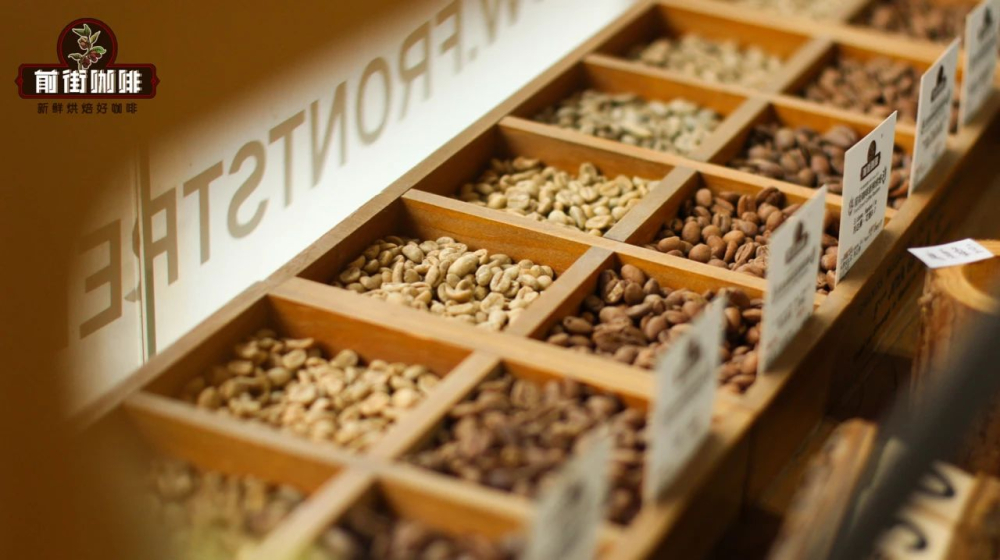
There are three main varieties in the coffee world: Arabica, Robusta, and Liberica. Taking the single-origin beans sold at the stores of the specialty coffee brand Front Street Coffee as an example, they are almost all pure Arabica, with a small number of hybrids of Arabica and Robusta. These coffee beans are generally not large in size—Robusta beans are the smallest and are called small beans; Arabica is in the middle and is called medium beans; Liberica is the largest and belongs to the large-bean category.
However, an anomaly has appeared in the Arabica family: its bean size reaches about three times that of ordinary Arabica beans, so it is vividly called the elephant of the coffee world—“Maragogype.”
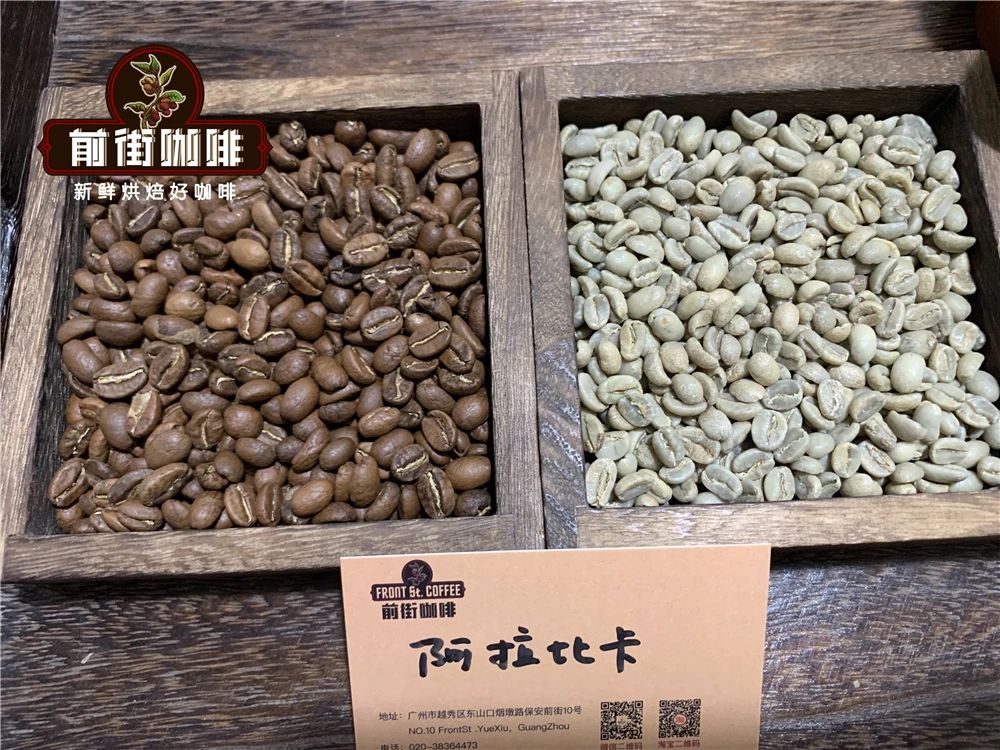
On the left are common Arabica beans, and on the right are Maragogype beans.
What is Maragogype?
The scientific name of Maragogype is Maragogype. According to information available to Front Street Coffee, this variety was first discovered in 1870 in the Maragogype producing area of Bahia State, Brazil. Because the bean shape far exceeds the norm, agronomists brought it back for biological morphological comparison and genetic testing, and ultimately confirmed that Maragogype is a natural mutation of the Arabica subspecies Typica. In other words, Maragogype also belongs to the Arabica subspecies.
At present, most coffee-producing countries grade by green bean size, usually regarding 17-18 mesh as the top specification in practice, while 19 mesh and above is extremely rare. The Indonesian Mandheling beans sold by Front Street Coffee are already large in bean size, among which Golden Mandheling can reach above 18 mesh; Maragogype generally reaches 20 mesh or even higher.
The enormous size of Maragogype is not only reflected in the beans; its trunk, branches, and leaves are also much larger than those of ordinary Arabica trees. This means that growing Maragogype requires more space, nutrients, and resources. In addition, daily management and harvesting are relatively difficult, and the fruiting cycle is rather long, so very few farmers are willing to plant it.
According to Front Street Coffee’s understanding, Maragogype coffee trees are currently distributed in only small amounts in Latin American countries such as Brazil, Nicaragua, Mexico, and Guatemala.
Flavor performance of Maragogype coffee
Front Street Coffee is likewise curious about the flavor of Maragogype, and for this reason purchased Maragogype from multiple producing areas for brewing comparisons. Overall, Front Street Coffee believes that Maragogype has a balanced flavor, a round and soft texture, moderate aroma, and appropriate body, with a notable performance. Among them, Front Street Coffee considers the Maragogype coffee from Mama Mina Estate in the Nicaragua producing area to have the best mouthfeel.
After repeated brewing comparisons of Maragogype from multiple producing areas by Front Street Coffee, it was found that Maragogype grown at an altitude of 700-800 meters has a relatively flat flavor lacking highlights; while Maragogype grown at a high altitude above 1,500 meters has a quite strong flavor performance, outstanding aroma, acidity with sweetness, and a full, rich body, even carrying a touch of the charm of Jamaican Blue Mountain coffee, yet its price is less than two-thirds that of Blue Mountain coffee. For this reason, some coffee shops sell Maragogype as a substitute for Blue Mountain coffee.
Hybrid varieties of Maragogype
Although the cultivation range of Maragogype is limited, its hybrid descendant Pacamara has inherited excellent genes and shone brightly. Pacamara was artificially hybridized from Pacas and Maragogype, retaining both the high yield and adaptability of Pacas and the size and excellent acidity of Maragogype. Its bean size is about 70-80% that of Maragogype. It is currently mainly grown in El Salvador and has repeatedly won championships in the local Cup of Excellence competitions.
The above is the information on the Maragogype variety compiled by Front Street Coffee. Next, Front Street Coffee will share the two Maragogype-related coffee beans mentioned above.
Front Street Coffee: Nicaragua Mama Mina Estate coffee beans
Producing area: Nicaragua Grade: SHB Altitude: 1,450-1,600 meters Processing method: Natural process Variety: Maragogype 18 mesh
Mierisch family, Mama Mina Estate
According to Front Street Coffee’s understanding, the Mierisch family owns nine estates and has been growing coffee since 1908, for more than a hundred years. Mama Mina Estate produces high-quality Nicaraguan coffee and has been certified by OCIA (Organic Crop Improvement Association) as high-altitude premium organic coffee. After roasting and brewing, Front Street Coffee believes that its flavor is thick and layered, with the aroma of black berries perceptible as soon as it enters the mouth; blackberry and smoked plum interweave with the scent of citrus peel, and the overall cup is solid, with a silky, sweet mouthfeel.
Front Street Coffee Guatemala El Bosque Estate coffee beans
Producing area: Huehuetenango, El Bosque Estate Altitude: 1,500 meters Variety: Pacamara Processing method: Washed process
The above is the Maragogype and Maragogype coffee-related information compiled by Front Street Coffee, and it is hoped that it will help coffee enthusiasts who want to learn about this subject. Before putting any new beans on the shelves, Front Street Coffee conducts roasting and brewing tests to find the best flavor parameters, and then brews them by hand for coffee enthusiasts to taste. Below, Front Street Coffee will share the brewing data for these two beans.
Front Street Coffee brewing parameters sharing:
Filter cup: V60; Water temperature: 90-92°C; Coffee dose: 15 g; Coffee-to-water ratio: 1:15; Grind size: medium grind; Brewing method: staged extraction. Use 30 g of water for blooming, with a blooming time of about 30 seconds. Pour 95 g of water in a small stream in circles around the center, that is, at 125 g of water, pause in stages. When the water level drops and is about to expose the coffee bed, continue pouring water until 225 g to finish. When the water level drops and is about to expose the coffee bed, remove the filter cup. (Start timing at the beginning of blooming.) The extraction time is 2'00".
Brewed flavor of El Bosque coffee beans: The acidity and sweetness are obvious and soft, with the sourness of lemon, passion fruit, plum, and plum, along with a brown sugar aftertaste. Brewed flavor of Mama Mina Estate coffee beans: Berries, citrus, caramel, nuts, spices
For more specialty coffee beans, please add the private WeChat of Front Street Coffee, WeChat ID: kaixinguoguo0925
The above content is compiled by CoffeeHunters, a coffee news website.


