







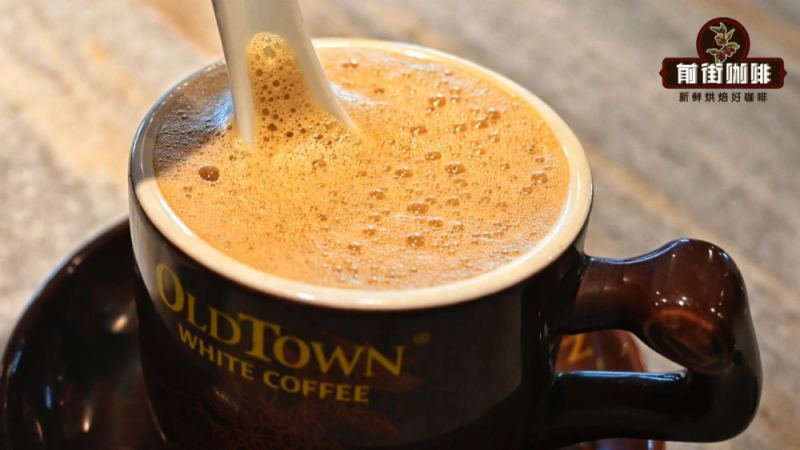
Nanyang coffee is a distinctive coffee beverage found in Malaysia, Singapore, Indonesia, Thailand, and other regions, made in a way completely different from contemporary specialty coffee. This coffee was first invented by Hainanese people; in the 1850s, coffee shops in Singapore were almost all run by Hainanese. To make low-quality robusta beans palatable, the Hainanese incorporated Chinese cooking techniques into the bean-roasting process, adding butter, sugar, salt, and other seasonings, forming a unique flavor system. From Kopi to Kopi O and Kopi C, Nanyang coffee has a complete set of ordering terminology. This article will trace the historical thread of Nanyang coffee, uncover the truth about white coffee, and master the key points for brewing a delicious cup of Nanyang coffee.
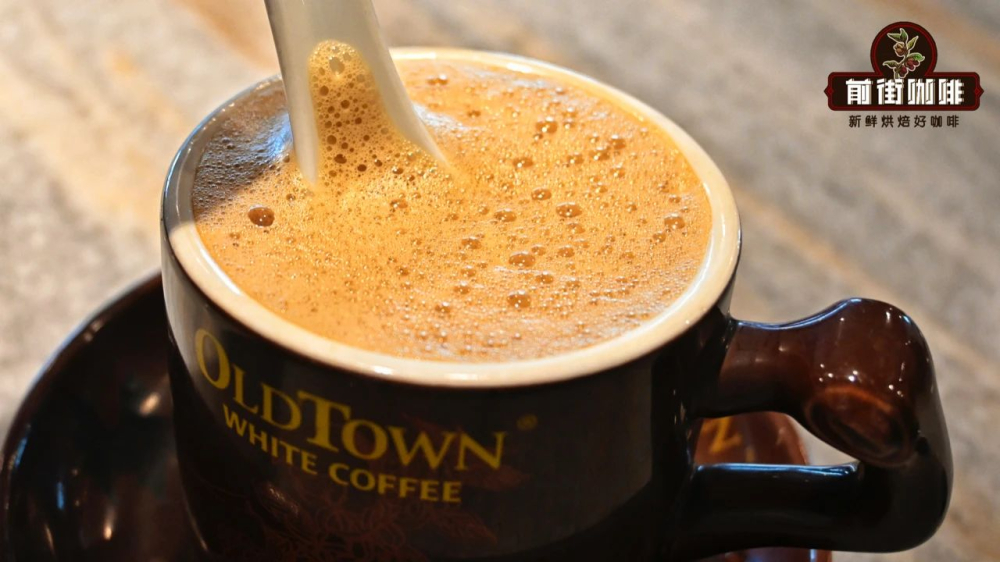
When Chinese coffee is mentioned, the first thing many elders think of is Nanyang coffee.
Last night, the author made a cup of coffee for his grandfather at home, and as he drank it, he recalled many memories related to Nanyang coffee. "The coffee we drank back then was truly fragrant and strong. Although the mouthfeel was rough, Nanyang coffee is a flavor that generations of Chinese people figured out with care, and it is also a flavor I have never been able to forget."
My grandfather's mother came from Singapore, where she was born and raised, and only returned to the Nanfanshun area of Guangdong after marrying, bringing the method of making Nanyang coffee with her. My great-grandmother once said that this is the taste of home, and it also carries the hardships of Chinese people going to Nanyang, and she hoped that later generations would remember it.
Literally understood, "Nanyang coffee" refers to coffee beverages from Malaysia, Singapore, Indonesia, Thailand, and other regions. Because everything from roasting to preparation methods is very different from the freshly ground coffee and specialty coffee we encounter today, "Nanyang coffee" is also used to refer to the coffee-making style that originated in the Singapore-Malaysia area, and later spread to Hainan and the Hong Kong and Macau regions.
During the Ming dynasty, the population grew rapidly, and people along the southeast coast had to keep searching south and west for new farmland and places to live, taking ships to the coastal areas of Indochina, the Philippine archipelago, the Indonesian archipelago, and other places to trade, work, and even marry locally and settle down. This was the "Nanyang migration."
For this reason, Nanyang, as a new homeland for Han Chinese immigrants, gradually acquired a clear scope and concept. As large numbers of Chinese people continued to move in, Chinese footprints spread across almost every part of Nanyang, becoming an important part of the ethnic structure of today's Southeast Asian countries, and Chinese dietary habits were transmitted to Nanyang along with them.
Strictly speaking, Nanyang coffee was first invented by Hainanese people. As early as the 1850s, coffee shops in Singapore were basically run by Hainanese.
In 1819, Stamford Raffles, an employee of the British East India Company, landed in Singapore and established a free trade port. After that, merchants from various countries came and went frequently, the population continued to grow, and Singapore gradually became an important stronghold for trade between Asia and Europe, requiring a large labor force.
During the early immigration period, the Hainanese accumulated culinary experience in Western cooking, coffee, and Western tea preparation by working for foreigners, laying the foundation for later work in the coffee and food industry. Later, the role of domestic servant was gradually replaced by Cantonese majie, and the Hainanese slowly "lost their jobs," so they turned one after another to running coffee shops. To cater to Chinese tastes, they Sinicized both coffee and Western food.
Most of the Chinese who migrated to Singapore in the early period relied on clan and hometown connections and spontaneously pulled one another along in order to make a living, often banding together locally to seek survival and development, thus forming occupational groups based on regional and kinship ties. By the 1850s, it was already quite common for a Hainanese family to own more than one coffee shop.
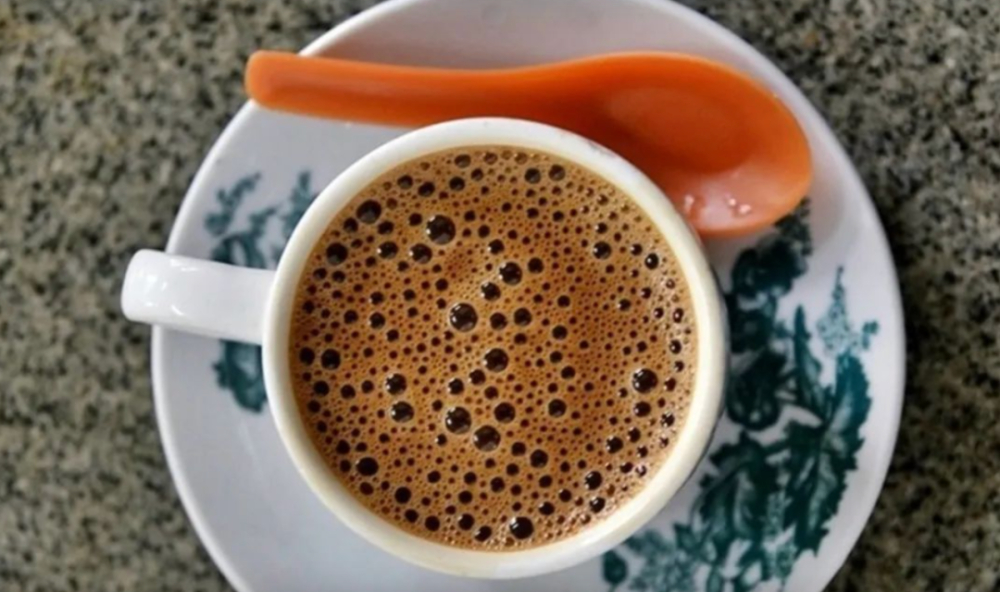
The key reason the coffee made by Hainanese people became so popular in Singapore was their bean-roasting technique, which could very effectively suppress the unpleasant flavors of low-quality coffee beans.
The concept of specialty coffee only began to receive widespread attention after 2000. Before that, coffee bean quality was uneven, mostly robusta or liberica varieties from low-altitude regions, and making coffee by directly roasting them would be hard to swallow.
To mask the negative flavors of coffee, the Hainanese drew on Chinese cooking techniques and added seasonings during roasting. They first roasted the coffee beans to about 70 to 80 percent done, then added butter, sugar, salt, and so on, making the beans sticky and giving them a burnt aroma. Because sugar and oil were added, the beans had to be ground into particles immediately after coming out of the roaster, otherwise they would become even harder to handle once cooled.
Speaking of this, I wonder whether everyone has heard of "white coffee"? After the Hainanese way of roasting coffee was brought to Malaysia by other Chinese people, it underwent new improvements. So-called "white coffee" actually refers to removing sugar from this sugar-roasted coffee bean roasting method and roasting to a "lighter" degree, so that overall it does not taste as strong as sugar-roasted coffee beans. It is not called white coffee because non-dairy creamer is added to black coffee.
Back to the main point. Although sugar is added when roasting the beans, the finished coffee is actually not sweet, because the sugar also gradually caramelizes during roasting. Robusta varieties already have high caffeine content, and to resist pests, coffee beans contain large amounts of chlorogenic acid; combined with extremely dark roasting, the coffee itself is very bitter.
To bring the richness of the coffee to the extreme, it is also brewed especially strong... If you drink a cup directly, not only is the caffeine's stimulating effect obvious, but that extreme pure bitterness also makes you "snap awake." The author's grandfather said, "The first time I drank Nanyang coffee, it felt like drinking strong liquor."
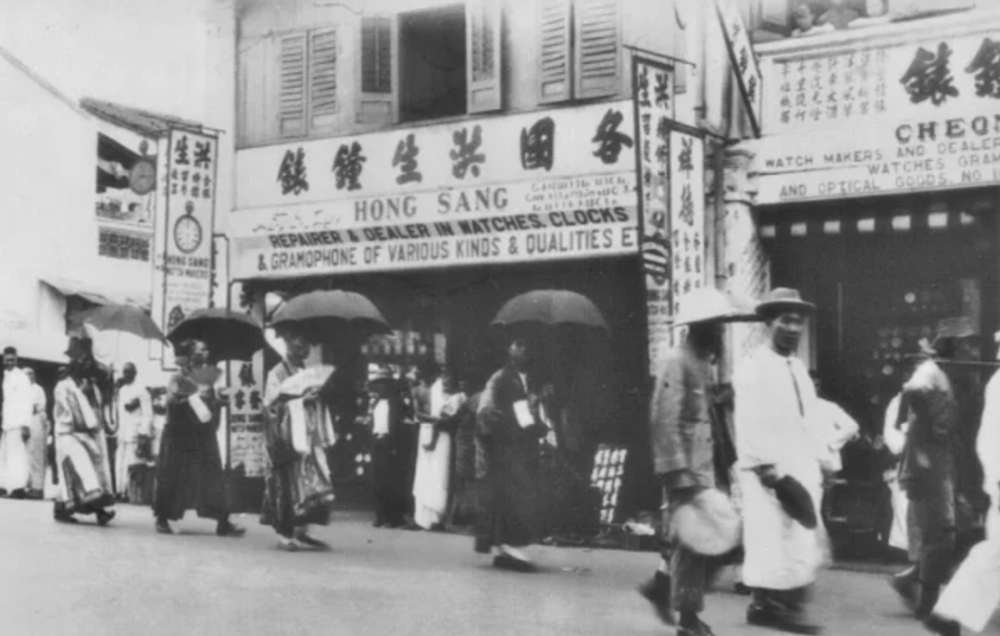
Coffee this bitter would definitely be hard to swallow if drunk directly as a cup. So local Chinese people developed an entire "system" around how to drink it. Local Chinese people call coffee kopi, but Kopi does not equal black coffee; rather, it is diluted with water and by default comes with sugar and condensed milk.
Therefore: Kopi = black coffee + water + sugar + condensed milk; Kopi C = black coffee + water + sugar + evaporated milk; Kopi O = black coffee + water + sugar; Kopi C Kosong = black coffee + water + evaporated milk; Kopi O Kosong = black coffee + water; Kopi Gau = a stronger Kopi; Kopi Poh = a weaker Kopi; Kopi Peng = Kopi with ice; Kopi Siew Dai = less sweet Kopi; Kopi Ga Dai = sweeter Kopi... These names all come from Hokkien pronunciations.
"Food not only satisfies individual needs and preferences, but also carries identity and the relational meaning of symbolic power." Against the broader background of coffee cultural identity, Nanyang coffee shops expanded strongly, and Nanyang coffee, which better suited Chinese tastes, quickly became a bonding agent for Singaporean immigrants. Soon, this way of making coffee spread to other Southeast Asian regions and also flowed back to Hainan and Hong Kong and Macau.
After reaching different places, local Chinese people improved both the coffee bean roasting method and the brewing method according to climate differences and local Chinese tastes. For example, as mentioned earlier, some Chinese people in Malaysia do not add sugar when roasting coffee.
Some Chinese people in Thailand add spices and grains when roasting coffee, and this coffee is called oliang; according to my grandfather, in the Hong Kong region people add baijiu when roasting coffee beans to remove astringency and enhance aroma. If baijiu is added, then sugar and oil are not added.
No matter which method of making Nanyang coffee it is, it has been passed down from generation to generation. Anthropologist Zhang Guangzhi once said, "One of the best ways to reach the core of a culture is through the stomach." It can also be said to be through the taste buds and the memory of flavor. Food constructs the way of life of a place and a city in both time and space. In the hearts of many Chinese people who grew up in Southeast Asia over generations, the traditional Kopi Tiam (coffee shop) and rich Kopi have always held a place.
Today, specialty coffee culture is constantly spreading, but Nanyang coffee has always been an important part of popular culture and an emotional bond in Chinese society. A cup of Kopi can let people start a new day full of energy, and also let people feel the hardships of generation after generation of Chinese people.
Once the pandemic is over, everyone might as well go to Southeast Asia to experience the charm of Nanyang coffee in person. If you want to experience it at home, Front Street Coffee also offers a variety of beans suitable for making Nanyang-style coffee, which are worth trying.
The above content is compiled by CoffeeHunters, a coffee news website.


