







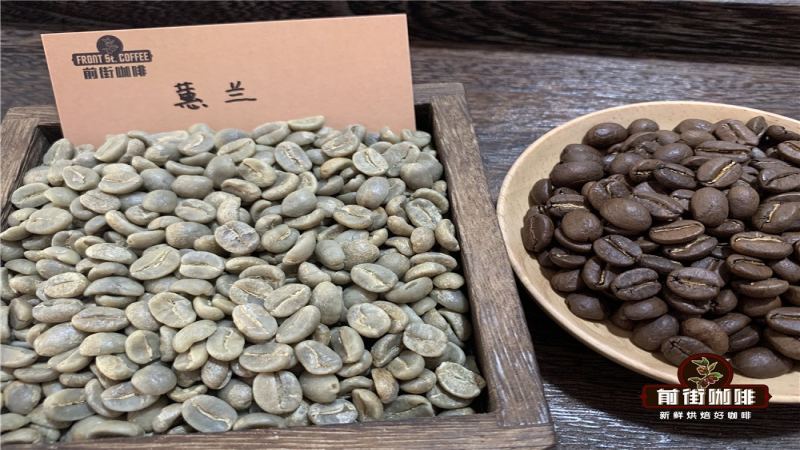
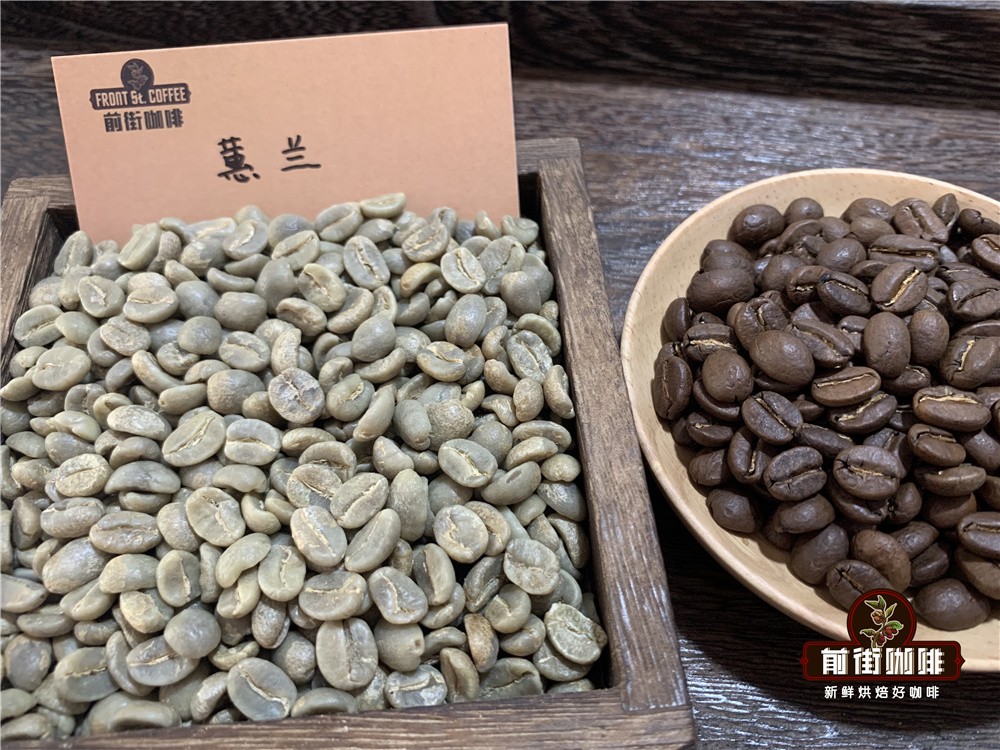
Colombia, with its exceptional geographical conditions and diverse climates, has become an important source of high-quality Arabica coffee. Many coffee enthusiasts notice that Colombian coffee beans are generally larger than beans from Ethiopia, Costa Rica, Brazil, and other producing regions, which is closely tied to Colombia's unique grading system. This article, from the perspective of Front Street Coffee, systematically introduces the standards by which Colombian green beans are graded according to screen size, including the specific specifications of common grades such as UGQ, EP, and Supremo, explains the meaning of the Excelso export grade, and introduces the key role of the FNC (Colombian Coffee Growers Federation) in the industry's development. Finally, it includes the brewing parameters and flavor description of Front Street's Huila everyday beans, helping readers gain a comprehensive understanding of Colombian coffee from grading to tasting.
For more specialty coffee knowledge, please follow the WeChat official account: Front Street Coffee (FrontStreet Coffee)
Compared with other coffee-producing countries in Central and South America, Colombia enjoys naturally superior coffee-growing conditions. Its vast and undulating terrain creates rich and diverse microclimates, providing ample inherent advantages for the growth of high-quality Arabica coffee. Many coffee enthusiasts have noticed that, compared with origins such as Ethiopia, Costa Rica, and Brazil, Colombian coffee beans are often noticeably larger. What exactly causes this? Next, Front Street will discuss Colombia's coffee grading system.
Front Street Coffee (FrontStreet Coffee): Colombia Huila Coffee Beans
Region: Huila
Altitude: 1,500-1,800 meters
Processing Method: Washed
Variety: Caturra
Flavor: Nuts, dark chocolate, caramel, soft fruit acidity
Currently, Colombian green coffee beans are graded according to screen size, usually using fixed-size screens for sorting, with different specifications corresponding to different aperture sizes. For example, if the mesh opening is 17 screen, beans larger than that size cannot pass through the screen, so the higher the screen number, the larger the coffee beans retained on the screen surface.
The most common grades on the market include UGQ, EP, and Supremo. It should be noted that no matter which screen-size grade the green beans belong to, once they are used for export, they are all classified under the Excelso grade. In other words, most burlap sacks of Colombian green coffee beans exported around the world today must be printed with the word Excelso. UGQ belongs to the Excelso grade, EP belongs to the Excelso grade, and Supremo also belongs to the Excelso grade. The Excelso export grade is currently the most widely adopted export standard by the FNC, and it is also the highest grade for Colombian green bean exports.
Excelso UGQ 12*60 (1.5%): UGQ stands for Usual Good Quality. Green bean size is above 14 screen, with 1.5% of green beans allowed to be between 12 and 14 screen, but they must be above 12 screen, and more than 50% must be larger than 15 screen.
Excelso EP 12*60 (10%): EP stands for European Preparation. Green bean size is above 15 screen, with 10% of green beans allowed to be smaller than 15 screen, but they must be above 14 screen.
Excelso Supremo 12*60 (5%): Green bean size is above 17 screen, with 5% of green beans allowed to be smaller than 17 screen, but they must be above 14 screen.
In addition, Colombia also has a grade called Extra for beans above 16 screen, a grade called Premium for beans above 18 screen, which are larger than Supremo, and beans almost entirely uniform at 15 screen are called Minama, and so on. Every farmer reports a number and enters green bean information so that traceability can be carried out later. The naming of Colombian exported green coffee beans usually follows the format of country + region + grade + other details. For example, the green bean name of Front Street's Huila everyday beans is Colombia Huila Supremo SC17/18 FNC.
Support Behind the FNC
Colombia has more than 500,000 coffee growers, most of whom are small-scale producers. For these coffee farmers, coffee is both a crop that sustains their livelihood and a testament to generations of family cultivation and harvest. Every harvest season, they can be seen carefully picking coffee cherries at just the right ripeness among the trees. The Colombian coffee industry's prosperity would not be possible without the continuous efforts of the Colombian Coffee Growers Federation. (Federacion Nacional de Cafeteros, abbreviated as FNC)
The FNC is a non-profit organization founded in 1927, with the purpose of safeguarding the rights and interests of coffee producers. From tree variety research and development, cultivation techniques, picking, green bean processing, to quality control, the FNC promotes knowledge dissemination, insists on purchasing green beans from coffee farmers at the best price of the day, and is truly committed to maximizing Colombia's "land potential" and "coffee farmer potential." In terms of commercial marketing, the FNC created the image of "Don Juan" leading a mule, successfully making Colombian coffee famous around the world.
Brewing Suggestions for Front Street Huila Everyday Beans
The flavor description of every Front Street coffee is based on freshly roasted beans. If coffee beans are stored for more than a month, the aroma may have partially dissipated, making it difficult to reproduce the original performance during brewing. Front Street deeply understands the importance of freshness, so it ensures that only coffee beans freshly roasted within 5 days are shipped, allowing everyone to enjoy the fullest flavor period upon receipt.
Considering that the Huila everyday beans use a medium-dark roast, with flavors leaning toward the rich, mellow tone of nuts and chocolate, the deeper roast makes the coffee beans more porous and the coffee grounds more absorbent. To avoid over-extraction, Front Street uses a medium grind size and medium water temperature, paired with a KONO dripper for extraction.
Brewing Parameters: KONO dripper, 90°C water temperature, grind size with 75% passing a No. 20 standard sieve, 1:15 coffee-to-water ratio, dose: 15 grams, three-stage extraction
Pour the coffee grounds into a V60 dripper, wet the coffee bed with twice the amount of water as the coffee grounds to form a dome and bloom for 30s, then pour in a thin stream in circles from the inside out until 125g, pause, wait for the coffee bed to drop to half the height of the dripper, continue pouring the third stage in the same thin stream until 225g, and after all the coffee liquid has filtered through, remove the dripper. The time is about 2 minutes.
This Colombian Huila everyday bean has obvious roasted aromas of chocolate, nuts, and caramel on the palate, smooth and sweet, with moderate body, a clean mouthfeel, and as the temperature drops, a pleasant soft acidity can be felt.
The above content is compiled by CoffeeHunters, a coffee news website.


