







Colombian coffee is renowned worldwide for its smooth body, rich fruit acidity, and balanced flavor, thanks to the unique microclimate and volcanic ash soil of the Andes Mountains. This article presents a complete picture of Colombian specialty coffee—from the growing environment and the regulatory role of the FNC, to the green bean grading system, the specific standards for Supremo coffee, the flavor characteristics of the Huila region, and brewing suggestions for Front Street Coffee's everyday beans—guiding you to a deeper understanding of the core appeal of this world-famous coffee origin.
In Colombia, coffee is honored with the title "green gold." Local coffee culture permeates daily life, with cafes of all styles found in both cities and countryside, filled with customers from morning to evening, reflecting Colombians' heartfelt love for coffee.
What Makes Colombian Coffee So Unique
Colombian coffee is often described as smooth, with bright fruit acidity and balanced flavor. This quality advantage is inseparable from Colombia's exceptional natural conditions.
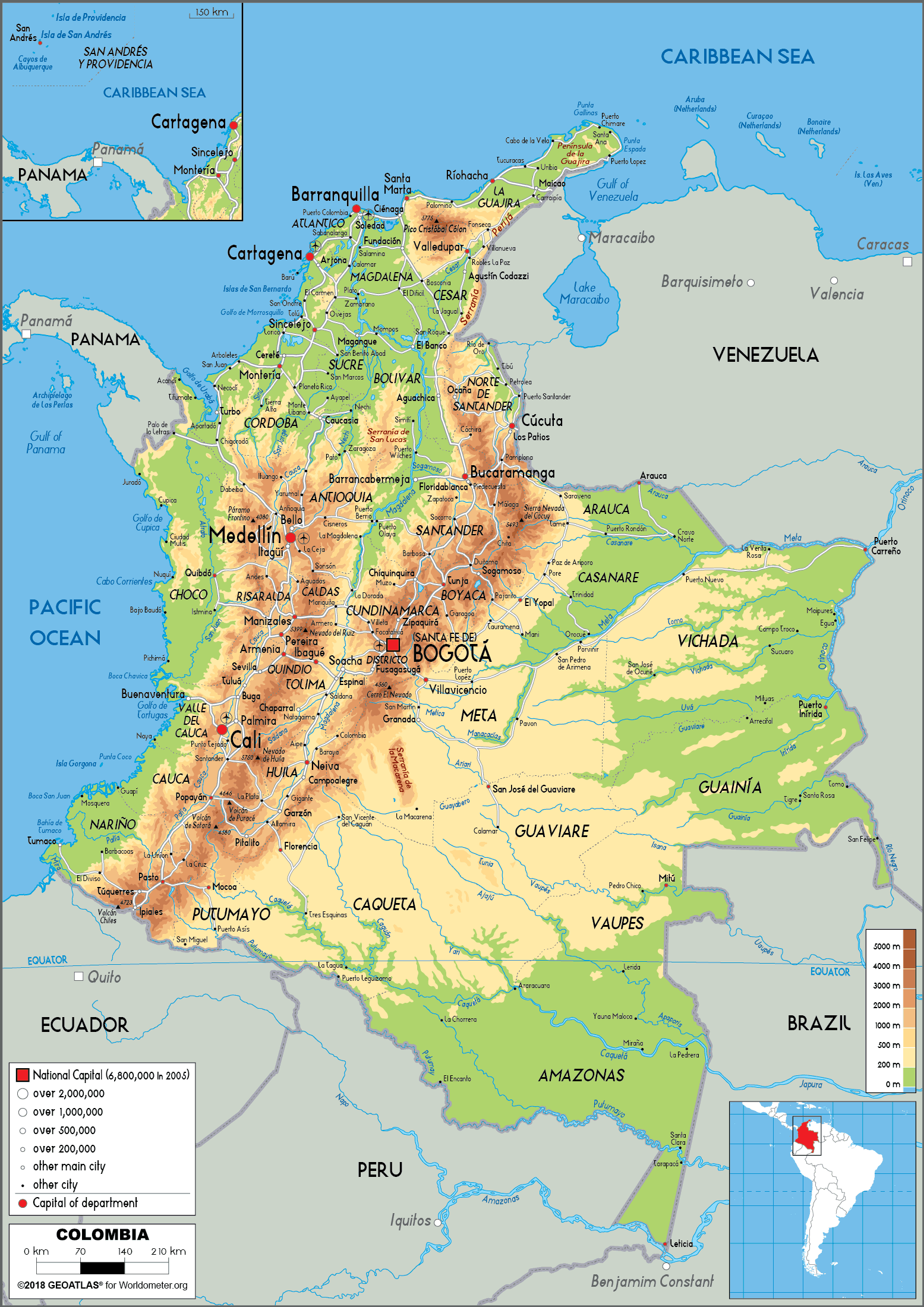
Southern Colombia straddles the equator with a vast geographical span. Coffee-growing regions are mainly distributed along the western Andes Mountains, where three major ranges run from south to north across the country. The diverse ecosystems—forests, grasslands, rivers, and lakes at the foot of each range—create varied climate conditions, and the volcanic ash soil formed over millions of years provides a range of ideal environments for coffee cultivation.
Coffee trees mostly grow on high slopes, where mist and low temperatures at altitude allow the coffee cherries to accumulate more sugar, resulting in coffee with rich flavor and a sweet aftertaste.
Colombian Coffee Growers Federation (FNC)
Colombia has over 500,000 coffee growers, most of whom operate small family farms, with all steps from picking to processing done by hand. The overall quality of the beans is generally higher than in countries like Brazil that focus on large-scale production.
As Colombia's coffee industry flourished, a group of growers dedicated to coffee export once formed a coffee producers' organization, but it failed to effectively regulate the industry. Later, at the urging of coffee farmers nationwide, the government established the Colombian Coffee Growers Federation (FNC) in 1927 to safeguard coffee quality while protecting the rights and welfare of every coffee producer, providing many farmers with a fair and stable source of income and promoting the healthy development of the entire industry.
In recent years, with the FNC's support, local coffee farmers have gained experience in dealing with leaf rust and climate change, and continue to explore the balance between quality flavor and increased yield.
What Grade Is Colombian Supremo Coffee?
The grading system for Colombian green coffee is first based on bean size. The highest grade is Supreme Screen 18+. Colombian Supremo beans means that over 95% of a 500-gram green bean sample reaches Screen 18, with plump and uniform beans.
Packed green coffee beans are usually screened using fixed-size mesh screens, with different specifications corresponding to different hole sizes. For example, beans larger than the holes of a Screen 17 mesh cannot pass through, so the higher the screen number, the larger the beans retained on the screen.
After size classification, defective beans and foreign matter are removed, and the beans are then assessed based on defect rate and cupping results. For defect rate grading, Colombia has specific standards, mainly divided into two categories: primary defects and secondary defects.
Primary defects (affecting cup characteristics): black beans, moldy or sour-fermented flavors. Maximum allowable defect value: 12. Secondary defects (relating to appearance): discolored (stale, faded, yellowed, mottled), bad beans, broken, cracked, cut, insect-damaged, deformed, immature, gray or soft, etc. Maximum allowable defect value: 60. Points are deducted according to the number of defects, and the final score determines three grades: AA, A, and G.
Each farm reports a number and enters green bean information for future traceability. The names of Colombian green coffee exports typically consist of country + region + grade + other information. For example, the green beans of Front Street Coffee's Huila everyday beans are Colombia Huila Supremo SC17/18 FNC.
Huila Region Coffee Beans
Colombia's coffee-growing regions are extremely vast, and different regions present different flavors due to geographical differences. Specialty coffee mainly comes from Huila, Cauca, and Nariño in the south.
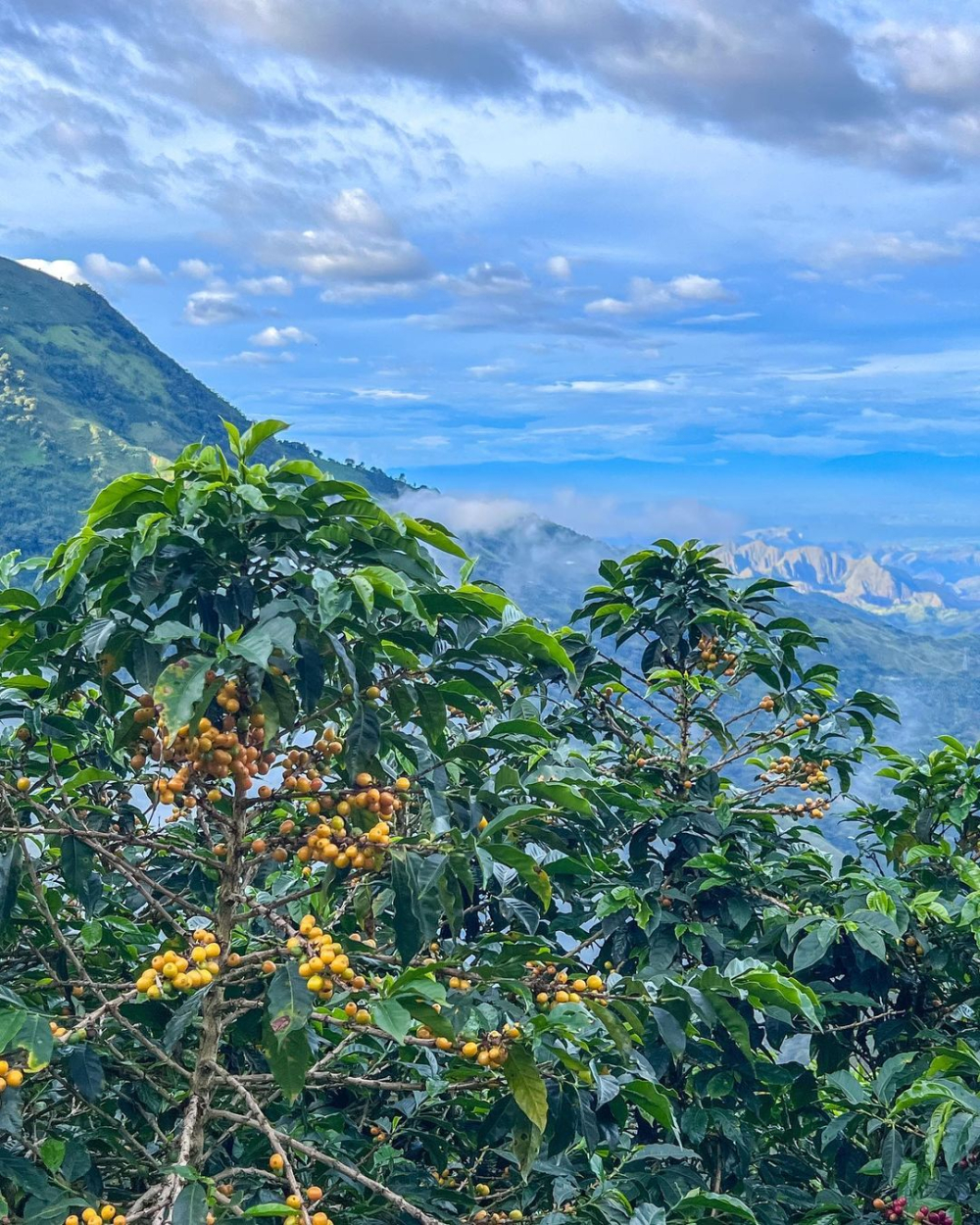
Huila Province is surrounded by mountains, with an average altitude above 1,500 meters. Several major Colombian rivers flow through this area. The abundant water and humid air form cool monsoons in the valleys, which both prevent excessive heat and block cold winds. Combined with the fertile soil provided by Huila Volcano, Arabica coffee here can absorb ample nutrients, producing many lots with complex aromas and fruity flavors.
Through cupping, Front Street found that coffee from Huila has rich nutty and chocolate aromas, prominent caramel sweetness, and a smooth, clean cup—very characteristic of Colombian coffee. Therefore, Front Street included it in its highly cost-effective everyday bean series.
The purpose of Front Street's everyday beans is to let coffee lovers who are just getting started, through 100-gram small packages, first become familiar with the basic flavors of different classic regions, and then further explore the more refined beans of each region. Besides Colombia Huila, the series also includes 6 coffees including the highly representative washed Yirgacheffe. Friends who want to explore more regions can give them a try.
Washed Processing
To taste the regional flavor of coffee, Front Street recommends traditional washed processing. Many people may first try special processing methods when drinking Colombian single-origin coffee for the first time. The fragrant aroma and fruity sweetness are indeed charming, but the clean flavor brought by washing allows us to better understand the taste of a region itself. This is also why most of Front Street's everyday beans are washed.

Almost every coffee farm in Colombia is equipped with specialized coffee pulping equipment. The peeled parchment beans are placed in tiled fermentation tanks for about 24 hours, during which acids produced in fermentation cause the mucilage layer to detach. After fermentation, the coffee is poured into flowing water channels and scrubbed to remove residual mucilage. Finally, the wet parchment beans are spread flat on clean ground to dry until moisture content drops to 12.5%. The washing and drying process removes the mucilage layer, retaining more of the bean's own character and making the coffee flavor clearer.
Flavor Characteristics of Colombian Huila Coffee
For brewing, Front Street Coffee (FrontStreet Coffee) baristas, aiming at the nutty, rich, and full-bodied chocolate profile of Huila everyday beans, use a medium grind and medium water temperature to avoid over-extraction.
Brewing parameters: KONO dripper, 90°C water temperature, grind size with 75% passing a No. 20 standard sieve, 1:15 coffee-to-water ratio, 15g coffee dose, three-stage extraction
Pour the coffee grounds into a V60 dripper, wet the bed with twice the coffee's weight in water, and let it bloom for 30 seconds to form a dome. Then, with a slow stream, pour in circles from inside to outside until reaching 125g and pause. When the bed drops to half the dripper, continue with the same slow stream for the third stage until 225g. Once all the coffee liquid has filtered through, remove the dripper. Total time is about 2 minutes.
Front Street's Huila everyday beans have a distinct chocolate aroma, smooth and sweet, with a clean cup and no off-flavors.
For professional coffee knowledge exchange and more coffee bean information, please follow Coffee Workshop (WeChat public account: cafe_style)
For more specialty coffee beans, please add the private WeChat of Front Street Coffee (FrontStreet Coffee): qjcoffeex
The above content is compiled by CoffeeHunters, a coffee news website.


