







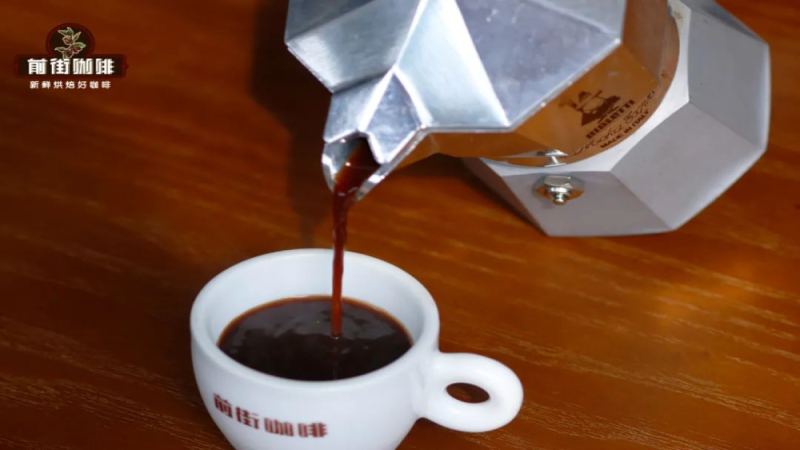
Want to make a rich cup of coffee at home with a moka pot, but often get stuck on heat level, grind size, water amount, and bean selection? This article systematically sorts out the origin of the moka pot and its pressure-extraction principle, explains how it differs from espresso, and walks through the actual operating sequence: filling the lower chamber with water, loading coffee into the filter basket, heating to extract, and when to turn off the heat. It also offers bean-selection guidance for medium-dark roasted espresso blends, and by combining the flavor characteristics of Front Street Classic Blend and Front Street Strawberry Candy espresso coffee beans, helps you more consistently reproduce thick crema and sweet aromas.
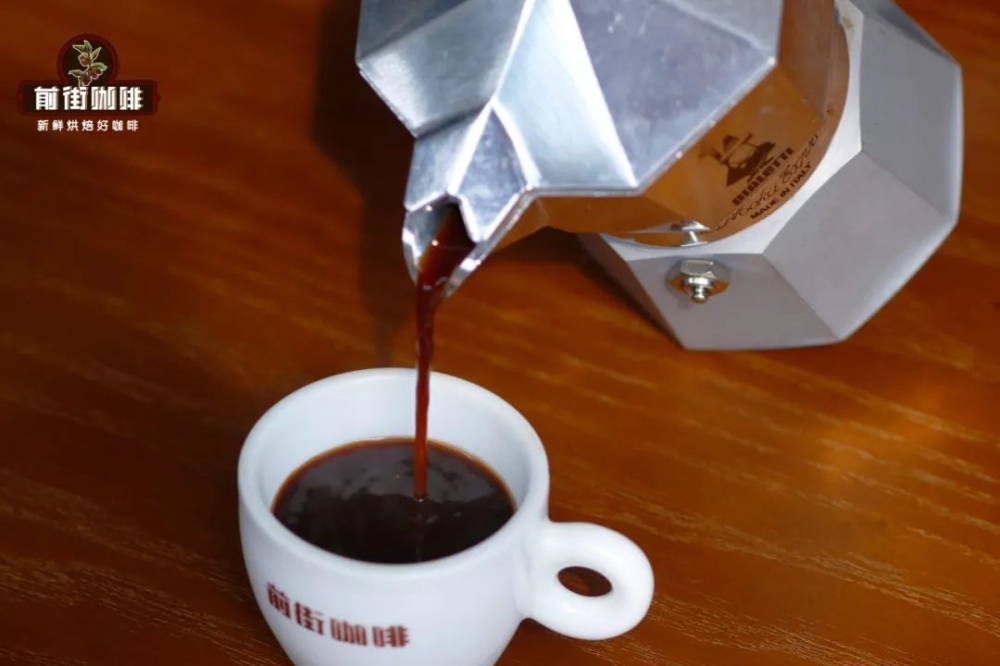
Many coffee enthusiasts keep a handy moka pot at home, hoping to brew a strong cup of coffee in their spare time, but once they actually get hands-on, they run into all kinds of questions, so they often come to ask Front Street. This time, Front Street will start with the history of the moka pot, then explain the specific extraction process step by step.
The origin of the moka pot
The espresso machine was first born in Italy and was also the world's first pressure-based coffee machine. Through continuous improvement and spread, espresso quickly became popular on Italian streets. However, at the time, espresso machines were bulky and had a high operating threshold, so if you wanted a fragrant, rich cup of coffee, you often had to go to a café. In 1933, Alfonso Bialetti, who worked in the metal industry, created a small device that could make espresso-style coffee at home, and thus the moka pot was born, named Moka Express.
At moka pot trade shows, Bialetti once advertised it this way: "Drinking an espresso at home is just like being in a café." From then on, espresso was no longer just a "luxury" to be enjoyed in cafés. The Bialetti moka pot was compact, affordable, and easy to use, gradually becoming a common appliance for daily coffee brewing in many Italian households, and later was brought to all parts of the world by Italians living abroad.
The extraction principle of the moka pot
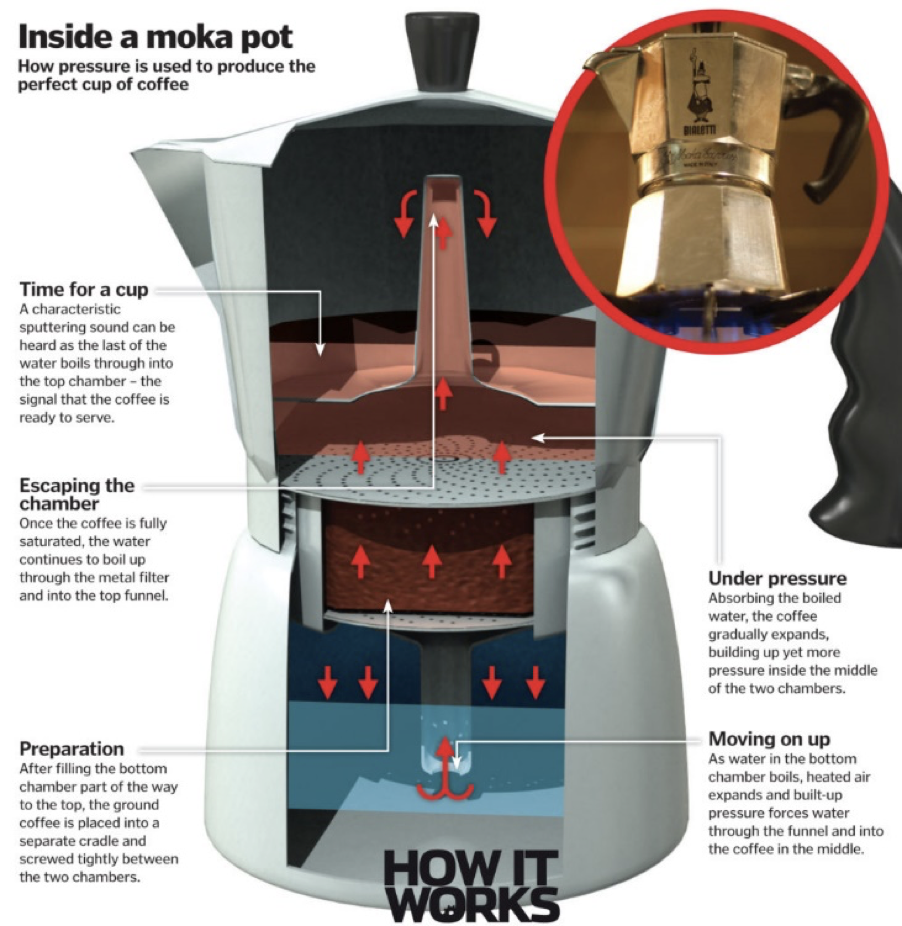
A moka pot with a simple structure usually consists of three parts: the lower chamber that holds water, the filter basket that holds coffee grounds, and the upper chamber that collects the extracted liquid. When the moka pot is heated, the water in the lower chamber first heats up and turns into steam, generating a certain pressure that pushes hot water to flow from bottom to top. The hot water rises through the coffee grounds to complete extraction, and the continuously increasing pressure pushes the coffee liquid further up into the upper chamber, so we get the rich coffee liquid we need.
The difference between moka pot coffee and espresso
It should be noted that although the coffee brewed by a moka pot tastes relatively strong, it is still different from the espresso we commonly see. What is now called espresso is usually extracted with pressure above 9 atmospheres, producing a coffee liquid that is rich, viscous, fine in texture, and layered. The maximum pressure a moka pot can reach is only about 2 atmospheres, far below the pressure level of commercial espresso machines, so the resulting coffee liquid is relatively thinner, and the flavor and mouthfeel are not as full and mellow as espresso. However, if you simply want to drink a rich, strong cup of coffee at home more quickly, Front Street believes the moka pot is still a very good choice.
Using a moka pot to extract coffee
Using a moka pot to extract coffee is not complicated; you only need coffee beans, a grinder, and a gas stove (or induction cooker) for heating.
The final taste of moka pot coffee still depends mainly on the coffee beans themselves. Compared with medium-light roasts, choosing a medium-dark roasted espresso blend makes it easier to extract coffee crema and better highlights the rich, full body of strong coffee, while also giving moka pot Americano or moka pot latte a richer aroma.
If you are trying moka pot coffee for the first time, you can start with the beginner-specific Front Street Classic Blend. This bean is composed of Brazilian semi-washed, Indonesian Mandheling, and Vietnamese washed beans, with a medium-dark roast level. It carries both the wild character of Asian coffee and the rich, full flavor of American coffee. While showing roasted aromas, its key point is full-bodied crema, and it is also relatively easy for beginners to master extraction.
If you want to make a fruity moka pot strong coffee, you can choose a medium-roast espresso bean and try Front Street Strawberry Candy espresso coffee beans, which can be ordered directly from the Taobao or Tmall store. This bean is mainly based on two major origins: Front Street Costa Rica Tarrazu, known for its honey processing, and Ethiopia, the birthplace of coffee, and is then paired with Colombian Huila coffee beans. The resulting strong coffee is not too pungent, and after extraction with a moka pot it has good crema and a dense texture, while also presenting a sweet-and-sour taste similar to strawberry gummies.
First remove the base of the moka pot and add water to the lower chamber (using hot water can shorten the brewing time and also prevent the coffee grounds from heating too quickly, which can make the flavor easily burnt and bitter). The water amount should be kept below the pressure relief valve line; here Front Street pours in 130ml.
Pour coffee grounds with a grind setting of EK-43s#0.5 into the filter basket, fill it to nine-tenths full, smooth the surface with your finger, and put it back on the base. There is no need to tamp with force; a coffee bed pressed too tightly can easily block the upward flow of water and thus affect extraction.
Then screw the upper chamber and lower chamber tightly together and place it on a gas stove or induction cooker to heat. When using an open flame, try to control the flame so it does not exceed the range of the moka pot base.
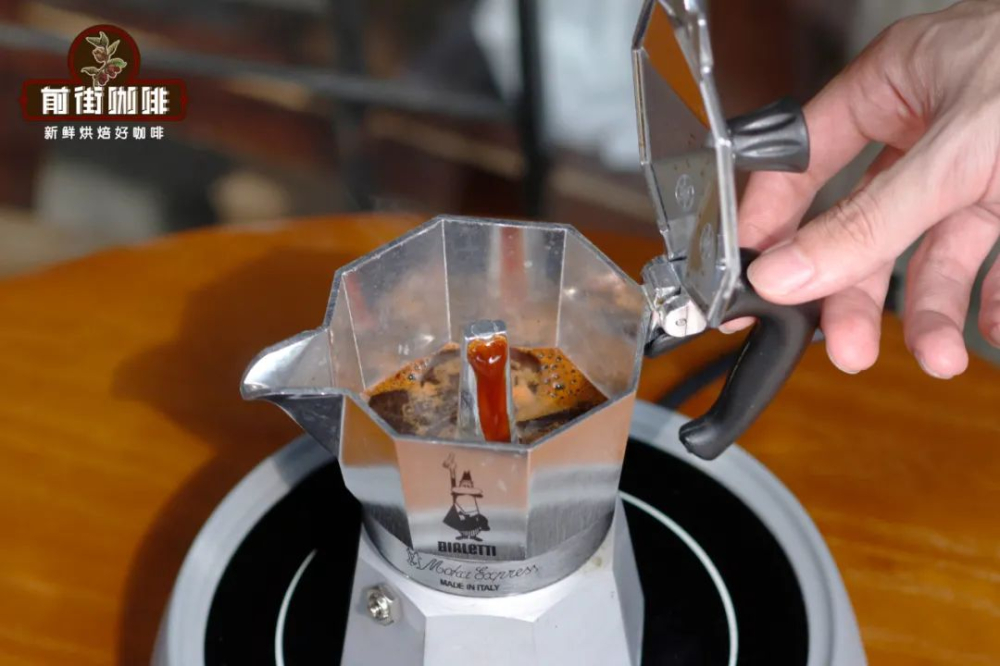
Wait for the moka pot to heat up. When you hear a hissing sound, turn it to low heat, and the coffee liquid and crema will slowly flow out. When you see the coffee liquid in the upper chamber is half full, you can turn off the heat source and move the pot to the table, using the residual heat and pressure inside the pot to continue extracting the remaining coffee liquid. It should be noted that the moka pot has metal parts, so during high-temperature heating, try not to touch the body of the pot to avoid burns.
Finally, pour the extracted coffee liquid into a cup and enjoy it directly. On the palate there are rich whiskey aromas, vanilla, cream, and the sweet-and-sour notes of berries, along with the aroma of roasted nuts. After adding a certain proportion of hot water, it presents fresh fruity sweetness and acidity, and when paired with milk it has even more of a sweet chocolate aroma.
Because pressure extraction differs from drip coffee extraction, the coffee beans used should also be adjusted according to its characteristics. For example, the same light-roasted single-origin coffee bean will show floral and fruity sweet-and-sour freshness when brewed by pour-over, but when extracted under pressure it may not necessarily be so aromatic, and instead can easily bring out sharp, pungent acidity. Therefore, Front Street recommends using medium to medium-dark roasted coffee beans for extraction, which can make moka pot coffee flavor more stable.
No matter which extraction method is used, freshly roasted coffee beans are very important. After roasting, coffee beans have a 4–7 day degassing and resting period, after which they enter the optimal flavor period when the flavor is stable. As time goes on, the coffee aroma gradually fades. If you choose coffee beans with a roast date more than two months ago for extraction, the aroma may already have dissipated, and it will be hard to restore the flavor. Front Street hopes every customer can drink coffee beans at their best flavor, so we confirm that only coffee beans freshly roasted within 5 days are shipped.
The above content is compiled by CoffeeHunters, a coffee news website.


