







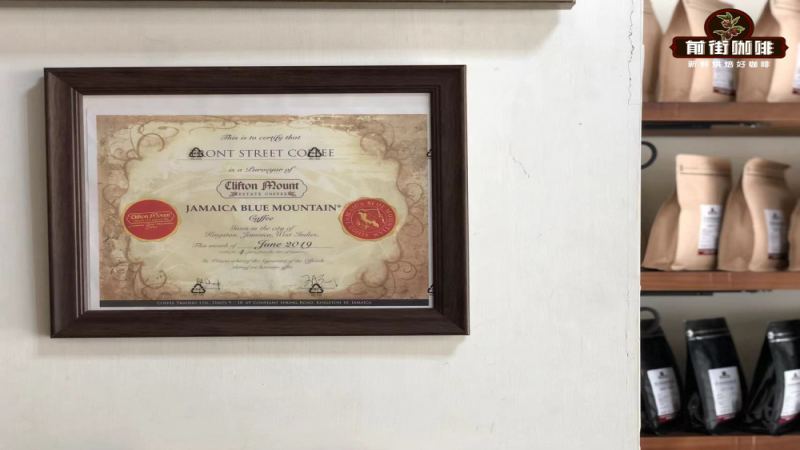
Almost everyone has heard of Blue Mountain coffee, but most so-called "Blue Mountain flavor" drinks on the market are not authentic. Where does real Jamaican Blue Mountain coffee actually come from? Starting from Front Street Coffee's Jamaican washed Blue Mountain No. 1, this article traces the rise and fall of Blue Mountain coffee since the 18th century: from British immigrants introducing Typica, to the sharp drop in production after the emancipation of slaves in the 19th century, to the government establishing central washing stations and the Coffee Industry Board in the 20th century to rebuild the quality system, and to today's limited growing area of only 6,000 hectares with strict certification standards. The article also highlights two representative estates, Wallenford Estate and Clifton Estate, to help readers understand why authentic Blue Mountain coffee is so precious and rare.
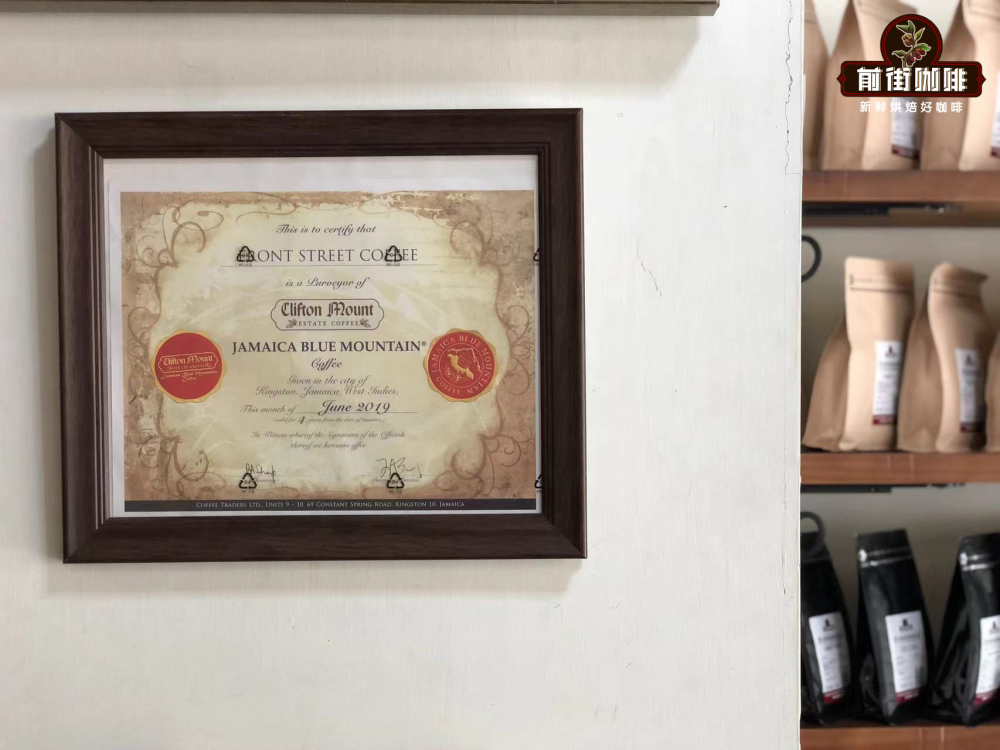
Whether or not you know anything about coffee, you have probably heard the name "Blue Mountain." Blue Mountain coffee is so famous that it can be seen everywhere from supermarket shelves to vending machines. But these are obviously not real Blue Mountain coffee—at best, they are merely caffeinated Blue Mountain-flavored drinks. So what does authentic Blue Mountain coffee actually look like? This article from Front Street will take you on a journey to find out.
Front Street Coffee (FrontStreet Coffee): Jamaican Washed Blue Mountain No. 1 Coffee Beans
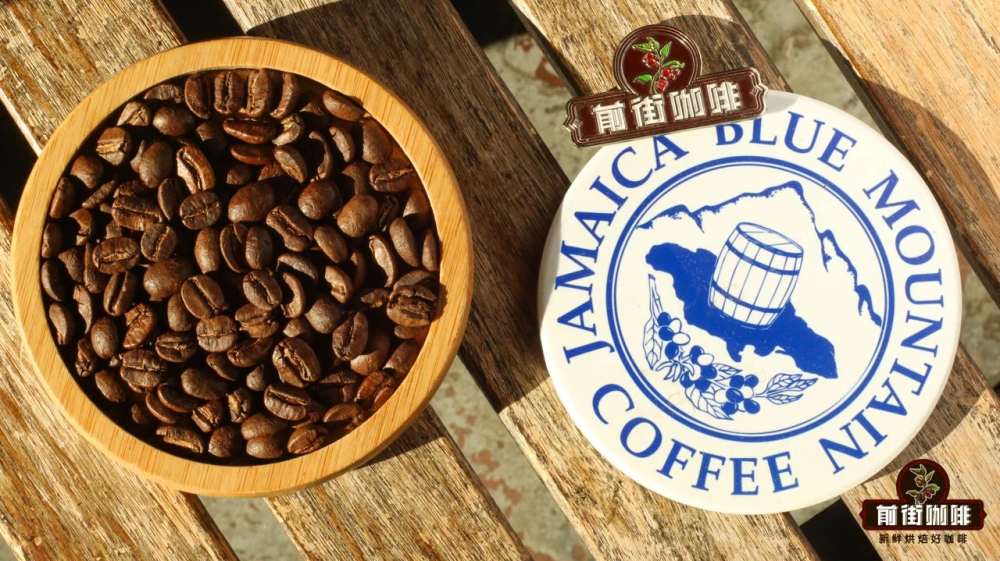
Country: Jamaica Region: Blue Mountain (Clifton Estate) Altitude: 1310m Variety: Typica Processing Method: Washed Flavor: Brown sugar sweetness and berry acidity on entry, nutty and cocoa notes in the middle and back, a creamy mouthfeel, rich and pronounced layers, with a walnut aroma in the finish.
The History of Blue Mountain Coffee
Blue Mountain coffee comes from Jamaica. According to information gathered by Front Street, its history can be traced back to the 18th century, when the British introduced Typica coffee trees to Jamaica's Blue Mountains. The soil and climate conditions of the Blue Mountains are uniquely favorable, especially at high altitudes where clouds and mist linger year-round, providing an ideal environment for coffee trees to grow. As a result, the coffee beans produced here are exceptionally outstanding in quality and highly favored by royalty.
Because of this, by 1800 there were as many as about 686 plantations in Jamaica's Blue Mountain area alone; by 1814, Jamaica's coffee exports had climbed to 15,199 tons, making the country one of the major coffee producers in the Western Hemisphere at the time.
However, after the slave trade was abolished in 1807, Jamaica's labor force was predominantly Black, and the source of labor for coffee plantations was completely cut off, causing production to begin declining. In 1838, Black slaves in Jamaica were fully emancipated, and the large number of Black people who had worked on the estates left one after another, turning instead to cultivate wasteland on other plots in the Blue Mountains, which further drove down Blue Mountain coffee production.
In 1850, Jamaica's coffee farms shrank sharply from the original 686 to 186, and coffee exports plummeted to 1,486 tons. Over the following century, the management model of Jamaica's Blue Mountains changed, gradually shifting from large plantations to smallholder farming. Small-scale cultivation made it difficult to guarantee professional standards, and the quality of Jamaican coffee declined accordingly. By 1943, Canada, one of Jamaica's largest coffee importers, became the first to announce that it would no longer accept the quality of Jamaican coffee, and neighboring United States followed suit by halting imports.
Thus, in 1944, Jamaica established a central washing station. Thanks to the active efforts of A.J. Wakefield, then Agricultural Inspector of the British West Indies, the Jamaican government finally set up this institution. The government also stipulated that all exported coffee had to be purchased, processed, and graded through this institution before it could be sold abroad. This meant that Jamaica began to attach importance to coffee quality from then on, and with strong government support, the quality of Blue Mountain coffee would also improve.
In 1950, the Jamaican government established the Jamaica Coffee Industry Board, responsible for setting coffee quality standards and supervising their implementation to ensure the quality of Jamaican coffee. The board also issued specially made official seals for Jamaica's exported green beans and roasted beans.
In 1969, Jamaica was severely hit by a hurricane. At that time, Japan's UCC Ueshima Coffee introduced ecological technology into coffee cultivation, helping Jamaica's coffee industry recover. To express its gratitude, the Jamaican government signed a contract with Japan in 1971, agreeing to ship 90 percent of its annual production to Japan. Most of the remaining 10 percent entered the hands of wealthy individuals or royalty before ever reaching the market. That is why Front Street said earlier that authentic Blue Mountain coffee is bound to be extremely difficult to drink.
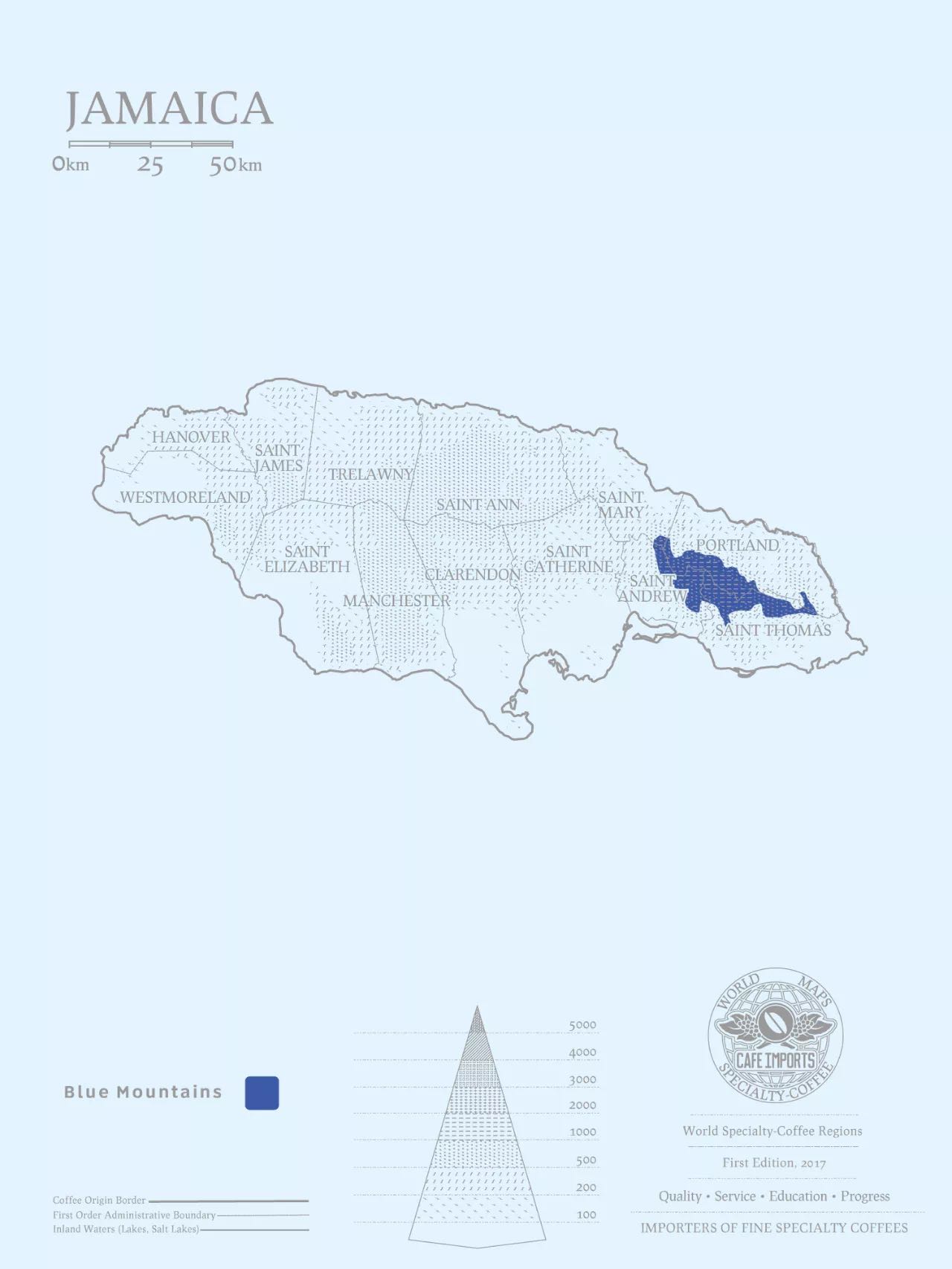
By 1981, about 1,500 hectares of land in Jamaica had been opened up for coffee cultivation, and another 6,000 hectares of coffee land were subsequently invested in. In fact, today's Blue Mountain region is only a small place with just 6,000 hectares of cultivation area, and it is impossible for all coffee labeled "Blue Mountain" to come from there. In addition, 12,000 hectares of that land are used to grow two other types of coffee: High Mountain coffee and Jamaica coffee.
Also, according to Front Street, Jamaica is the only country in the world with a government coffee management agency, namely the Jamaica Coffee Industry Board (CIB for short). The functions of the CIB cover cultivation technical guidance, processing training, fair trade, quality supervision, and a series of matters involving the quality and brand of Jamaican Blue Mountain. The board members of the CIB are all estate owners in Jamaica with plantations above a certain scale (due to industrial shifts, newly certified Jamaican Blue Mountain estates now need to be over 50 hectares). The CIB stipulates that only coffee beans produced in growing areas above 2,200 feet in Jamaica's Blue Mountains can be called Jamaican Blue Mountain. This is exactly why authentic Blue Mountain coffee is expensive—rare things are precious, and even with money, one may not necessarily be able to drink 100% pure Blue Mountain coffee.
Blue Mountain Coffee Estates
On the market, so-called "Blue Mountain flavor coffee" and genuine "Blue Mountain coffee" are mixed together and hard to distinguish. In fact, only those from prestigious origins can obtain CIB certification as "Jamaican Blue Mountain Coffee," such as Wallenford Estate. Wallenford Estate is truly a leader in high-quality Jamaican Blue Mountain coffee and also a major cultivator of coffee in the Blue Mountains. This estate is located at an altitude of 7,000 feet, where the mild, moist sea breezes from the Caribbean converge year-round, with frequent fog and rain, providing rare favorable conditions for coffee to develop a rich and exquisite flavor profile. The estate's coffee growers have guarded Jamaican Blue Mountain coffee for generations, for more than 250 years.
Front Street's Blue Mountain No. 1 coffee comes from Jamaica's famously renowned Clifton Estate. Clifton Mountain is the oldest coffee-producing area in Jamaica that is still in normal operation, and in Jamaica, only Clifton Farm bears the "Rainforest Alliance" mark.
It is widely recognized as a very high-quality, world-famous Blue Mountain coffee origin. Its elegant great-house farm is located in the Newcastle area, on the eastern slope of a mountain top at an altitude of about 4,300 feet. The Blue Mountain region is a small place with only 6,000 hectares of cultivation area, and it is impossible for all coffee marked "Blue Mountain" to be grown there. Today's Clifton Farm is the largest estate in the region, though by international standards it still counts as small-scale cultivation, and many of the estate owners are small landholders whose families have farmed this land for two centuries.
Clifton has high altitude and a long history, and its processing method is also uniquely ingenious. This wonderful and distinctive processing method gives Clifton not only the rounded, smooth mouthfeel characteristic of Blue Mountain No. 1, but also rich layers including a faint floral note.
According to CIB regulations, only Blue Mountain coffee beans produced in growing areas above 2,200 feet in Jamaica's Blue Mountains can be called Jamaican Blue Mountain, and their grades are divided by bean size into NO.1, NO.2, NO.3, and hand-selected PB. Among them, the basic standards for NO.1 Blue Mountain green beans are 17 screen size or above, a defect rate of less than 3%, and a moisture content of about 13%. Front Street's Blue Mountain coffee is the highest grade, NO.1, with uniform, plump beans and, after roasting, a rich coffee aroma.
The above content is compiled by CoffeeHunters, a coffee news website.


