







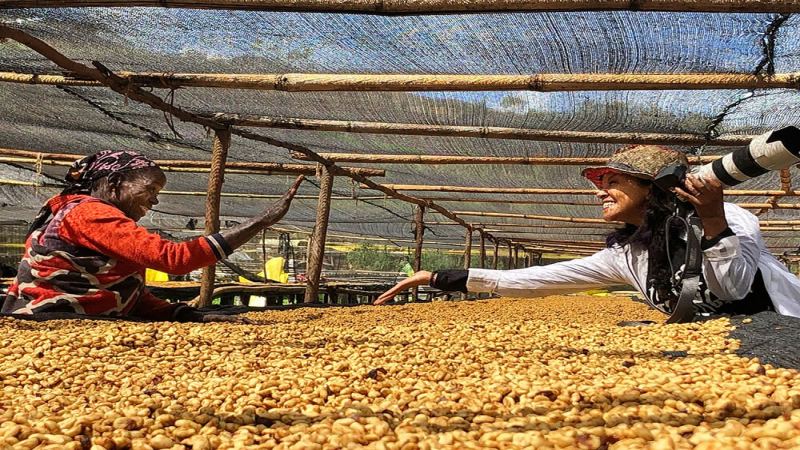
Ethiopia, as the birthplace of coffee, possesses the world's richest coffee gene pool, and the Bench Maji production area on the western border is the original homeland of the renowned Geisha variety. This article systematically explores the unique characteristics of this region, from its geographical environment and production area divisions to its cultivation models and the variety and grading systems of the Gesha Village Estate. Front Street Coffee takes this year's new-season Gold Label Geisha as an example, presenting the cupping flavors and in-store pour-over parameters, guiding you through a complete understanding of Ethiopian Geisha from forest to cup.
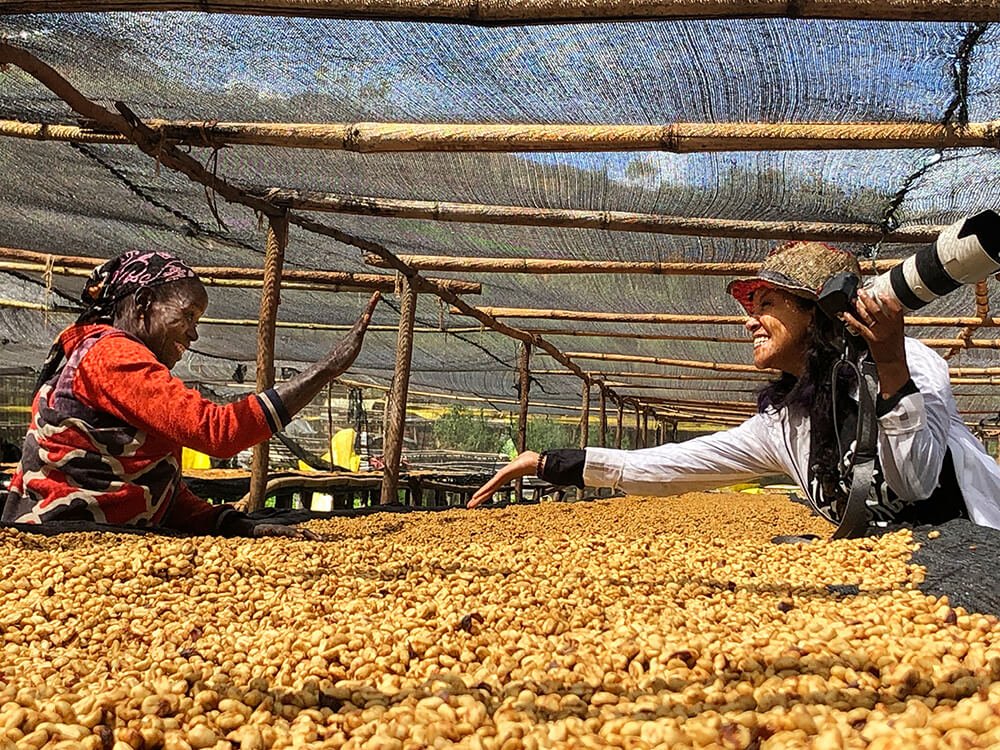
For those who love coffee, Ethiopia holds an almost sacred status. It is not only the origin of the coffee plant but remains the largest producer of Arabica coffee in Africa today, while also preserving the world's largest coffee gene pool with extremely rich variety resources. The world-famous Geisha originated from the primeval forests of this land.
The origin story of Geisha is almost universally known in coffee circles, and several top estates in Panama have been thoroughly studied by enthusiasts. However, when it comes to Ethiopian Geisha, many people only know of a "Gesha Village" located in Bench Maji, and cannot elaborate further. Today, Front Street Coffee will sort through this production area with you to see what makes Ethiopian Geisha so special.
Ethiopia
Ethiopia is located in the northeastern corner of Africa, bordering Djibouti, Somalia, Sudan, South Sudan, Kenya, and Eritrea. The country is predominantly mountainous and plateau terrain, with the Ethiopian Highlands occupying the central and western parts, accounting for about two-thirds of the national area. The East African Rift Valley runs through the entire country from north to south, with the average altitude of the mountains approaching 3,000 meters.
The relatively high terrain brings a comfortable climate, with an average annual temperature of about 16°C. The plateau areas have a tropical savanna climate, the mountains exhibit a highland mountain climate, while the low-altitude areas in the east and north have a tropical desert climate. The year is broadly divided into dry and rainy seasons, with annual rainfall of about 1,237 millimeters. The country is densely covered with rivers and lakes and is rich in water resources, hence it is known as the "Water Tower of East Africa." Coupled with nearly 50 volcanoes, abundant water sources, variable climate, and high-altitude mountains, this is truly an ideal place for coffee cultivation.
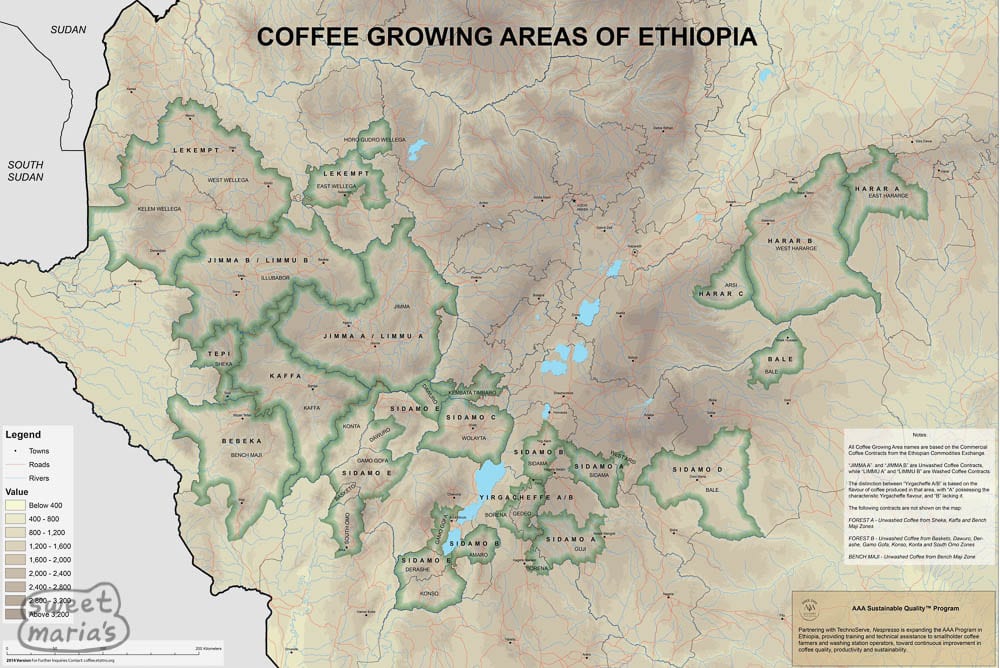
Ethiopia's coffee production areas can be broadly divided into three blocks: eastern, southern, and western. After reviewing materials, Front Street Coffee learned that the eastern production area is centered on Harar, with most of its coffee sold to Middle Eastern countries; the southern production area concentrates more representatives of specialty coffee, such as Yirgacheffe, Sidamo, and Guji, and is also recognized domestically as a major source of high-quality coffee; the western region mainly includes the lower-altitude Jimma and Limmu, as well as Kaffa and Bench Maji, which adopt forest cultivation models.
Bench Maji
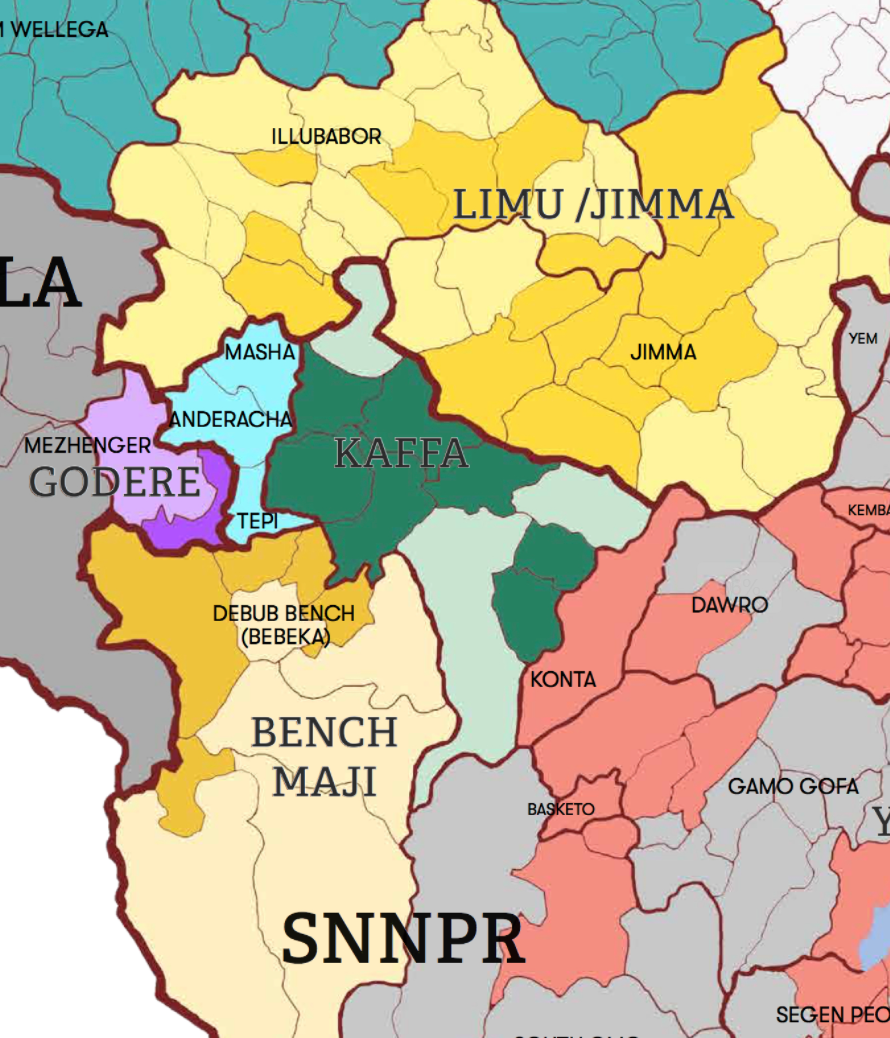
From an administrative perspective, Bench Maji is a Zone under the Southwest Ethiopia Region, located on the western border of the country, not far from South Sudan. The place name comes from the Bench ethnic group, which has the highest population proportion locally. This ethnic group is renowned for its exquisite agricultural techniques, with its most representative achievement being the cultivation of local staple crops such as Teff.
The Bench Maji production area is also called the Bebeka production area, because Bebeka is the capital of the Bench Maji Zone. It is located in southwestern Ethiopia, a zone under the Southern Nations, Nationalities, and Peoples' Region, just a few kilometers from South Sudan. Here lies a well-known coffee estate—Gesha Village Coffee Estate—and the Geisha variety trees of this estate were discovered in the wild forests of Bench Maji.
Unlike the central and southern regions that are abundant in specialty coffee, the western highlands are covered with vast primeval forests. In earlier years, Bench Maji was more protected as a biodiversity forest, so few people planted coffee here in the past. However, in recent years, as Gesha Village and Bench Maji have gained fame, more and more farmers have begun to turn to coffee cultivation.
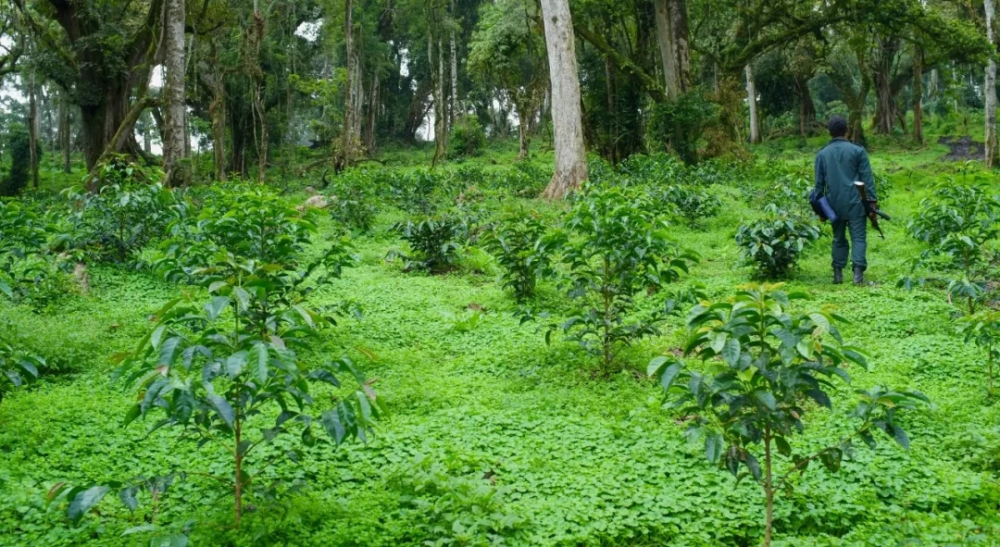
Among the western production areas, Bench Maji is adjacent to Kaffa, the birthplace of coffee, and its most prominent feature is its extremely high forest coverage. Local coffee production is supervised and managed by farmers. Out of respect for the natural ecosystem, they take measures to minimize intervention in the forest, such as occasionally removing old coffee trees or poorly growing plants and replacing them with new seedlings grown in the same wild forest.
As the region where Geisha originated, Bench Maji also has its own smallholder coffee alliance—the Bench Maji Coffee Farmers' Cooperative Union. This is a large coffee production organization composed of 65 cooperatives, serving 130,000 smallholder farmers. Local coffee trees are usually intercropped with other crops among the tall plants of the primeval forest. To obtain more stable economic income, farmers sometimes also plant spices such as ginger. This semi-forest cultivation model, relying on the shade of the primeval forest and natural soil, water, and nutrients, keeps coffee trees growing well without the need for additional pesticides and fertilizers, thus achieving mutual promotion of ecological and economic benefits.
Gesha Village Coffee Estate
Gesha Village Coffee Estate is located in the Bench Maji production area, covering 471 hectares, and was co-founded by documentary director Adam Overton and his photographer wife Rachel Samuel. In 2007, while filming a coffee documentary for the Ethiopian government, the couple made a discovery in the Gori Gesha Forest of the Bench Maji region, which inspired the idea of establishing their own coffee estate. In 2009, they met Willem, the owner of Panama's Hacienda La Mula, and together returned to Ethiopia to search for Geisha. They came to a place in Bench Maji called Gesha Village and found the area most likely to be the original Geisha. After discovering wild Geisha, they collected seeds from the native Geisha trees, selected them, and planted them in Gesha Village. They decided to build the estate there and named it Gesha Village Coffee Estate.
Planted Varieties and Plots
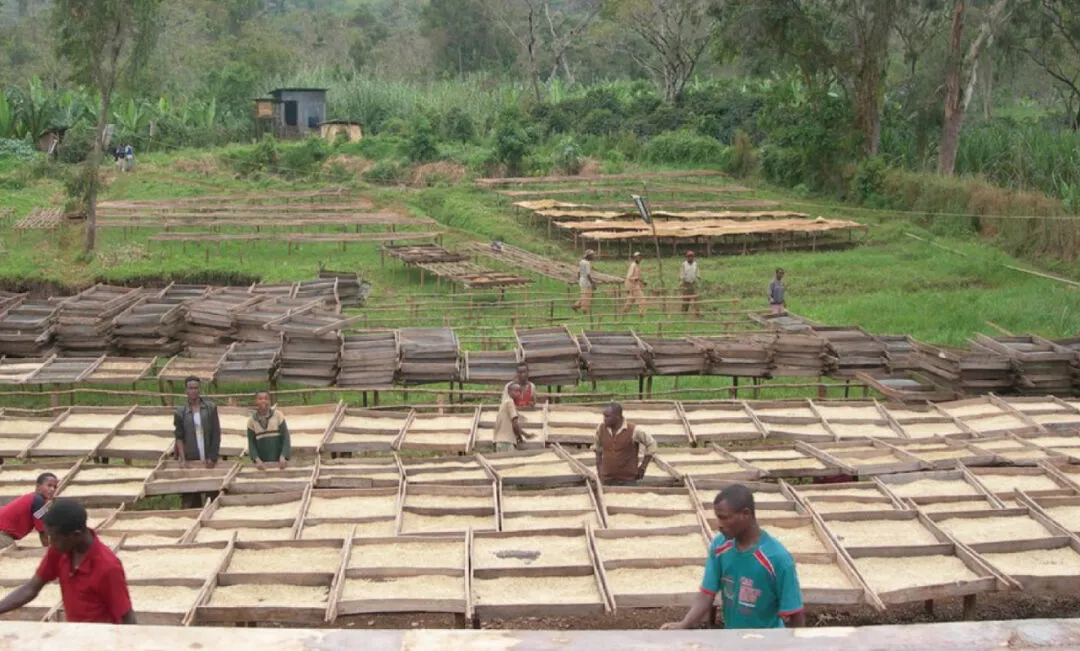
Currently, Gesha Village Coffee Estate cultivates three coffee varieties: Gesha 1931, Gori Gesha, and Illubabor Forest 1974. The estate is divided into 8 plots, with each plot planted with only one variety. Among them, the Oma, Surma, and Narsha plots are planted with Gesha 1931; the Bangi, Shewa-Jibabu, and Shaya plots are planted with Gori Gesha; and the remaining Gaylee and Dimma plots are planted with Illubabor. Coffee cherries harvested from each block are labeled to indicate their source, and through an internal traceability system, their entire process from processing plant to export is recorded.
Gesha 1931: The Geisha variety was first discovered in the Ethiopian coffee forest in 1931. Due to its resistance to leaf rust, it traveled through many countries and eventually became famous in Panama.
Compared with Panama Geisha, the Gesha 1931 here was confirmed by observing plant morphology, bean shape, size, and cupping performance, and is considered the closest to the mother tree of Panama Geisha. Through cupping comparisons by FrontStreet Coffee, the new-season Gesha Village Gold Label coffee beans exhibit rich berry aromas, melon-like fullness, citrus-like fresh acidity, chamomile-like floral notes, and a tea-like sweet aftertaste.
Gori Gesha: After Gesha Village Coffee Estate was established in 2011, the estate owner discovered a native Geisha bean variety in the Gori Forest, 12 miles from the estate, and therefore named it Gori Gesha.
Illubabor Forest 1974: Discovered during an expedition to the Illubabor Forest in 1974, it was later developed by the Ethiopian research center into a variety with resistance, and is currently grown only at Gesha Village Coffee Estate.
Gesha Village Grading
The coffee grading at Gesha Village Coffee Estate draws on the business models of some Panama estates and differs from Ethiopia's traditional grading. Currently, Gesha Village is divided into five types: Champion's Reserve, Rarities, Growers Reserve, Single-Terroir, and Chaka.
Champion's Reserve/Farm Reserve: This lot accounts for only 3.7% of Gesha Village's annual production and is the estate's top-tier lot after strict selection. The auction lots are further divided into Champion's Reserve and Farm Reserve, and currently can only be obtained through the global auction of Gesha Village Coffee Estate.
Rarities: This lot is the highest quality among Gesha Village's non-auction lots. The Gold Label accounts for only 10% of the entire estate's production, so its price is also the most expensive Gesha Village product outside of the auction. FrontStreet Coffee's new-season Gold Label Geisha coffee beans this year come from the Oma plot, processed by a natural method with a drying time of 32 days, and the variety is Gesha 1931, exclusive to the Oma plot.
Growers Reserve: The Growers Reserve accounts for 15% of Gesha Village Coffee Estate's production, and the beans in this lot must score above 88 points in SCA cupping.
Single-Terroir: The Single-Terroir lot has no cupping score requirement, but can be traced to information such as plot, variety, processing method, and time.
Chaka: The Chaka lot is a blend of all plots and varieties from the entire estate, without emphasizing subdivision.
FrontStreet Coffee: Ethiopia Gesha Village Coffee Estate Gold Label Coffee Beans Production Area: Bench Maji Production Area Estate/Processing Plant: Gesha Village Coffee Estate Altitude: 1,931-2,040 meters Variety: Gesha 1931 Processing Method: Natural Flavor: Citrus, Berry, Chamomile, Melon, Tea-like
Next, Front Street will demonstrate the brewing steps for the in-store Gesha Village Gold Label, which you can use as a reference and compare with your own brewing approach.
Pour-over recommendations for Gesha Village Gold Label coffee:
Dripper: V60
Water Temperature: 91-92°C
Dose: 15g
Coffee-to-Water Ratio: 1:15
Grind Size: Fine granulated sugar size (80% passing through a No. 20 sieve)
Three-stage extraction: First, pour 15 grams of coffee grounds into the dripper and tare the weight. For the first stage, pour 30g of water for a 30-second bloom while starting the timer. Use a small stream at the center point and begin spiraling outward, making sure to wet the entire coffee bed.
For the second stage, use a slightly larger stream to pour 120g of water, aiming to lift the entire coffee bed. The water column should be poured vertically and evenly. At this point, the scale should read 150g, and the pour should be completed in about 55 seconds.
When the liquid level drops to the halfway point, begin the third stage by pouring 90 grams using a small stream in a small spiral. Try to control the stream so it does not spiral too widely, as this can easily disturb the coffee bed and cause under-extraction. The total water amount will be 240 grams, and the drip completion time should be around 2 minutes and 10 seconds. After removing the dripper, swirl the coffee in the server to mix evenly, and it is ready to taste.
The above content is compiled by CoffeeHunters, a coffee news website.


