







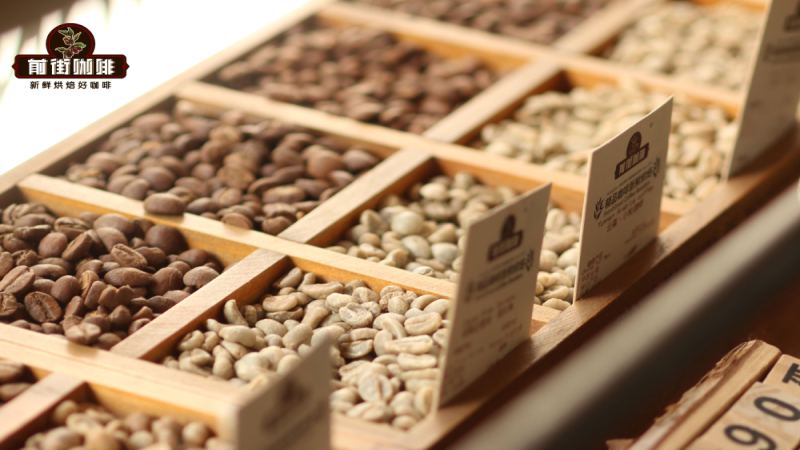
Different coffee-producing countries have developed their own unique quality grading systems based on their planting history and processing traditions. Some look at the proportion of defects, some measure bean size, and others rely on cupping for evaluation. This article focuses on Colombia, outlining the Excelso export standard in its green bean grading system, defect scoring rules, screen size classification, and the flavor profile of Supremo-grade Huila beans. It also includes the brewing parameters and taste description for Front Street's Huila everyday beans, making it suitable for enthusiasts who want to systematically understand Colombian coffee.
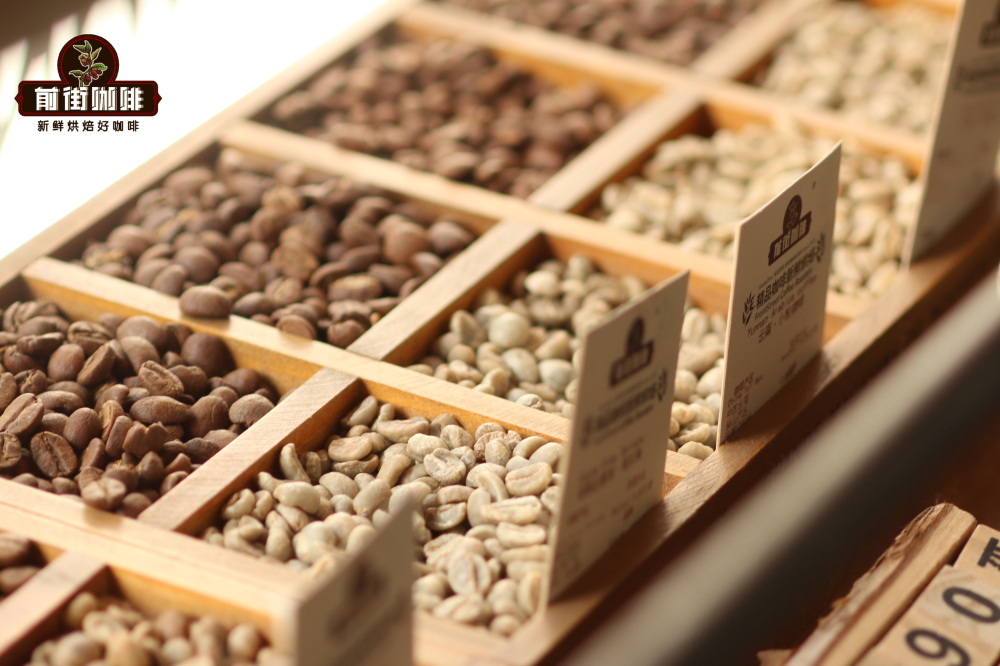
Every coffee-producing country designs a quality grading scheme suited to its own realities based on its planting history and processing habits. Some use the number of defects as the basis, some classify by green bean size, and others evaluate through cupping. In this article, Front Street will discuss the grading system for Colombian green coffee beans.
What is the Excelso grade?
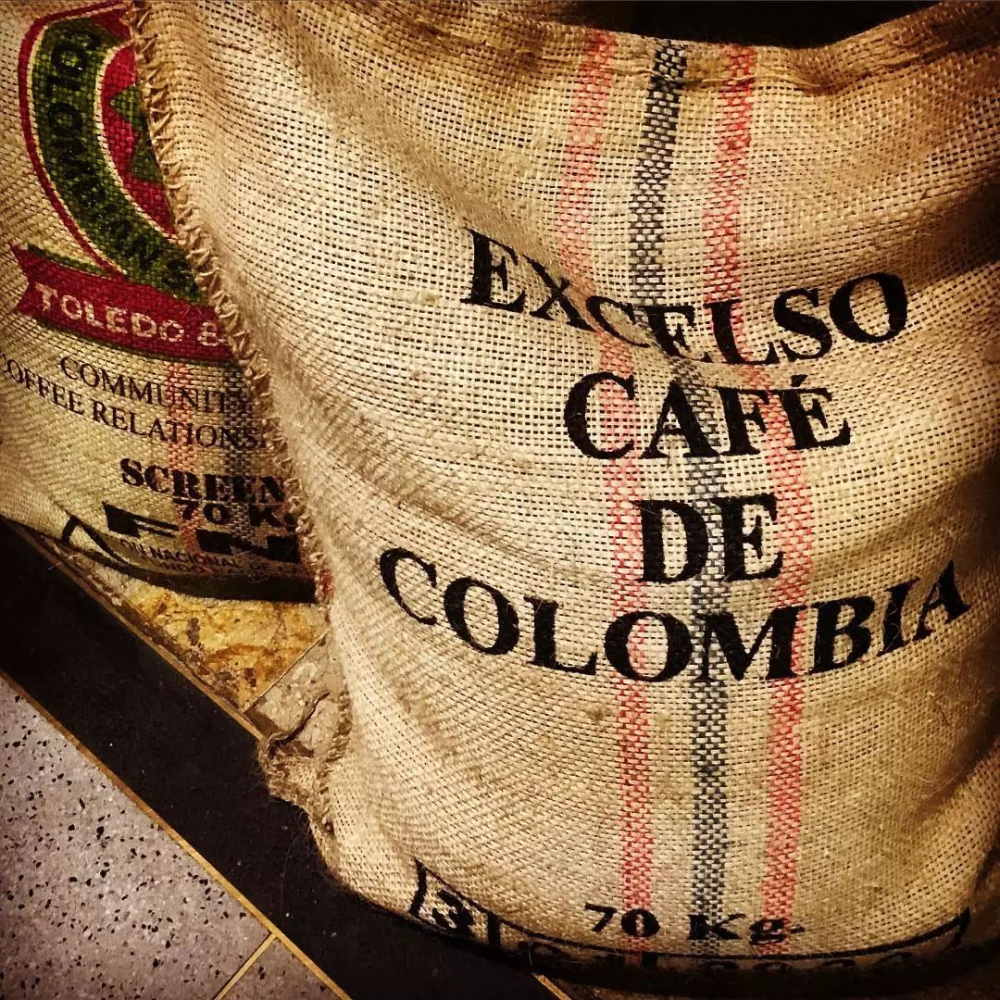
If we carefully observe the burlap sacks of green coffee beans shipped from Colombia to China, we will find that the surface of each bag is uniformly printed with the words "Excelso-Café de Colombia." Regardless of the screen size of the green beans in that batch, as long as they meet Colombia's export standards, the "Excelso" mark will appear on the sack, with the three most common being UGQ, EP, and Supremo.
In other words, the vast majority of Colombian green beans currently exported around the world must be labeled with the Excelso grade on their packaging. UGQ belongs to Excelso, EP belongs to Excelso, and Supremo also belongs to Excelso. Excelso is the most widely used export standard grade by the Colombian Coffee Growers Federation (FNC), and it is also the highest grade for the country's green bean exports.
To meet the Excelso grade, coffee must satisfy the following conditions: taking 500 grams of green beans, the size must be above 14 screen, no more than 5% of the green beans may fall between 12 and 14 screen, and more than 50% of the green beans overall must be larger than 15 screen. In addition, it is required to be free of insect damage, uniform in color, free of abnormal odors, clean in flavor, with a moisture content not exceeding 12.5%, and a cumulative defect score not exceeding 24 points.
Defect classification standards
The National Coffee Committee of Colombia has strict regulations on this. Green bean defects are classified into two types (see the figure below), and the grade is assessed through a scoring method. Taking Colombia's most common export specification Supremo 12*60 (5%) as an example, in a 500-gram green bean sample, a maximum of 12 primary defects and a maximum of 60 secondary defects are allowed.
Screen size classification standards
Although green bean size cannot directly determine coffee quality and flavor, many producing regions believe that plump, uniform, and large beans indicate that the coffee fruit has reached a fully mature state, can develop higher-quality aromas, and is easier to roast evenly, thereby achieving consistent flavor performance.
Colombian green beans are graded according to screen size, usually using screens of fixed sizes, with different specifications corresponding to different aperture sizes. For example, when the screen is 17, beans larger than that size cannot pass through the mesh, so the larger the screen number, the larger the beans retained on the screen surface. At present, the three grades most commonly exported by the FNC are Excelso UGQ 12*60 (1.5%), Excelso EP 12*60 (10%), and Excelso Supremo 12*60 (5%).
Excelso UGQ 12*60 (1.5%): UGQ stands for Usual Good Quality. The green bean size is above 14 screen, 1.5% of the green beans are allowed to fall between 12 and 14 screen, but must be above 12 screen, and more than 50% must be larger than 15 screen.
Excelso EP 12*60 (10%): EP stands for European Preparation. The green bean size is above 15 screen, 10% of the green beans are allowed to be smaller than 15 screen, but must be above 14 screen.
Excelso Supremo 12*60 (5%): The green bean size is above 17 screen, 5% of the green beans are allowed to be smaller than 17 screen, but must be above 14 screen.
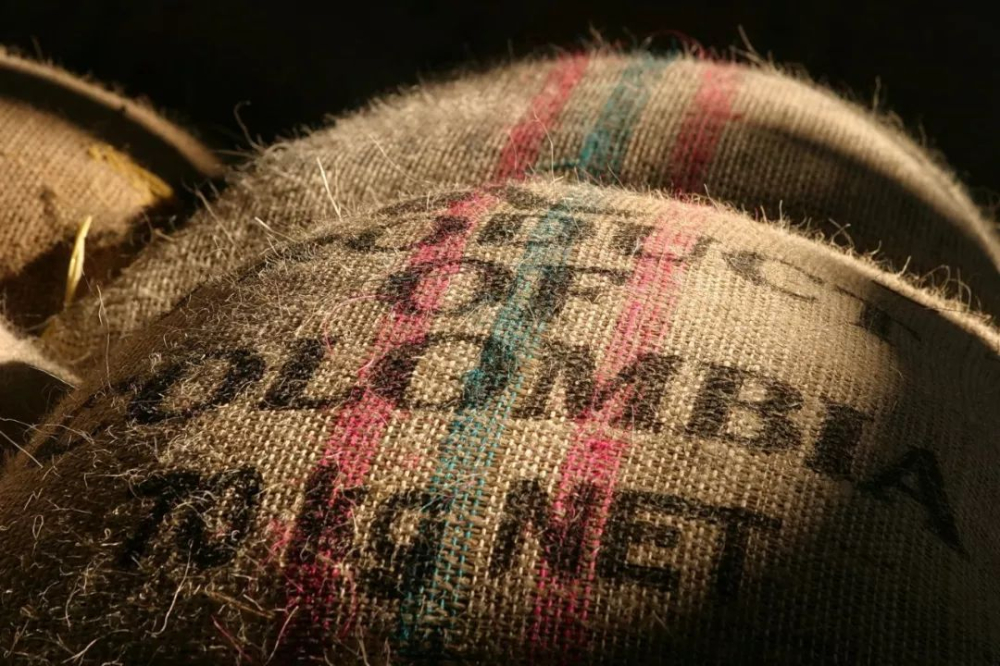
In addition, Colombia also has Extra above 16 screen, Premium above 18 screen which is larger than Supremo, and Minama, whose beans are almost all uniformly at 15 screen. Colombia also has coffee beans that do not reach the Excelso export grade, locally called "Product of Colombia," usually used to make commercial-grade instant coffee.
In Colombia, every farm reports a number and enters green bean information so that traceability can be carried out later. The naming of Colombian exported green beans usually adopts the format of country + producing region + grade + other information. For example, the green beans of Front Street's Huila everyday beans are Colombia Huila Supremo SC17/18 FNC.
Flavor characteristics of Colombian Supremo-grade Huila coffee beans
Front Street's daily bean list includes a total of 5 coffee beans from Colombian producing regions, each with its own style. If you are a beginner just getting into coffee, Front Street recommends starting with the washed Huila everyday beans launched by Front Street. Front Street's everyday bean series covers multiple classic producing regions and common varieties, helping everyone understand the flavor direction of different producing regions, then find the type they prefer, and further explore in depth.
Colombian producing regions are rich in freshwater resources, and most coffee is washed. Family-based farms are mostly equipped with dedicated green bean processing machines (Ecomill or Eco-Pulper). After the harvested coffee fruit is poured into the machine, it can not only remove the skin and pulp, but also remove most of the mucilage with only a very small amount of water. The parchment beans with a small amount of residual mucilage enter a small tank or container—possibly a tiled tank—and rest overnight to ferment, allowing the remaining mucilage to loosen. The next day they are rinsed clean with clean water, and finally spread out in the sun to dry to the target moisture content. The washing process greatly reduces the defect rate of coffee beans, preserves the beans' own flavor, and presents a higher degree of cleanliness.
In order to showcase the rich, full-bodied mouthfeel of Colombia's classic nut and chocolate notes, Front Street chooses a medium-dark roast. A darker roast makes the coffee beans more porous, and the coffee grounds have a stronger water absorption capacity. To avoid over-extraction, Front Street uses a medium grind size and medium water temperature, paired with a KONO dripper for brewing.
Brewing parameters: KONO dripper, 90°C water temperature, grind size with a 75% passing rate on a No. 20 standard sieve, 1:15 coffee-to-water ratio, 15 grams of coffee, three-stage extraction
Pour the coffee grounds into the KONO dripper, first wet the coffee bed with twice the amount of water as the coffee grounds, and after a dome forms, let it bloom for 30 seconds. Then pour water in a circular motion from the inside out with a small stream, and pause the staged pouring at 125 grams. Wait until the coffee bed drops to half the height of the dripper, then continue pouring the third stage with the same thin stream until 225 grams. After all the coffee liquid has finished filtering, remove the dripper. The total time is about 2 minutes.
This Colombian Huila everyday bean has obvious roasted aromas of chocolate, nuts, and caramel on the palate, smooth and sweet, with moderate body and a clean mouthfeel. After the temperature drops, a pleasant and soft acidity can be felt.
The above content is compiled by CoffeeHunters, a coffee news website.


