







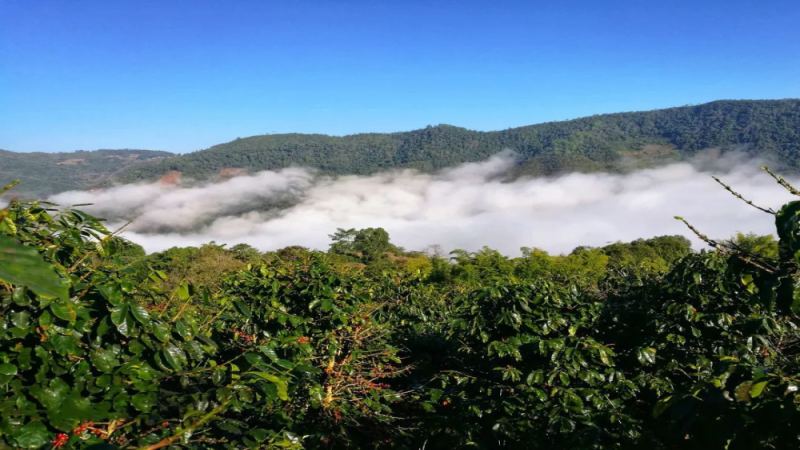
In Yunnan's coffee cultivation area, the Catimor variety holds an absolutely dominant position, with about ninety percent of production coming from this hybrid. Catimor CIFC7963 was developed by the Portuguese Coffee Rust Research Center, combining the disease resistance and high yield of Robusta with the sweet and sour flavor of Arabica, but its flavor complexity is relatively limited, often described as predominantly nutty and brown sugar notes. Meanwhile, the Typica variety, which was the first introduced to Yunnan, has gradually been replaced due to its low yield and weak disease resistance. Front Street Coffee has been cultivating Typica in Lincang, Yunnan since 2013, and after years of cultivation, its natural sun-dried processing presents full-bodied flavors of caramel, berries, and black tea. This article will systematically review Catimor's genetic background, flavor performance, and the succession of coffee varieties in Yunnan, and share Front Street's brewing parameters for Yunnan coffee.
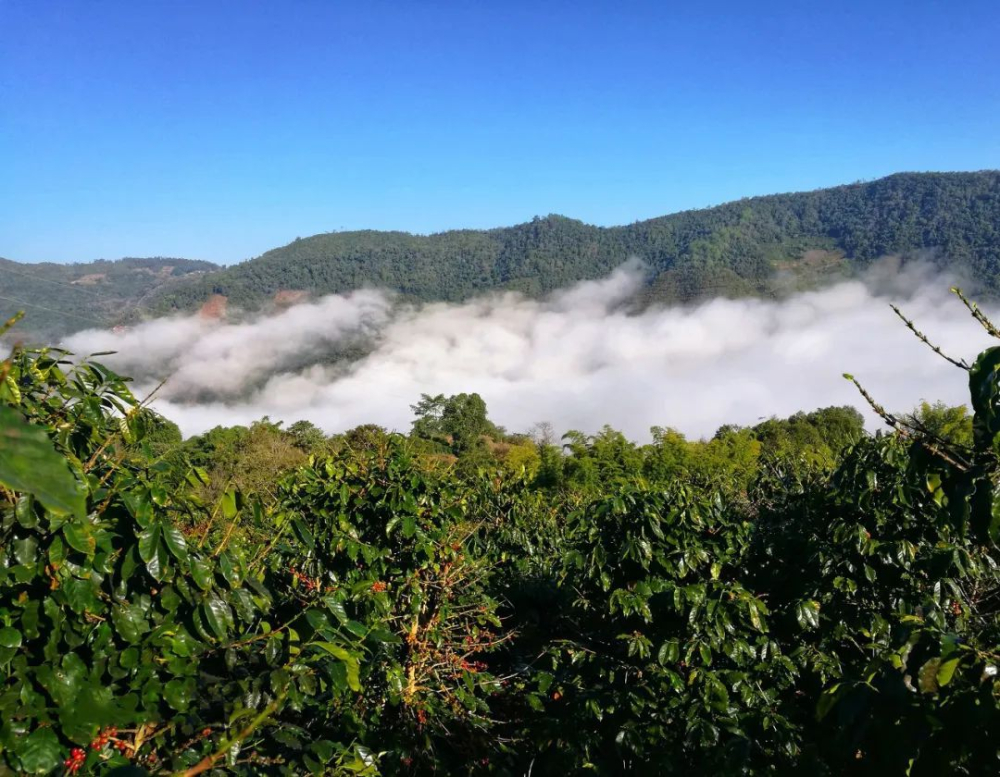
In its daily sharing, Front Street has repeatedly emphasized that the formation of coffee flavor involves many variables—variety, origin terroir, field management, picking standards, post-processing, roasting curve, and extraction method, among others—and variety plays a pivotal role among them. In this article, Front Street will focus on the topic of Yunnan coffee varieties—Catimor.
The "small-bean coffee" grown in Yunnan belongs to the Arabica species. Currently, the most widely planted variety in the province is Catimor, whose production accounts for 90% of the province's total, with all other varieties combined making up only one tenth. The Yunnan daily coffee beans produced by Front Street are made from Catimor from the Baoshan region. Let us first get to know this variety.
Catimor CIFC7963 is a hybrid variety bred by the Portuguese Coffee Rust Research Center (CIFC) with rust resistance as its goal. The plant has a compact and short tree shape, dense branching, short internodes between fruit-bearing nodes, strong growth, and excellent adaptability. Its most prominent advantage is its extremely strong resistance to rust, along with excellent yield performance.
Although Catimor is classified as Arabica, from a genetic background perspective it is the offspring of a cross between Timor (belonging to Robusta) and Caturra (a variant of Bourbon), and therefore carries about 25% Robusta genes. Robusta naturally has a higher chlorogenic acid content, strong tolerance to pests and climate fluctuations, and is usually planted at low altitudes, with high yields and rapid fruit ripening. Its flavor is intense and its bitterness prominent; if not handled properly, it easily develops astringency and unpleasant musty notes.
By contrast, the Arabica species appears much more "delicate," with weaker disease resistance in the plant and lower yields per tree. The significant day-night temperature difference brought by high-altitude environments lengthens the fruit ripening cycle, allowing coffee cherries to accumulate more nutrients and thus build more complex aromatic layers. The unique microclimates of each producing region also provide Arabica with diverse growing conditions, creating flavor profiles of different styles.
Catimor inherits the dual characteristics of both Robusta and Arabica. It possesses strong disease resistance and high yield potential, and in cupping it can also present fruit-like acidity and sweetness. However, the Robusta genes also bring shortcomings in flavor. Overall, it is centered on nuts and brown sugar, lacking bright and layered high-level flavors such as citrus, floral notes, and tropical fruit. In addition, in the early years, green bean processing was relatively rough, and Yunnan coffee was once labeled with "the devil's aftertaste," making it difficult to compete with pure Arabica varieties such as Caturra in competitions. Furthermore, Catimor's rust resistance gradually declines after 20 to 30 years of cultivation. If Yunnan coffee is to improve its overall quality and achieve sustainable development, variety replacement is imperative.
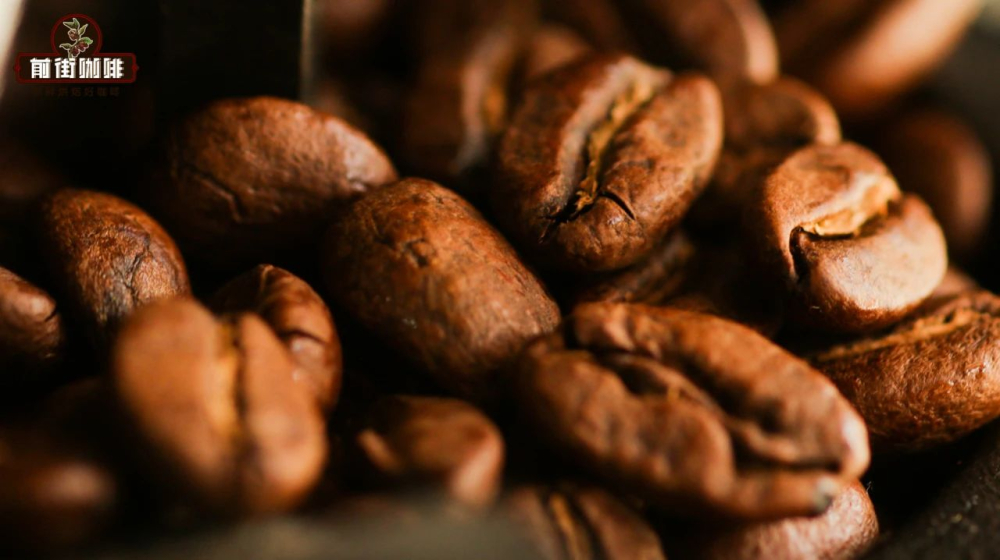
In recent years, more and more new varieties have taken root in Yunnan, such as the world-renowned Geisha. It can be foreseen that in the coming years, more high-quality coffee varieties will emerge in Yunnan. As early as 2013, Front Street selected and cultivated the "old variety" Typica in Lincang, Yunnan.
The earliest coffee variety introduced to Yunnan was precisely Typica, brought in 1904 by the French missionary Tian Deneng to be planted in Zhugula Village, Binchuan. Typica is renowned for its rich flavor, able to display diverse fruit acidity and delicate mouthfeel, and is widely recognized in the industry as a high-quality variety. The world-famous Blue Mountain coffee is Typica. In appearance, the Typica tree is tall and has good cold resistance, but its yield per tree is relatively low, and its resistance is weak, making it highly susceptible to leaf rust, coffee berry disease, and nematode disease. This means more labor must be invested in management. In addition, because the variety lacks a price advantage in the market, in recent years many Yunnan coffee farmers have switched to planting the higher-yielding Catimor, replacing Typica.
In 2013, Front Street launched a coffee planting project in Lincang, Yunnan. From site selection, seed selection, seedling cultivation, planting, harvesting, processing, to roasting, the entire process was handled personally by the Front Street team, thereby accumulating a great deal of practical experience and knowledge about varieties, altitudes, and processing methods. Lincang is influenced by the warm, humid airflow from the Indian Ocean and the southwest monsoon. The boundaries between the four seasons are blurred, but the dry and wet seasons are distinct, with abundant rainfall, long sunshine hours, and a short frost period. Some areas are frost-free all year round, and the three-dimensional climate characteristics are prominent, making it very suitable for Arabica coffee cultivation. Front Street deliberately chose the most primitive Typica. Typica has an elegant and pure flavor, but low yield and poor resistance are also recognized facts, and Front Street invested a great deal of effort in planting management. After five or six years of cultivation, in 2020 Front Street finally harvested its first batch of fruit, processed by natural drying in the sun, and named it "Front Street 2013."
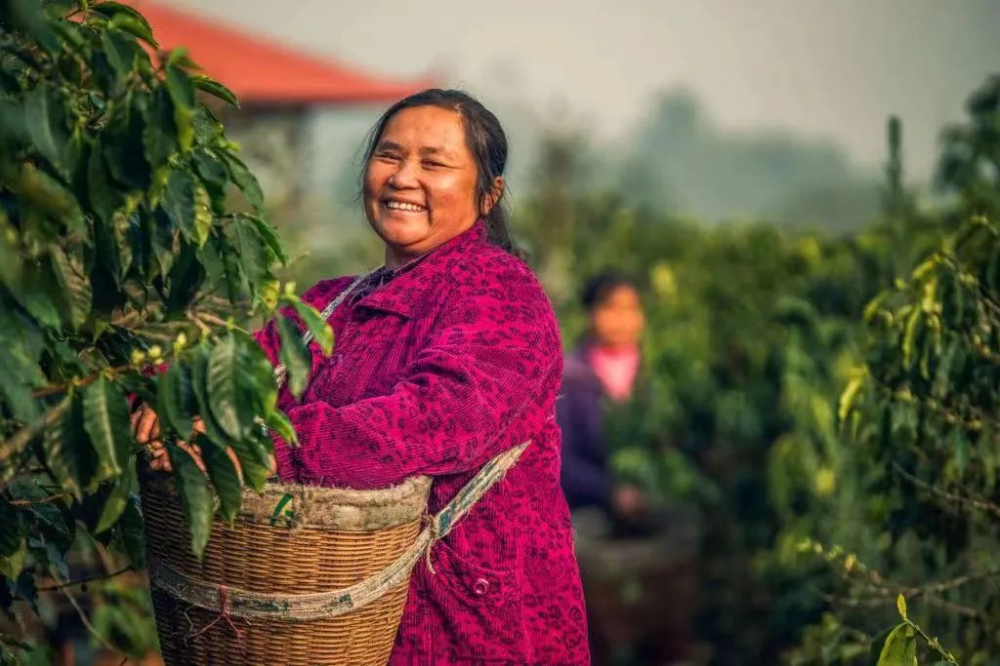
Around November each year, the coffee fruits planted by Front Street ripen one after another. Front Street arranges workers to pick red coffee cherries one by one, spreads the fresh fruit evenly in the sun to dry naturally, and turns them at irregular intervals to ensure even dehydration and prevent excessive fermentation from producing off-flavors. After the coffee beans have dehydrated to a purplish-red color and reached the target moisture content, they are sent for hulling and roasting. The sun-dried Typica shows fuller fermentation flavors, prominent sweetness, and aromas of caramel, berries, and black tea.
Front Street believes that the coffee flavor nurtured by Yunnan's terroir belongs to a neutral and balanced type, with sweetness, acidity, and bitterness each finding expression. Therefore, Front Street's Yunnan coffee is uniformly given a medium roast, highlighting the roasted aromas of chocolate and nuts while retaining some acidity. In cupping, Front Street captures from the Yunnan small-bean daily coffee aromas of nuts, herbs, and brown sugar, a melon-and-fruit-like sweetness, and plum-like acidity, with an overall balanced mouthfeel. The sun-dried Typica presents a fuller tropical fruit fermentation note and a lasting sweet aftertaste.
Front Street matches corresponding parameters when brewing different coffee beans. For darker-roasted beans, such as Mandheling and Brazilian coffee, Front Street uses a water temperature of 87 to 88 degrees Celsius and a medium-coarse grind; for lighter-roasted beans, such as Ethiopian Yirgacheffe and Panama Geisha, it uses a high temperature of 91 to 93 degrees Celsius with a medium-fine grind to bring out the aroma of high-altitude hard beans. Returning to Front Street's Yunnan small-bean coffee, Front Street chooses a medium water temperature and grind size to highlight its neutral and balanced characteristics.
Brewing parameters:
Dripper: Hario V60
Dose: 15g
Water temperature: 90 degrees Celsius
Grind size: 75% passing through a No. 20 sieve
Water-to-coffee ratio: 1:15
Three-stage pouring: First, wet the coffee bed with twice the amount of water as the coffee grounds, and after a dome forms, let it bloom for 30 seconds. Then, pour in a small stream in circles from the inside outward until it reaches 125 grams, then pause. When the coffee bed has dropped to half the height of the dripper, continue pouring the third stage in a fine stream until 225 grams. After all the coffee liquid has drained, remove the dripper. The total time is about 2 minutes. Gently swirl the coffee liquid in the server to mix it, then pour it into a cup, and experience the evolution of flavor layer by layer starting from the high-temperature stage.
For professional coffee knowledge exchange and more coffee bean information, please follow Coffee Workshop (WeChat public account: cafe_style)
For more specialty coffee beans, please add the private WeChat of Front Street Coffee (FrontStreet Coffee), WeChat ID: qjcoffeex
The above content is compiled by CoffeeHunters, a coffee news website.


