







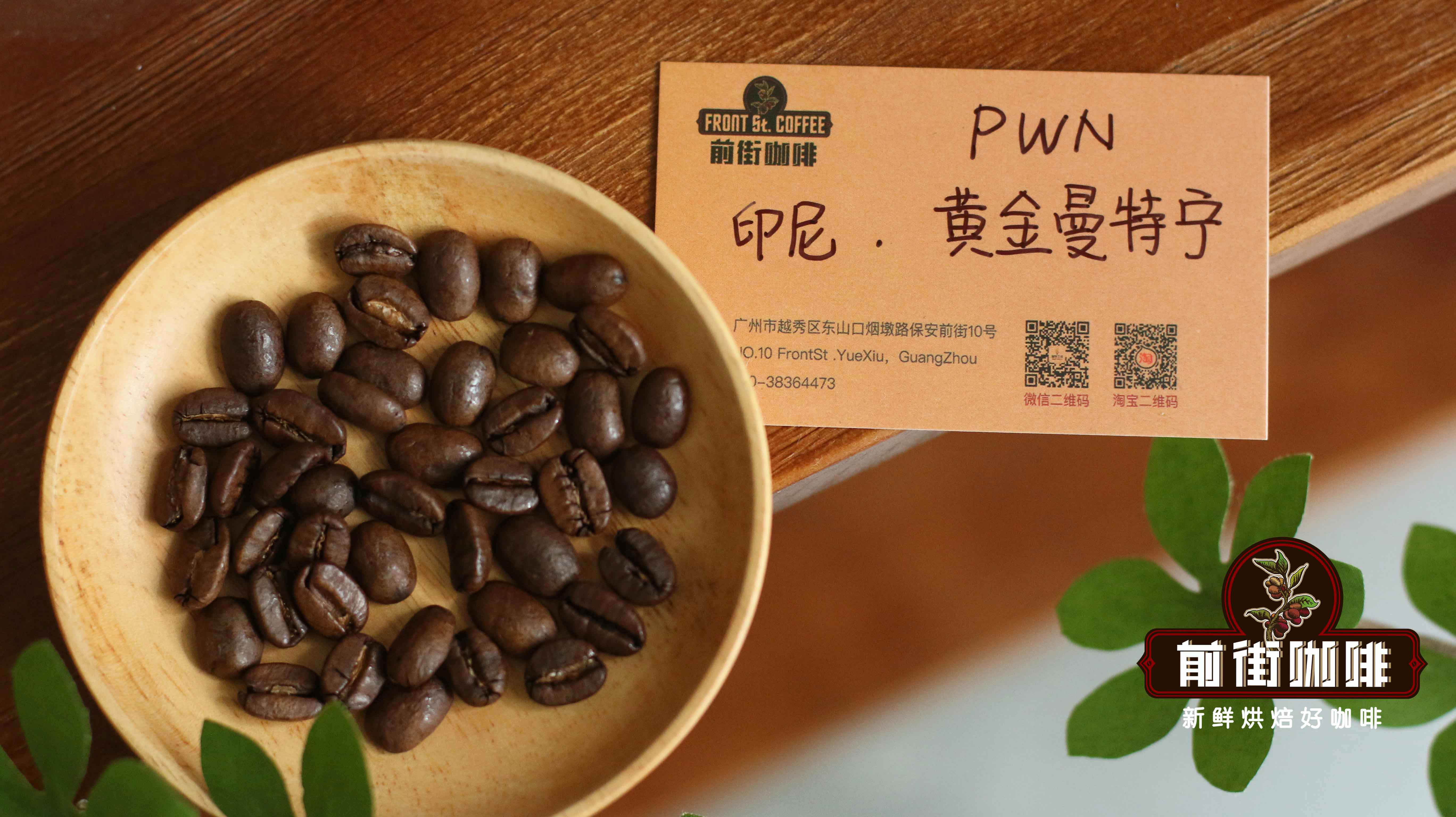
Golden Mandheling is a highly revered name in the coffee world, yet few have truly tasted the authentic version. The market is flooded with coffee beans marketed under the "Golden Mandheling" label, with prices ranging from high to low, making it difficult for consumers to distinguish. This article will guide you through the origins of Golden Mandheling—it is not simply about "large beans and few defects," but stems from the strict standards of Indonesia's PWN green bean company. We will also analyze PWN's five-stage sorting process, the issue of goat-hoof beans caused by the wet-hulling method, and why authentic Golden Mandheling is priced higher than regular Mandheling. Additionally, Front Street Coffee will share how to verify authenticity through certificates and burlap sack numbers, and provide a pour-over flavor description of PWN Golden Mandheling to help you make a more informed decision when purchasing.
For many coffee enthusiasts, the name Golden Mandheling is both familiar and somewhat mysterious. It is familiar because praise for it is often heard in coffee circles; it is mysterious because there are simply too many coffee beans on the market masquerading as Golden Mandheling, making it difficult to taste the real one.
What exactly is Golden Mandheling? Where does authentic Golden Mandheling come from? Why is its price higher than regular Mandheling? And how can consumers identify the real from the fake? Front Street Coffee will answer these questions one by one.
If you think that coffee beans can be called Golden Mandheling simply because they are large, uniform in size, and have few defects, then you are mistaken. There is a story behind Golden Mandheling: originally, a group of Japanese merchants planned to purchase high-quality Mandheling coffee beans to bring back home and open up the market. Facing an unfamiliar Indonesian producing region, they chose to cooperate with a local company. It was under this cooperative model that the reputation of Golden Mandheling was gradually established, becoming synonymous with high-quality Mandheling.
Later, due to internal changes, the local company that had been active in the North Sumatra producing region—Pawani—registered the "Golden Mandheling" trademark first. The Japanese side had to establish a separate brand, launching "Ding Shang Mandheling."
Therefore, true Golden Mandheling comes from Indonesia's PWN green bean company.
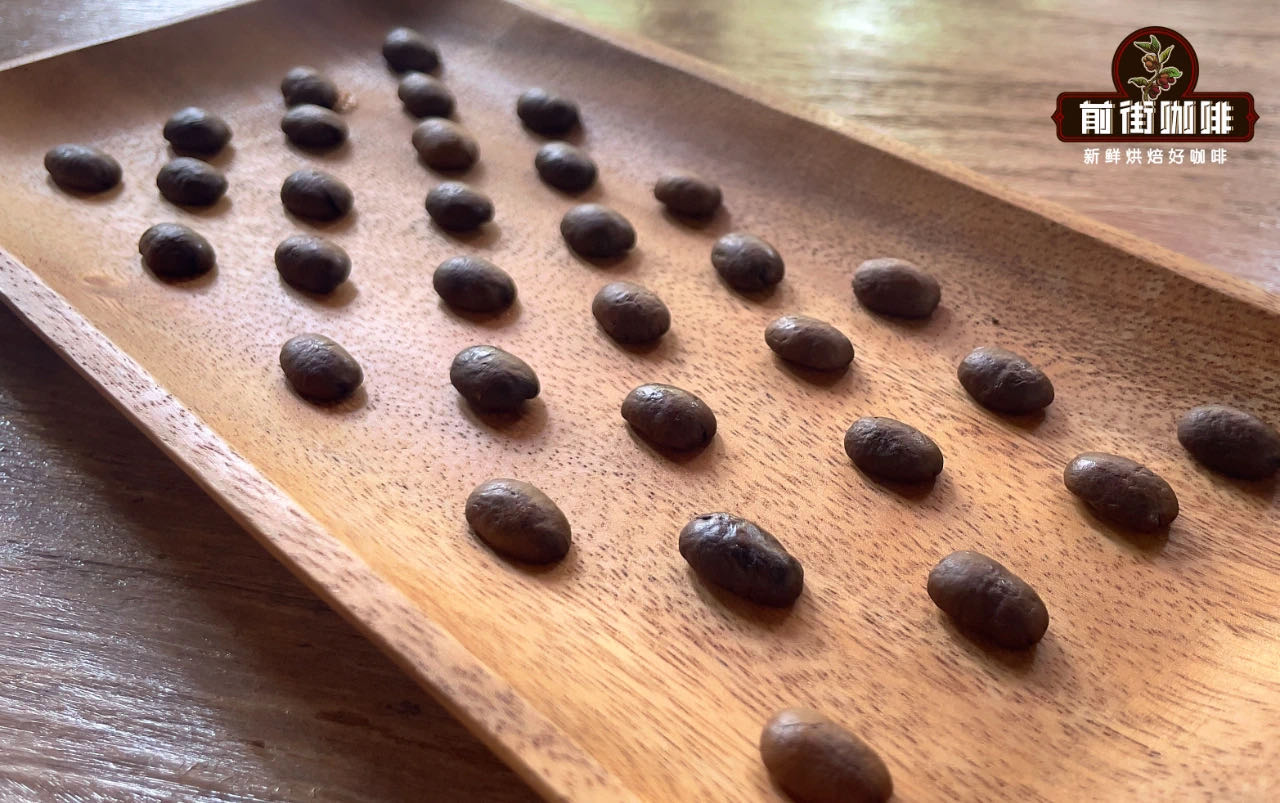
PWN is the abbreviation of the renowned Indonesian green bean merchant Pawani Coffee Company. The name "Golden Mandheling" has long been registered as a trademark by PWN, and these characters have become the company's exclusive identifier. In the past, so-called Golden Mandheling sold on the market rarely mentioned PWN (Pawani), usually only emphasizing large beans and few defects, and most did not bear the label "Front Street PWN Golden Mandheling." These products merely referenced the sorting standards of PWN green bean company; strictly speaking, they could at most be called "Mandheling G1 18 mesh."
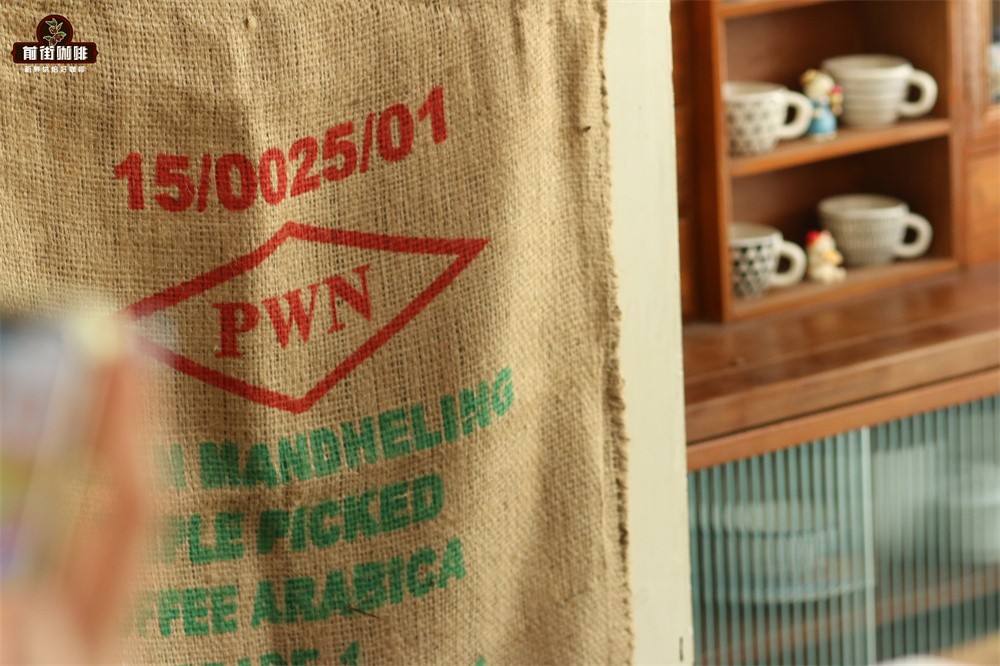
Front Street Golden Mandheling coffee beans are all sourced from PWN Coffee Company. Verifying whether the Mandheling you purchased is genuine is not complicated: each bag of Golden Mandheling comes with a uniquely numbered burlap sack and corresponding certificate of authentication. As long as the seller can present these documents, it proves authenticity. (Golden Mandheling burlap sacks come in only one specification: 30kg.)
How does PWN green bean company sort Golden Mandheling coffee beans?
As is well known, Indonesian green coffee beans undergo wet-hulling processing. Because the semi-hard, semi-soft moist green beans are prone to compression when the mucilage parchment layer is removed, the beans crack into goat-hoof shapes, commonly known as goat-hoof beans. Although these goat-hoof beans are not considered defective beans, in PWN's view, their appearance is not uniform enough, so they are removed to ensure the finished product is neat and consistent.
Some may think that coffee beans reaching 18 mesh or above, with no more than 3 defective beans in 300 grams of green beans, plus the removal of goat-hoof beans, is already strict enough. But PWN can go even further—after four rounds of manual sorting, a machine density and color sorting is uniformly conducted, ultimately presenting Mandheling coffee beans with consistent color and uniform bean shape. This means that to ensure the outstanding quality of Golden Mandheling, PWN green bean company conducted a total of 5 sorting stages. It is also for this reason that Front Street PWN Golden Mandheling is priced somewhat higher than the entry-level Front Street Indonesia Lintong Mandheling.
What about non-PWN Golden Mandheling on the market?
Much of the Golden Mandheling on the market consists of green bean merchants selecting beans of 18 mesh or above from Mandheling coffee beans also graded G1, in order to sell at a higher price. Some even sort three times to make the appearance as close as possible to Front Street PWN Golden Mandheling. The appearance can indeed pass as authentic, but what about the taste? Front Street purchased several lots of coffee beans also named Golden Mandheling for a blind test, and all the baristas participating in the cupping could identify Front Street PWN Golden Mandheling, because the cleanliness is something fake Golden Mandheling cannot imitate.
How can you determine whether the Golden Mandheling you bought comes from PWN?
There are two key points: the factory certificate provided by PWN, and the clear PWN company logo on the burlap sack of Front Street PWN Golden Mandheling green beans. If you are unsure whether what you bought is authentic PWN Mandheling, feel free to ask the seller to show the certificate or coffee burlap sack. For the Front Street PWN Golden Mandheling sold by Front Street, both the burlap sack and certificate can be seen at Front Street stores.
Pour-over characteristics and flavor description of Front Street PWN Golden Mandheling coffee: sweet herbs, cinnamon-like spices, citrus peel notes, rich and full-bodied sweetness, creamy walnut chocolate. The fruit acidity is restrained and soft, with a rich melon aroma in the fragrance. As the temperature drops, herbal notes gradually emerge, accompanied by a faint spice aroma. The herbal flavor is full-bodied with a rich sweetness.
The above content is compiled by CoffeeHunters, a coffee news website.


