







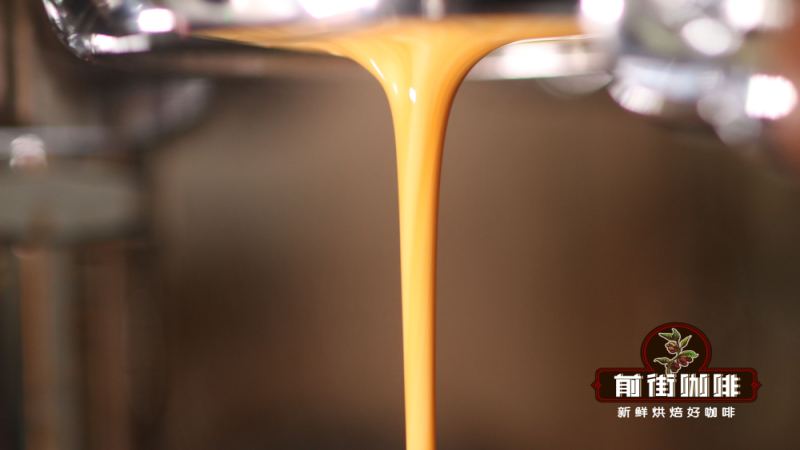
Espresso is a small, intense, pure black coffee liquid extracted by forcing high-pressure steam and hot water quickly through a puck of coffee grounds, topped with a golden-brown crema. Although it rarely appears on café menus on its own, it serves as the base for common drinks like Americano, latte, and cappuccino, making it the soul of a coffee shop. This article will start with the definition and characteristics of Espresso, outline its historical evolution and ideas for choosing blend beans, and explain in detail the complete steps for making espresso at Front Street Coffee, including dose, liquid yield, time control, and operational details such as distribution and tamping. Finally, it will summarize the key variables affecting extraction flavor and daily cleaning points, helping coffee enthusiasts systematically understand the logic behind a high-quality Espresso.
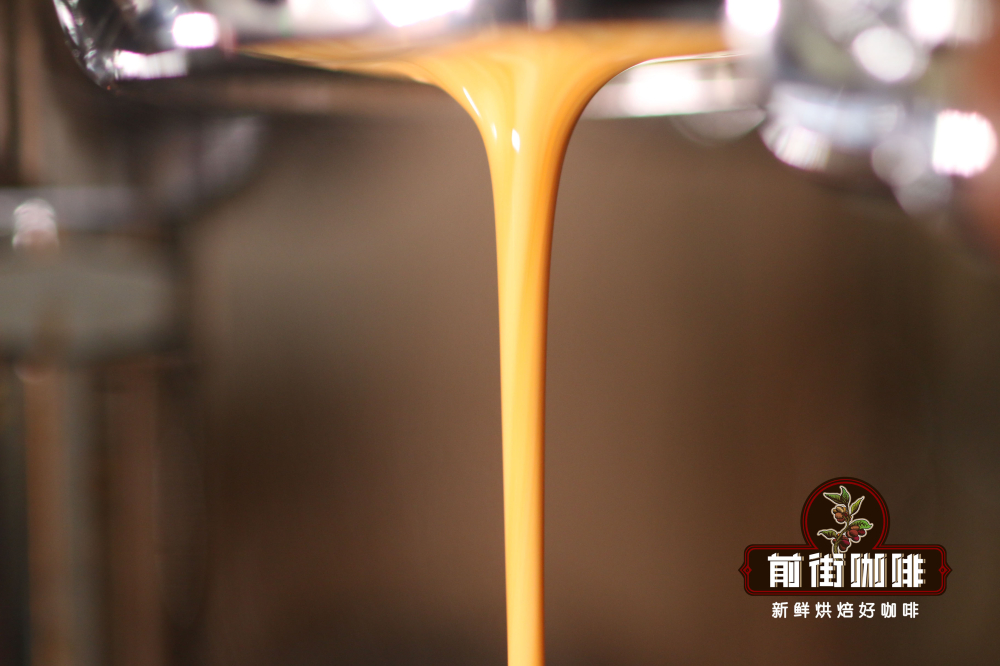
Espresso, known in English as Espresso, is a small cup of strong, aromatic, pure black coffee liquid with a golden foam on top, obtained by forcing hot water under steam pressure to quickly pass through a layer of coffee grounds. Although cafés rarely list Espresso directly on their menus, daily drinks like Americano, latte, and cappuccino all rely on it, and it is no exaggeration to call it the soul of a coffee shop.
What are the characteristics of Italian espresso?
Before the birth of espresso, people mainly brewed coffee by immersion, which required grinding the beans very finely and going through a slow extraction process, resulting in quite a long waiting time. In the early 19th century, to quickly obtain a cup of rich coffee, Italians tried using steam pressure to push high-temperature, high-pressure water through a coffee puck, thereby improving the efficiency of the original drip extraction. Through continuous improvement, this gradually developed into the semi-automatic and fully automatic espresso machines we commonly see today.
Because espresso uses fine grinding, high water temperature, and high-pressure extraction, the concentrated coffee brings together multiple layers of flavor, and various flavor compounds stimulate the taste buds exponentially. Coffee is an agricultural product and varies with changes in climate, soil, and other conditions; even from the same origin, different batches of coffee beans have different flavors. Blend beans help bring out the best in each other, contributing to a more balanced and stable aroma and mouthfeel in every extraction. Therefore, Front Street recommends using blend beans specifically designed for espresso machine extraction. Front Street's bean list includes four espresso blend beans, also suitable for espresso machines and moka pots.
Traditional espresso usually uses extremely dark-roasted coffee beans and adds Robusta beans rich in oils, resulting in a burnt, bitter, and intense taste that needs to be sipped slowly over several mouthfuls. In recent years, with the rise of the specialty coffee wave, coffee bean quality and extraction techniques have continued to improve, and drinkers have pursued higher flavor and mouthfeel. Today's espresso no longer only has a burnt bitterness. For example, the espresso produced at Front Street stores presents fermented wine aromas, berry-like sweet acidity, rich aromas, a soft mouthfeel, and is very easy to drink.
Steps for making espresso
The espresso drinks produced daily at Front Street stores all use the "Sunflower Warm Sun Blend." The baristas at Front Street Coffee (FrontStreet Coffee) debug the espresso extraction parameters every day before opening, and only then begin official production.
Front Street uses the capacity of a double basket, with a dose of about 18–20 grams; in actual production, 20 grams of coffee grounds are used. Front Street's extraction ratio is 1:2, meaning 20 grams of coffee grounds extract 40 grams of coffee liquid. The extraction time is related to the flow rate of the coffee grounds; generally, a single extraction is controlled within 20–35 seconds, because within 20 seconds the coffee taste tends to be thin, while over 35 seconds it tends to be over-extracted and develop burnt bitterness. Most of Front Street's espresso falls within the 28–30 second range.
Before extraction, wipe the basket dry, turn on the grinder, grind a double dose of coffee grounds, place them on an electronic scale, and adjust to reach 20 grams. Then use a distribution tool to level the coffee grounds, and use a tamper to press vertically downward with force, tamping the coffee puck firmly to ensure more stable extraction.
Then turn on the extraction switch and let water run for 1–2 seconds to wet the group head, which also removes coffee grounds stuck to it. Place an electronic scale under the cup for Espresso and tare it to zero; place it together under the group head during extraction.
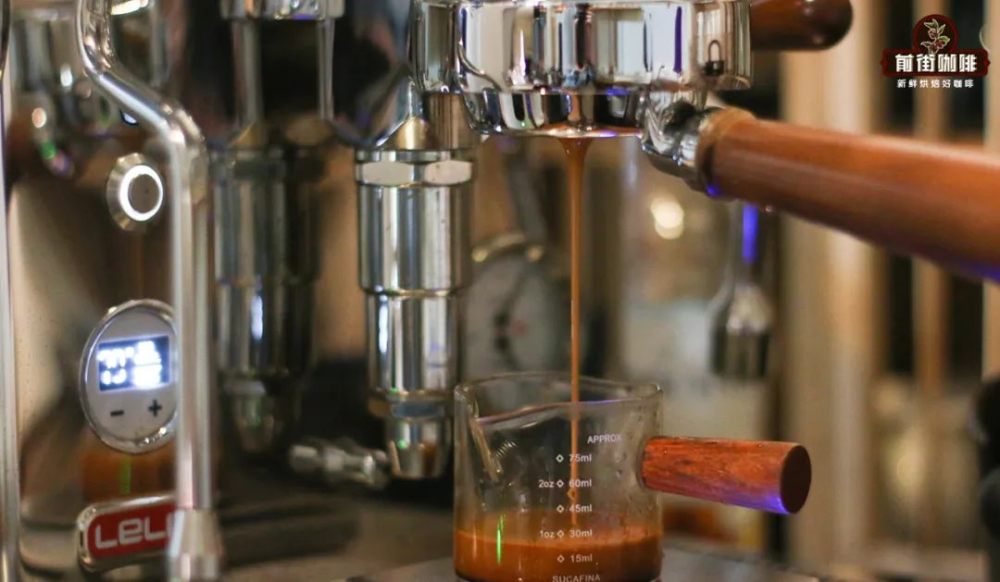
Gently lock the portafilter onto the group head, and start the extraction switch. Observe the changes in the extracted liquid; when the electronic scale shows 40 grams of coffee liquid at about 30 seconds, turn off the extraction switch. Brewing parameters will change subtly according to daily air humidity and the condition of the coffee beans, so it is necessary to adjust the coffee dose, grind setting, and extraction yield up or down.

The extracted Espresso can be drunk directly; with a cup of water to rinse the mouth, you can taste the dense crema and the rich, full-bodied coffee liquid beneath. If you cannot accept the intense bitterness, you can also add water or milk according to your preference to dilute and soften the strong taste.
What details should be noted when making Italian espresso?
Common commercial espresso machines can provide more than nine stable atmospheres of pressure and hot water above 90 degrees Celsius. The high pressure forces hot water to quickly pass through finely ground coffee, extracting a coffee liquid with rich crema, intense aroma, and a heavy mouthfeel. To extract an ideal espresso, the barista's job is to master the various parameters that affect coffee flavor and then adjust them to the optimal extraction range.
In operation, there are many factors affecting the flavor of an espresso, including coffee bean quality, roast level, grind size, coffee machine boiler pressure, water temperature, distribution and tamping force, dose, extraction time, extraction yield, and other factors and details. Usually, the coffee machine's pressure and water temperature are set and not easily changed. Distribution and tamping force are controlled according to the barista's habits. The four major factors used daily to adjust extraction are dose, time, yield, and grind size. Brewing parameters will change subtly according to daily air humidity and the condition of the coffee beans, so adjustments up or down are needed to achieve better extraction results.
What other operational details should be noted?
The above parameters all change correspondingly with the extraction state. We need to pay more attention to and summarize the adjustment directions brought by extraction variables, so as to better grasp the excellent flavor in the cup. No matter which barista, to extract a high-quality espresso, every movement must be crisp and precise. Distribution must be even, and tamping pressure must be stable. If the pressure is too light or the coffee bed is uneven, extraction will be uneven. Locking in the portafilter requires aligning the angle; if it bumps against the coffee machine, it can easily shatter the puck, causing channeling and making the taste unbearable.
After extraction, some coffee residue will stick to the dispersion screen. If not cleaned, it will be baked dry by the high temperature of the group head, and these residual coffee grounds will also affect the flavor of the next espresso. Therefore, we need to develop the habit of flushing the dispersion screen with water while removing the portafilter after extraction.
The above content is compiled by CoffeeHunters, a coffee news website.


