







As the autumn and winter camping season arrives, the moka pot has once again become a popular choice among outdoor coffee enthusiasts. But faced with the two specifications on the market—single-valve and dual-valve—many consumers feel confused. From the perspective of Front Street, this article first explains the basic principle by which a moka pot uses steam pressure to complete extraction, then takes a deeper look at the structural differences between single-valve and dual-valve models—the dual-valve design adds a pressure valve that restricts the outflow of coffee liquid, thereby increasing internal pressure and delivering higher extraction efficiency and a richer coffee flavor. The article will also explore the relationship between coffee crema and roast level, and recommend Front Street's classic blend coffee to help readers make a wise purchasing decision based on their own needs.
Autumn and winter are the golden season for camping, and many coffee lovers hope to enjoy a good cup of coffee outdoors as well—which is precisely an important reason the moka pot has become popular again in the past two years. However, when people open e-commerce platforms to choose one, they discover that besides brand and capacity, moka pots also come in single-valve and dual-valve versions.
"What exactly is the difference between single-valve and dual-valve?" Many friends hesitate to place an order because they can't figure out the distinction. Today, Front Street will go into detail about exactly what differences exist between single-valve and dual-valve moka pots.
To understand their differences, we must first start with the working principle of the moka pot, because the dual-valve version is essentially the original structure with an additional "special device" added.
The Working Principle of the Moka Pot
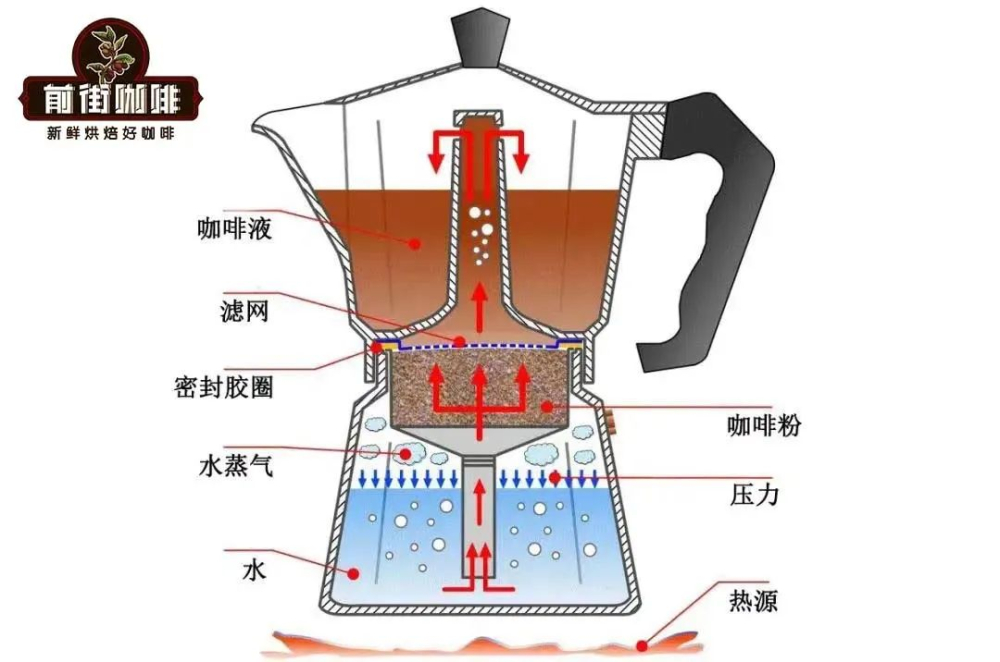
Using this diagram again, we can intuitively see the structure and operation of a moka pot. A moka pot mainly consists of three parts: the lower chamber that holds hot water, the filter basket in the middle that holds the coffee grounds, and the upper chamber with a filter screen.
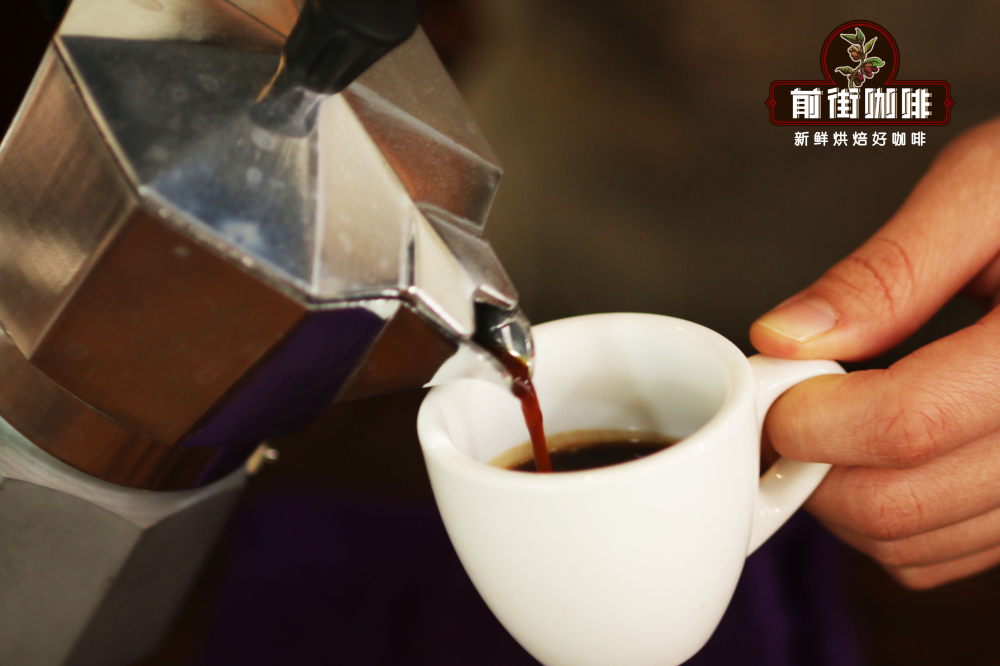
The working mechanism of a moka pot is actually not complicated—it uses the pressure generated by water vapor to push hot water through the extraction process. After the lower chamber is heated, the water inside reaches boiling point and turns into steam. The steam keeps expanding, squeezing the space inside the pot and forcing the hot water to flow upward along the pipe. The hot water passes through the coffee grounds to extract them, and finally coffee liquid flows out from the top outlet.
The above is the extraction principle of moka pot coffee, and also how the most common single-valve moka pot works. The dual-valve version simply adds a pressure valve at the outlet on top of this foundation.
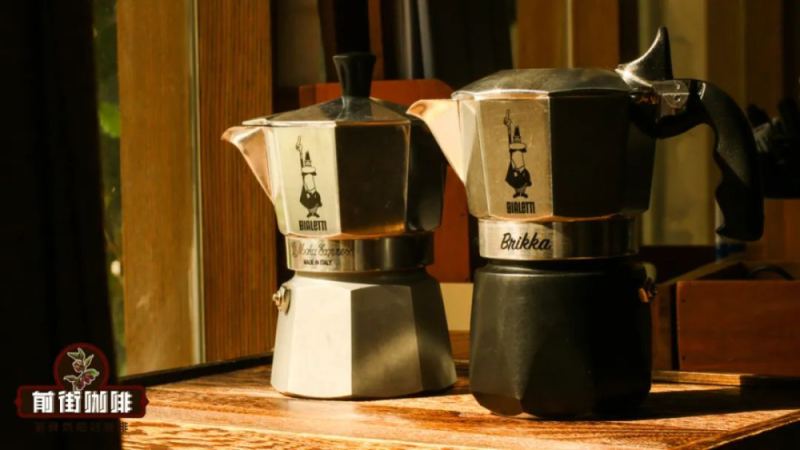
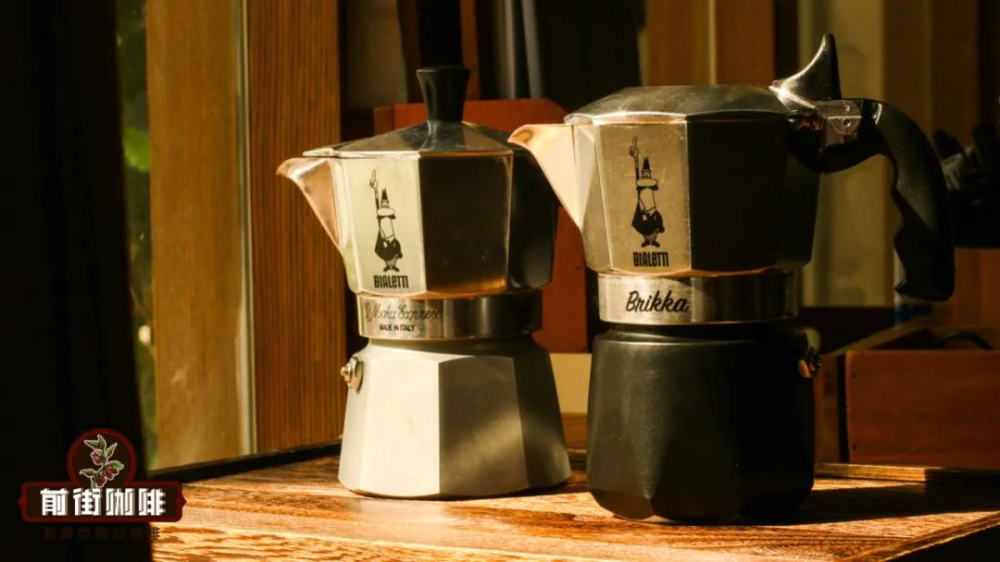
(Left: single-valve; Right: dual-valve)
A pressure valve, as the name suggests, serves to increase pressure. This valve deliberately narrows the passage gap, restricting the outflow path of the coffee liquid. When the coffee liquid cannot pass smoothly due to the narrow gap, it accumulates internally and forms a blockage, thereby achieving the pressure-boosting effect.
Pressure is one of the most critical parameters in pressure-based extraction methods such as moka pots and espresso machines. The greater the pressure, the higher the extraction efficiency. Since a pressure valve allows the moka pot to achieve greater pressure, that means we can extract coffee with higher extraction efficiency. Under the same extraction conditions, coffee made with a dual-valve moka pot has a concentration and extraction yield closer to espresso, so when making a latte you don't need to worry about a thin taste from insufficient concentration, nor about the coffee flavor being masked by milk.
This improvement is very practical for most people. The original single-valve moka pot has relatively lower extraction pressure, so the coffee grounds need to be ground to a fineness similar to espresso, even close to flour-like particles, which is not easy for most users of hand grinders—grinding is quite laborious.
In addition, due to the presence of the pressure valve, the extracted coffee is not only more concentrated but also carries richer crema. Precisely because of this, many merchants on the market currently advertise the dual-valve moka pot's ability to extract crema as a selling point—for example, claiming that a dual-valve moka pot can produce more beautiful latte art patterns.
In fact, the amount of crema is also closely related to the roast level of the coffee beans. The lighter the roast, the less carbon dioxide gas the beans contain, the harder the texture, and the thinner the crema; only by choosing coffee beans at a medium-dark roast or darker will the coffee brewed in a moka pot have a fuller aroma, sufficient carbon dioxide content, and higher body.
If this is exactly the taste you're after, you might as well try Front Street classic blend coffee. It combines Indonesian Mandheling beans with Brazilian espresso beans, offering both the wild aroma of Mandheling and the smooth mouthfeel of Brazilian beans, complementing each other in flavor with harmonious balance. Front Street Classic Espresso Blend adds Robusta beans on the basis of the Mamba recipe, significantly enhancing the coffee's crema and making moka pot coffee even fuller in body—very suitable for home brewing and also great for latte art.
Overall, Front Street more recommends that friends planning to buy a moka pot choose the dual-valve version, because it is more versatile and suits a wider range of scenarios. But if you have no need for milk coffee and simply want to enjoy a cup of black coffee, then a single-valve moka pot is completely sufficient. After all, the price gap between the two is not small, and spending your money where it counts is the wise move.
The above content is compiled by CoffeeHunters, a coffee news website.


