







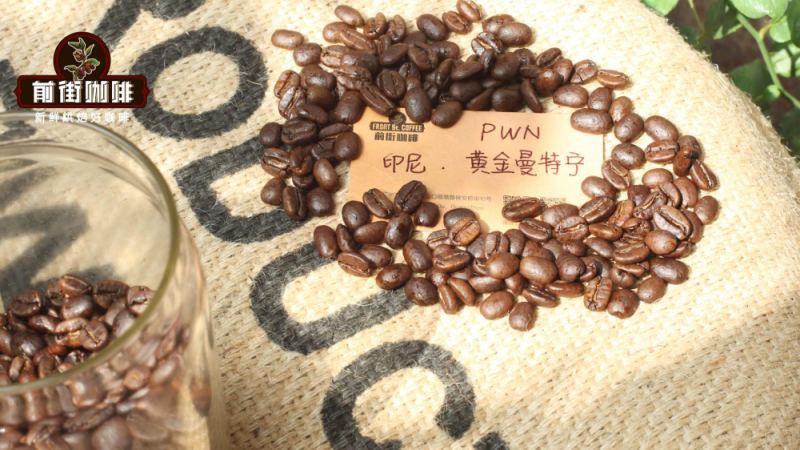
Golden Mandheling is one of the most iconic coffees from Indonesia's Sumatra region, renowned for its full body and distinctive flavor. This article starts with the PWN Golden Mandheling sourced by Front Street Coffee, providing a detailed introduction to the geographical background of its origin near Lake Tawar in the Gayo Highlands, the stringent standards of G1 grade and triple hand-sorting, an analysis of the origins and characteristics of the Ateng variety, and an in-depth explanation of how Indonesia's unique wet-hulling process shapes Mandheling's signature goat-hoof-shaped green beans and clean sweetness. It also includes complete product information for Front Street's PWN Golden Mandheling, covering region, altitude, processing method, and flavor description, offering coffee enthusiasts a professional and practical reference guide.
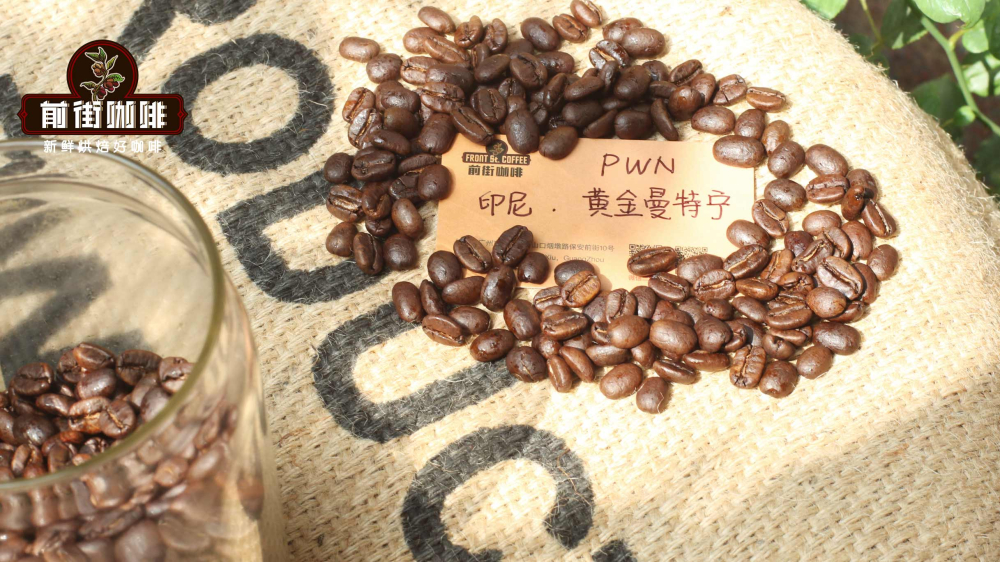
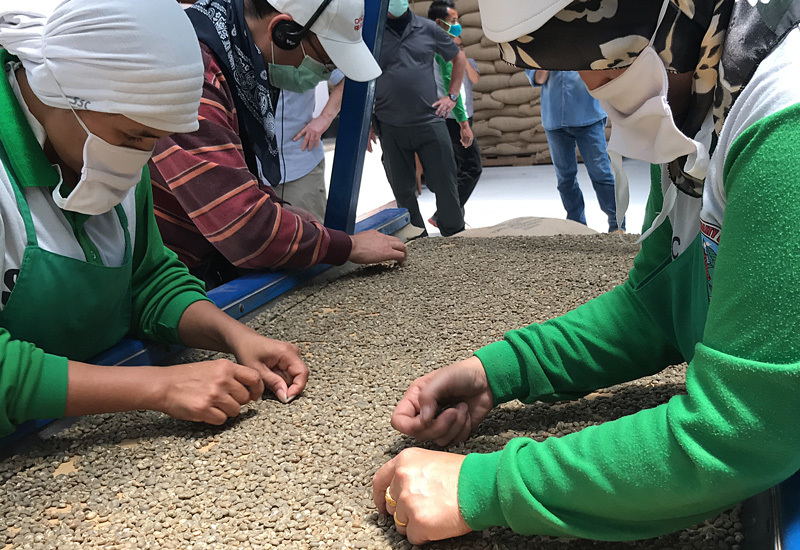
The Golden Mandheling coffee beans selected by Front Street Coffee come from the Lake Tawar area near the Gayo Highlands in northwestern Sumatra, representing a high-specification lot within Mandheling. When PWN purchases green beans, it only selects beans of screen size 18 and above, and requires that a 300-gram sample contain no more than 3 defective beans, meeting the G1 grade—the highest level in Indonesia's green bean system. Afterward, following established standards, three rounds of manual sorting are conducted to remove defective beans, ensuring that every Mandheling bean is consistent in appearance, color, shape, and size. As a result, Front Street's PWN Golden Mandheling offers greater cleanliness on the palate, with the heaviness of its body and sweet aftertaste even more pronounced.
Coffee variety: Front Street PWN
The variety used in Golden Mandheling is Ateng, a name derived from the Aceh Tengah region of central Aceh. The so-called Ateng series is actually a collective term for Catimor varieties on Sumatra and other Indonesian islands, produced by crossing Arabica with Robusta, and is widely cultivated on Sumatra. This variety has high yields, strong resistance to coffee leaf rust and coffee berry disease, and performs quite well in cupping.
Wet-hulling process:
When it comes to Mandheling coffee, Front Street must mention the region's highly distinctive wet-hulling process. Indonesia's rainy season is long, making it impossible to dry green coffee beans through prolonged sun-drying as in Africa and other regions, so locals developed this processing method known as wet-hulling.
The specific procedure is: first, use a machine to remove the outer skin of the coffee fruit, rinse away impurities with clean water, then place the beans in a sealed container to ferment for about 3 hours, followed by drying in the sun for one to two days. At this point, the green beans still have a moisture content as high as 30% to 50%, and the beans are in a semi-soft, semi-hard state. Next, the mucilage layer and parchment layer on the surface of the green beans are removed, and sun-drying continues, usually for another 2 to 4 days, until the moisture content drops to 12% to 13%. Compared to the natural and washed methods, the wet-hulling process has a much shorter drying cycle.
Because the wet-hulling process removes the parchment layer, the green beans take on a bluish-green hue. During processing, the beans are soft and prone to compression and deformation, ultimately forming the familiar goat-hoof-like appearance.
Front Street Coffee: Front Street PWN Golden Mandheling Coffee Beans
Region: Sumatra, Indonesia
Grade: G1, triple hand-sorted
Altitude: 1100–1600m
Variety: Ateng
Processing method: Wet-hulling
Flavor: Nuts, spices, herbs, caramel, dark chocolate
The above content is compiled by CoffeeHunters, a coffee news website.


