







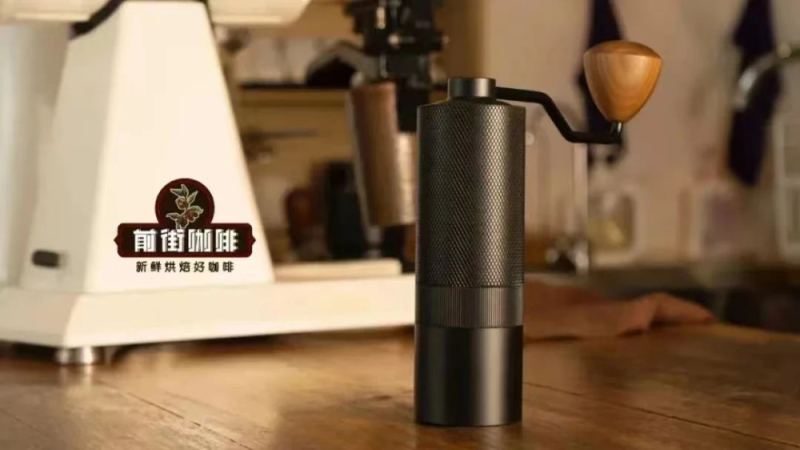
Hand grinders are a go-to piece of gear for many pour-over enthusiasts. They work well for everyday home use and can be paired with a French press, AeroPress, or moka pot to form a portable outdoor kit. Grinders from different brands and models vary noticeably in price and in the quality of the grounds they produce. From Front Street Coffee's perspective, this article systematically breaks down the core components of a hand grinder—the burr, the dial, the handle, the bean chamber, and the grounds chamber—and explains how to adjust the grind setting for different brewing methods, how to turn the handle correctly, and the key points of cleaning and regular maintenance, so you can use your hand grinder more smoothly and get more consistent extraction in every cup.
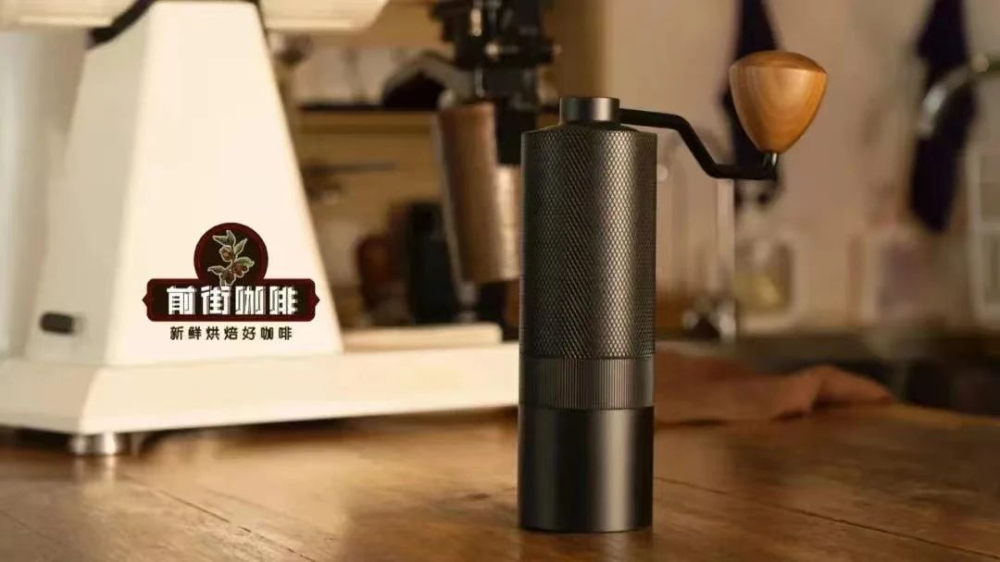
The differences between hand grinder brands and models show up not only in price but also directly in the quality of the coffee grounds they produce. A hand grinder suits daily home use and can also be paired with devices like the French press, AeroPress, and moka pot to form a portable coffee kit for outdoor or travel use, which is why it is so popular among pour-over enthusiasts. Today, Front Street Coffee will explain the specific ways to use a hand grinder.
Burr: The Core Grinding Structure
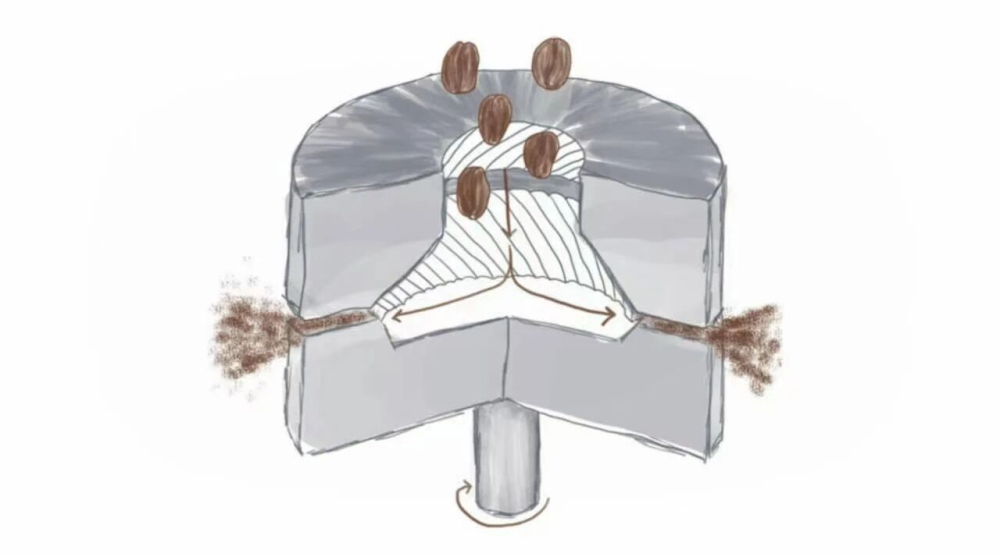
The burr consists of two opposing burr plates that move relative to each other, with regular patterns on their surfaces, such as serrations, grooves, or conical protrusions. Under the combined action of the serrations cutting and the grooves crushing, coffee beans are gradually broken down from whole beans into powder. The finer the pattern, the more suitable it is for fine grinding.
Most hand grinders on the market use conical burrs, with the upper burr plate shaped like a cone and the lower burr plate featuring a grooved structure. Because conical burrs have a larger contact area, grinding efficiency and uniformity tend to perform better.
Dial: Controlling Grind Coarseness
The distance between the upper and lower burr plates directly determines the coarseness of the coffee grounds: the narrower the gap, the finer the powder; the wider the gap, the coarser the powder.
Turning the dial, knob, or nut changes the distance between the two burr plates. Some models also come with a locking mechanism to prevent the gap from shifting during grinding.
Handle: Transmitting Power
During operation, you turn the handle to provide power. The handle is generally connected to the upper burr plate through a linkage rod, converting human force into mechanical rotational force.
Bean Chamber
Used to store coffee beans waiting to be ground, usually located above the burr. The ground coffee then falls through a channel below the burr into the grounds chamber. The inner wall of the channel is smooth, which reduces retained grounds and prevents them from affecting the flavor of the next use.
Grounds Chamber
Used to catch the ground coffee, it is mostly a detachable structure, commonly twist-on, snap-on, or magnetic, making it very convenient to pour out the grounds.
Using a hand grinder correctly ensures grinding uniformity, thereby improving the taste of the coffee.
Different brewing methods have different requirements for grind size. When you first start, you can try grinding a small amount of coffee beans to see whether the particles are uniform; if there is obvious clumping, or the grind is too coarse or too fine, fine-tune the setting and try again. Generally speaking, the larger the number on the burr dial, the coarser the coffee particles; the smaller the number, the finer the particles. For example, when grinding Front Street Coffee's Huakui coffee beans, the target coarseness is like fine granulated sugar. If the test grind comes out too coarse, you need to adjust the number smaller.
Hold the grinder handle and rotate it clockwise or counterclockwise with even force. Do not use too much force during grinding, otherwise it is easy to cause uneven particles or even damage the burr. If you feel resistance or sticking, the grind setting may be too fine, or the coffee beans may contain impurities; at this point, stop and check.
Daily cleaning: After each use, use a brush to remove retained grounds from the grounds chamber and the burr. Do not rinse the burr with water, especially metal ones, to avoid rust.
Regular maintenance: For grinders that can be disassembled, it is recommended to take apart the burr every 1–2 months and wipe away residual oils with a dry cloth. Long-term oil buildup will affect flavor.
The above content is compiled by CoffeeHunters, a coffee news website.


