







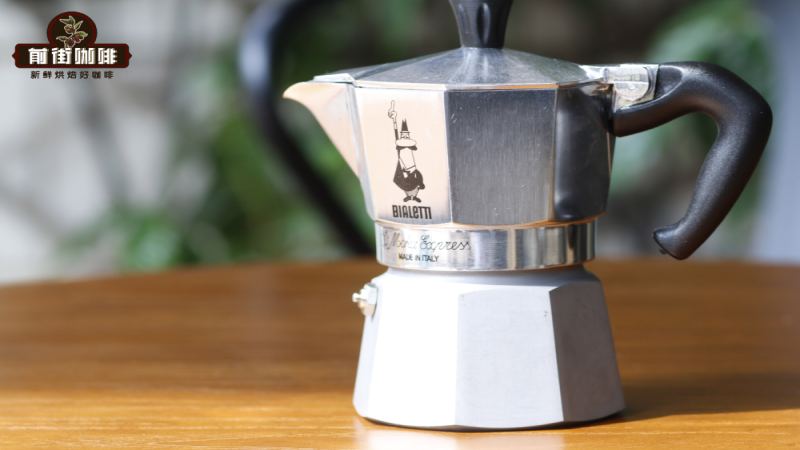
The moka pot is the preferred device for many coffee lovers to make rich coffee at home, and Bialetti's classic octagonal pot is the most iconic example of them all. This article will start with the story of the birth of the Bialetti moka pot, tracing how this classic device went from 1933 to households around the world, and then break down in detail the moka pot's three-layer structure and pressure extraction principle. On this basis, Front Street will combine its own experience to share the specific steps for brewing coffee with a moka pot, including how to choose coffee beans, the key points of controlling grind size, and the critical details during heating, to help you consistently make a cup of rich, smooth moka pot coffee at home.
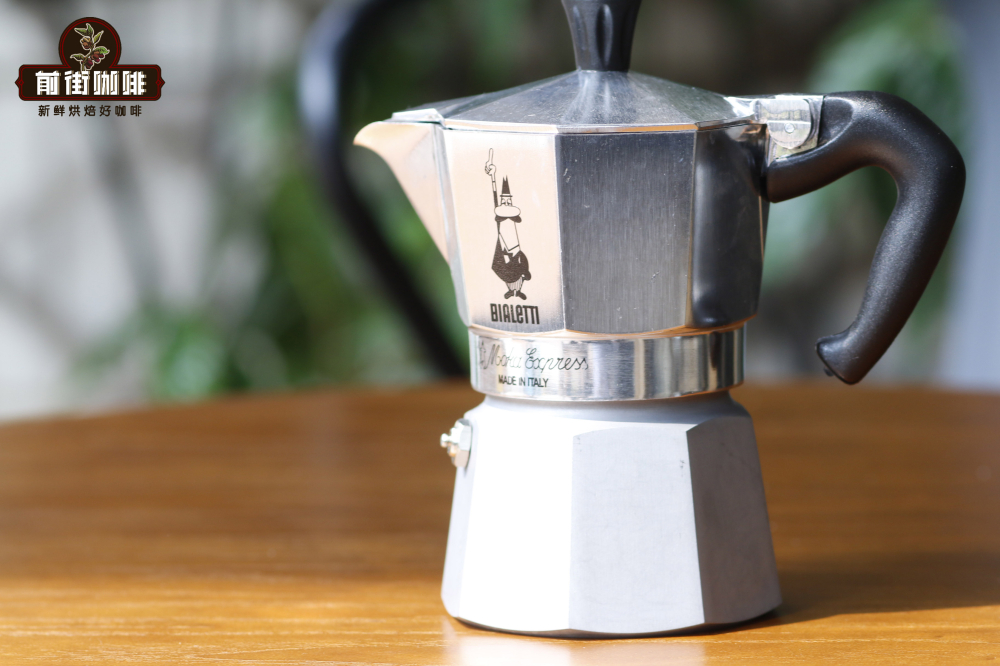
In the world of moka pots, Bialetti is undoubtedly the best-known brand, and the moka pots it produces still use the original classic design to this day. If you have ever visited a Front Street store, you should remember the octagonal pot on the display shelf—that is the iconic moka pot made by Bialetti.
The Birth of the Bialetti Moka Pot
In the early days of coffee drinking, people used to boil coffee grounds and water together over a fire, then filter it before drinking. Entering the 19th century, some began exploring the use of steam to extract coffee, hoping to obtain a cup of stronger coffee in an extremely short time. In the early 20th century, the influence of the Industrial Revolution spread across the world, and Italians built an espresso machine whose appearance and imposing presence closely resembled a steam locomotive boiler, with a metal shell paired with brass parts, creating a rather spectacular sound-and-light effect when brewing coffee. The steam locomotive itself was an epoch-making invention that allowed people to travel quickly from one place to another, and applying it to coffee brewing was equally satisfying, with a modern feel and coffee flavor blending together, so cafes attracted Italian men like magnets, giving them a reason to go out at any time.
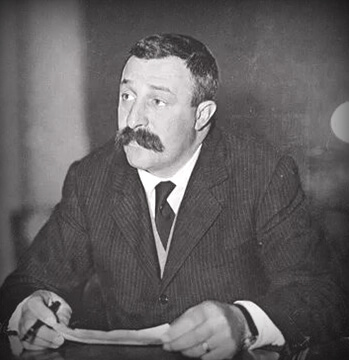
Compared with the coffee served in cafes, the coffee women drank at home was much inferior. This situation did not fundamentally change until 1933, when Alfonso Bialetti invented the first device that truly improved the home coffee experience. This device was exactly what we now know as the moka pot. Even more remarkable is that, from Bialetti's original design to the present, the moka pot has undergone almost no changes in material, structure, or appearance, and what we see today is exactly the same as the first one that appeared in 1933. Its unique shape even made the list in the selection of the most influential designs in 20th-century Italy, alongside the 1946 Vespa scooter and the 1957 Fiat 500.
Bialetti created the moka pot with a clever concept, allowing people to make coffee close to cafe quality in their own kitchens, but this octagonal moka pot did not truly become famous until his son Renato took over the business.
After World War II, Renato returned to Italy from Germany and reactivated the machinery and equipment his father had packed away and sealed during the war. With his talent for marketing, he promoted it through multiple channels, from billboards, newspapers, and radio to large three-dimensional product sculptures outside exhibition halls, expanding the output of the Moka Express moka pot from ten thousand units per year in his father's time to one thousand units per day, and even achieving the astonishing figure of 300 million units sold cumulatively worldwide between 1950 and the end of the 20th century.
As times kept changing, the materials of moka pots also developed from aluminum into multiple options, but for the Moka Express moka pot produced by Bialetti, apart from some parts being mass-produced using industrial technology, the lower chamber used to hold water at the bottom still adheres to the handcrafted method since its founding in 1933, which is also why its internal surface looks like it has the raw texture of a handmade product. A moka pot genuinely produced by the original Bialetti factory in Italy has a cartoon figure on the body: a man with a mustache pointing upward, as if he is ordering a coffee. This is the Bialetti moka pot logo created by Renato based on his father's image. Today it not only appears in 90% of Italian households, but also firmly occupies a place in the hearts of coffee lovers around the world.
The Coffee Brewing Principle of the Moka Pot
The moka pot mainly consists of three parts: the bottom layer is used to hold water, the middle layer is used to hold coffee grounds, and the top layer is used to hold the brewed coffee. During operation, first add water to the bottom layer, fill the middle layer with coffee grounds, then assemble and tighten the three parts. After that, pressure is generated through heating, causing the water to rise along the central metal tube, pass through the coffee grounds in the middle layer to complete extraction, and finally the coffee liquid emerges into the top layer.
How to Use a Moka Pot to Brew Coffee
Previously, quite a few friends asked Front Street how to use a moka pot to brew coffee, so here Front Street will give a unified answer.
The first step is to choose the right coffee beans and the corresponding grind size. Because the moka pot uses pressure extraction, it is more suitable for coffee beans with a roast level between medium and dark. On the one hand, it can extract oils and make the coffee aroma richer; on the other hand, medium-dark roasted beans are richer in caramelized substances and better match the style of strong coffee, so when used to make moka pot americano or moka pot latte, they will not be diluted into blandness.
If you prefer a rich mouthfeel plus a toasty aroma, you can buy Front Street. Golden Mandheling. This bean is dark roasted, and after extraction with a moka pot the coffee is rich and smooth, with chocolate and nut notes, focusing on low acidity and a heavy mouthfeel.
If you like a bit of acidity in floral and fruity aromas, you might try Front Street. Strawberry Candy espresso blend. This bean is known for its honey processing, using two major origins—Front Street Costa Rica Tarrazu and Ethiopia, the birthplace of coffee—and paired with the Colombia Huila region, the moka pot espresso it produces is not only not harsh, but also has good oils and a creamy texture, while presenting a sweet-and-sour taste similar to strawberry gummies.
Grind size is equally critical for the moka pot. If it is ground too fine, the coffee liquid will most likely not come up, and it will also increase the pressure in the lower chamber; if pressure is not released smoothly, there is a risk of explosion. So once the water has boiled but the coffee liquid still does not rise for a long time, the heat source should be turned off immediately. Grinding too coarse is also no good, because the resistance is too small, and the coffee liquid will burst out violently, easily causing splashing and burns. Front Street recommends a coarseness of EK-43s #3-3.5 setting, roughly equivalent to fine salt.
Specific Operation
1. Pour hot water into the lower chamber, with the water level 0.5 cm below the pressure relief valve. Using hot water can better shorten the coffee brewing time.
2. Pour the ground coffee into the filter basket, tap it lightly left and right a few times to let the coffee grounds settle naturally downward, and level the surface of the coffee bed. This is done to make the spaces between the coffee particles evenly distributed, and not tamping is to avoid excessive resistance in the coffee bed.
3. Put the filter basket into the lower chamber, and tighten the upper chamber and lower chamber together. Place it on an electric ceramic stove, turn on the power, and begin heating.

4. When the moka pot heats up to a certain point and makes a clear "whoosh" sound, turn the electric ceramic stove to low heat and open the lid of the upper chamber; at this time the coffee liquid and oils begin to flow out.
5. When half of the coffee liquid in the upper chamber has flowed out, turn off the electric ceramic stove and move the moka pot to the tabletop. The residual heat and remaining pressure of the moka pot will "push" the rest of the coffee liquid into the upper chamber.
The above content is compiled by CoffeeHunters, a coffee news website.


