







Blue Mountain coffee is the classic of classics in the hearts of many coffee lovers, and Blue Mountain No. 1 is the highest grade within Jamaican Blue Mountain coffee. Which regions and estates does it actually come from? Why is it still so sought after despite its high price? This article will cover the historical origins of Blue Mountain coffee, Jamaica's altitude-based grading system, and methods for identifying green beans by appearance, then go on to introduce the Clifton Farm Blue Mountain No. 1 sold at Front Street Coffee stores, along with a complete pour-over recipe and flavor description under medium-dark roasting, helping readers gain a comprehensive understanding of this top-tier coffee bean and learn how to tell genuine Blue Mountain coffee from fakes on the market.
As the specialty coffee trend continues to grow, coffee lovers' pursuit of high-end beans has become ever more fervent. Those who love juicy, sweet-and-tart flavors gravitate toward Panama Geisha, while seasoned drinkers who prefer a rich, full-bodied taste often set their sights on Blue Mountain No. 1 coffee beans. Unlike Geisha, Blue Mountain coffee's fame has already permeated the memories of two generations. Many friends who walk into Front Street Coffee have already known Blue Mountain coffee inside out before they've even heard of Geisha.
As one of the top-tier coffee beans, Blue Mountain coffee's price naturally rises along with its fame. From time to time, customers bring in packaging and ask Front Street whether it is truly Blue Mountain coffee. The reason such doubts arise is that some merchants, in order to inflate prices, play word games and put out labels like "Blue Mountain flavor" or "Blue Mountain blend." Products like these may not contain even a single bean that actually comes from Blue Mountain. Below, Front Street will discuss how to identify Blue Mountain coffee beans.
Front Street has mentioned in many previous articles about Blue Mountain coffee that the reason Blue Mountain coffee is named "Blue Mountain" is that its place of origin is precisely the area of Jamaica's Blue Mountain range. Like many coffee-producing countries in the Americas, Jamaica is not the native home of coffee, yet it is remembered by the whole world for its distinctive flavor.
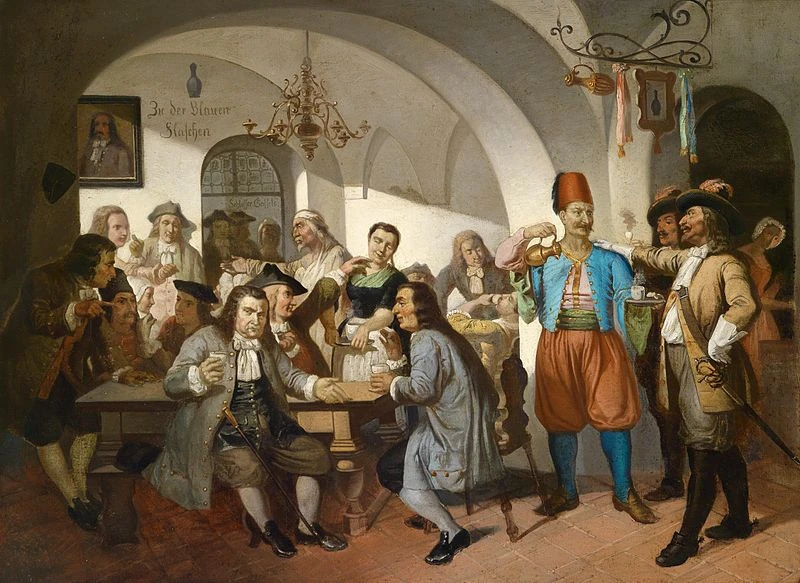
In 1723, King Louis XV of France sent Typica coffee trees to the then French colony of Martinique. By 1728, the governor of Jamaica received a coffee sapling as a gift from the governor of Martinique, and coffee was thus brought into Jamaica.
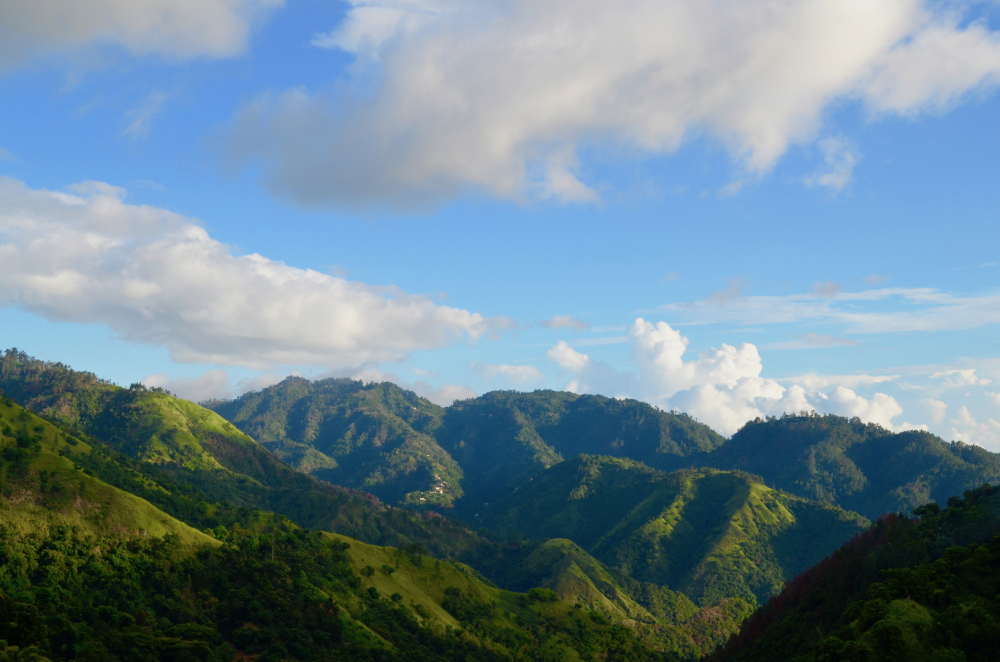
The southeastern coast of the Blue Mountain range is embraced by the Caribbean Sea. On clear days, sunlight strikes the azure sea and is then reflected onto the mountains, shrouding the entire range in a blue halo—hence the name Blue Mountain. The coffee-growing areas of the Blue Mountain range have a mild climate year-round, with white clouds drifting past from time to time, protecting the coffee trees growing on the towering peaks from being scorched by the intense sun and heat; at the same time, sea breezes blowing in from the Atlantic bring abundant moisture and plentiful rainfall.
The Typica coffee trees thus took root, grew, and flourished in this suitable environment, ultimately creating the top-tier Blue Mountain coffee flavor with a balance of acidity, sweetness, and bitterness.
The highest peak of Blue Mountain exceeds 2,200 meters in altitude, but coffee is not grown across the entire range. Out of environmental considerations, the Jamaican government has cordoned off certain high-altitude areas as forest reserves where coffee cultivation is prohibited. Front Street Coffee's years of growing experience in Lincang, Yunnan, also show that as altitude rises, temperatures drop accordingly, and beyond a certain height, frost may occur in winter and can even kill the coffee trees.
At present, the Blue Mountain coffee-producing area spans four administrative regions within Jamaica: Saint Andrew, Saint Thomas, Saint Mary, and Portland.
Jamaica has strict requirements for coffee-growing areas, classifying them by altitude into Jamaica Blue Mountain Coffee (1,000 to 1,700 meters), Jamaica High Mountain Coffee (500 to 1,000 meters), and Jamaica Supreme Coffee (outside the Blue Mountain area, below 500 meters). In other words, only beans grown at an altitude above 1,000 meters and within the Blue Mountain coffee-growing area count as true Blue Mountain coffee beans.
Among these, Jamaica Blue Mountain Coffee is further divided by green bean size and defect count into four grades: No. 1, No. 2, No. 3, and Peaberry. With a green bean defect rate of no more than 2%, on that basis, No. 1 grade Blue Mountain coffee beans are 17/18 screen size; No. 2 grade is 16/17 screen size; and No. 3 grade is 15/16 screen size.
It can thus be seen that Blue Mountain No. 1 coffee beans are the highest grade within Jamaican Blue Mountain coffee. Such a rigorous grading system and standards make the output of genuine Blue Mountain No. 1 coffee beans quite limited, and it is recognized as one of the world's finest coffees, which is also reflected in the price of Blue Mountain No. 1 coffee beans.
Customers often bring Blue Mountain coffee beans bought online to Front Street Coffee, asking whether what they bought is authentic and how to identify genuine Blue Mountain coffee beans.
Front Street has mentioned in many articles about Blue Mountain coffee that Blue Mountain green beans have a beautiful blue-green color, uniform particle size and shape, and a delicate, lingering aroma. After roasting, Blue Mountain No. 1 coffee beans are uniform in size, and because they are mainly processed by the washed method, there will be residual silver skin in the center of the beans.
Besides examining appearance, consumers can also ask the merchant to present the certificate of origin for Jamaican Blue Mountain coffee beans issued by the estate, as well as the wooden barrel used to hold the Blue Mountain coffee beans. Most coffee-producing regions in the world export green beans in burlap sacks, but coffee produced in Jamaica's Blue Mountain is still sold in wooden barrels to this day.
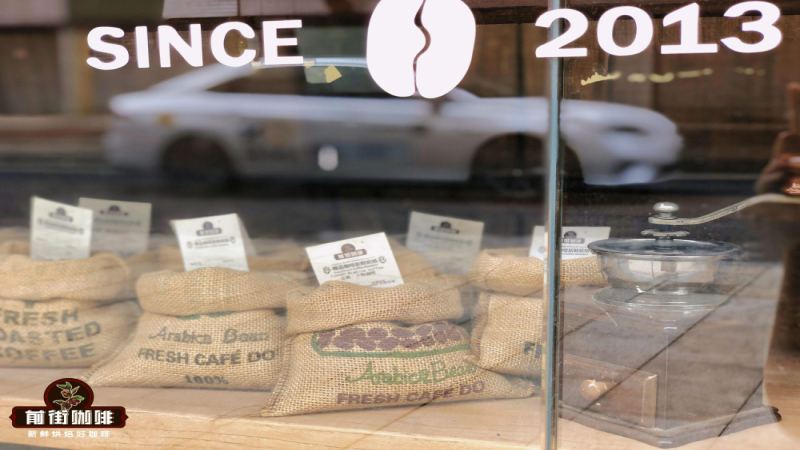
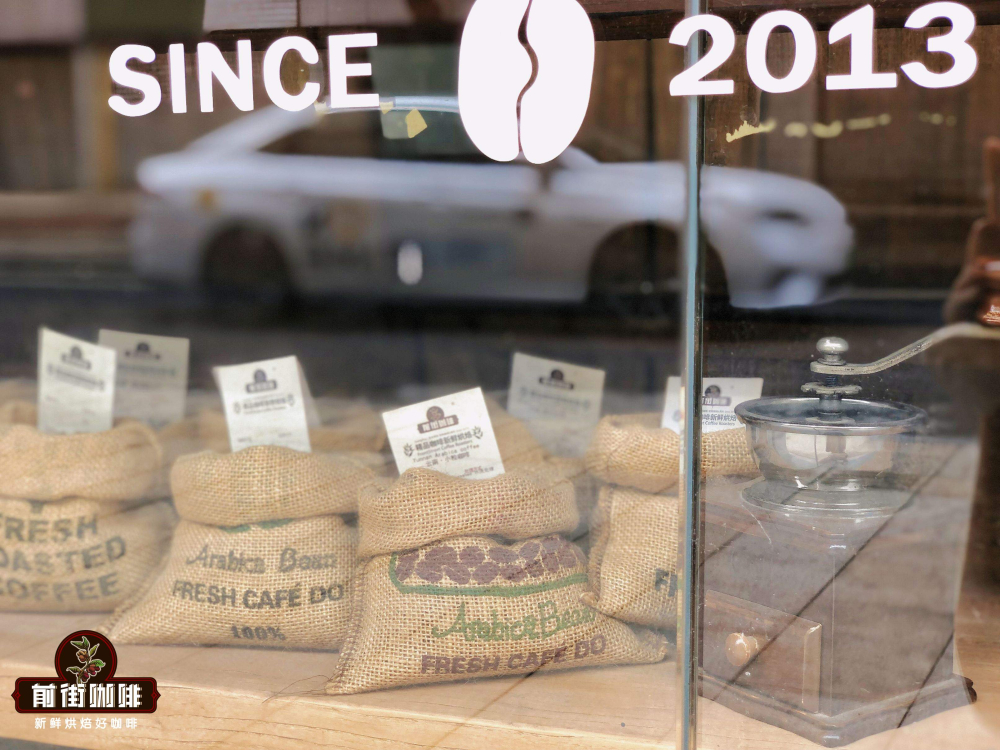
The walls of Front Street Coffee stores are covered with burlap sacks used by various producing regions to transport green beans. In addition, Front Street stores also display the certificate of origin for Blue Mountain coffee green beans issued by Clifton Farm, as well as a green bean wooden barrel once used to hold Blue Mountain No. 1 coffee.
As the highest grade among traditional top-tier Blue Mountain coffees, Blue Mountain No. 1 coffee beans are naturally indispensable on Front Street Coffee's bean list. Front Street Coffee's Blue Mountain No. 1 coffee beans come from Clifton Farm, and everyone can see a green frog logo on the Blue Mountain coffee barrel at Front Street stores. Rainforest Alliance certification means that Clifton Farm's growing environment is excellent and that its cultivation management emphasizes biodiversity and ecological protection.
After cupping and comparing many Blue Mountain coffee beans, Front Street believes that Clifton Farm's Blue Mountain No. 1 coffee beans are one of the outstanding representatives of that region.
Today, people's definition of top-tier coffee leans more toward fruity acidity and sweetness, with a clean and transparent mouthfeel. The classic Blue Mountain coffee flavor, by contrast, is a balance of acidity, sweetness, and bitterness, with a rich, smooth mouthfeel. To reproduce the typical Blue Mountain coffee flavor, Front Street uses a medium-dark roast for this coffee bean.
According to its roast level, the baristas at Front Street Coffee use the following brewing parameters when serving Blue Mountain coffee:
Dripper: KONO
Water temperature: 88 degrees Celsius
Dose: 15 grams
Coffee-to-water ratio: 1:15
Grind size: 75% passing through China standard No. 20 sieve
Since Front Street ships coffee beans freshly roasted within 5 days, they have already passed the 4-to-7-day resting period by the time they arrive, so to provide more stable conditions for extraction, Front Street recommends blooming.
First pour 30 grams of hot water to bloom for 30 seconds, then pour in a fine stream from the center point while slowly circling to 125 grams; when the water level in the dripper drops to the point where the coffee bed is about to be exposed, continue circling and pouring to 225 grams, with a total extraction time of about 2 minutes.
After brewing, Front Street Coffee's Jamaica Blue Mountain No. 1 coffee beans have a rich nutty note on the entry, a dark chocolate finish, a balance of acidity, sweetness, and bitterness, and a full-bodied mouthfeel.
For more coffee bean information, please follow Coffee Workshop (WeChat public account cafe_style)
For professional coffee knowledge exchange, please add WeChat ID kaixinguoguo0925
The above content is compiled by CoffeeHunters, a coffee news website.


