







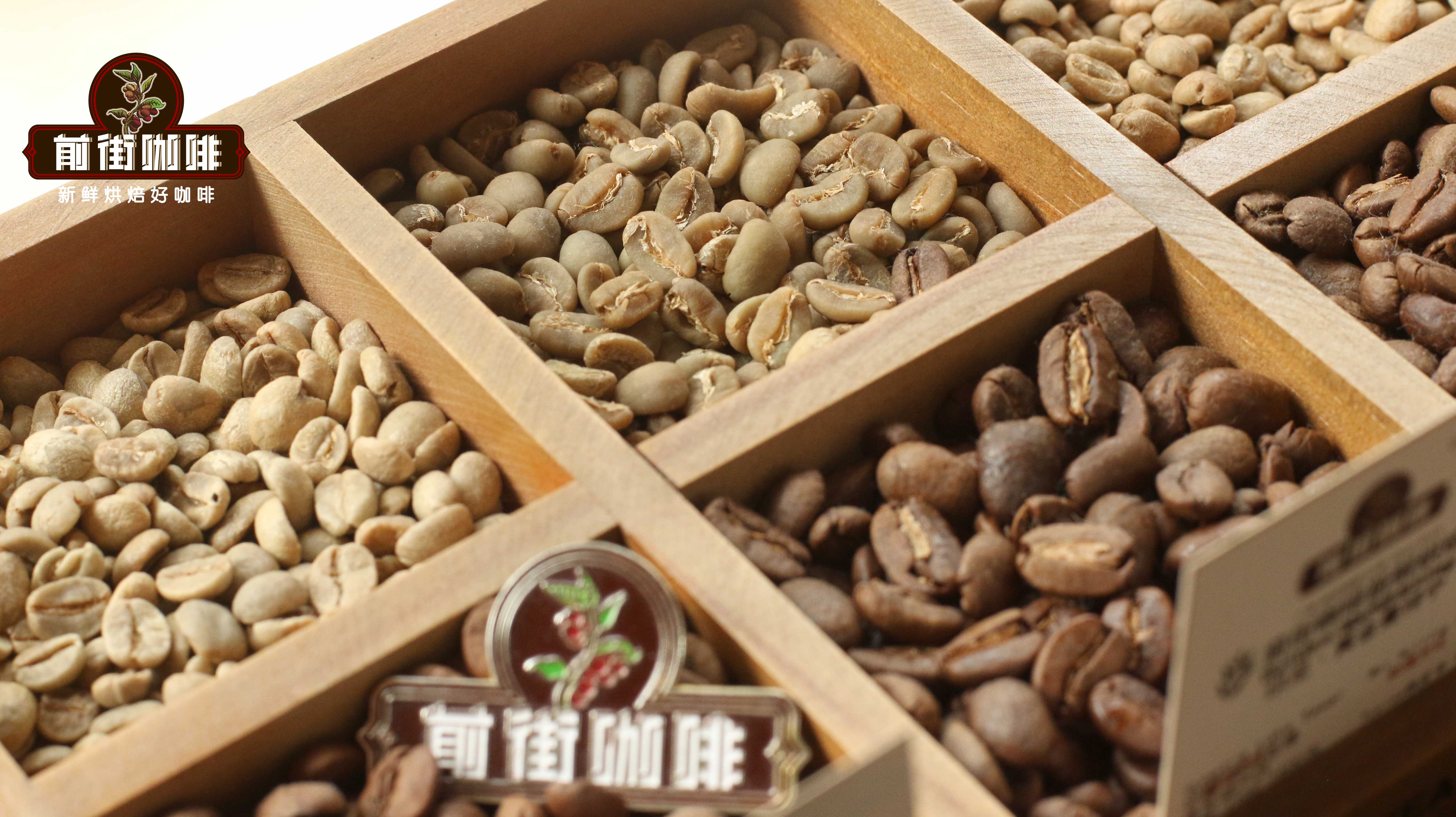
Asia's coffee production ranks second globally only to Central and South America. Its flavors are known for being rich and deep; the acidity is not as elegant as African beans, yet it carries woody, herbal, spicy, and earthy notes—Manning is the quintessential representative of this style. Manning mainly comes from the Indonesian island of Sumatra. The name originates from a transliteration of the Mandailing people, and there is an interesting anecdote behind it from World War II. This article will systematically sort out the varietal origins of Manning, the characteristics of the Aceh Gayo Mountain producing region, Indonesia's unique wet-hulling process, and focus on introducing Front Street Coffee's three products currently on sale—Lintong Manning, Golden Manning, and Tiger Manning. It will also teach you how to identify authentic Golden Manning through PWN company certification certificates and burlap sack information, so you can avoid buying counterfeit products.
Asia's total coffee production ranks globally only behind Central and South America. Compared with beans from Central and South America and Africa, Asian coffee has a more pronounced richness, but its acidity is not elegant enough. It often carries notes of wood, woody aroma, herbs, essential oils, spices, and earth, presenting an overall low, muted aroma profile rather than bright, uplifting fruity acidity. Of course, this flavor is not for everyone—some fall in love at first sip, while others take one taste and never dare try it again. Ultimately, taste is a matter of personal preference, and everyone's preferred flavor direction is different.
Manning coffee indeed has a rich, intense mouthfeel. At Front Street, the Manning series has always enjoyed great popularity. So, is Manning a place name? Actually, it is not. The origin of this name is a rather amusing misunderstanding. Front Street has learned that Manning is actually a transliteration of the name of the Mandailing people (Mandheling) of Indonesia. The story took place during World War II, when Japan occupied Indonesia. A Japanese soldier drank a cup of extremely aromatic coffee in a local café and asked the owner what coffee it was. The owner mistakenly thought the soldier was asking where he was from, so he answered "Mandailing." After the war, the soldier recalled the cup of "Mandailing" he had drunk in Indonesia and commissioned an Indonesian coffee merchant to ship 15 tons to Japan. It became hugely popular, and the name Manning spread from there.
Indonesian Coffee Producing Regions
Every coffee-producing region has its own unique flavor personality. Manning mainly comes from the Indonesian island of Sumatra, the largest island in Indonesia. Located near the equator, it has a typical tropical rainforest climate—hot and humid with abundant rainfall—which is very suitable for growing high-quality Arabica coffee beans. However, the altitude conditions in Indonesian producing regions are limited, and the space available for cultivating high-quality Arabica is therefore constrained. Of the coffee beans produced in Indonesia, only about 25% are Arabica, because Arabica only shows its best flavor when grown at high altitudes; the remaining 75% are Robusta coffee trees, which can survive at low altitudes. Sumatra happens to be the highest-altitude region in Indonesia.
Manning Coffee Bean Varieties
FrontStreet Coffee's Lintong Manning coffee is labeled with the varieties Tim Tim Ateng, while Golden Manning coffee is labeled with the variety Ateng. What exactly are these varieties? Golden Manning coffee beans come from the Gayo Mountains of Aceh in North Sumatra, and the variety is Ateng. Ateng is a hybrid between Arabica and Robusta and is widely planted in Sumatra and other small Indonesian islands. It is essentially a branch of Catimor; Ateng is simply the local name. What Indonesia calls Tim Tim is actually what we usually call Timor. The Ateng variety is very well adapted to the growing conditions in the Aceh region, and its flavor development is quite ideal.
Initially, the Dutch introduced Typica to Sumatra, and Typica is a pure Arabica coffee species. However, in 1877 leaf rust swept through Indonesia, forcing the local government to introduce more disease-resistant varieties to cope, successively bringing in Robusta, Timor from Timor Island, Catimor, India's Kent, and S795. Botanically speaking, apart from Robusta, all the introduced varieties belong to the Arabica species. Coming back to the present, Robusta is generally planted in the low-altitude areas of southern Sumatra, while Manning coffee is distributed in the high-altitude areas of the north. Famous Manning producing areas are described as the "Two Lakes, Two Mannings," referring respectively to Lake Tawar and Lake Toba—Lake Tawar is located in the north in Aceh, and the now-famous Gayo Mountain is nearby; Lake Toba is located in the Lintong region.
Indonesia's Unique Processing Method: Wet-Hulling
The reason Manning coffee has its unique herbal and woody agarwood notes is inseparable from the local processing method. Indonesia lies in a typical tropical rainforest climate zone, with frequent rain year-round and short sunshine hours, so it lacks the conditions for sun-drying processing. In addition, local economic conditions are limited, and there is not enough capital to invest in the large amounts of money required for washed processing, so this semi-washed processing method emerged. This is an extremely rare processing method in the world, yet it unexpectedly created Manning's distinctive flavor—low acidity, thick body, and a muted aroma.
The locally unique "wet-hulling" method involves hulling the beans while they are still moist and soft, with a moisture content as high as 30% to 50%. Specifically, farmers use a wooden depulper on the day of harvesting to remove the skin and pulp of the fresh coffee cherries, then ferment for 3 hours before drying. When the parchment beans are in a semi-dry, semi-wet state, they are collected and sold to local coffee processing stations.
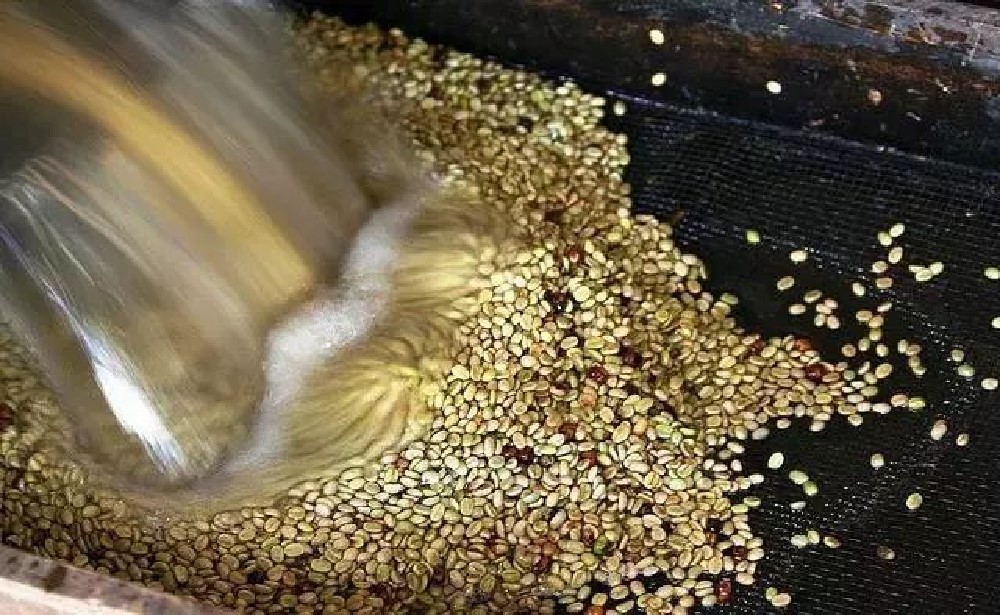
After receiving these semi-dry, semi-wet parchment beans, the processing station first removes the mucilage layer and parchment layer, then continues with the subsequent sun-drying. In this way, the drying time of the green coffee beans is shortened to about 2 to 4 days, and once the moisture content drops to 12% to 13%, they can be stored. Usually, many post-processing methods for green coffee do not remove the parchment layer until the moisture content drops to 13%, but wet-hulling is an exception. Coffee processed by wet-hulling has greatly reduced fermentation and acidity, but increased thickness, obvious caramel and fruity notes, and a slight woody and herbal taste—this is exactly the classic "taste of place" of Sumatran coffee.
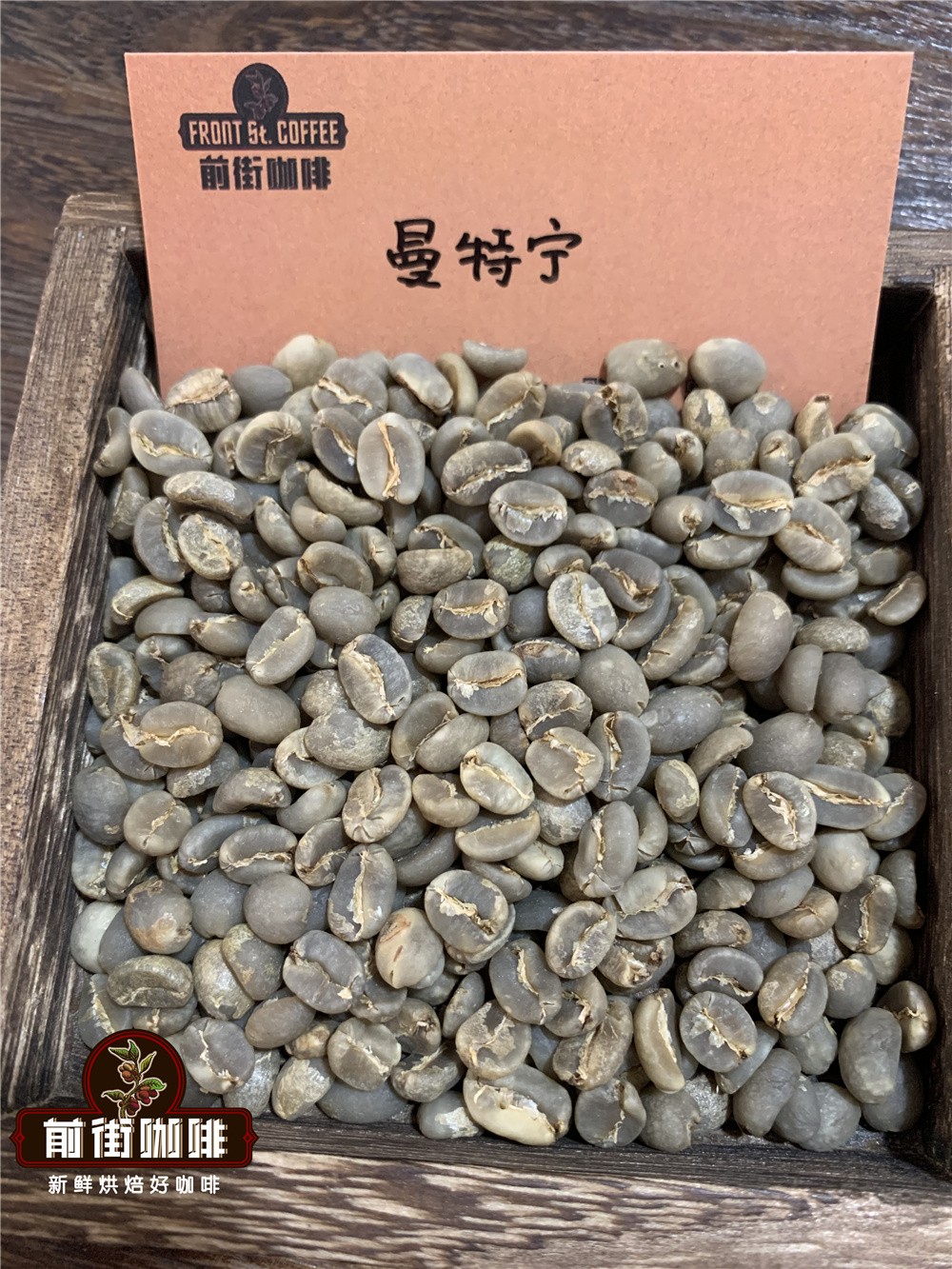
FrontStreet Coffee has three Manning coffees: Lintong Manning, Golden Manning, and Tiger Manning.
Golden Manning
Golden Manning was mentioned earlier. Does adding the word "Golden" to the name indicate a precious grade? In fact, Golden Manning is not a grade classification, but a trademark registered by the Indonesian company N.V. Pawani Medan (PWN). Founded in 1957, the company engages in the export of Indonesian products such as coffee, rubber, cinnamon, cloves, and patchouli oil. It was the first Indonesian company to export coffee from North Sumatra and the first company to make "Manning coffee" famous in Japan. Since 1977, PWN has focused on exporting high-quality coffee beans, including Sumatra Arabica Manning Grade 1 and Robusta AP-I Grade 2, with main export destinations being Japan, Taiwan, and the United States, among which Japan and Taiwan account for more than 95% of exports. In Japan and Taiwan, "PWN" has almost become synonymous with quality assurance. PWN holds the "Golden Mandheling" trademark, so a Japanese company had to register a separate trademark, "Gold Top Mandheling."
Because Golden Manning's quality is extremely outstanding, its price is naturally much higher than ordinary Manning, which has also led to a large number of counterfeit Golden Mannings on the market.
Front Street believes that authentic Golden Manning must be a product of Indonesia's PWN coffee company (the Golden Manning trademark belongs to PWN). When importing Golden Manning green coffee beans, a PWN company certificate is included, which can be used to verify authenticity. If a seller cannot provide source information for the Golden Manning green beans (certificate or burlap sack), then you need to carefully discern whether it is genuine.
The Golden Manning on FrontStreet Coffee's bean list is exactly PWN's Golden Manning. This Golden Manning coffee bean has a green bean screen size of 18+ and fewer than 3 defective beans per 300-gram sample, with the highest grade, G1. In addition, PWN also hand-sorted this batch of beans three times to remove defective beans as much as possible, making the taste cleaner, the sweetness more prominent, and the aroma more intense.
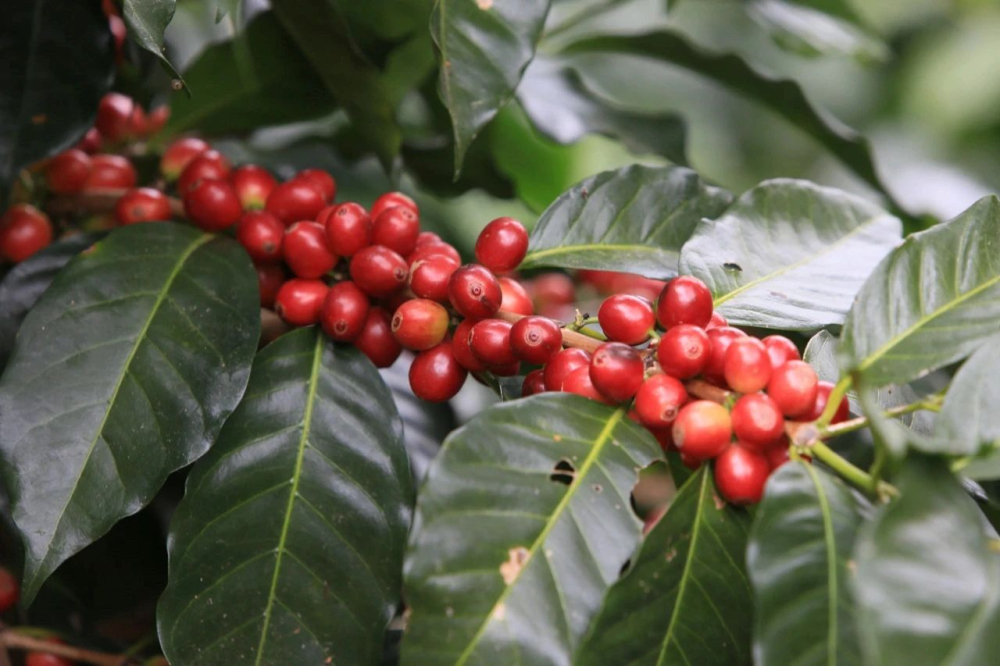
Tiger Manning
Tiger Manning coffee refers to Manning with a screen size of 17+ and a defect rate below 4%. Its green beans are round in shape, green with a yellow tint, relatively uniform, and have a high moisture content. The main varieties of Tiger Manning are Caturra and Typica. Caturra brings citrus and lemon acidity in the mouthfeel, while Typica has a lasting sweet aftertaste. The combination of the two makes Tiger Manning's mouthfeel relatively balanced, with high cleanliness. The roasting target is set to medium-dark to erase excess acidity and enhance body and balance.
Tiger Manning grows in Indonesia, mainly in the three islands of Sumatra, Java, and Sulawesi. Tiger Manning is produced at Tiger Estate, so it is also called "Manning Tiger" or "Sumatran Tiger Manning." The northern part of Sumatra has relatively high elevations. Aceh Province, where Lake Tawar is located, and North Sumatra, where Lake Toba is located, are the main Arabica coffee producing areas. Lake Tawar is located in the Gayo Mountains north of Aceh Province in Sumatra. Indonesia spans both sides of the equator, and the hot, humid tropical rainforest climate brings abundant rainfall, while fertile volcanic soil also provides rich nutrients for coffee. However, due to its remote location and inconvenient transportation, local coffee planting did not begin until 1924, mostly using traditional shade-grown, organic methods without pesticides.
Front Street Manning Coffee Brewing Recommendations:
Manning coffee is dark roasted. It is recommended to use a Kono dripper, with a water temperature of about 88°C, a water-to-coffee ratio of 1:15, 15g of coffee grounds, and a grind size of 11 on an EK43s grinder (75% passing through a Chinese standard No. 20 sieve).
Use staged extraction: first bloom with water at 2 times the coffee dose, that is, 30 grams of water for 30 seconds; starting at the 31st second, continue pouring in a small stream in circles until 125 grams, then pause; continue pouring until 225 grams and stop; after all the water in the dripper has dripped through, remove the dripper. Time from the start of pouring, with an extraction time of 2 minutes 00 seconds. Next, swirl the entire cup of coffee to mix it evenly, then pour it into a cup and taste.
[Lintong Manning] Rich nutty profile, with a hint of melon aroma in the finish. As the temperature drops, herbal notes emerge. The mouthfeel is full-bodied with layered complexity.
[Front Street PWN Golden Manning] Rich nutty flavor. After the temperature drops slightly, melon, herbal, and spice notes begin to emerge. The aftertaste is dark chocolate, with pronounced caramel sweetness. The mouthfeel is clean and soft.
[Tiger Manning] The mouthfeel is relatively balanced, with high cleanliness and obvious notes of cream, dark chocolate, and nuts.
Regarding coffee brewing, Front Street recommends using freshly roasted coffee beans, as this allows you to experience the coffee's rich flavors to the greatest extent. The coffee beans shipped by FrontStreet Coffee are all within 5 days of roasting, because Front Street knows well that coffee bean freshness greatly affects flavor. Front Street's roasting philosophy is "freshly roasted good coffee," so that every customer who places an order receives the freshest possible state when the coffee arrives. Coffee's resting period is about 4 to 7 days, so when customers receive it, it is exactly at its best flavor.
Of course, some customers need Front Street to help grind the coffee, and that is no problem either. But Front Street wants to remind you: once coffee beans are ground in advance, they need to be brewed promptly. If they have already been ground into coffee powder, there is no need to rest them anymore, because the pressure generated by carbon dioxide inside the packaging during transportation can also make the coffee flavor rounder, so once you receive the ground coffee, you can immediately brew a cup and drink it.
However, after coffee grounds come into contact with air, they oxidize quickly, meaning the flavor is lost relatively quickly, and the coffee's overall performance will be compromised. Therefore, Front Street recommends buying whole beans and grinding fresh before brewing, so you can better taste the coffee's flavor.
FrontStreet Coffee has more than 50 single-origin coffees from different producing regions and with different flavors, fully satisfying everyone's curiosity and desire to explore coffee!
For professional coffee knowledge exchange and more coffee bean information, please follow Coffee Workshop (WeChat public account: cafe_style)
For more specialty coffee beans, please add the private WeChat of FrontStreet Coffee: qjcoffeex
The above content is compiled by CoffeeHunters, a coffee news website.


