







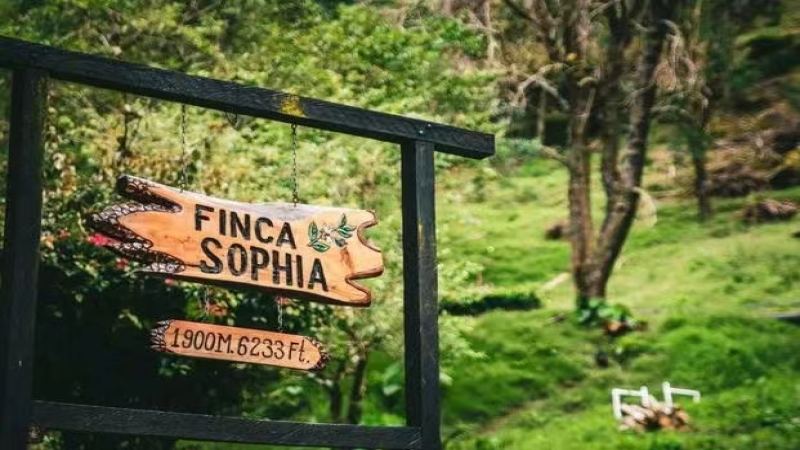
Geisha coffee beans are renowned for their rich floral aroma and delicate fruit acidity, but this variety went from Ethiopia's wild forests to the world stage through nearly seventy years of obscurity and twists. This article sorts out Geisha's varietal origins, propagation paths, and cultivation requirements, focusing on the terroir advantages of Panama's Boquete production area, as well as the grading system of Hacienda La Esmeralda's Red Label and Green Label. It also brings Front Street Coffee's roasting approach for Geisha and V60 brewing parameter suggestions, along with flavor descriptions of beans from well-known Panamanian estates such as Butterfly and Elida, providing coffee lovers with a complete Geisha tasting reference.
For professional coffee knowledge exchange and more coffee bean information, please follow Coffee Workshop (WeChat public account cafe_style)
Geisha is a rare wild coffee variety native to Ethiopia, and its name is said to come from the small village of Geisha where the bean was first discovered. This coffee tree is relatively tall, with narrow and long leaves, strong resistance to coffee leaf rust, and a relatively wide spacing between the trunk and branches. The green beans are slender in shape, and after roasting they emit an intense and full fruit aroma. Because the yield per plant is extremely low, this variety is difficult to purchase as a commercial bulk crop. At present, only scattered cultivation exists in countries such as Panama, Jamaica, Malawi, Kenya, and Guatemala.
The reason Geisha coffee beans have made a name for themselves globally is their signature intense floral fragrance, citrus and berry notes, juice-like mouthfeel, and the increasingly delicate acidity and rich overall layers as the temperature drops. Coffee cultivation in Panama is almost entirely concentrated around the Chiriqui volcano. Geisha is extremely demanding regarding growing conditions; only when planted at high altitude, with cloud cover or abundant shade trees, and in soil with sufficient fertility can it display its captivating floral aroma, refined fruit acidity, and multi-layered cup performance.
Geisha coffee's place of origin is Ethiopia, which is both the birthplace of coffee and a treasure trove of coffee genetic diversity, with extremely complex varieties, so many Ethiopian coffee beans are directly labeled as heirloom varieties in the variety column. Geisha (Geisha) was discovered in 1931 in the Geisha forest of Ethiopia. At the time, it did not receive much attention locally and was even used as a windbreak, until the emergence of Panama's Hacienda La Esmeralda changed its fate. After that, Geisha was sent to the Kenyan Coffee Research Institute, introduced to Uganda and Tanzania in 1936, entered Costa Rica in 1953, and was introduced to Panama in 1970. Ultimately, Panama's Hacienda La Esmeralda separated it from other varieties to compete, and in 2004 it won the BOP competition championship, becoming famous overnight. Geisha thus entered the public eye and became a leader among specialty coffees.
Although Panama Geisha was introduced and planted from Ethiopia, the Geisha variety and flavor performance in the two places are not the same. Although Geisha's flavor is refined, this elegant quality comes from a specific growing environment. This variety is very picky about growing conditions, requiring high altitude, cloud shade or abundant shade trees, and fertile soil. High-altitude Geisha has prominent floral aromas and refined, elegant fruit acidity, so Panama's growing environment is also an important factor in making Geisha famous, and one of the reasons it swept the world.
Since Panama Geisha rose to fame, places around the world have begun to research and plant Geisha varieties, including many estates in Panama itself. The Geisha coffee beans Front Street has obtained include not only those from Panama's Hacienda La Esmeralda, but also those from Colombia and Costa Rica. Of course, Ethiopian Geisha is definitely indispensable; Front Street already has more than a dozen single-origin Ethiopian coffees, and Front Street also has more than 50 single-origin beans from around the world.
Panama's Growing Environment
Panama is located at the southern end of Central America, bordering Colombia. It lies in the isthmus between North and South America and has held important strategic significance since Columbus's time in the sixteenth century. In the early nineteenth century, Panama leaned politically toward the south and once formed Gran Colombia together with Colombia, Ecuador, and Venezuela. But starting in 1903, Panama used American power to break away from the union; at the moment the canal was dug, Panama's national destiny was bound to the United States. This Panama Canal, running through Central America and linking the Pacific Ocean, the Caribbean Sea, and the Atlantic Ocean, not only opened up shipping trade but also brought a large amount of agricultural knowledge from the United States and Europe. Many retired North Americans chose to settle in Panama, which has a mild climate and lower cost of living, and this also promoted the development of Panama's coffee industry.
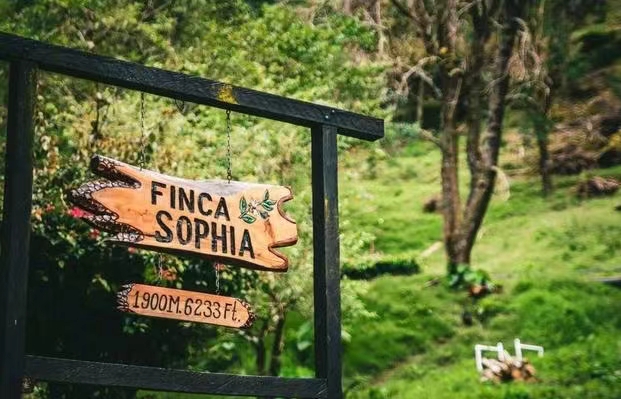
Panamanian coffee has a smooth mouthfeel and balanced acidity, and its high-quality coffee beans have pure flavor and great character. The first batch of coffee exported each year is shipped in November.
In 1780, Europeans first brought the Typica variety to Panama. At the end of the twentieth century, the construction of the Panama Canal attracted a large number of elites southward, promoting the development of the coffee industry. But early Panamanian coffee was not famous, and production was not large. With the development of the third wave of specialty coffee, the concept of specialty Panamanian coffee became increasingly mature, especially after Geisha's flavor skyrocketed in 2004, and it has long occupied top coffee rankings.
Panama's Coffee Producing Regions
Panama's terrain is undulating throughout, with ravines and valleys crisscrossing; apart from the north and south coastal plains, it is mostly mountainous. It is close to the equator and has a tropical maritime climate, humid during the day and cool at night, with an average annual temperature of 23-27C°. The year is divided into dry and rainy seasons, with an average annual rainfall of 1500-2500mm. High-quality Panamanian coffee is mainly grown in northwestern Panama, that is, near Costa Rica and close to the Pacific Ocean. Coffee produced in the Boquet coffee-producing area of Chiriqui Province is very famous.
[Boquete Coffee Producing Area]
Boquete is planted at altitudes as high as 1400-1,900m and is located near the border between Panama and Costa Rica, close to the famous Baru Volcano, with beautiful scenery, fertile and rich soil, and a climate and soil very suitable for producing high-quality coffee. Within the Boquete production area there are also many excellent estates. Apart from Hacienda La Esmeralda, there are also Elida Estate, Kotowa Duncan Estate, and others, all producing high-quality specialty coffee. This benefits not only from the mild climate conditions of Panama's Boquete region and the fertile volcanic ash soil of the Baru volcanic area. Another important factor is the variable microclimate found in the Boquete highlands of Panama.
The washed Boquete Geisha coffee from the Boquete production area, as a representative of Panamanian Geisha coffee, has been included among FrontStreet Coffee's daily drinking beans.
Panama Hacienda La Esmeralda Estate
Hacienda La Esmeralda is located at one corner of Baru Volcano, so before it became famous, the Panamanian coffee beans produced in this area were mostly named after Baru Mountain. The surrounding area of Bouquete has beautiful scenery, with many leisure hotels and resort estates, even built along the important Rio Caldera river.
After Price took over, he divided the estate's planting areas into five major brands for sale according to altitude, microclimate, cupping performance, and planted variety. There are three brands of the Geisha variety: Esmeralda Special, Private Collection, and Geisha1500. There are two brands of the Catuai variety: Diamond Mountain grows and Palmyra.
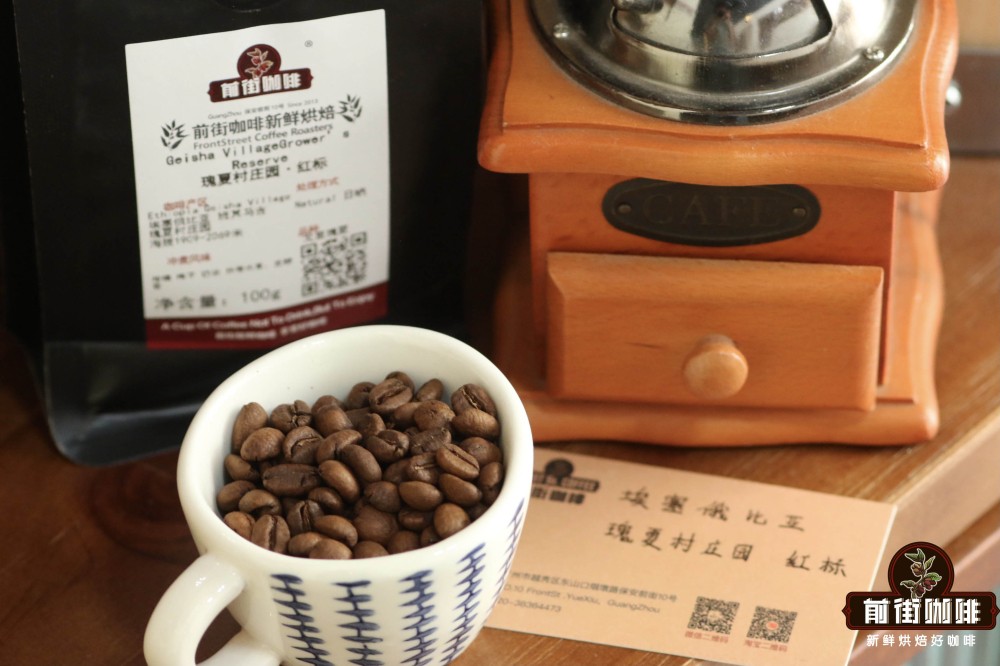
[Plot Divisions of Hacienda La Esmeralda]
Hacienda La Esmeralda's Geisha is divided very finely by plot, mainly into three plots: Jaramillo, Canas Verdes, and El Velo. Each plot is further finely divided into smaller plots.
[Esmeralda Special]
The Geisha coffee beans produced under Esmeralda Special are what we often call Red Label. They are selected from planting altitudes of 1600-1800 meters, with cupping scores above 90 points, and are produced
from Geisha beans in the two production areas of Jaramillo and Canas Verdes.
The independent auction held by Hacienda La Esmeralda itself, in which the Geisha lots put up for bidding from the divided plots are the auction Red Label. However, there are now also non-auction Red Labels on the market, which are actually Geisha selected from the same plots but not entered into the auction and then circulated to the market. The variety and quality are consistent, with differences only in selling price.
However, in 2022, Hacienda La Esmeralda separated the auction lots from the Red Label and established an auction lot, so the current Red Label does not include auction lots. Pricing differs slightly according to the characteristics of each plot. Every year Front Street selects the slowly sun-dried Red Label lot from the Mario plot, because the Geisha coffee from the Mario plot is precisely the plot where Hacienda La Esmeralda won the BOP championship in 2004. Therefore, Front Street believes that the Geisha coffee from this plot is outstanding.
Geisha coffee beans of this grade use sun-dried or washed processing methods, and the flavor has special, bright floral fragrance and citrus aroma.
[Private Collection]
Private Collection, commonly known as Green Label, is not a separately competed lot, but Geisha varieties that do not participate in bidding yet still have excellent quality. They are selected from planting altitudes of 1600-1800 meters and are micro-lot blends from different plots such as Jaramillo and Canas Verdes.
Because a blending model is used, with no detailed plot notation, sometimes Green Label and Red Label can show very high flavor similarity, but the next release may differ again. Although Green Label is not as high-grade as Red Label, it still carries Geisha's classic flavors: floral aroma, fruit aroma, citrus acidity, and a thick, juicy mouthfeel. Green Label Geisha also has washed or sun-dried processing.
However, starting in 2021, Hacienda La Esmeralda adjusted its Geisha coffee grading. Beginning with the 2021 harvest season this year, Hacienda La Esmeralda has canceled the Blue Label lot (Geisha 1500).
Panama Butterfly
In addition to launching Hacienda La Esmeralda Geisha, FrontStreet Coffee also has a Panamanian coffee bean with particularly high cost performance and a very beautiful name —— Butterfly. It has 70% of Geisha's high-quality lineage and is composed of three varieties: Geisha, Caturra, and Catuai. It is planted in the Baru volcanic area of Boquete, growing at an altitude of 1600 meters in the volcanic region, and the processing plant uses fine washed processing. Panama's special local microclimate results in abundant rainfall in this area, along with large temperature differences between day and night. Combined with the unique volcanic rock soil of the volcanic area, as well as careful harvesting and fine processing, this coffee performs quite excellently in body, acidity, and floral aroma.
Elida Estate
Elida is a famous Panamanian coffee estate with a century-long history and excellent coffee quality, located in Panama's well-known specialty coffee production area — Boquete. Last year, an Elida Geisha coffee bean won the championship in the Geisha processing group of the BOP competition. FrontStreet Coffee selected Elida Geisha from the same plot and same altitude for tasting. Compared with Hacienda La Esmeralda's Geisha coffee beans, it was found that due to the different processing methods chosen, Elida Geisha's layering is somewhat more complex than Panama Geisha.
Elida Estate has a total area of 65 hectares, of which more than half lies within the boundaries of Baru Volcano National Park. Only 30 hectares of the estate are used to plant coffee trees, while the rest remains primary forest. The coffee is grown at altitudes from 1670 meters to 1850 meters, making it one of the two coffee estates in Panama with very high altitude (the other estate with such an altitude is Carmen Estate in Volcan Valley.)
In such a high-altitude environment, low temperatures delay the ripening period of coffee cherries, by about a full month later than the normal ripening period. The fertile volcanic soil provides sufficient nutrients for the coffee, and together with the excellent microclimate brought by Baru Volcano, this enables Elida Estate to achieve repeated success in cupping competitions.
Front Street's Suggestions for Roasting Geisha Coffee Beans:
Geisha coffee's flavor is world-famous for its rich floral aroma and complex fruit notes. Front Street's roaster hopes to preserve more of Geisha's high-quality acidity, so a medium-light roast is chosen (slight adjustments are made for different lots). This roast level does not change much of the high hardness of beans grown at high altitude, so brewing requires increasing the extraction rate somewhat to present a fuller flavor layering. Here, a higher water temperature and a finer grind size are used to stimulate more aromatic substances.
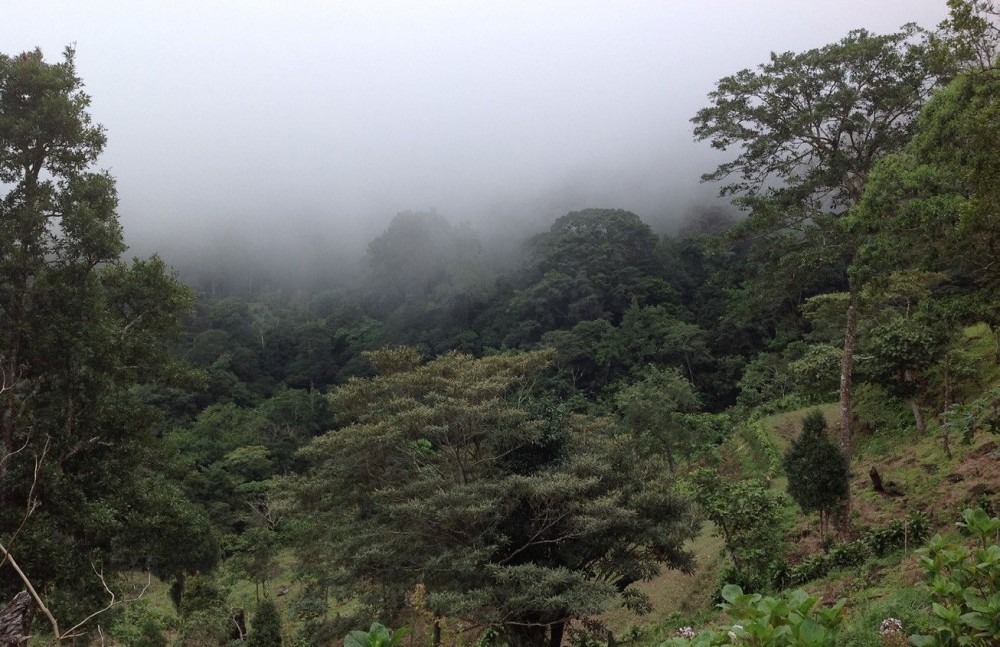
Front Street's Parameters for Brewing Geisha Coffee:
Front Street's daily production mostly uses a V60 dripper, because the 60-degree angle design and spiral rib design allow everyone to fully extract the essence of Geisha coffee by controlling the water flow and number of pours, while the large outlet design avoids over-extraction of the coffee. The V60 dripper body has guiding ribs connecting the top and bottom and a large central circular hole, which speeds up the flow rate of water falling, while the spiral-shaped exhaust groove design lengthens the water flow path and increases the contact time between coffee grounds and hot water. Each stream of water converges along the grooves toward the center point of the dripper, concentrating the pressure on the coffee grounds and producing a coffee with richer layering.
Dripper: V60, water temperature: 91-92 degrees Celsius, coffee dose: 15g, water ratio: 1:15, grind size: fine granulated sugar size (20号筛碗筛粉到80%).
[Panama Elida Coffee Flavor] : fermentation aroma, rose, berry, citrus, green tea, cream, nuts.
[Flavor Characteristics of Panama Washed Boquete Geisha Coffee ] : It has clear acidity of citrus, lemon, and bergamot, with a creamy smooth mouthfeel when swallowed, and a finish of green tea and honey sweetness.
Front Street's Coffee Brewing Suggestions:
Regarding coffee brewing, Front Street has always believed that the freshness of coffee beans has a great relationship with coffee flavor. Therefore, the coffee beans shipped by FrontStreet Coffee are all within 5 days of roasting. Front Street's roasting philosophy is "freshly roasted good coffee," so that every customer who places an order receives the freshest coffee when they get it. The bean resting period is about 4-7 days, so when the customer receives it, it is exactly at its best flavor.
For friends who need ground coffee, Front Street kindly reminds you: once coffee beans have been ground in advance, there is no need for further resting, because during transportation the pressure generated by carbon dioxide inside the package can also make the coffee flavor rounder, so once you receive the ground coffee you can immediately brew a cup and drink it. However, ground coffee needs to be brewed promptly, because after ground coffee contacts air it oxidizes relatively quickly, meaning the coffee flavor disperses faster and the coffee will not taste as good. Therefore, Front Street recommends buying whole beans and grinding fresh before brewing, so you can better taste the coffee's flavor.
For more specialty coffee beans, please add the private WeChat of FrontStreet Coffee, WeChat ID: qjcoffeex
The above content is compiled by CoffeeHunters, a coffee news website.


