








Friends who are just getting into pour-over coffee are often confused: which bean should I choose? With different origins, varieties, processing methods, and roast levels, how do you find the flavor that suits you? This article systematically sorts through representative coffee beans from classic origins such as Africa, the Americas, Asia, and China's Yunnan, including Front Street Yirgacheffe, Kenya Asali, Brazil Queen's Estate, PWN Golden Mandheling, Hacienda La Esmeralda Geisha, and Front Street 2013 Yunnan Typica, and shares key pour-over details such as water quality, grind size, coffee-to-water ratio, and dripper choice, helping coffee lovers build their own flavor memory bank.
Many coffee enthusiasts who are just starting out run into the same question:
"What beans should I actually buy for pour-over coffee?"
"Which one would suit my taste?" For experienced drinkers, this is hardly a problem at all. But for beginners who have just encountered specialty coffee, things become a bit puzzling.
The coffee beans displayed in cafés are dazzling in variety, with different origin countries, varieties, processing methods, and roast levels.
So how exactly do you pick the one that best matches your own taste buds? Let's keep talking.
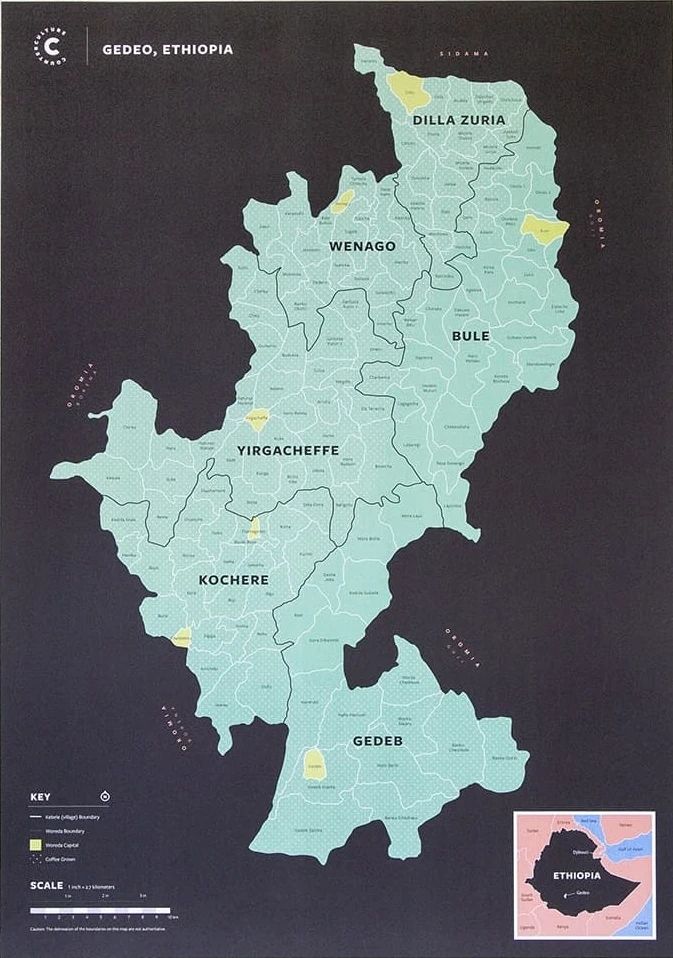
Cocoa, tea, and coffee are known as the world's three major beverages. Coffee has been in China for only a little over a hundred years, but it is also only in recent years that coffee's development momentum in China has grown better and better, and the group of people drinking coffee has grown larger day by day. Africa — Front Street Ethiopia Yirgacheffe Yirgacheffe from the African origin is the first name many friends who are new to specialty coffee come to know. When people mention Front Street Yirgacheffe coffee beans, everyone is very familiar with this bean from Ethiopia.
As is well known, Ethiopia is the birthplace of Arabica coffee .
Yirgacheffe was originally just a sub-region under the Sidamo production area. Because the coffee beans produced in Yirgacheffe town were so outstanding in production methods and flavor, even Ethiopia itself took pride in them, and even labeled beans from other regions with the Yirgacheffe name. As a result, Yirgacheffe was separated from the Sidamo production area and established itself as distinct. There is no need to say much about Yirgacheffe's characteristics: Front Street Yirgacheffe coffee's bright fruit acidity, clean texture, and delicate, elegant floral aroma . In Mr. Han Huaizong's "Specialty Coffee Studies" , the description of Yirgacheffe, Front Street very much agrees with "coffee enters the mouth, a hundred flowers bloom." Because Front Street Yirgacheffe washed Gutingding is exactly like this.
Front Street Ethiopia Yirgacheffe Washed Gutingding Region: Ethiopia Yirgacheffe Cooperative: Gutingding Cooperative Altitude: 2000m - 2100m Variety: local heirloom varieties Processing method: washed Flavor: citrus, black tea, floral, cream, caramel, almond
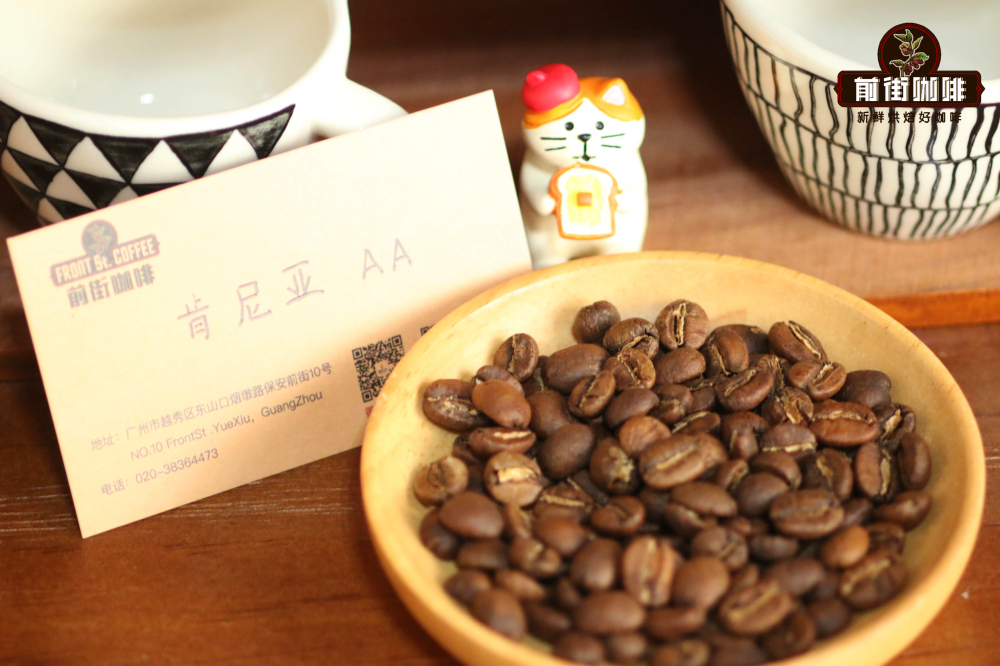
This Front Street washed Gutingding, not only lets you taste Yirgacheffe's signature flavor direction, but also lets you feel its tea-like quality; paired with citrus-like acidity, it really gives a bit of the illusion of drinking lemon tea. Africa — Front Street Kenya Coffee Kenya coffee holds an extremely high place in the hearts of many coffee connoisseurs and can be called a pearl of Africa.
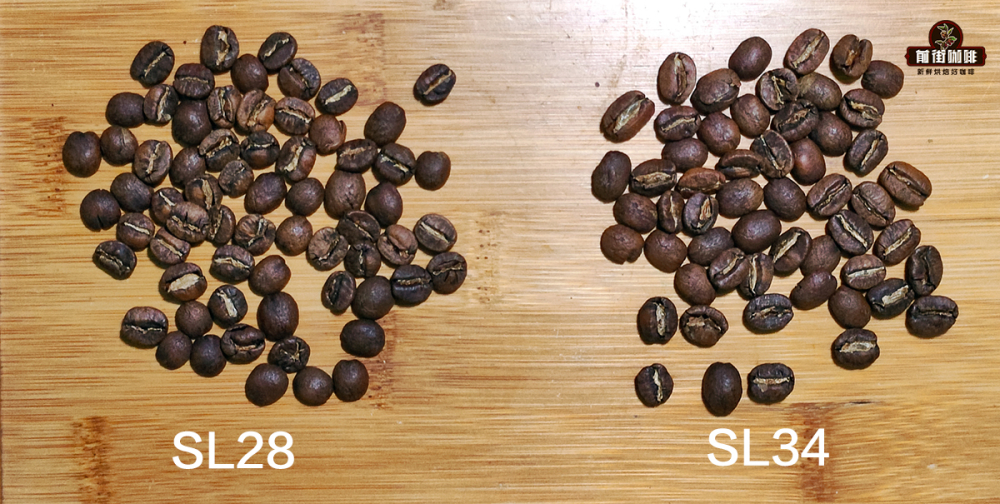
The earliest varieties introduced to Kenya coffee were Bourbon and India's Kent, and later Jamaica's Blue Mountain Typica variety was introduced and planted on Mount Elgon. Today Kenya's most famous varieties are SL28 and SL34.
These two varieties were selected and cultivated at the Kenya National Agricultural Laboratory (formerly the Scott Coffee Research Institute). SL28 is drought-tolerant and resistant to pests, suitable for planting in mid-to-high altitude areas. SL34 is suitable for planting in high-altitude areas with abundant rainfall.
In terms of flavor, SL28 and SL34 are very close, though SL34 has richer acidity and a fuller mouthfeel. Kenya coffee's signature blackberry-like acidity and aroma come partly from the local soil's rich phosphoric acid, and partly from Kenya's most famous K72 washed processing method. K72 washed processing flow: after harvesting, the coffee cherries are pulped and fermented, and after 24 hours of fermentation they are washed with water. Then they are soaked and fermented for another 24 hours, washed with water again, and this is repeated 3 times. Finally, 72 hours of strong fermentation is achieved.
Front Street Kenya Asali coffee beans use the K72 washed processing method, making the flavor brighter and cleaner.
Front Street Kenya Asali Coffee Beans Region: Kenya Thika Processing station: Asali Processing Station Altitude: 1550m - 1750m Variety: SL28, SL34 Processing method: K72 washed processing method Flavor: snow pear, smoked plum, yellow sugar, cherry tomato, plum
Brazil Coffee Brazil is the world's number one coffee-producing country. Brazil's history of coffee cultivation can be traced back more than 300 years.
In the 1720s, a Portuguese captain from Brazil used seduction to win the heart of the wife of the governor of Cayenne in French Guiana, and successfully brought coffee seeds into Brazil.
Brazil's growing altitude is relatively low, roughly between 400 meters and 1600 meters, and in addition the local growing methods often use sun-drying, allowing coffee cherries to absorb enough heat and ripen as early as possible, resulting in Brazilian coffee beans with low density and a soft texture, showing a soft-bean style. This forms a sharp contrast in flavor with African coffee beans. Front Street Brazil coffee beans' flavor: low acidity, prominent nuttiness, good chocolatey sweetness and body, but with a bit of woody and earthy notes, while floral and orange notes are not obvious.
Front Street's baristas often recommend Brazilian coffee beans to friends who do not like acidity, because Brazilian coffee has a relatively light mouthfeel, and it is not easy to taste the bold, assertive rising acidity and orange notes of African beans.
Front Street Brazil Queen's Estate Yellow Bourbon Coffee Region: Brazil Mogiana region Estate: Queen's Estate Altitude: 1400m - 1950m Variety: Yellow Bourbon Processing method: natural Flavor: nuts, creamy peanut, cane sugar, fermented fruit
Indonesia Indonesian coffee is no stranger to many coffee beginners. Among them, Indonesia's kopi luwak is famous for its scarce production and high price. The Indonesian coffee most easily accessible to the public is undoubtedly Mandheling. Front Street Lintong Mandheling coffee is mainly produced in the Sumatra region of Indonesia. Front Street Lintong Mandheling coffee is mellow and intense in mouthfeel and flavor, with a distinct character. The formation of this unique flavor is related to the local processing method: Indonesia is located in Southeast Asia, with abundant rainfall year-round, and sunshine hours shorter than in Ethiopia and Brazil, so using the natural processing method easily produces fermented beans or moldy beans ; in addition, local economic conditions are limited, and washed processing requires consuming large amounts of water resources. Therefore, when locally processing Mandheling coffee beans in Indonesia, the locally distinctive semi-washed method, that is, wet hulling, is mostly used.
Wet hulling is also called Wet Hulling The processing flow of wet hulling: after the coffee cherries are pulped, they are placed in water to soak for 1-2 hours, then rubbed against each other to remove part of the mucilage, and then undergo the first drying, at which point the coffee beans' moisture content drops to between 20% and 35%. The coffee beans, whose mucilage layer has not yet solidified, are collected and sent to the processing plant for a second drying, which brings the moisture content down to about 18%. After the second drying is completed, the parchment layer is removed, and then a final drying is carried out until the moisture content drops to 11%.
Mr. Han Huaizong once described the flavor characteristics of wet-hulled coffee beans in a book like this: This is also a rare processing method in the world, accidentally creating Mandheling's special low-acidity, thick, and stuffy-aromatic flavor.
Over the years, Front Street has cupped different wet-hulled Indonesian coffee beans: the coffee has relatively low acidity, a thick mouthfeel, and unique flavors such as herbal spices, but the drawback is that quality is relatively unstable. Of course, unstable quality cannot be entirely blamed on wet hulling; in most cases it may still be caused by the quality of some green coffee beans not being ideal enough.
Front Street Indonesia Front Street PWN Golden Mandheling Coffee Beans Region: North Sumatra, Indonesia, Aceh Gayo Mountain Altitude: 1100m - 1600m Variety: Ateng Processing method: wet hulling Flavor: spices, nuts, pine, caramel, herbs, chocolate
Panama Coffee Nowadays, Geisha coffee is famous for its high price. Geisha's rise to fame is inseparable from Panama's Hacienda La Esmeralda. Hacienda La Esmeralda is both the discoverer and the promoter of Geisha. The Geisha variety entered Panama in the 1960s, and after more than 40 years of quiet accumulation, it finally won first place in the BOP in 2004 and rose to fame, becoming an supreme treasure in the minds of many specialty coffee lovers.
Geisha's refined and elegant flavor comes from a specific growing environment. Geisha is extremely picky about its growing environment: the planting altitude must be high, it must be grown under shade, and the soil must be fertile.
It is precisely these conditions that create Geisha coffee's obvious floral aroma and refined, elegant fruit acidity. Such an elegant flavor is also one of the reasons it has swept the world. On Front Street's coffee bean list, Front Street Panama Hacienda La Esmeralda Geisha coffee is also often available.
Front Street Panama Hacienda La Esmeralda Red Label Geisha Coffee Beans Region: Boquete, Panama Estate: Hacienda La Esmeralda Altitude: 1700+m Variety: Geisha variety Processing method: natural Flavor: citrus, jasmine, honey, berries
China Yunnan Coffee
In China, the history of tea is more than a thousand years earlier than that of coffee, and the earliest circulation history of coffee in China can be accurately traced back to 1870. The history of coffee cultivation in China's Yunnan is disputed: one account says 1902, another says 1892, and another says 1904.
Yunnan's earliest coffee variety was Typica , but with the advancement of opening policies, international giants such as Starbucks and Nestlé entered Yunnan and promoted the cultivation of the Catimor variety, which has strong disease resistance and high yield but inferior flavor. Over time, Yunnan small-bean coffee evolved from the former Typica variety to today's Catimor variety . Yunnan coffee's growing regions are mainly distributed in southwestern Yunnan Province: Lincang, Baoshan, Pu'er, and Dehong. Lincang borders Pu'er to the east, Dali to the north, Baoshan to the west, and Myanmar to the southwest. Lincang's average annual temperature is between 16.8 and 17.2°C. The dry and rainy seasons are distinct, and sunshine is abundant. In 2013, Front Street began its coffee-growing undertaking in Lincang, Yunnan. Unlike most varieties grown in Yunnan, what Front Street grows is Yunnan's ancient superior variety — Typica. In 2021, Front Street Coffee (FrontStreet Coffee) launched its first self-produced Yunnan coffee bean — "Front Street 2013 Yunnan Typica."
Front Street Yunnan Front Street 2013 Coffee Beans Region: Lincang, Yunnan, China Estate: Yunnan Front Street Coffee (FrontStreet Coffee) Estate Altitude: 1300m Variety: Typica Processing method: natural processing Flavor: berries, brown sugar, nuts, tea-like quality
Front Street has always believed that pour-over coffee may seem simple to make, but even for the same person, the coffee brewed each time will never taste exactly the same.
To brew a delicious cup of pour-over coffee, many details are crucial.
| Water Quality In a cup of pour-over coffee, as much as 98.5% is water. If you want to make a good cup of pour-over, the first step is to manage water quality well. In daily pour-over brewing, try not to use tap water directly. It is recommended to use water purified through a filter, or mineral water with a suitable mineral content. Water temperature is equally crucial. According to the different characteristics of coffee beans, the water temperature is usually controlled at 85-93°C.
| Grind Size Grinding coffee beans into powder is the first step of pour-over and also a key step. Grinding too fine or too coarse will directly affect the final flavor and mouthfeel.
The importance of grind size lies in affecting the coffee's concentration and extraction rate, and the most obvious expression in mouthfeel is the change in body. Under the same conditions (same coffee-to-water ratio, same water temperature, same pouring method, same brewing time), finely ground coffee has high concentration, high extraction rate, and high body; coarsely ground coffee has low concentration, low extraction rate, and low body.
Front Street's recommended pour-over grind size is a degree of coarseness at which 70-80% passes through a No. 20 sieve.
| Coffee-to-Water Ratio The coffee-to-water ratio is also a key factor in pour-over coffee. Different coffee-to-water ratios will greatly affect the coffee's flavor expression. During pour-over brewing, aromatic substances and acidity are extracted first, followed by sweetness and caramelized substances, and only at the end do bitterness, astringency, and off-flavors appear. Therefore, by controlling the coffee-to-water ratio, the coffee's ideal best flavor can be brought out.
Front Street recommends a coffee-to-water ratio for pour-over coffee of between 1:15 and 1:16.
| Dripper Finding a dripper that suits you is very important. Traditional trapezoidal dripper has a smaller opening and a slower flow rate, and the brewed coffee has a thicker mouthfeel; the drawback is that when the flow rate is too slow, water easily accumulates and produces bitterness. Conical dripper has a large hole and a faster flow rate, but the flavor may be a bit light. Wave dripper because it has a flat bottom and is paired with wave filter paper, guides water downward through the grooves on the filter paper, giving the smoothest water flow, and the filtered pour-over coffee also has the most even mouthfeel.
After many brewing experiments and repeated tests, Front Street found that different drippers show very obvious differences in expressing coffee flavor, acidity and sweetness, body, and cleanliness.
If brewing light-roasted coffee beans, Front Street recommends using a V60 dripper; if brewing dark-roasted coffee beans, Front Street recommends using a Kono dripper.
Can all coffee beans be used for pour-over? Yes, they can. For brewing different coffee beans, it is recommended to use different parameters. Only by constantly trying can you brew the cup that best matches your personal taste.
Front Street believes that building your own flavor memory bank is very important . Second, drink as much coffee as possible and experience more flavors. In addition, you should also continuously collect information on different coffee beans, drink with thought, and compare while drinking.
The above content is compiled by CoffeeHunters, a coffee news website.


