







Ethiopia is the birthplace of Arabica coffee and holds a pivotal position in the specialty coffee world with its bold floral and fruity aromas. This article will focus on the country's unique Heirloom native varieties, outlining their definition, cultivation systems, and flavor profiles, and introducing representative regions such as Yirgacheffe, Sidamo, Guji, Harrar, and Limu one by one. At the same time, drawing on Front Street Coffee's bean selection and brewing experience, it will explain the differences between washed and natural processing methods, and how to extract the bright acidity and delicate floral notes of Yirgacheffe through reasonable parameters and techniques, providing coffee enthusiasts with a complete reference on Ethiopian coffee knowledge.
Among the many coffee-producing countries, Ethiopia's coffee stands out with its highly expressive floral and fruity aromas, capturing the hearts of a large number of coffee enthusiasts. On Front Street's bean list alone, there are more than ten coffees from Ethiopia, which shows just how significant this region is.
What exactly is Heirloom?
Anyone with even a little exposure to Ethiopian coffee should be familiar with the name Heirloom. In Ethiopia, Heirloom is not a specific variety, but a general term used to refer to the country's large number of native varieties that grow wild or have not yet been clearly classified at the genetic level. From the dictionary definition, Heirloom means "a precious thing passed down from generation to generation." In other words, in the hearts of Ethiopians, coffee is truly an irreplaceable treasure.
Coffee cultivation in Ethiopia can be roughly divided into three systems: smallholder cultivation, semi-forest cultivation, and forest cultivation, with the semi-forest model being the most common. These coffee trees are mostly wild varieties, and farmers grow other cash crops while managing the cultivated areas. Because the number of Heirloom varieties is extremely large, it is almost impossible to complete genetic testing and verification on a large scale, so growers can only rely on experience accumulated over many years to identify and confirm them. Out of consideration for protecting these unknown varieties, and to avoid industry players from various countries rushing to obtain them, the local government ultimately decided to uniformly name them "Heirloom."
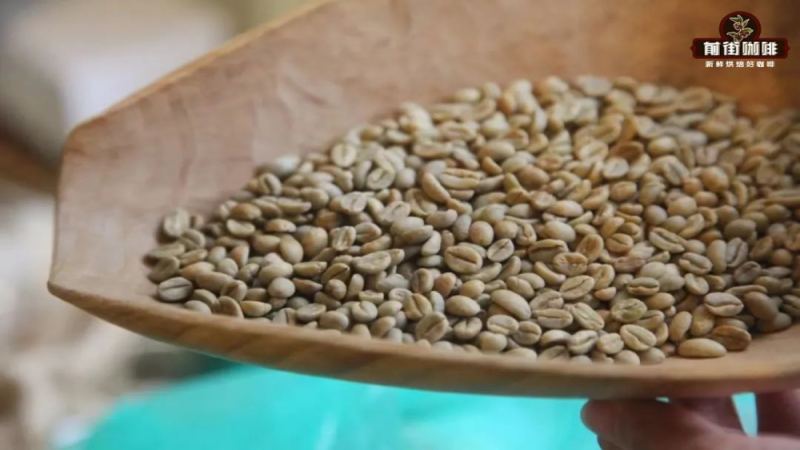
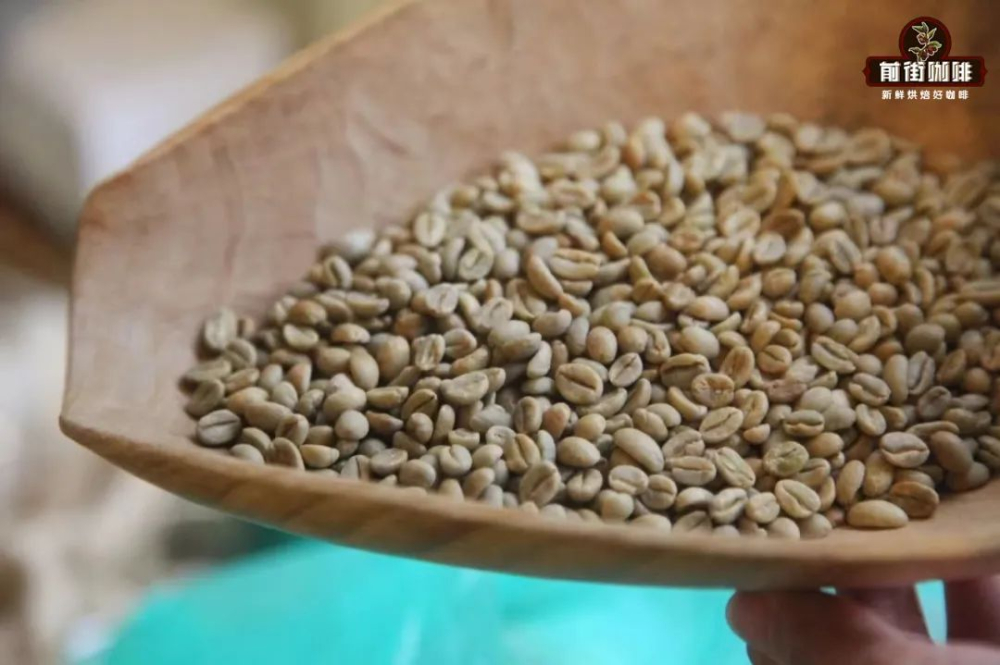
As the birthplace of Arabica coffee, Ethiopia has thousands of Heirloom varieties, which makes it unique among global producing regions. The beans of Heirloom native varieties are usually on the smaller side, relatively round in shape, and uneven in size, with most falling between screen sizes 14 and 15. In cupping performance, they often present elegant floral and fruity notes, and are widely favored.
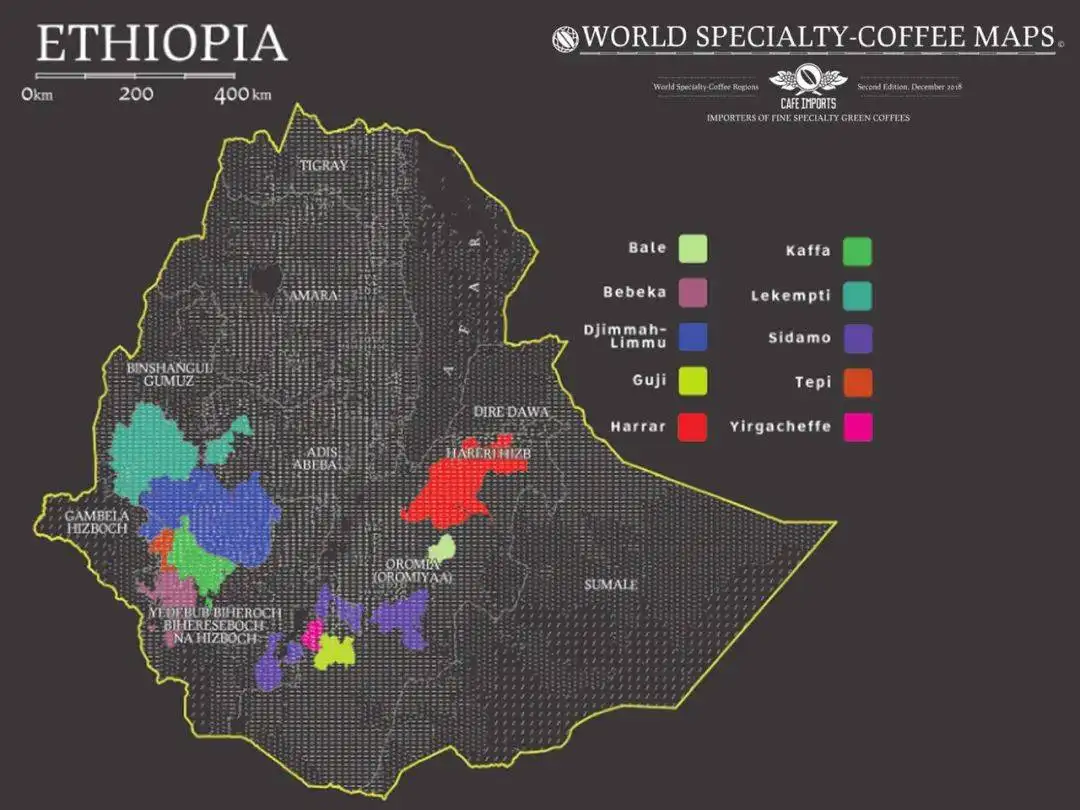
How are Ethiopia's specialty-producing regions distributed?
Coffee cultivation in Ethiopia is concentrated in the western and southern regions. Smallholder households account for 90% of overall cultivation, and nearly 1.2 million smallholder households make a living by growing coffee. The local production system can be divided into four categories: forest coffee, semi-forest coffee, garden coffee, and large plantations, among which garden coffee is the most common, with each household cultivating no less than 4 hectares. Because smallholders have limited output, local cooperatives and processing plants of varying sizes have formed to handle green bean processing in their areas. Farmers send the coffee beans they harvest to processing plants near water sources for centralized processing, after which the coffee is sold externally under the name of the processing plant.
The Yirgacheffe region is one of them.
The Yirgacheffe region, also known as the Yirgacheffe Coffee Farmers Cooperative Union (YCFCU), is made up of 28 small cooperatives. The Gedeb Cooperative and the Worka Cooperative are among the names that are often mentioned. This region was originally under the jurisdiction of Sidamo, but was later separated out because of its distinctive flavor. The significant temperature difference between day and night brought by the high altitude causes the coffee fruit to grow slowly and lengthen its ripening cycle, thereby accumulating more nutrients and making the aroma more intense. The so-called Yirgacheffe flavor refers to bright citrus and lemon acidity, rich jasmine floral notes, and honey-like sweetness, leaving a lingering impression.
Front Street believes that Yirgacheffe best embodies the foundational flavor of African coffee, so it selected washed Yirgacheffe as one of its 7 everyday beans. Front Street's everyday series is equivalent to the "representative face" of each producing region. Friends who are new to coffee can use it to taste the basic flavor of the region and then get to know more coffee types.
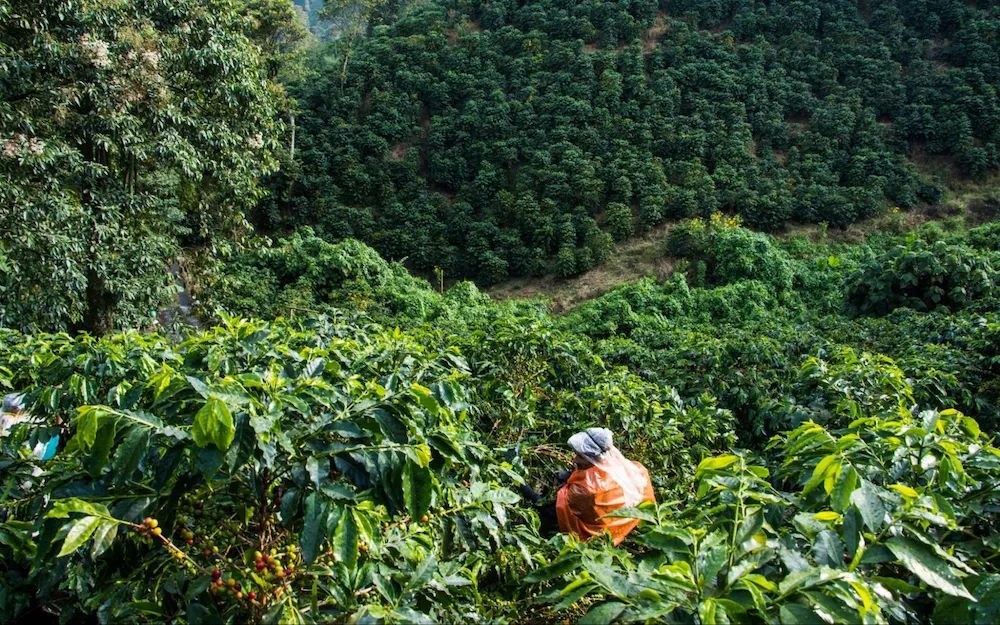
The Sidamo region is located in southern Ethiopia, and its rich and diverse terroir has created a very wide range of flavor types. Sidamo's coffee trees are distributed on both sides of the East African Rift Valley. The highland soil is fertile, and annual rainfall can reach as high as 2,000 millimeters, providing ideal growing conditions. Guji is the highest-quality small producing region within Sidamo's jurisdiction, at an altitude of 1,850 to 2,000 meters. The coffee it produces has outstanding sweetness and delicate floral notes. Similar to Yirgacheffe, Guji originally also belonged to Sidamo and later became independent because of its outstanding flavor, but today when Guji is mentioned, it is still usually grouped under the Sidamo producing region by default. Front Street's Hambela Hualigui coffee beans are produced right here, presenting in the cup the juicy mouthfeel of tropical fruits such as passion fruit and strawberry.
Harar is a historic trading center located in eastern Ethiopia and is also one of the four holy cities of Islam. Coffee from the Harar region is not grown in the city itself, but in the Hararghe Highlands. Local annual rainfall is only 1,000 millimeters, with abundant sunshine, so almost all of it is naturally processed. In flavor, specialty-grade Harar coffee is similar to the famous Yemen Mocha. During roasting, it gives off a strong chocolate aroma, with a rich red wine mouthfeel and dark berry acidity. However, in recent years, affected by various local factors, the grading system has been chaotic and coffee quality has not been stable enough, so there is less and less specialty Harar on the market.
The Limu region is located in central Ethiopia, with cultivation at altitudes between 1,200 and 2,000 meters. Coffee production in this region is relatively low, mainly supplying European and American markets, and green bean processing methods include washed, natural, and semi-washed. Front Street believes that Limu coffee has lower body, and its floral and citrus notes are not as good as those of Yirgacheffe and Sidamo. In flavor, it shows bright fruit acidity, but with additional grassy and dark brown sugar notes.
About coffee processing methods
As is well known, Ethiopia, located on the African continent, is very short of water resources, and traditionally coffee relied on natural sun-drying. Because the methods were relatively rough, coffee beans were directly spread on mud ground or rooftops to dry, making it very easy for them to absorb earthy flavors or over-ferment due to uneven heating, ultimately dragging down coffee quality.
To improve coffee quality, the Ethiopian government introduced more advanced washed processing technology and supporting equipment from Central and South America in 1972. This change gave Yirgacheffe coffee a fresh citrus profile and elegant white floral notes, with an overall bright and delicate flavor. Yirgacheffe also therefore became independent from the Sidamo producing region and became the well-known region it is today in the coffee world.
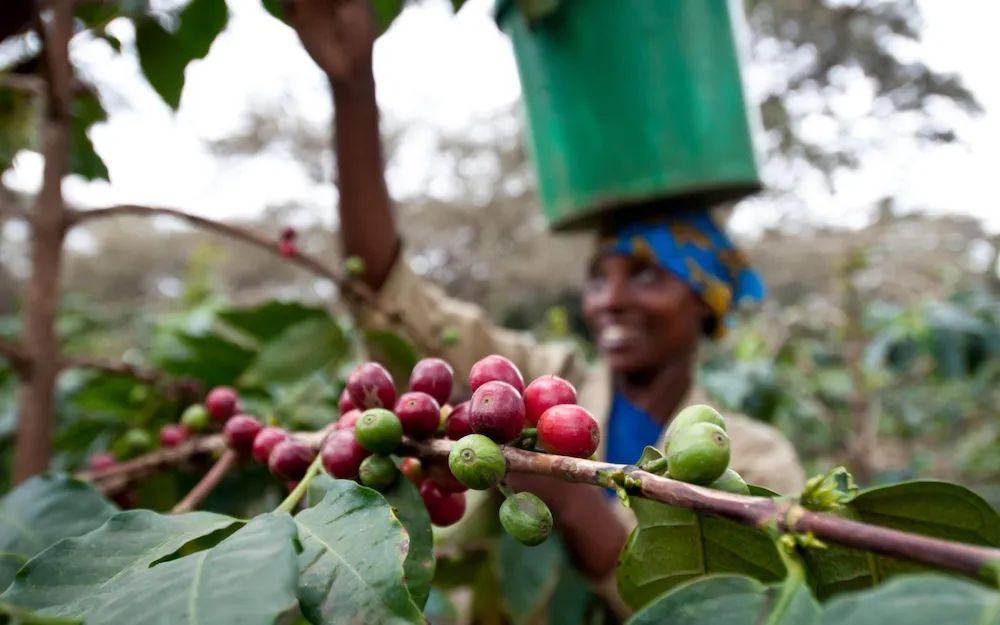
The specific steps of washing are: after the coffee cherries are picked, they are placed in water, and underripe fruits are removed by buoyancy; then the skin and pulp are removed with a pulper, and the beans are left to rest in a fermentation tank overnight so that the mucilage layer breaks down and falls off. After fermentation is complete, the parchment beans are scrubbed in channels for 30 to 60 minutes. Through specially designed channels combined with flowing water, low-density and poor-quality beans are removed; then the high-quality coffee beans are drained and spread on African raised beds to dry, and once the target moisture content is reached, they can be packed and stored.
As everyone's pursuit of specialty coffee flavor has increased, major producing regions in Ethiopia have also begun to improve natural processing techniques and have produced many excellent natural lots. The Red Cherry coffee beans on Front Street's bean list are selected from naturally processed Yirgacheffe. Natural processing itself is very simple: spread the coffee cherries in the sun and dry them until they shrivel into a dark purple color. During the drying process, people also pay more attention to turning the coffee cherries so that the fruit dries more evenly. Naturally processed Red Cherry has the fermented feel of ripe fruit, obvious honey sweetness, and a black tea sensation.
Front Street brewing suggestions
In terms of roasting, Front Street takes into account that Yirgacheffe should have acidity as its main flavor direction, so it uses a medium-light roast. The washed Yirgacheffe Gedeb Cooperative coffee beans are light roasted to retain more bright acidity and white floral notes; the naturally processed Yirgacheffe Red Cherry coffee beans are medium-light roasted to present full berry-like sweet acidity.
Both Yirgacheffes are high-altitude extremely hard beans, and coupled with a relatively light roast level, they require a higher water temperature and a finer grind to fully extract the aroma. Front Street's brewing parameters this time are: Hario V60 dripper, 91–93°C water temperature, 15 grams of coffee, 1:15 coffee-to-water ratio, medium-fine grind (80% passing through a Chinese standard No. 20 sieve).
The brewing technique uses three-stage extraction: pour the coffee grounds into the V60 dripper, first wet the coffee bed with twice the weight of the coffee grounds in water, and after a dome forms, let it bloom for 30 seconds; then pour in a thin stream in circles from the inside out, pausing the pour when it reaches 125 grams, and after the coffee bed drops to half the height of the dripper, pour the third stage with the same thin stream until 225 grams. After all the coffee liquid has finished filtering, remove the dripper. The total time is about 2 minutes.
Yirgacheffe Gedeb: white floral notes, lemon, citrus, honey-like sweetness, green tea
Yirgacheffe Red Cherry: berries, fermented fruit aroma, black tea, citrus
For professional coffee knowledge exchange and more coffee bean information, please follow Coffee Workshop (WeChat public account: cafe_style)
For more specialty coffee beans, please add the private WeChat of Front Street Coffee (FrontStreet Coffee), WeChat ID: qjcoffeex
The above content is compiled by CoffeeHunters, a coffee news website.


