







Mandheling coffee has low acidity and a rich, bittersweet body, making it an irreplaceable classic in the hearts of many coffee lovers. But where exactly does the name "Mandheling" come from? Does it refer to a port, a region, or an ethnic group? This article will trace the historical origins of the name Mandheling and introduce Front Street Coffee's PWN Golden Mandheling, covering everything from its growing region, variety, and processing method to brewing parameters, giving you a comprehensive understanding of what makes this rich coffee so unique.
For more specialty coffee knowledge, please follow: Front Street Coffee (Frontsteet Coffee)
Front Street Mandheling coffee has a highly distinctive flavor profile—low in acidity, aromatic and mellow, with a pronounced bitterness—which aligns perfectly with people's traditional perception of coffee. As a result, opinions about it are sharply divided: some are utterly enamored with it, while others avoid it at all costs. When it comes to Front Street Coffee (FrontStreet Coffee), the rich, full-bodied Mandheling is an irreplaceable favorite. Today, let's talk about what makes Front Street Mandheling so unique, and introduce the pinnacle version of Mandheling—Front Street Golden Mandheling coffee.
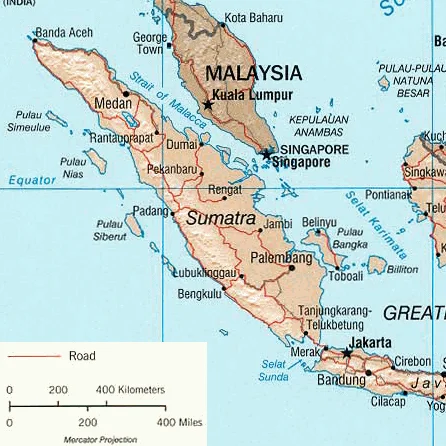
If you're familiar with the history of coffee's spread, you may know that Indonesia shares an equally long history with coffee. Coffee originally grew in Ethiopia. In 1699, Dutch colonists brought the coffee plant to Indonesia by way of Yemen. Sumatra is part of Indonesia. It is the sixth-largest island in the world, home to over 50 million people. Along with Borneo and Java, it is one of the three main islands that make up the country.
Later, coffee spread rapidly throughout Indonesia, and Indonesia became one of the world's largest coffee-producing countries. At that time, Indonesian coffee was exported from Jakarta on the island of Java, which is why Java was, for a period in history, home to what was considered the world's finest coffee. So it's no surprise that coffee packaging and export bags were labeled "Java."
Legends and stories about coffee have always existed, especially in ancient, traditional regions. Take Sumatra's coffee, for example—most of it is sold under the name "Mandheling." In fact, the name "Mandheling" refers to an indigenous tribe living on the island of Sumatra, not to a specific coffee-producing origin.
It's said that during World War II, a Japanese soldier tasted a rich, full-bodied coffee and asked the coffee shop owner for its name. The owner mistakenly thought the soldier was inquiring about his background, so he introduced himself as "Mandailing." Because "Mandailing" and "Mandheling" sound very similar in Japanese pronunciation, the soldier remembered it as "Mandheling." No one can resist the temptation of delicious coffee—after returning to Japan, the soldier asked a Japanese merchant friend to find local traders in Indonesia to source Mandheling coffee. As a result, several tons of Mandheling coffee beans were shipped back to Japan for sale. In the early years, judgments about top-tier coffee largely followed Japan's lead, and since Mandheling was hugely popular in the Japanese coffee market, Mandheling coffee became world-famous.
That local Indonesian trader at the time was the now-famous PWN company. PWN registered "Golden Mandheling" as a trademark in the early days; the Japanese merchant, not to be outdone, registered "Dingshang Golden Mandheling" as a trademark. Since the two have different brands, different companies, and different marketing strategies, which one tastes better or is more premium is a highly subjective question.
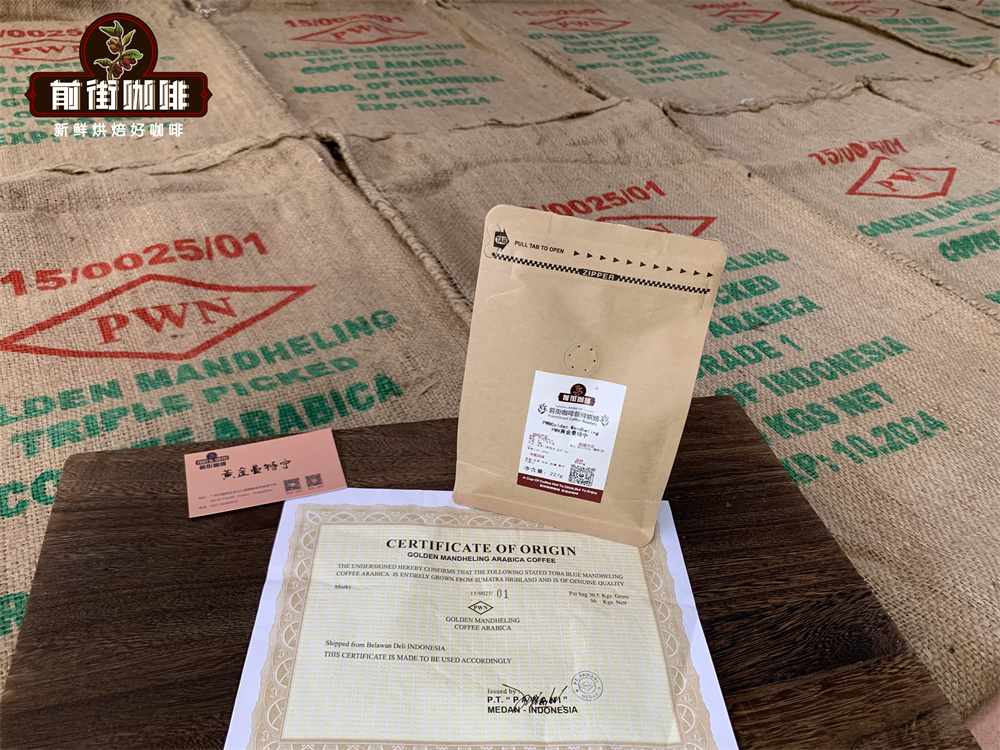
Since "Golden Mandheling" is a trademark registered by PWN, only Golden Mandheling originating from PWN is truly Golden Mandheling in the strict sense. Many merchants on the market also label their roasted coffee beans as Golden Mandheling. If consumers want to know whether the Golden Mandheling they are about to purchase or have already purchased comes from PWN, they can ask the merchant to provide evidence such as the Front Street PWN Golden Mandheling green coffee bean burlap sack and certificates to prove whether it is authentic Front Street PWN Golden Mandheling.
Front Street Coffee (FrontStreet Coffee): Front Street PWN Golden Mandheling coffee beans
Region: Sumatra, Indonesia
Altitude: 1,100m–1,600m
Variety: Ateng
Processing method: Wet-hulled (Giling Basah)
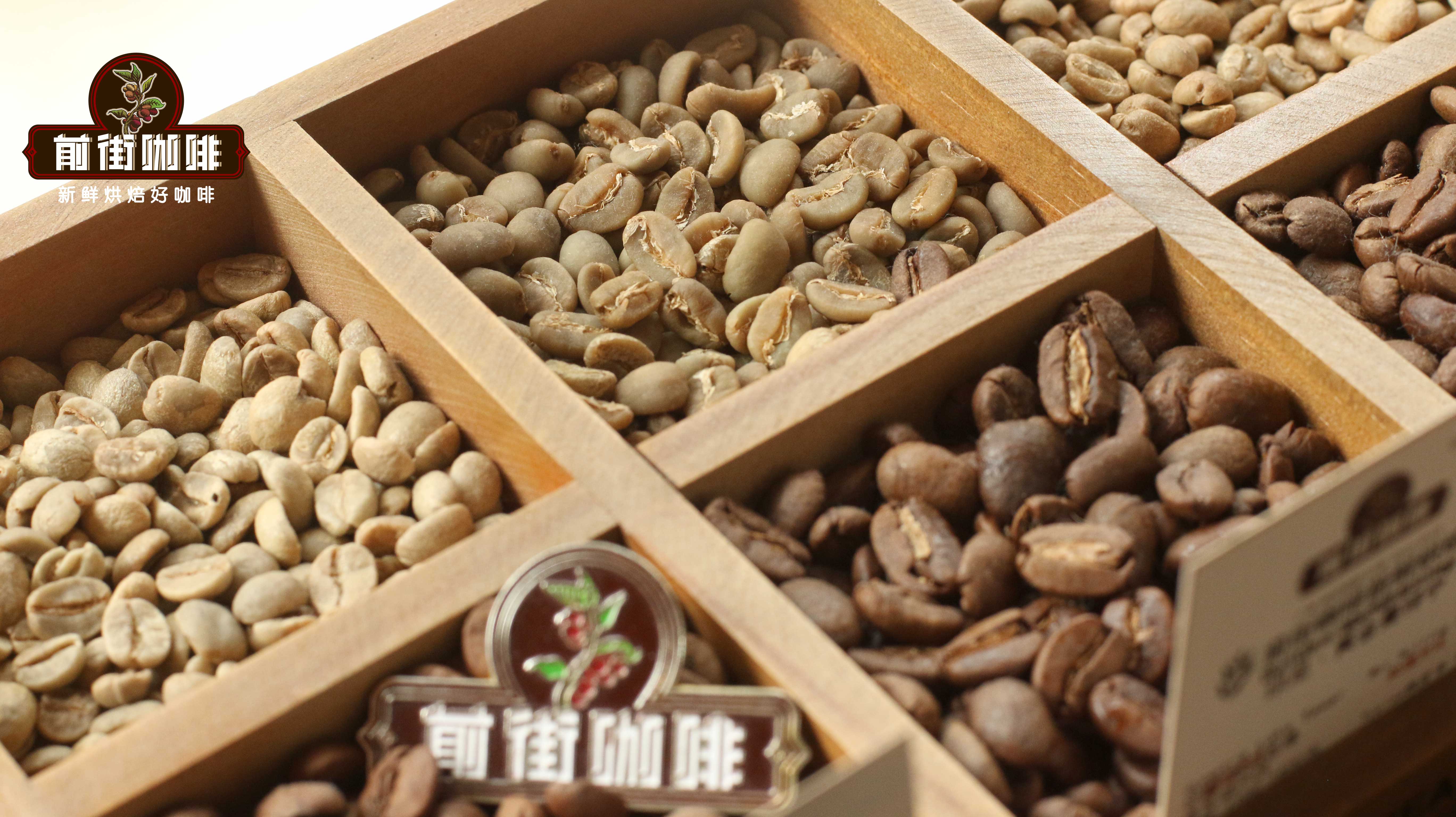
Front Street PWN Golden Mandheling green coffee beans are graded at the highest G1 level, with bean screen sizes of 18 mesh and above, and fewer than 3 defective beans per 300-gram sample. PWN company enforces strict requirements in producing Golden Mandheling coffee beans—after machine sorting, the beans undergo 3 rounds of hand sorting to ensure defective beans are eliminated as thoroughly as possible, thereby enhancing the coffee's cleanliness and sweetness.
Sumatra's coffee is renowned for its low acidity. Several reasons account for this. Among them, the local farmers' post-harvest processing method for green coffee beans is the most important. Compared to the washed processing method popular in Latin America, this method of processing coffee cherries is more primitive and less standardized.
After the coffee cherries are picked, they are machine-depulped on the same day to remove the skin and fruit. Then, people pile these slippery, parchment-covered beans in tanks or bags to ferment. Afterwards, the mucilage layer is washed off with clean water, and the parchment beans are spread out in the yard to dry.
When the parchment beans are in a semi-dry, semi-wet state, farmers put them into bags and sell them to nearby coffee processing plants. After receiving the parchment beans, the processing plant removes the parchment layer, leaving the green coffee beans directly exposed for drying.
Mandheling coffee processed with the wet-hulled method has a flavor profile featuring aromas of spices and herbs, with faint fruit acidity and a viscous, smooth mouthfeel. Because of its deep, low-toned aroma and rich body, Mandheling coffee is famous worldwide. And because Mandheling coffee is famous, its unique wet-hulled processing method has become famous alongside it. It can be said that the wet-hulled method and Mandheling coffee have a mutually reinforcing relationship.
When Front Street Coffee's (FrontStreet Coffee) roaster received the Front Street PWN Golden Mandheling green coffee beans, they observed that the bean size was very uniform with a blue-green color. During roasting, in order to highlight Mandheling coffee's rich, full-bodied mouthfeel, a medium-dark roast level was adopted.
When brewing, in order to achieve the rich, full-bodied taste of Front Street PWN Golden Mandheling, Front Street Coffee (FrontStreet Coffee) recommends using a dripper with a slower flow rate, such as the KONO dripper. To avoid over-extraction caused by prolonged contact between coffee grounds and water, Front Street recommends a medium-coarse grind size and a water temperature of 88°C.
Dripper: KONO dripper
Water temperature: 88°C
Coffee dose: 15g
Coffee-to-water ratio: 1:15
Grind size: Medium-coarse (70% passing rate through a Chinese standard No. 20 sieve)
Those who regularly read Front Street articles should be very familiar with Front Street Coffee's (FrontStreet Coffee) baristas using the three-stage pouring method—that's because the three-stage pouring method gives the coffee a richer sense of layering.
First, pour 30g of hot water to completely wet the coffee grounds and let them bloom for 30 seconds. Then, with a slow, small stream, start from the center and slowly spiral outward, pouring the second stage of water up to 125g to create a break. When the water level in the dripper drops to the point where the coffee bed is about to be exposed, continue pouring. Pour the third stage of water up to 225g and stop. Wait for the water in the dripper to fully drip through into the server below, then remove the dripper. Total extraction time is approximately 2 minutes.
After brewing, Front Street Coffee's (FrontStreet Coffee) Front Street PWN Golden Mandheling has a nutty character. As the temperature drops slightly, aromas of cinnamon spice, herbs, and melon begin to emerge, along with a caramel-like sweetness and a clean, rich body.
The above content is compiled by CoffeeHunters, a coffee news website.


