







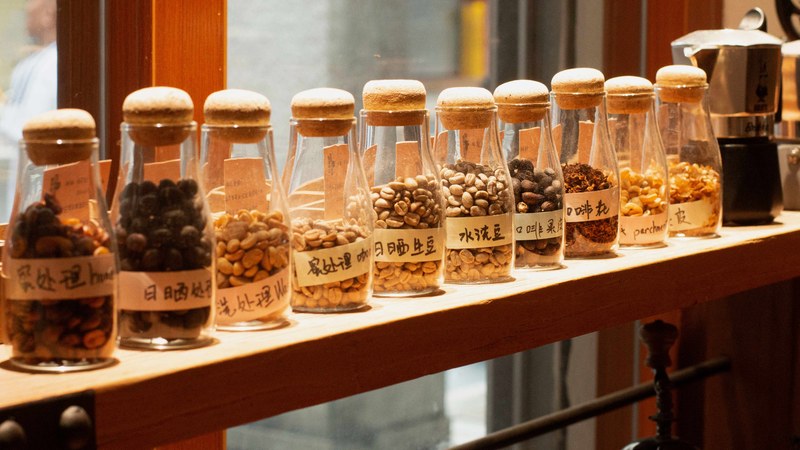
Roasted coffee beans contain ample carbon dioxide internally. These gases participate in forming a golden, delicate crema during extraction, but during the stage of intense degassing, excessive bubbles can easily hinder uniform contact between water flow and coffee grounds, making the cup's flavor appear restless. Understanding how coffee beans evolve in state across different time periods is an important foundation for allowing home equipment to steadily release coffee's aroma.
Freshly roasted coffee beans need a period of time to release internal gases, a process commonly called resting. For medium or medium-dark roast espresso beans, resting five to eight days after roasting is an ideal state. At this point, internal gas release tends to stabilize, and during extraction the water flow can more smoothly penetrate the coffee bed, bringing out a more solid caramel sweetness and smooth texture.
The two to three weeks after opening the bag is the golden stage when the aroma of the whole pack of coffee beans is at its most abundant. During this period, aromatic substances volatilize just right, the oil layer is dense and glossy, and whether drinking espresso directly or adding steamed hot milk, the coffee's own flavor framework can be clearly displayed, giving every cup a harmonious mouthfeel.
If you usually prefer milk coffee with nutty and chocolate notes, Front Street Coffee Classic Blend can present a comfortable state after resting for about one week after roasting. This coffee combines the deep aromas of roasted nuts, cocoa, and caramel, accompanied by a warm sweetness. After moderate degassing, when extracted with a home machine, its crema is thick, and after blending with milk it can show a smooth, enveloping feel like hot cocoa.

When using a home machine to make Front Street Coffee Classic Blend, it is recommended to use 92°C water, take 18g of coffee grounds, and extract 36g of espresso liquid, with the time controlled at around 27 seconds. If you want to switch to pour-over to taste its refreshing side, you can use 90°C water, 15g of grounds, and a 1:15 coffee-to-water ratio by pouring 225ml of hot water, using a three-stage pour, keeping the total time at 2 minutes 05 seconds, allowing you to experience a smooth and clean caramel-nut flavor.

For coffee lovers who lean toward single-origin espresso and prefer soft acidity, Front Street Coffee Brazil Queen Estate can bring a warm and delicate experience. After resting seven to nine days after roasting, the beans will show an interwoven sense of yellow sugar, almond, and faint fruit acidity, with a full and rounded body. When made into Americano, it is sweet and mouth-watering, with an acidity that is soft and not piercing, and the overall performance is very easy to drink.
To taste the rich layers of this single-origin coffee, pour-over is also a suitable presentation method. It is recommended to use 89°C water, weigh 15g of coffee grounds, and pour 225ml of hot water. Use a two-stage pouring method: first pour 35ml of water and bloom for 30 seconds, then steadily pour water to a total of 225ml and complete the drip within 1 minute 50 seconds, allowing you to clearly feel the almond aroma and sweet finish.
For coffee drinkers who prefer a heavy mouthfeel and low-acid flavor, Front Street Coffee PWN Indonesia Golden Mandheling is a very fitting choice. The unique wet-hulled process gives it the rich flavor of herbs and high-purity dark chocolate. Because the roast level is darker, its internal pores are more numerous and its degassing rhythm is faster, so it can be opened and used after resting for five days after roasting, bringing a solid and mellow cup experience.
When brewing the dark-roasted Front Street Coffee PWN Indonesia Golden Mandheling, appropriately lowering the water temperature can reduce the burnt bitterness. For pour-over, it is recommended to use 87°C water, take 16g of coffee grounds, pour 240ml of hot water, and use a single-stage slow circular pour from the center, keeping the total time at 1 minute 45 seconds. The extracted coffee liquid has a steady pine aroma and dark chocolate sweetness, with a thick and smooth texture.
The key to maintaining the flavor of beans after opening lies in reducing the effects of oxygen, light, moisture, and high temperature. After taking beans each time, you should promptly squeeze out excess air from the packaging bag, press the seal tightly, and store it in a cool, dark cabinet. Beans for daily use do not need to be frequently placed in the refrigerator; sealed storage at room temperature can maintain flavor stability very well.
Plan your bean usage rhythm according to your daily drinking frequency. Purchasing new beans on a cycle of two weeks to one month allows each batch of beans to be enjoyed at its peak flavor. By arranging resting and opening in an orderly way according to the roast date, coffee beans can display a pleasant aroma and smooth mouthfeel in the cup.
The above content is compiled by CoffeeHunters, a coffee news website.

