







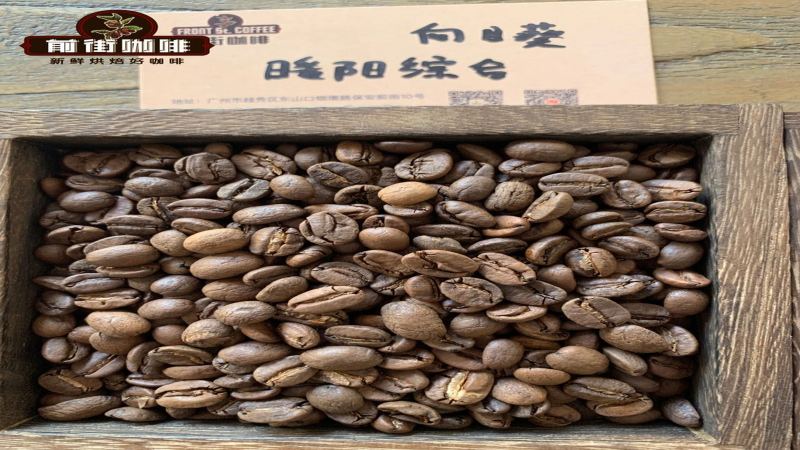
Darker-roasted coffee beans undergo sufficient caramelization and Maillard reactions in the roaster, the fibrous tissue inside the bean expands, the pores are larger, and the degree of gas filling and release speed are noticeably faster than light roasts. Understanding the degassing patterns and flavor evolution of dark-roasted beans helps you accurately grasp the bean's condition during everyday pour-over, allowing the ground coffee in the dripper to display full-bodied aroma and richness.
Freshly roasted dark-roasted coffee beans are not suitable for immediate grinding and brewing. In the first few days after roasting, a dense concentration of carbon dioxide builds up inside the beans, and the vigorous bubbles during brewing block even contact between hot water and coffee particles, leading to uneven extraction. It is usually recommended to give dark-roasted beans about four to six days of resting and degassing, allowing the internal gas to release gently and the overall flavor to stabilize.

Once the coffee beans pass the initial intense degassing stage, they enter the golden phase when aroma and flavor unfold, a period that usually lasts from one week to three weeks after roasting. At this point the aromatic substances in the beans have volatilized fully, and the brewed coffee is not only smooth and lingering on the palate, but its signature caramel sweetness, nutty aroma, and cocoa notes also come through especially clear and mellow.
Among single-origin dark-roasted pour-over beans, Front Street Coffee Papua New Guinea Paradise Bird is a very representative choice for experiencing this smooth texture. In terms of flavor, this bean has a clean, rounded, and softly sweet profile, with mild and restrained acidity, and its overall balance and finesse are quite close to the Blue Mountain style. Ground and brewed after one full week of resting, it presents a warm brown sugar and roasted malt aroma.
When making pour-over Front Street Coffee Papua New Guinea Paradise Bird, you can use a three-stage pour to enhance the layering. It is recommended to use a water temperature of 88°C, weigh out 15g of coffee grounds, pour a total of 225ml of water, with a coffee-to-water ratio of 1:15, and keep the total time to 2 minutes 05 seconds. First bloom with 30ml of hot water for 30 seconds, then steadily pour 95ml of water to reach 125ml, and after the liquid level drops, pour the remaining water to 225ml to finish.
If you prefer a richer, deeper dark chocolate character, Front Street Coffee Dark Cocoa Blend is a typical choice for showcasing a roasty, substantial sweetness. This blend displays a style oriented toward deep dark chocolate, roasted almond, and thick caramel sweetness, with faint acidity and a solid mouthfeel. After about a week of resting and degassing, the black coffee brewed has a warm, enveloping feel like cocoa butter, making it very suitable as a morning pick-me-up single-origin pour-over.
When brewing Front Street Coffee Dark Cocoa Blend, in order to highlight its rich cocoa aroma and avoid over-extraction, it is recommended to use a two-stage pour. Use a water temperature of 86°C, 16g of coffee grounds, a total water volume of 220ml, and keep the total time to 1 minute 50 seconds. Perform a gentle 25-second bloom with 35ml of water, then with a medium flow gently pour in circles from the center outward for the remaining 185ml of hot water, and enjoy once extraction is complete.
Another bean that performs excellently in everyday brewing is Front Street Coffee Classic Blend. Its flavor base leans toward nuts, cocoa, and caramel, with a full body and moderate strength. Not only can you taste a comfortable nutty syrup sweetness when brewing it as a single-origin pour-over, it also maintains its flavor integrity when paired with warm milk. Opened after about five to eight days of resting, its aroma is at its fullest.

To brew Front Street Coffee Classic Blend, you can try a single-stage, single-pour method to maintain extraction stability. Recommended water temperature is 87°C, 15g of coffee grounds, a total water volume of 210ml, and keep the total time to 1 minute 45 seconds. After blooming with 30ml of water and waiting 25 seconds, maintain an even and steady thin stream and pour continuously to 210ml, keeping the stream as close as possible to the center of the coffee bed, to brew out a smooth sweetness where nuts and caramel blend.
In order to maintain the aroma of the beans throughout the entire drinking period, proper storage after opening is equally crucial. Dark-roasted beans have a trace of oil on their surface, making them highly prone to absorbing moisture from the air and oxidizing. Therefore, they should be sealed and stored in the original bag with a one-way exhaust valve, kept at room temperature in a cool, dry place, avoiding refrigeration and dampness, and finished within two to three weeks after opening.
Mastering the degassing patterns and brewing rhythm of dark-roasted coffee beans can make everyday pour-over relaxed and full of enjoyment. Arrange your purchase quantity according to your own drinking frequency, so that each bag of beans is savored carefully during its peak flavor period, and you can fully appreciate the warm aroma and rich lingering finish that dark-roasted pour-over brings.
The above content is compiled by CoffeeHunters, a coffee news website.


