









The moka pot is the most accessible type of machine for brewing espresso-style coffee, and it is commonly used in Italian households. It was invented in 1933 by the Italian Alfonso Bialetti. It brews coffee by heating the base and is a type of distillation-style brewing. The moka pot's coffee brewing principle is similar to that of the first commercial espresso machine, which La Pavoni put into design and production in 1905.
What coffee beans (grounds) brew the best-tasting coffee in a moka pot?
As a household coffee tool, the moka pot is convenient and simple to use.
In Italy, few households have a coffee grinder, and when buying coffee grounds, people generally go to large supermarkets to choose coffee grounds specifically for moka pots. This kind of coffee grounds is simply ground to a roast level and grind size suitable for moka pots. Ordinary housewives do not need to understand overly professional coffee knowledge to use a moka pot to brew rich, aromatic coffee.

In China, coffee grounds specifically for moka pots are relatively rare, so you have to make do on your own. China's specialty coffee market is developing well, and coffee beans from every recognizable coffee-producing region in the world can be found. The rich flavor produced by a moka pot will turn out very strange with light-roasted coffee beans, with thin crema and strong acidity. Therefore, it is still recommended to use medium-dark roasted coffee beans.
The baristas at Front Street Coffee will first recommend using espresso blend coffee beans. Because it is a blend, when designing the recipe, they take into account balanced flavor and mouthfeel, and the taste will also better suit the general public. For example, Front Street Specialty Espresso Blend coffee beans use 70% Brazilian coffee beans blended with 30% Colombian coffee beans. It has a light fresh grass aroma, is sweet and smooth, with soft slight acidity, a rich nutty tone, and abundant crema.
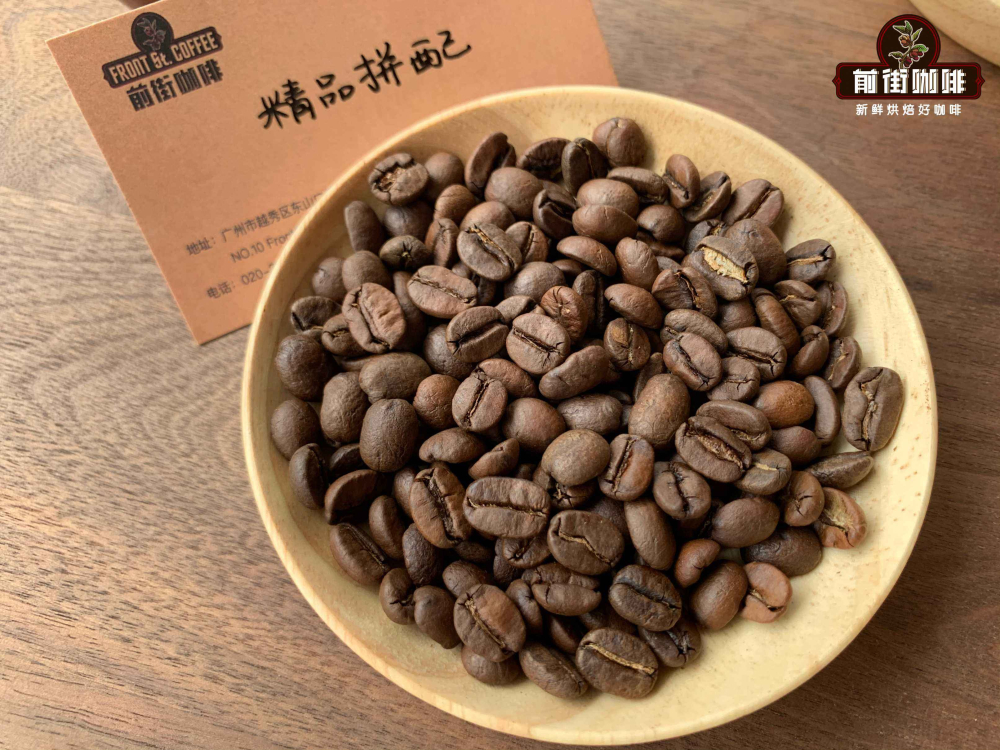
[Front Street Coffee Front Street Specialty Blend]Colombia: Brazil, roasted together;
Flavor characteristics: a comfortable sweet-bitterness, extremely smooth on the palate, with a light fresh grass aroma, a delicate fragrance with slight bitterness, sweet and smooth, and a finish that leaves one feeling pleasantly refreshed.
Coffee beans from Colombia's Huila region have a pleasant acidity, an aromatic and mellow smell, moderate acidity, and rich sweetness that is very thought-provoking. Coffee beans from Brazil's Cerrado region have a comfortable sweet-bitterness and are extremely smooth on the palate. This Front Street Specialty Blend coffee is suitable for use in all kinds of specialty coffee shops.
If you also want an espresso coffee bean with obvious floral and fruity flavors, then you can choose Front Street Strawberry Candy Blend coffee beans, which have rich floral and berry flavor performance.
Front Street Strawberry Candy Coffee Beans
This is a blend carefully selected by Front Street from high-altitude coffee from two producing regions. It combines Panama's washed Geisha and Costa Rica's honey-processed coffee. In order to maximize the advantages of the two origins, Front Street uses a medium roast, allowing the coffee to retain rich floral and fruity notes while also highlighting its roasting-type aromas. When brewed, it presents caramel, raisins, candied fruit, and a sweet, rich rose fragrance.
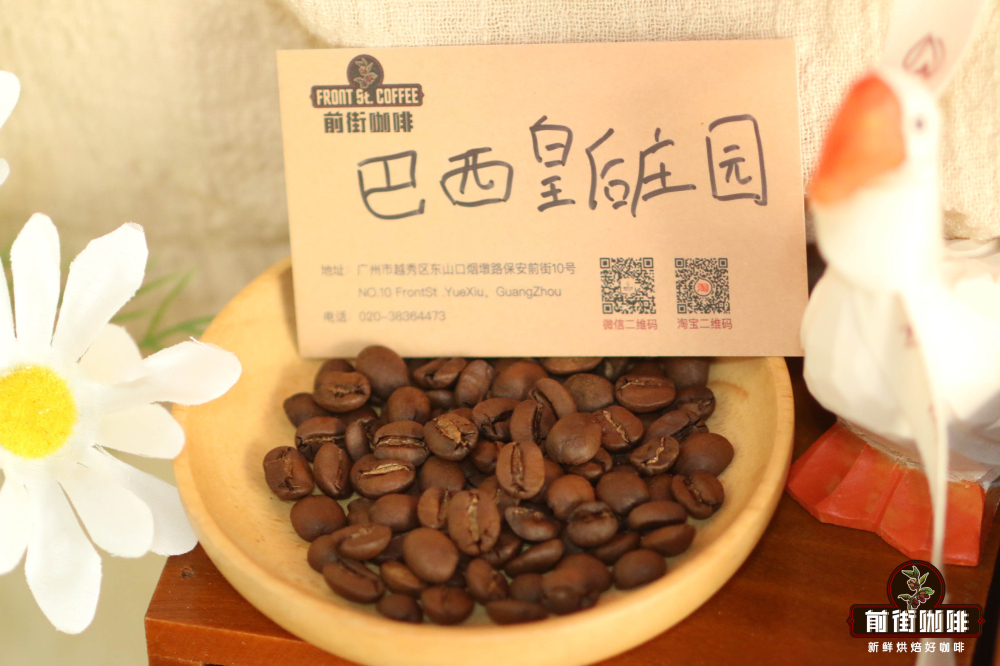
If you want to taste a rich regional flavor, for medium-roasted single-origin coffee beans, Front Street recommends using Front Street Brazil Queen's Estate and Front Street Papua New Guinea Bird of Paradise Estate coffee beans. The characteristics of both single-origin beans are balance, a rich nutty tone, and a fructose-like sweetness.
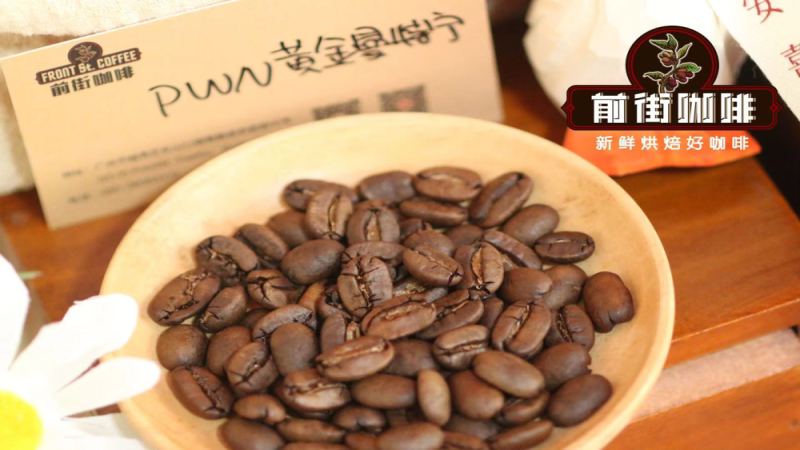
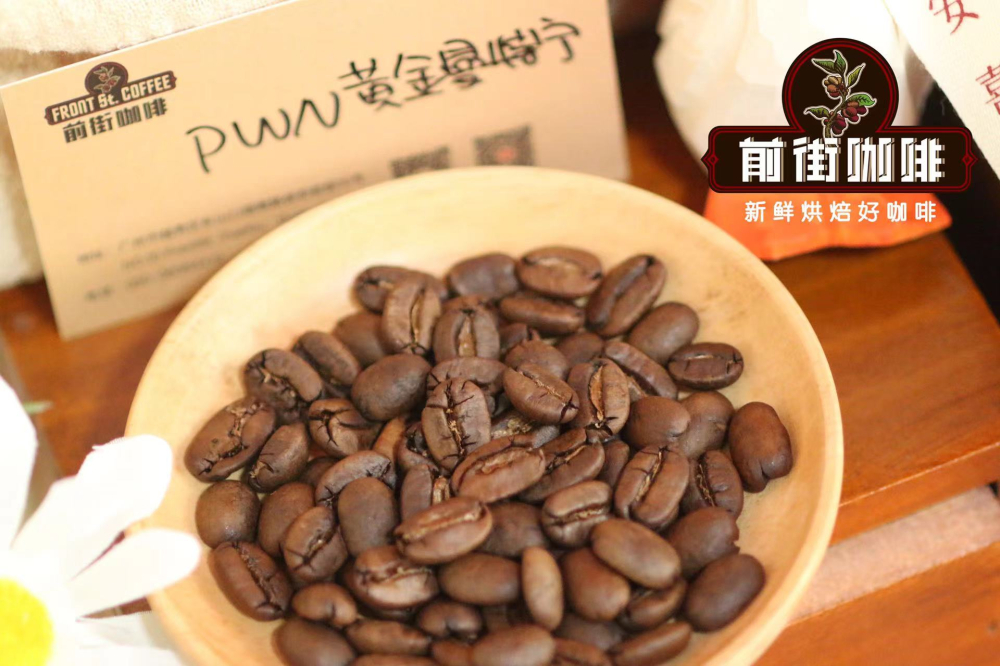
If you want a richer aroma and flavor, you can choose coffee beans with a darker roast level, such as Front Street Indonesia PWN Golden Mandheling coffee beans, which have a special herbal aroma and are also very suitable for use in a moka pot.
If you don't want your coffee flavor to be too monotonous, you can also use some coffee beans with special flavors, such as Front Street Honduras Sherry coffee beans, which have rich sherry wine aroma, vanilla cream, and chocolate flavors. The key point is that its crema is also very rich, and it is also very good for brewing in a moka pot.
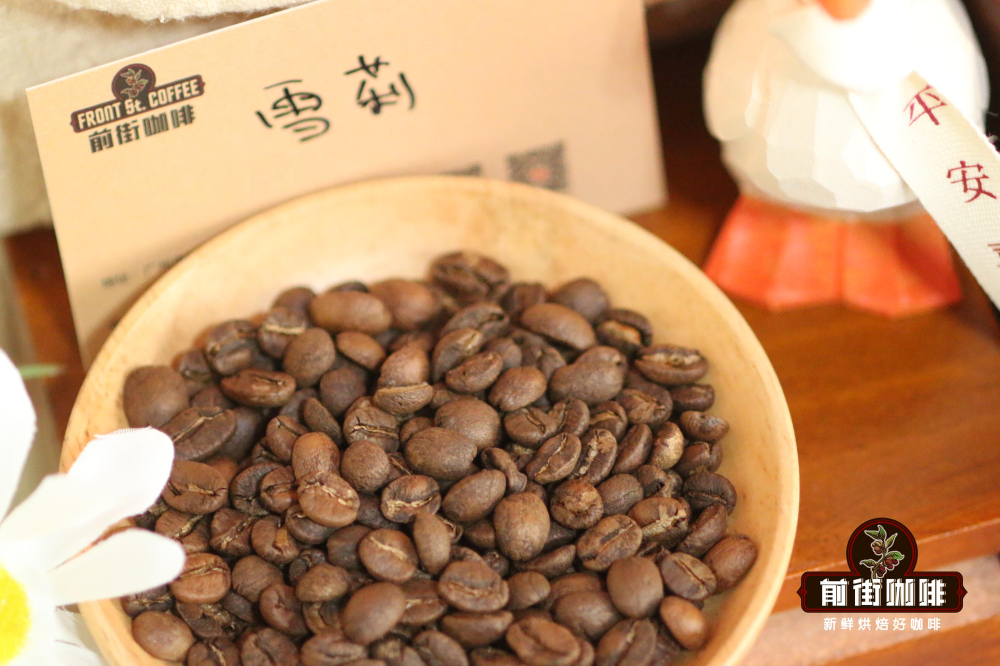
How fine should the coffee grounds used in a moka pot be?
Often, friends want to use coffee brewed in a moka pot to replace coffee extracted by an espresso machine. However, because the two are completely different brewing tools, that means the brewing parameters are also different. Friends often ask Front Street's baristas: if brewing coffee with a moka pot, should the coffee grounds also be as fine as those for espresso?
Actually, if you are brewing coffee with a moka pot, choose a coffee grind slightly coarser than for espresso. You can refer to the size of the gaps in the filter screen of the basket to ensure that the coffee particles will not fall down into the lower pot. It also cannot be too coarse, because then no pressure will be generated, no crema will appear, and even spouting may occur because the resistance is too small.
1. Grind size is directly proportional to extraction time: the coarseness or fineness of the coffee grind affects the length of extraction time and the extraction yield. The finer the coffee is ground, the longer the extraction time and the higher the extraction yield; the coarser the coffee is ground, the shorter the extraction time and the lower the extraction yield.
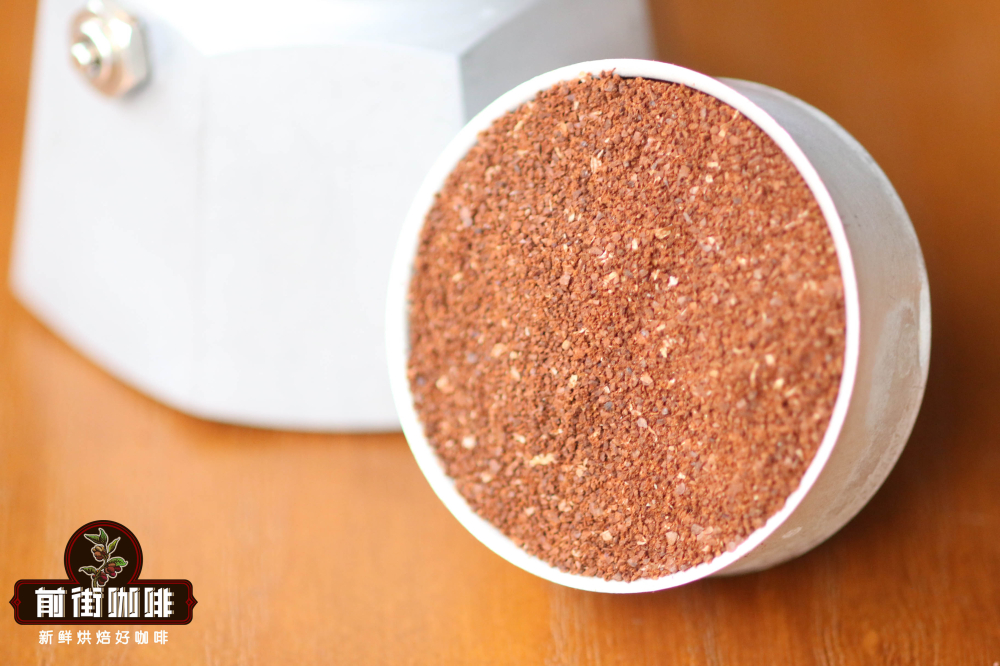
2. Darker-roasted beans should be slightly coarser, lighter-roasted beans slightly finer: the darker the roast, the more the fiber structure has been destroyed, and the easier it is to extract. Grinding too fine will make it too bitter, so it is suitable to grind slightly coarser; the lighter the roast, the opposite.
3. Grind size can control bitterness and astringency: the finer the coffee is ground, the higher the extraction yield, and the easier it is to extract high-molecular-weight bitter and astringent substances in coffee such as chlorogenic acid, quinic acid, and caffeine. Conversely, if ground too coarse, it is harder to extract high-molecular-weight astringent and bitter substances, but medium-molecular-weight sweet and fragrant flavors will also remain in the coffee grounds due to insufficient extraction, which is really a bit wasteful. Therefore, baristas must pay attention to whether the coffee grounds' coarseness is normal and the grind size suitable for each type of bean.
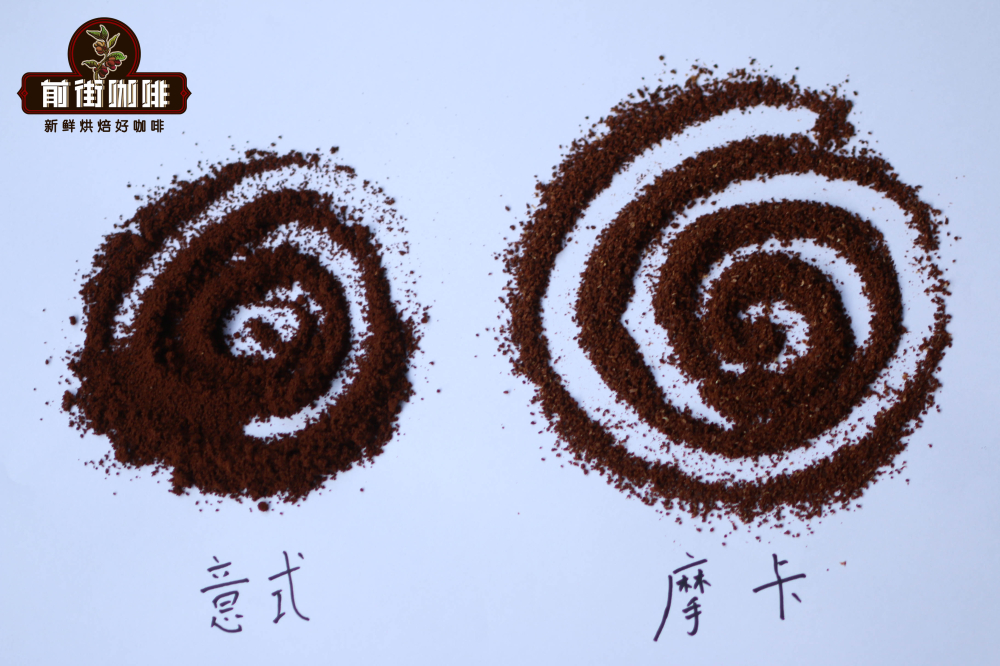
The particle size of coffee grounds is between 0.3 mm and 0.55 mm. However, not every friend can distinguish a difference of one or two millimeters with their eyes. The simplest method is to use a grind size ruler or special moka grounds for comparison. In addition, you can also directly adjust by trial. If the grounds are too fine, you can hear the water boiling with a whirring sound, but no coffee liquid rises up; at this time, it is recommended to turn off the heat immediately. If the grounds are too coarse, the coffee liquid may gush out like a fountain.
Moka pot coffee-making process
1. Pour purified water into the lower pot of the moka pot. The water level should be about 0.5 cm below the pressure relief valve.

2. Slowly pour the coffee grounds into the basket, gently tap to distribute the coffee grounds evenly, and when the coffee grounds form a small hill shape, level the coffee surface by distributing the grounds.
Filling the basket with grounds is to avoid extracting undesirable defective flavors. Because the closer the density of the coffee grounds in the basket, the more it avoids causing some coffee grounds to be over-extracted or some to be under-extracted, resulting in uneven flavor or bitterness.
3. Put the basket into the lower pot, tighten the upper and lower parts of the moka pot, then place it on an electric ceramic stove and heat over high heat;
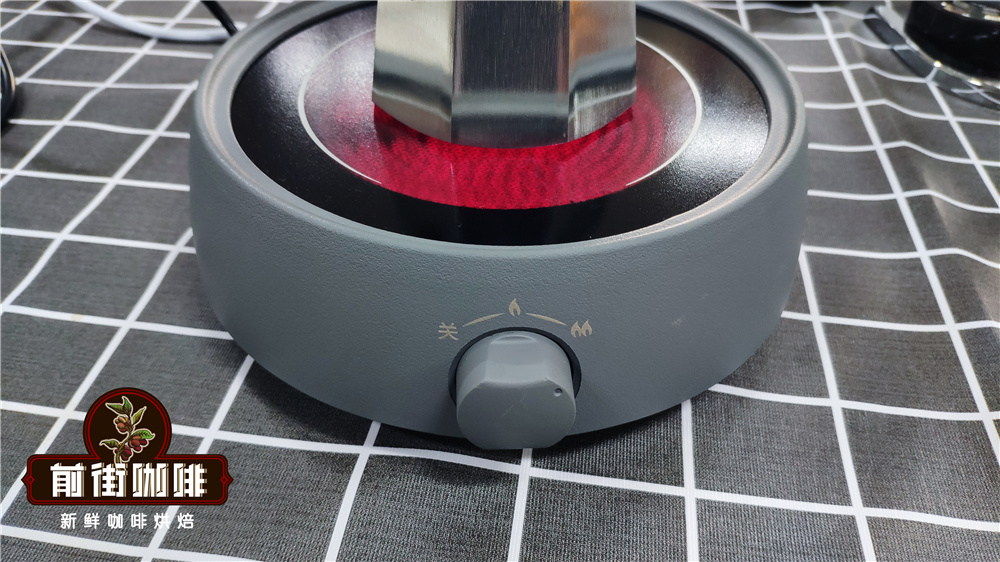
4. When the moka pot rises to a certain temperature, and when the moka pot makes an obvious hissing sound, set the electric ceramic stove to low heat and open the lid of the upper pot.
5. When half of the coffee liquid has come out into the upper pot, turn off the electric ceramic stove. The residual heat and pressure of the moka pot will "push" the remaining coffee liquid into the upper pot.
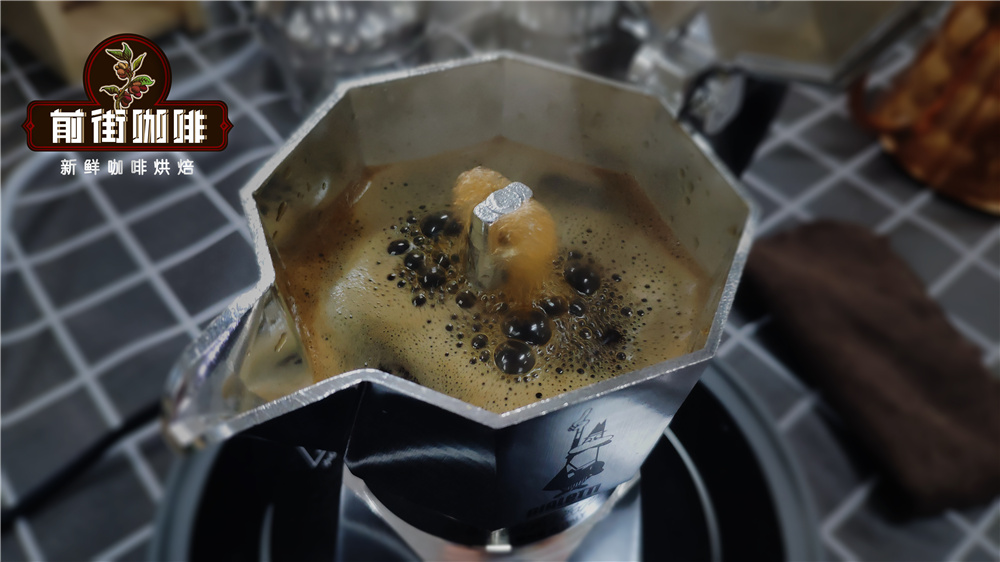
6. When the coffee liquid has all been extracted into the upper pot, it can be poured into a cup and tasted. Coffee extracted by a moka pot is very rich, and can even extract Crema. It can also be mixed with an appropriate amount of water or milk for a better flavor.
For more specialty coffee beans, please add the private WeChat Front Street Coffee (FrontStreet Coffee), WeChat ID: kaixinguoguo0925
The above content is compiled by CoffeeHunters, a coffee news website.


