







How Does Grind Size Affect How to Brew Coffee With a Coffee Maker?
Grind size controls how quickly water pulls flavor from coffee, so a pour-over setup needs a medium setting rather than the fine powder used for espresso. Too coarse leaves the cup weak and thin because water passes through the grounds before it extracts enough. Too fine clogs the filter and turns the cup bitter. Adjust one step at a time and taste before changing anything else.
Uniformity matters as much as the average setting. A comparison test of an electric grinder and a manual grinder showed clear differences in particle distribution. When coffee beans for hand brew are ground at home, a hand grinder gives more control over uniformity, while entry-level electric models often leave a wider spread of fine and coarse particles that extract at different rates.
Among the many variables in pour-over coffee, grind size is a key link that determines the direction of extraction. Particle size directly affects the contact area between water and coffee grounds, which in turn influences flavor performance: too coarse easily leads to under-extraction, while too fine may cause over-extraction and bitterness. However, many beginners often fall into pitfalls when adjusting grind—memorizing settings, making large grind adjustments, and ignoring uniformity. This article starts from the basic principles of grinding, analyzes these common problems one by one, and with the help of Front Street · Little Tomato’s comparative test, shows the actual differences between electric grinders and manual grinders in particle distribution and flavor presentation, and finally gives buying advice for entry-level equipment to help coffee lovers establish a scientific approach to grind adjustment.
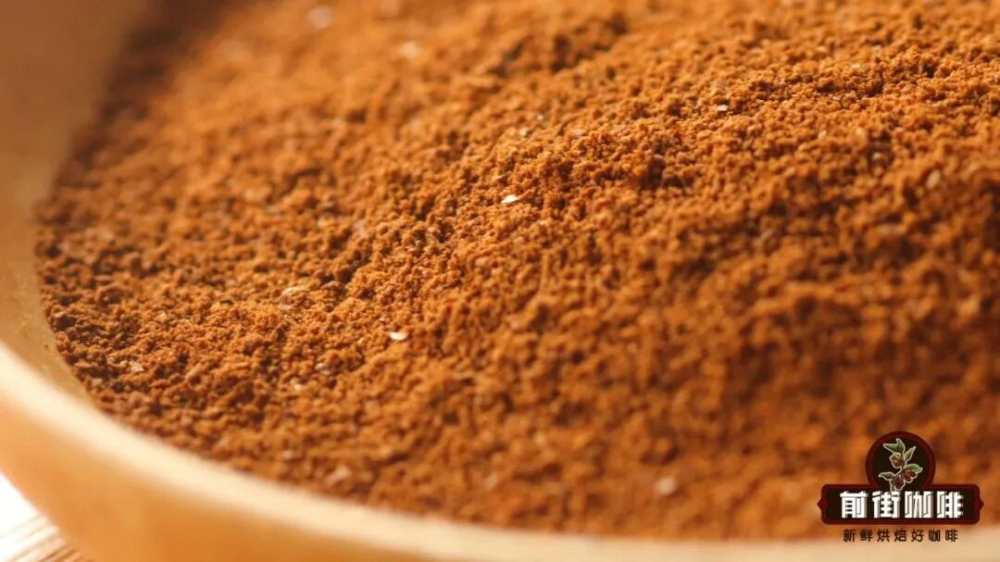
After getting a bag of high-quality coffee beans, choosing the appropriate grind parameters before formal brewing is an unavoidable step, as it directly relates to whether the expected extraction effect can be achieved.
How big is the impact of grind size? On the positive side, it can allow the coffee’s aroma to be fully released during extraction or even enhanced further; on the negative side, it can also ruin those flavors that should have been pleasant at any time, greatly reducing the drinking experience of the whole cup. The key to the problem lies in whether we can flexibly control the coarseness of the coffee grounds according to actual needs.
Is coarser better, or finer better?
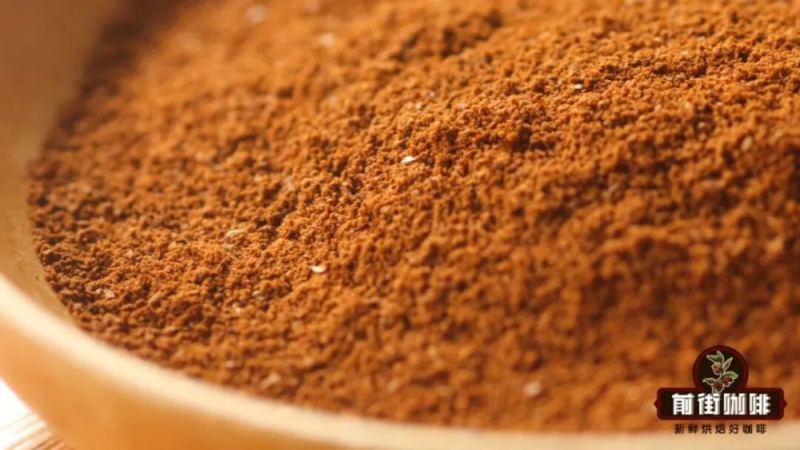
For pour-over, the setting directly determines the coarseness of the coffee grounds, and this further changes the contact area between grounds and water as well as the speed of extraction.
With other conditions unchanged, the coarser the coffee is ground, the larger the particles become, the contact area with water shrinks accordingly, and extraction efficiency naturally decreases. The result is often under-extraction—the taste is weak, the body is insufficient, and the mouthfeel is thin. In this case, consider adjusting the grind finer.
Conversely, the finer the coffee is ground, the smaller the particles become, the surface area increases accordingly, and the extraction speed clearly accelerates, making over-extraction very likely—not only is the taste too strong, but negative sensations such as bitterness may also be brought out. At this point, try adjusting the grind coarser to improve it.
The above logic of grind adjustment has been repeatedly discussed by Front Street in many previous articles, and it basically applies to most brewing methods. However, when this basic theory reaches the practical level, it has caused many beginners to stumble.
Misunderstanding One: “Rote memorization” of grind settings
There are now countless grinder brands and models on the market, but the adjustment methods are broadly similar—simply rotate the dial directly; the smaller the number, the finer the grounds, and the larger the number, the coarser.
Compared with the various confusions brought by other parameters, the question Front Street receives most about grind size is: “How many clicks do you use to brew this bean?” Obviously, these friends treat all grinders as the same thing. In fact, different brands, different models, and different burrs each have different setting systems, and the wear condition of the burrs also affects the final coarseness. Therefore, when determining grind size, rather than copying someone else’s number, it is better to judge based on brewing time and the actual taste of the coffee.
Take the brewing combination commonly used by Front Street as an example (15 g coffee, 1:15 coffee-to-water ratio, water temperature 88–93°C, three-stage pouring): if the total time exceeds 2 minutes 30 seconds, it means the flow rate is too slow, the taste is bitter, and the coffee may be too fine, so it needs to be adjusted coarser; if dripping is completed within 1 minute 50 seconds, it means the flow rate is too fast, the taste is weak or sour, indicating the grounds are too coarse and need to be adjusted finer.
Misunderstanding Two: Changing the grind size drastically
Front Street has noticed that some friends who are just starting to explore pour-over are especially aggressive when adjusting the grind. Once they feel the taste is off, they directly turn the dial a full circle, hoping the next cup will turn things around.
But as the saying goes, haste makes waste. When adjusting grind size, be sure to remember the principle of “fine-tuning”! As long as the time has not seriously deviated from the 1 minute 50 seconds to 2 minutes 10 seconds range, and the overall character of the coffee has not changed significantly, with only problems such as blurry flavor, messy mouthfeel, or weak aroma, then each time just move it one small notch, brew a cup, and record the flavor changes. Only in this way can you build up your feel more quickly.
Misunderstanding Three: Ignoring the uniformity of coffee grounds
Many people may not realize that the uniformity of coffee grounds is actually more important than simple coarseness or fineness. The reason is that only when particle size is as consistent as possible can extraction proceed evenly.
We use the same bean—Front Street · Little Tomato—for a comparative test. This is a single-origin coffee from Kenya, with an intense cherry tomato aroma and very high flavor recognizability. Besides pour-over, it is also suitable for cold brew, ice drip, French press, American drip coffee makers, and many other extraction methods.
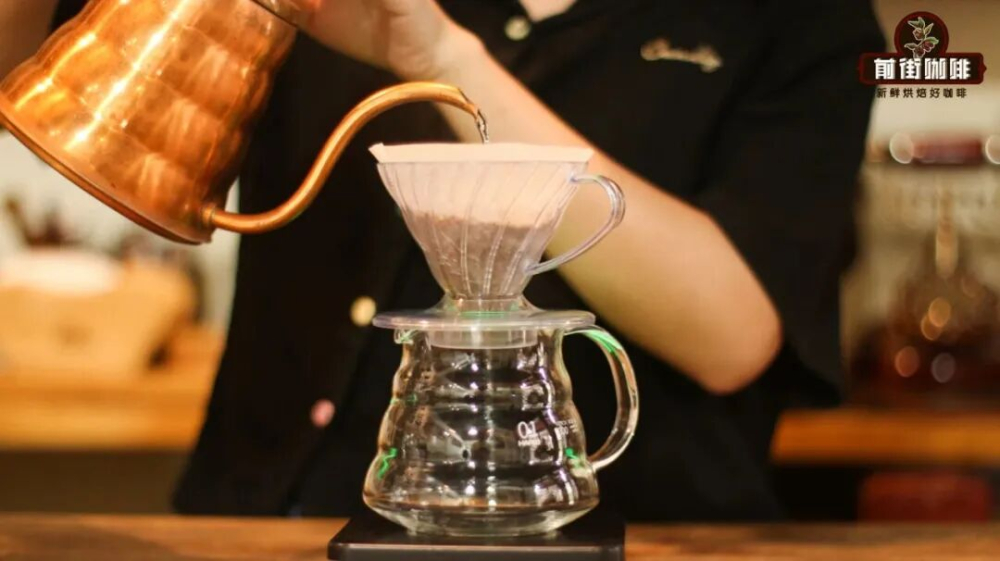
Next, Front Street used an electric grinder (EK43s, setting -10) and a manual grinder costing under 100 yuan (setting 5) respectively to grind the coffee beans to a coarseness with an 80% pass rate on the China No. 20 standard sieve, then performed pour-over extraction. (Front Street · Little Tomato pour-over parameters: 15 g dose, 1:15 coffee-to-water ratio, water temperature 93°C, three-stage pouring.)
The EK43s group finished dripping at exactly 2 minutes, while the manual grinder group took 15 seconds longer. After observing the coffee grounds, Front Street found that the particles produced by the electric grinder showed a uniform fine sugar-like shape, with obvious gaps between particles, like a honeycomb; while the coffee grounds produced by the manual grinder, although also mainly sugar-like particles, showed on closer inspection muddy powder adhering to the surface, mainly deposited at the bottom and around the edge of the dripper.
(Manual grinder)
Comparing at the flavor level: the EK43s group had full and uplifting fruit acidity, presenting flavors of cherry tomato and snow pear, accompanied by a rich caramel-like aroma, and after the temperature dropped, the clean sweetness of ripe red plum; the manual grinder group’s Front Street · Little Tomato showed nutty and slight berry notes, with a subtle sugarcane-like sweetness, a bitter finish, and an overall relatively dull character.
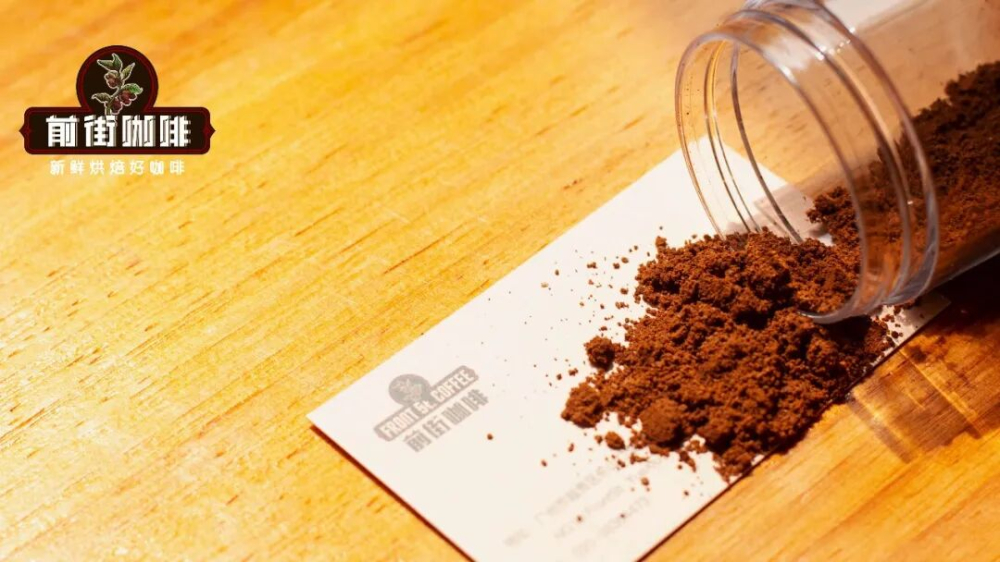
Uniformity is the foundation of a delicious cup of coffee. A poorly performing grinder, even if using the most expensive beans, will waste the essence within them. Therefore, when choosing equipment, the focus should also be placed on grind uniformity. The above situation is clearly caused by uneven coffee particle size—extremely fine powder releases flavor prematurely when it meets water, while the material inside coarse particles is difficult to dissolve out, ultimately creating the contradictory result of both over-extraction and under-extraction.
The 200–499 yuan price range can be classified as entry-level manual grinders, suitable for beginners in the enlightenment stage. The price is not too high, but the grind quality is still acceptable, allowing some attention to be paid to coffee particle size.
The above content is compiled by CoffeeHunters, a coffee news website.


