








How Do Roast Level and Density Guide Coffee Extraction?
Unfamiliar coffee beans do not require guesswork. Reading roast level and bean density gives enough information to decide between higher and lower extraction efficiency, then set water temperature, grind size, and ratio. Light roasts are denser and need hotter water and a finer grind; dark roasts are more porous and extract faster, so they call for cooler water and a coarser grind.
The goal is a suitable extraction yield and concentration, dissolving the pleasant compounds while limiting the bitter ones. Two reference beans illustrate the range: an Ethiopian light roast brewed hotter and finer, and a Golden Mandheling dark roast brewed cooler and coarser. Checking the roast date and bean hardness before brewing keeps the first attempt close to the target.
Buying a bag of unfamiliar coffee beans, the biggest fear is using the wrong parameters and wasting good beans for nothing. In fact, even without a ready-made brewing recipe on hand, you can judge whether the beans suit a high-efficiency or low-efficiency extraction method by observing their roast level and density, and thereby set the appropriate water temperature, grind, and ratio. In this article, Front Street Coffee will walk you through flavor descriptions and bean hardness, breaking down the differences between light-roast and dark-roast coffee beans step by step, and using Ethiopian Huakui and PWN Golden Mandheling as two examples to give directly referenceable pour-over parameters, so you can confidently brew a cup even when facing new beans.
However, many friends are troubled by this: the coffee beans they just got are still unfamiliar, and they worry that using the wrong parameters will lead to an unsatisfactory cup, ruining good beans for nothing. So many people, when buying beans, carefully ask Front Street for the corresponding brewing recipe and take careful notes to avoid a mishap.
Objectively speaking, the packaging bags of coffee beans sold by Front Street Coffee are printed with a QR code corresponding to that bean; scanning it lets you see detailed bean information and brewing parameters. So by simply scanning that code, you can get the accurate brewing recipe.
But even if you don't have the corresponding parameters on hand, we can still use some special methods to grasp the basic situation of the beans, then infer their characteristics and match the appropriate parameters, and in the end still easily brew a good pot of coffee. Many experienced players use exactly this approach to avoid mishaps. So today Front Street will talk about this "success rule" that lets you brew unfamiliar beans well on the first try!

The "success rule" for brewing unfamiliar coffee beans well on the first try!
First we need to understand that the essence of coffee extraction is using water as a solvent to dissolve the flavor substances out of the coffee grounds. But the substances in coffee are quite complex—there are both pleasing components and components that become unpleasant when there are too many. So to brew a delicious cup of coffee, you must choose the right extraction parameters and use an appropriate extraction efficiency to dissolve the pleasing substances while trying to avoid a large release of the unpleasant ones.
Put plainly, you want the coffee to reach an appropriate extraction yield. Of course, a suitable concentration is equally key. And what determines the extraction yield, as Front Street said earlier, is precisely the various parameters we use when brewing coffee.
Water temperature, grind, ratio, time, and agitation method together influence the extraction efficiency during brewing. The higher the extraction efficiency, the faster the flavor substances dissolve; conversely, the slower. And because different coffee beans have different characteristics, some need high-extraction-efficiency parameters to brew, while others suit lower ones.
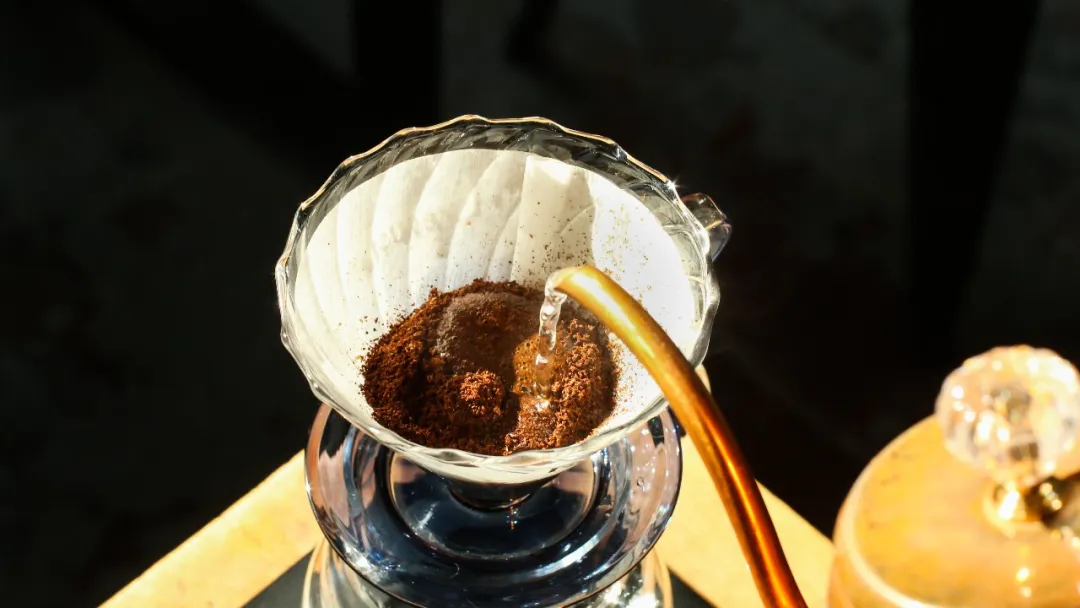
So back to the point: how do we judge whether a bean should use high-efficiency or low-efficiency parameters?
The method is simple: just look at the coffee bean's roast level or density. The lighter the roast and the higher the density, the more it relies on high-efficiency extraction parameters to dissolve a large amount of flavor substances in a relatively short time;
And when the coffee beans are darker-roasted and lower in density, the flavor substances dissolve very easily, so at this point you should use parameters with lower extraction efficiency to avoid over-extraction.
Now, to know a bean's density or roast level, besides checking the bean color value—a "simple and rough" method—you can also obtain the bean's specific situation from other information, for example—its flavor description.
The flavor description can serve as a reference for judging a bean's roast level, because the roast level determines the direction of aroma and taste. The darker the coffee beans are roasted, the more the acidic substances are consumed during roasting, so the acidity tastes weaker and the bitterness stronger, and the aroma is mainly roasted notes like chocolate, caramel, and nuts;
Conversely, the lighter the coffee beans are roasted, the more acidic substances are retained, so it tastes mainly acidic, and because there isn't much roasted aroma covering it, the floral and fruity notes can show through better.
So when we're not clear about a bean's roast level, we can use its flavor description as a reference! If the flavor description is mainly floral and fruity, then its roast level certainly won't be too dark; conversely, if it's mainly roasted flavors, then the roast level probably won't be too light (Captain Obvious much…) .
Another method is to look at its hardness/brittleness—this is something Front Street shared not long ago! Generally, beans that are easier to snap apart, with high brittleness/low hardness, are all easier to extract; conversely, they are harder. So by testing a bean's hardness/brittleness, we can roughly judge its characteristics, and then choose and use parameters based on those characteristics.
Take Front Street as an example! Among Front Street's bean list, the Front Street Ethiopian Huakui coffee beans have a flavor description of: orange blossom, lemon, strawberry, black tea. As you can see, it's mainly floral and fruity. Then we press the coffee beans to test density, and find they're not very easy to snap apart, indicating their density/hardness is on the higher side.
Combining the above two points, we can conclude that its roast level is medium-light, and when brewing you need parameters with higher extraction efficiency. So the parameters Front Street uses are as follows: Dose 15g, coffee-to-water ratio 1:15, grind degree 75%~80% passing rate on a No. 20 sieve, fine granulated sugar particle size, brewing water temperature 91°C~93°C, extraction time about 2 minutes~2 minutes 30 seconds.

Let's give another example: among Front Street's bean list, Front Street PWN Golden Mandheling! The flavor description of Front Street PWN Golden Mandheling is: chocolate, nuts, caramel, pine, spices—mainly roasted aromas. When pressing the coffee beans, the beans are easily crushed, from which we can see the beans' brittleness is relatively high.
Combining the above two points, we can judge that its roast level is very dark, and when brewing you should appropriately lower the extraction efficiency of the parameters to prevent over-extraction. So the parameters Front Street uses are as follows: Dose 15g, coffee-to-water ratio 1:15, grind degree 70%~75% passing rate on a No. 20 sieve, brewing water temperature 86°C~89°C, extraction time about 2 minutes.
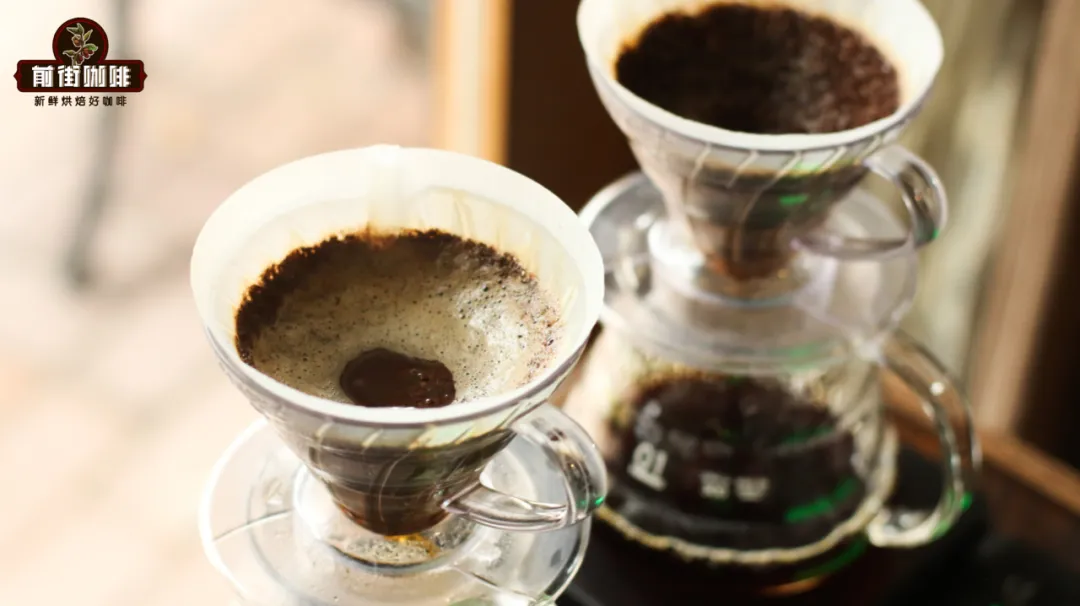
That's all for this Front Street分享. It's really very simple. Although judging the roast level by the coffee beans' external color value is more convenient, it's inevitable that some beans' appearance color doesn't match the actual roast level—for example, anaerobically processed coffee beans look like dark roast but are actually medium or medium-light roast.
In such cases, if you judge the roast level directly by color value, it may lead to improper extraction because the extraction efficiency doesn't match when brewing the coffee. Therefore, this "success rule" is still one we recommend everyone learn about~
- END -
The above content is compiled by CoffeeHunters, a coffee news website.


