








Understanding Ice Dosage and the Japanese Rapid Cooling Method for Iced Pour-Over Coffee
The ice used in iced pour-over coffee serves two main purposes: rapid cooling and dilution. Large, dense ice cubes melt slowly, helping maintain the coffee's concentration over time. The recommended ice-to-water ratio is about 1:1 by weight, but this can be adjusted based on the coffee's roast level and personal taste. The Japanese rapid cooling method involves brewing hot coffee directly onto ice, which quickly chills the coffee and preserves volatile aromas.
To apply this method, start with a high-extraction brew using a finer grind and hotter water, then pour it over a measured amount of ice. For example, using 15 grams of coffee, aim for 150 grams of hot water and 150 grams of ice. The ice should be large and clear to slow melting. This technique works well with light-roasted beans like Front Street Coffee's Geisha Village Estate Red Label Geisha, producing a refreshing, full-bodied iced coffee at home.
When making iced pour-over coffee, the choice and amount of ice is often the most common question raised by enthusiasts. The core role of ice in iced pour-over is rapid cooling, not aroma preservation or keeping cold. Since melting ice dilutes the coffee concentration, its density and quantity directly determine the final taste and drinking experience. This article will explain, one by one, the considerations for choosing ice, recommended amounts, and the complete process and specific parameters of Japanese-style rapid-cooling iced pour-over. Using Front Street Coffee's Geisha Village Estate Red Label Geisha as an example, it also shares a practical approach combining high-concentration extraction with precise ice ratios, helping you brew a refreshing, full-bodied, and flavor-forward iced pour-over coffee at home.

When it comes to making iced pour-over, besides brewing parameters, the most frequently asked questions are about ice—such as which type of ice is most suitable and how much ice to use. These are the messages Front Street Coffee frequently receives in its back end. So today Front Street Coffee will talk about what exactly are the ins and outs of the ice used in iced pour-over~
What are the considerations for ice in iced pour-over?
In the process of making iced pour-over coffee, the primary function of ice is actually rapid cooling, not locking in aroma or maintaining low temperature. We need to make a cold, refreshing iced pour-over in a relatively short time, so first using hot water to quickly extract the flavor substances from the coffee grounds, then using ice to bring the temperature down, is clearly the ideal approach. Therefore, the core task of ice in iced pour-over is cooling.
At the same time, ice absorbs heat and melts into water, thereby diluting the coffee concentration, so the density and quantity of ice directly affect a cup of coffee's taste, flavor, and overall experience over continued drinking.

For iced pour-over coffee, the ice used should naturally be as large and dense as possible. This type of ice melts more slowly, so we don't need to worry that the coffee will be over-diluted if not finished within a short time, causing a weaker taste and thinner body. It can maintain a good drinking state for a longer period and bring a better tasting experience;
Conversely, if using ice that is small in size and relatively low in hardness, under the same quantity, it will melt noticeably faster. If you cannot finish drinking it in time and the amount of ice is not controlled well, the coffee will quickly become over-diluted due to melting ice, producing the negative situations mentioned above by Front Street Coffee.
However, many friends only have access to ice that is small, not very hard, and melts quickly, and they cannot change the quality of the ice itself. Therefore, rather than worrying about the density or size of the ice, Front Street Coffee suggests focusing more on the quantity of ice. By controlling the quantity, we can manage the degree to which the coffee is diluted. Even if it is not finished within a short time, there is no need to worry about the coffee becoming over-diluted.
As for how much ice to add, Front Street Coffee's suggestion is to leave a little ice remaining after the coffee has completely cooled. The specific amount mainly depends on the liquid volume of the coffee. Of course, the less liquid the better, because under the premise of an unchanged extraction yield, the less liquid there is, the higher the coffee concentration!
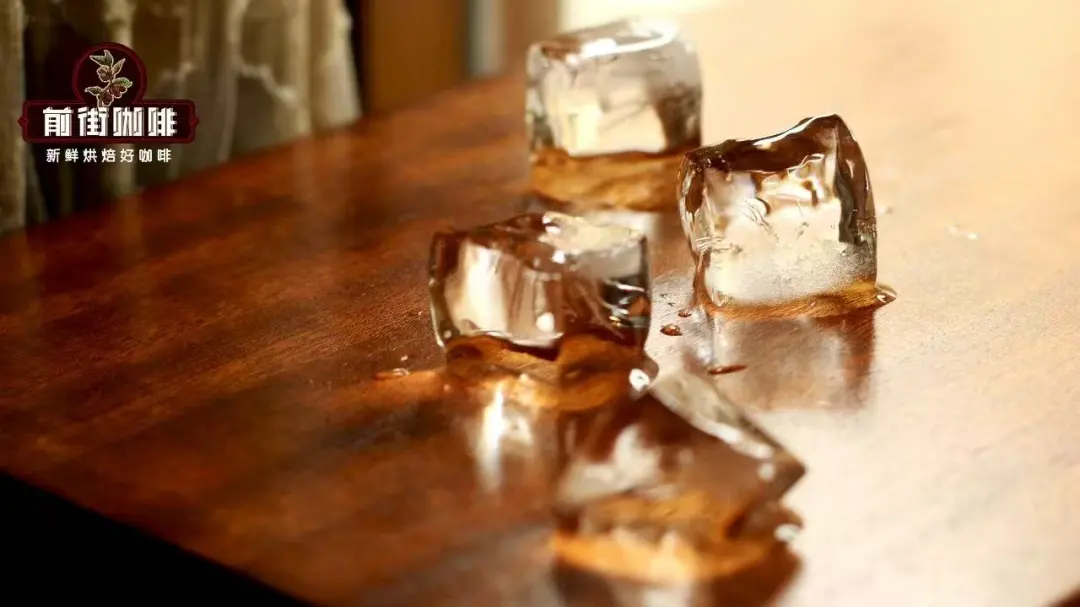
High-concentration coffee has the ability to offset dilution from melting ice, so if you want to make a delicious iced pour-over, the best approach is to brew a high-concentration coffee liquid, then add just enough ice to cool the coffee with a little extra left over. The ratio Front Street Coffee uses when brewing iced pour-over was developed through repeated trials based on exactly this idea~
If you also want to brew a pot of iced pour-over coffee that is sufficiently cold and has a suitable concentration, you may refer to this set of parameters used by Front Street Coffee~ Note that this is for reference only, because everyone's beans, grinder, ice density, and ice size are all different. In actual practice, corresponding adjustments still need to be made according to the materials at hand.
Brewing Sharing
In this sharing, the coffee bean selected by Front Street Coffee is the Front Street Geisha Village Estate · Red Label Geisha from the bean list of Front Street Coffee's Tmall Taobao flagship store. This bean uses natural processing and medium-light roasting, with prominent excellent flavors such as berries, citrus, and roses, making it very suitable for making iced pour-over coffee. The extraction parameters are as follows:

Dose used: 15g Coffee-to-water ratio: 1:10 Coffee-to-ice ratio: 1:6 Grind size: 80% passing rate on a No. 20 sieve Brewing water temperature: 92°C Extraction time: 2 minutes
Before starting to brew, you can first put the ice into the lower server, so that after the coffee liquid is brewed out, it can directly contact the ice, which not only cools it quickly but also preserves more aroma.
For brewing, still first use water at twice the coffee dose for a 30-second bloom.

After the bloom ends, divide the remaining water into 2~3 pours according to your own water-control proficiency. If your water-control proficiency is relatively high and you can pour with a small stream throughout, then divide it into two pours: one pour around a large circle with 70ml hot water, and another pour around a small circle in the center with 50ml hot water.
If your water-control proficiency is not as high, you can divide the hot water evenly into three pours. For each pour, use a moderate stream and pour in circles, waiting until the liquid in the dripper has completely finished dripping before pouring the next segment. In this way, the time can most likely be controlled to around 2 minutes, ensuring the coffee is fully extracted.
The Front Street Geisha Village Red Label Geisha brewed this way not only tastes refreshing and delicious, but also has just the right concentration. It is sweet and tart, with a solid and full body and prominent flavors, showing flavor expressions of strawberry, citrus, blueberry, and rose. The sweet-and-tart taste paired with the full body makes the whole cup full of juice-like character—quite excellent~
- END -
The above content is compiled by CoffeeHunters, a coffee news website.


