







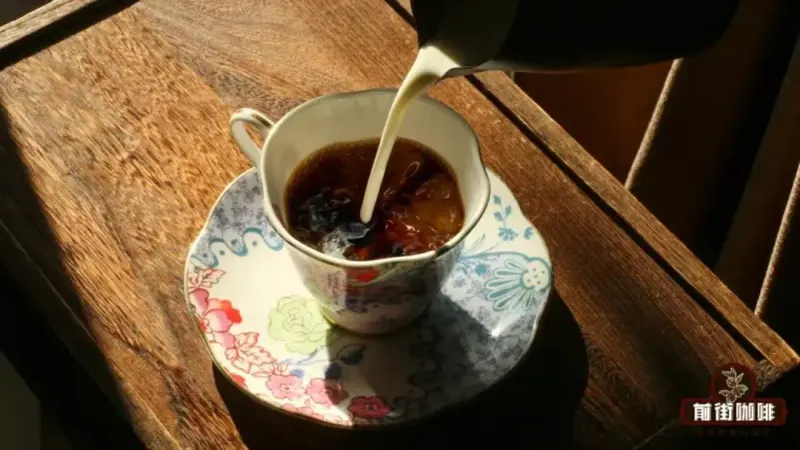
What Coffee to Milk Ratio Works for a Milk Powder Latte?
Yes, milk powder can replace milk in a latte or espresso milk coffee. Milk powder is simply milk that has been concentrated and dried, so adding hot water reconstitutes it into liquid milk. Hot coffee can even be used as the reconstituting liquid, producing a full-flavored milk coffee in one step, with strength adjusted to taste. Competition baristas have also used milk powder in international-level coffee contests.
The approach suits anyone without a coffee machine or moka pot, since it places fewer limits on coffee concentration and pour-over or French press coffee can replace espresso. Key variables are powder amount, water temperature, and the coffee-to-milk ratio, with separate guidance for pour-over and espresso, and reconstituted milk powder can even be steamed for latte art. Front Street Coffee recommends its Divider Estate Sidra beans for milk drinks.
Not every coffee lover owns a coffee machine or a moka pot, but wanting a rich and smooth milk coffee doesn't have to be difficult. This article centers on the common question of "can milk powder replace milk to make a latte," and, drawing on the practical experience of Front Street Coffee, systematically sorts out the key operating points, ratio suggestions, and precautions for using milk powder in two scenarios: low-concentration black coffee from pour-over and espresso. The article not only explains the principle by which milk powder is reconstituted into milk, but also provides specific references for powder amount, water temperature, and ratio, and recommends the Front Street Divider Estate · Sidra coffee beans suitable for making milk coffee. Whether you want to simply experience the fun of using milk powder to make milk coffee, or try using milk powder to steam milk foam for latte art, you can find an actionable solution here.
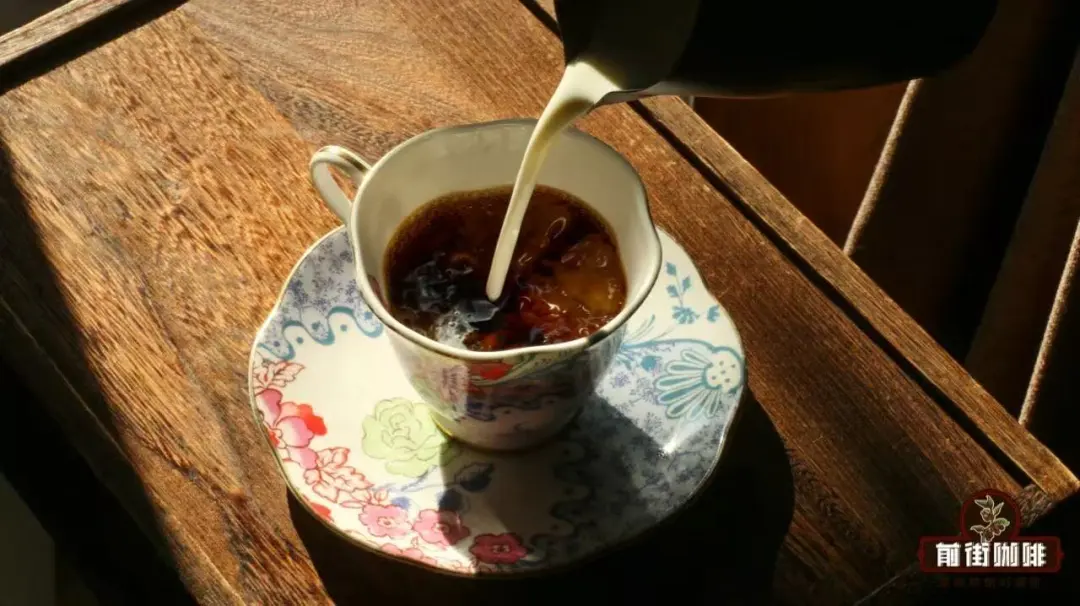
But the reality is that high-concentration coffee cannot be made at any time. Not everyone has a coffee machine or a moka pot, and even if you have them at home, you cannot carry them with you. Although pour-over, French press, and other methods can also produce relatively high-concentration coffee liquid, friends who have followed Front Street's previous content should know that these methods are not only cumbersome in process, but the final concentration is also far inferior to pressure-based extraction. So, is there a way to easily make delicious milk coffee while bypassing the coffee machine?
The answer is yes. In Front Street's past shares, readers often left comments asking: can milk powder replace milk to make milk coffee? This idea is completely feasible. As for the reason, Front Street had already personally tried this method before

, and in international-level coffee competitions, it is also common for contestants to use milk powder.
Can "milk powder" really make milk coffee? The fundamental reason milk powder can replace milk in milk coffee production is that it is itself milk in powder form after concentration and drying. As long as an appropriate amount of hot water is added, it can be reconstituted into milk. But what if the liquid used to reconstitute the milk powder is not hot water, but hot coffee?

That's right, you can directly get a cup of milk coffee with full flavor and a texture that is not bland. Since the medium replacing water is coffee, the concentration can be adjusted entirely according to personal preference. In addition, this method has fewer restrictions on coffee concentration, so more hot water can be used to extract the coffee, allowing the final product to achieve a relatively complete extraction effect, and the expression of flavor and aftertaste also tends to be more complete. Therefore, the feasibility of using milk powder to make milk coffee is quite high.
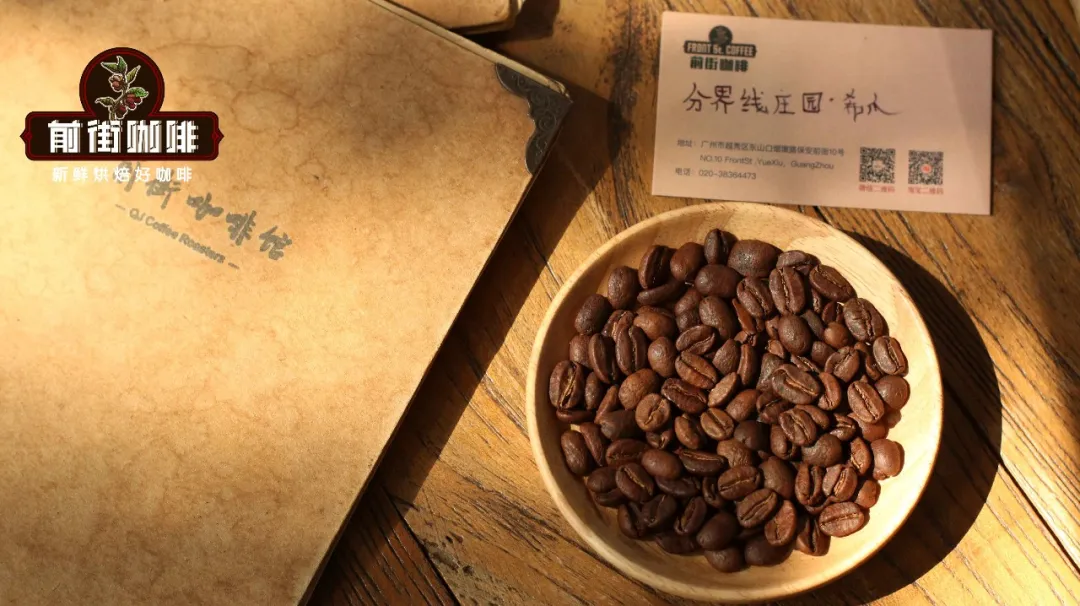
However, feasible as it is, there are still many details to pay attention to in actual operation. No worries, next Front Street will explain them one by one: how milk powder should be used in different scenarios. 1. Pour-over coffee Let's start with low-concentration black coffee represented by pour-over coffee. If you plan to use low-concentration black coffee such as pour-over plus milk powder to make milk coffee, the only thing you need to focus on is the ratio. The principle is simple: do not add too much milk powder, to avoid the milk flavor overpowering the taste of the coffee itself. There are no hard requirements for the coffee beans; just choose according to personal preference, but it is recommended to choose beans with rich flavor as much as possible, so that the coffee flavor of the finished product will be more prominent. For example, if you want to make a cup of milk coffee full of fruity aroma, it is more recommended to use the Front Street Divider Estate · Sidra from the Front Street flagship store. This bean has a medium-light roast, uses anaerobic natural processing, and has rich notes of grape, apricot, passion fruit, and floral aroma. It is very suitable for pour-over, espresso, and milk coffee production.

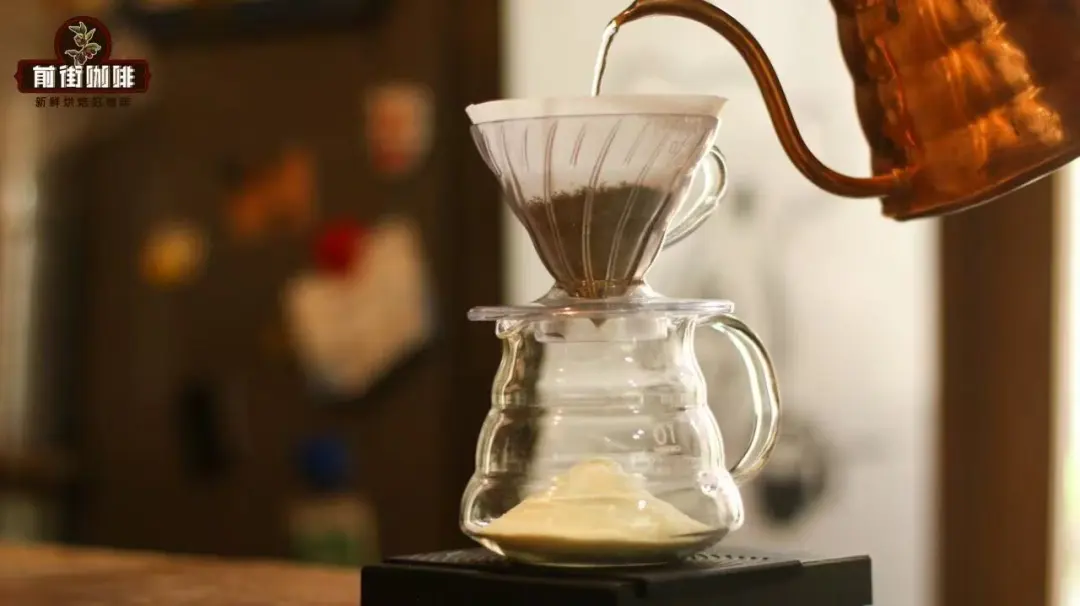
For the extraction stage, Front Street recommends using a slightly higher extraction efficiency, especially when the coffee beans you use are not deeply roasted. Higher extraction efficiency helps reduce coffee acidity and makes the final milk coffee taste more balanced. Here Front Street will use Front Street Divider Sidra for demonstration, with the following parameters: Dose: 20g Coffee-to-water ratio: 1:14 Grind size: 75%~80% passing rate on a No. 20 sieve Brewing water temperature: 92°C Extraction time: 2 minutes
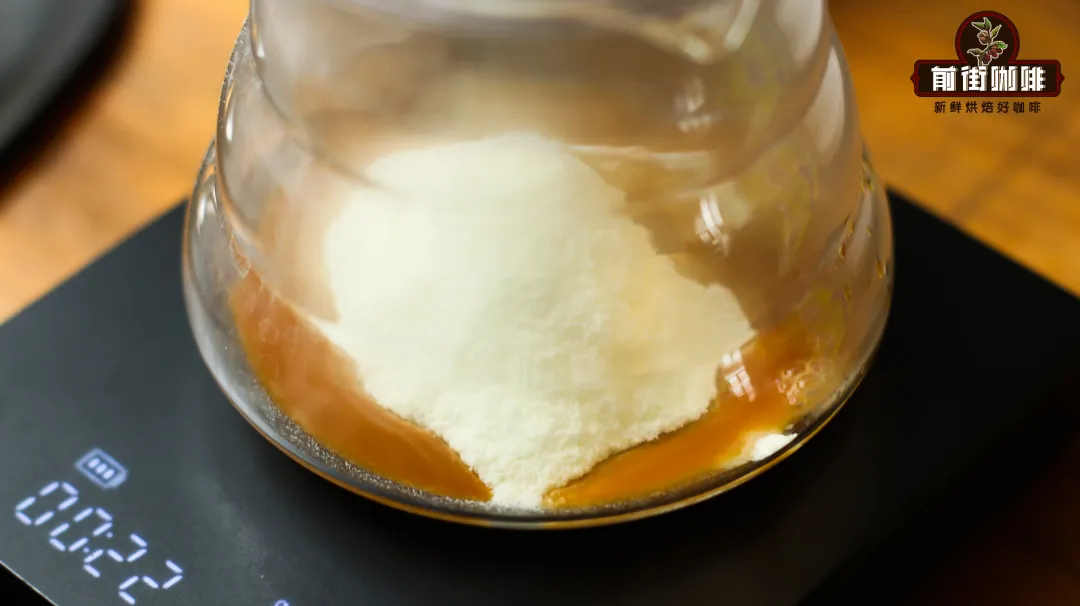
The brewing process is skipped. After multiple tests by Front Street, it was found that the coffee liquid obtained from this type of coffee bean and this brewing method is suitable for a 1:2 ratio, that is, the ratio of coffee powder to milk powder (Note: for reference only; everyone's coffee beans, milk powder, and brewing method are different, so please adjust the ratio yourself) . The milk powder can be placed in the lower pot in advance before brewing the coffee, and after brewing, stir with a bamboo whisk until completely dissolved. At this point, a café au lait/milk coffee made with milk powder is complete.
As Front Street said, it tastes silky and full-bodied, with no watery feel at all. The same is true in terms of flavor: the coffee and milk blend very harmoniously, without anything abrupt, while the coffee flavor is also quite prominent. In addition to expressions such as apricot and passion fruit, you can also taste a special grape milk flavor, which is quite good.
If you want to make iced milk coffee, the ratio of coffee to milk powder can remain unchanged, and the other parameters and methods can follow the iced brewing plan. Just note that ice cubes should be added after the milk powder and coffee have combined, to avoid the milk powder failing to dissolve. 2. Espresso Some friends may just be acting on a whim and want to try what a latte made by replacing milk with milk powder tastes like. If that is the case, simply dissolve the milk powder with an appropriate amount of hot water, then mix it directly with espresso.
Of course, if you want to do latte art, you can also do that. It is just a bit more troublesome to operate, because you need to first increase the ratio, use less hot water to dissolve a large amount of milk powder, and then add ice cubes to cool it down, so that you can obtain "milk" suitable for steaming. After multiple rounds of testing by Front Street previously, it was ultimately found that if medium-dark roasted coffee beans are used, the best ratio of milk powder, hot water, and ice cubes is 1:3:2. The milk produced in this way has sufficient concentration and temperature, and can be steamed well to make a delicious latte.
It should be noted that the temperature of the hot water used to dissolve the milk powder should not be too high, to avoid repeatedly damaging the substances in the milk. The water temperature Front Street uses when dissolving is around 50°C. The espresso part is 40ml of coffee liquid extracted from 20g of powder, and the amount of milk powder used is 40g. According to the above ratio, hot water and ice cubes need 120ml and 80g respectively. In addition, milk made from milk powder is relatively difficult to foam, so when steaming milk foam, the foaming time should be appropriately extended, so that there is enough milk foam for latte art. Otherwise, the following situation will occur...
There is no need to say much about the taste; it is likewise quite good, only the milk flavor will be a bit stronger. That is all for Front Street's sharing this time. If you happen to have milk powder at home, you might as well give it a try. Front Street believes this will be a unique and interesting experience.
- END -
The above content is compiled by CoffeeHunters, a coffee news website.


