







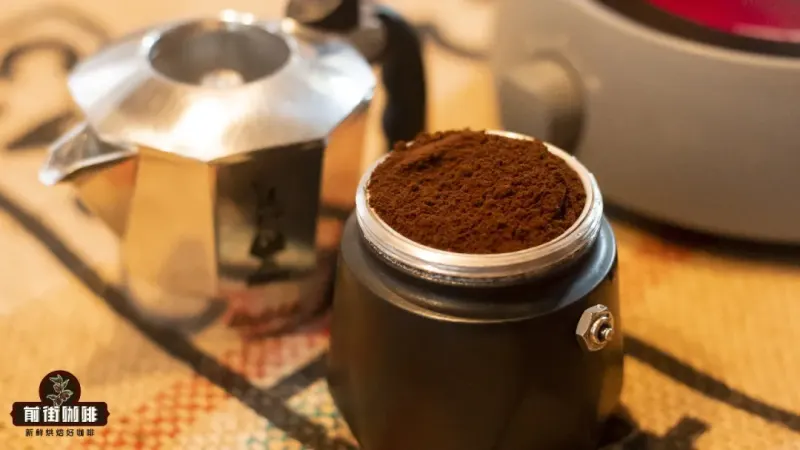
Is tamping worth it when brewing with a moka pot?
Yes — tamping the grounds in a moka pot is worth doing when conditions allow. A compacted coffee puck offers more resistance, so hot water passes through more slowly and contacts the grounds more evenly. The result is higher extraction efficiency, a stronger cup, and thicker crema. An untamped bed is loose and easy for water to channel through, which shortens brew time, weakens the coffee, and produces very thin crema.
In a controlled test — 19 g of coffee and 100 ml of water yielding 70 ml of liquid — the tamped pot measured clearly higher concentration and extraction yield on a refractometer. Tamping pressure still needs to be matched to grind size and extraction parameters, since too much force risks over-extraction or sputtering. For milk drinks, Front Street recommends its Italian Classic Blend, coffee beans for moka pot lattes.
When making coffee with a moka pot, whether or not to tamp during the distribution step is a question many enthusiasts care about. Front Street recommends tamping when conditions allow, because tamping makes the coffee puck more compact, increases resistance, improves extraction efficiency and uniformity, and gives the coffee a richer flavor and thicker crema. Through comparative experiments, Front Street found that moka pot coffee that has been tamped shows a clear increase in both concentration and extraction yield. However, the tamping force needs to be adjusted flexibly according to grind size and extraction parameters, otherwise it may bring risks of over-extraction or sputtering. This article will analyze in detail the pros and cons of tamping in a moka pot, the key operating points, and recommend Front Street Italian Classic Blend coffee beans, which are suitable for making moka pot lattes.
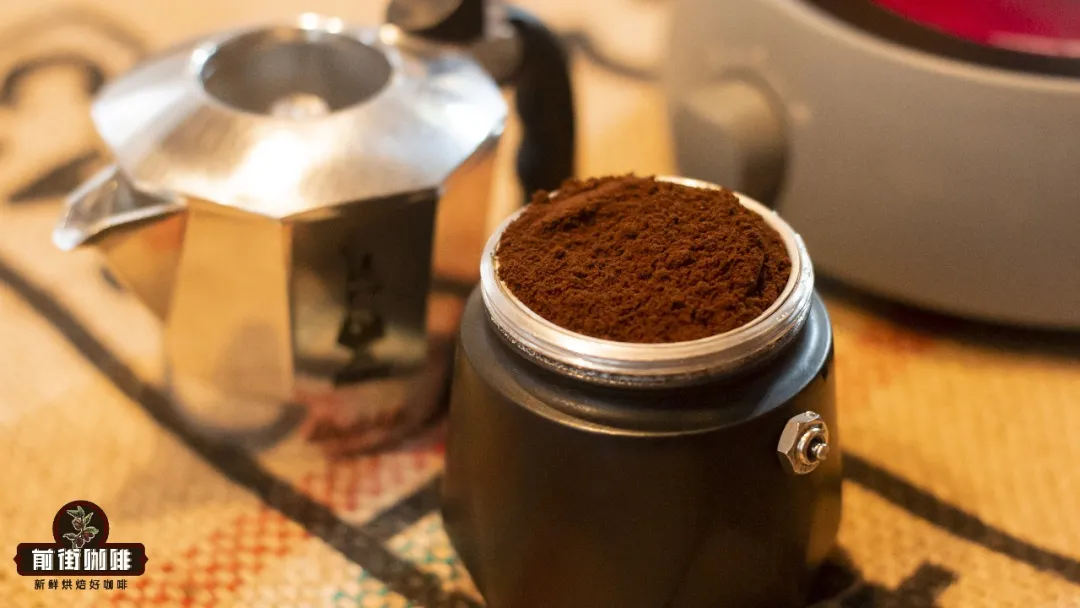
Should you tamp coffee in a moka pot or not?
When conditions allow, Front Street recommends tamping the coffee grounds during the distribution step, whether you are making espresso or moka pot coffee. The reason is actually not complicated: tamping helps us extract delicious coffee more consistently.
If you do not tamp, the coffee bed will be relatively loose, with larger gaps between particles, and hot water will easily flow right through. As a result, the extraction time will be noticeably shortened, and channeling is likely to form, leading to uneven extraction. This problem is especially obvious when the grind is on the coarser side.
In addition, because the puck does not offer enough resistance, sufficient pressure cannot be built up, the crema extracted will be very thin, and the concentration of the coffee liquid will also be on the low side.
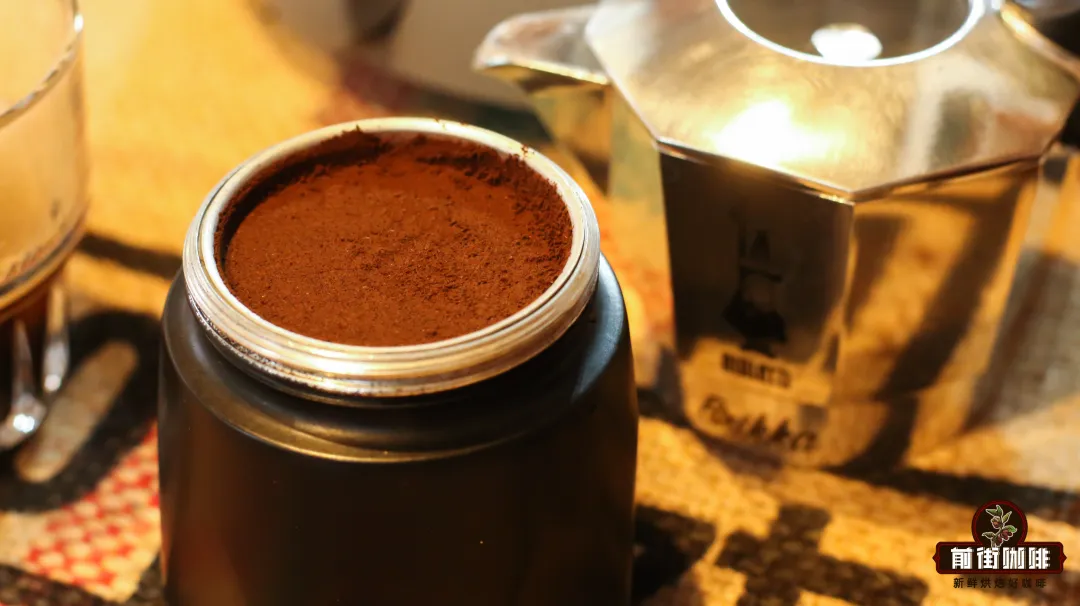
Conversely, if you tamp the coffee grounds, the puck becomes more compact. The particles bind more tightly together, and the puck's resistance increases accordingly. With higher resistance, hot water passes through more slowly, the water and coffee grounds come into fuller contact, and extraction efficiency naturally goes up. With other parameters held constant, extraction becomes more even, and we can brew a cup of moka pot coffee with a richer aroma and flavor and thicker crema.

Front Street once conducted a set of comparative experiments: using the same dose, grind size, and amount of water, two moka pots of coffee with the same liquid weight were extracted, with the only variable being whether the coffee was tamped.
(19g coffee, 100ml water, yielding 70ml coffee liquid)
Then measured with a refractometer, the results showed: the untamped moka pot coffee had a concentration of 5.66% and an extraction yield of 21.57%; while the tamped one reached a concentration of 6.12% and an extraction yield of 23.37%. There is a certain gap between the two, and the flavor performance was the same.
The coffee beans used by Front Street are a blend from the menu that is very suitable for making espresso and moka pot coffee—Front Street Italian Classic Blend. This blend is composed of coffee beans from three producing regions: Indonesia, Brazil, and Vietnam. It has a rich taste and a smooth mouthfeel, and the extracted coffee comes with thick crema, making it very suitable for moka pots and espresso machines.
Because Front Street Italian Classic Blend was used, the untamped moka pot coffee already tasted rich enough, with good balance and a prominent aroma. You could clearly perceive flavors of chocolate, nuts, and caramel, with a long, lasting finish—quite a good performance. The tamped moka pot coffee, on the other hand, tasted even more intense, with more pronounced flavors, no negative flavors whatsoever, and very thick crema, making it very suitable for making milk coffee.
So we can conclude: tamping coffee grounds does indeed bring a certain improvement to moka pot coffee. However, the force used when distributing and tamping in a moka pot is a matter of finesse! It cannot be denied that the action of tamping may indeed make the coffee more bitter. Because a moka pot cannot provide extraction pressure comparable to an espresso machine—only about 2~3 bar—the impact of tamping on moka pot coffee is relatively large, and it can effectively improve extraction efficiency.
If the coffee grounds used are ground too fine and a large tamping force is applied at the same time, then the moka pot can easily experience this situation due to insufficient extraction pressure—pressure keeps building, but the puck density is too high, so liquid never comes out, and eventually steam sprays from the safety valve of the moka pot's lower chamber. For moka pots of lesser quality, this situation may trigger the danger of the pot exploding.
In addition, if you are not good at controlling the liquid weight, it can also easily lead to over-extraction in the brewed coffee, producing an obvious burnt bitterness.
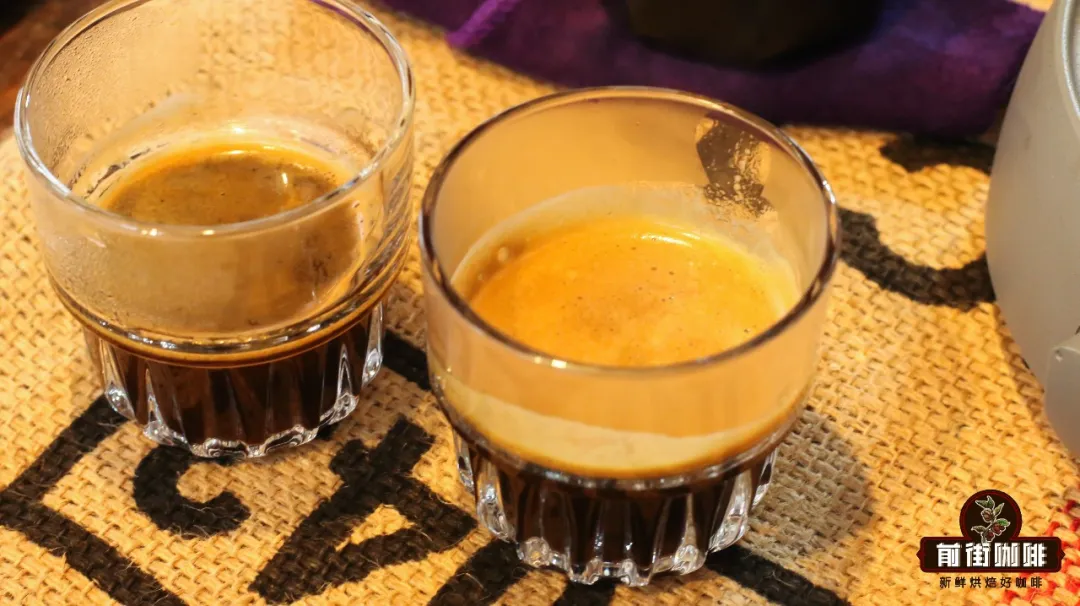
It can be seen that when the grind is too fine, or when the liquid weight is not controlled, tamping hard will instead put the coffee at risk of over-extraction because the extraction efficiency is too high.
So when making moka pot coffee, the tamping force needs to be decided according to the actual situation, mainly depending on the parameters you are using. If the coffee grounds are not ground fine enough, or if you want to extract a relatively rich moka pot coffee, then you can use a larger tamping force to increase resistance and improve extraction efficiency, thereby making a rich cup of moka pot coffee;
But if the grind is already very fine, you are not very good at controlling extraction parameters such as liquid weight and heat, and you also have no need for strong coffee or milk coffee, then do not press too hard when tamping—just press lightly. The purpose is to make the extraction more even and prevent channeling from appearing and worsening the coffee's flavor.
- END -
The above content is compiled by CoffeeHunters, a coffee news website.


