







Does the 1:16 Golden Ratio Work for Mandheling Coffee?
The 1:16 coffee-to-water ratio is widely called the golden ratio because it usually lands inside the Golden Cup extraction range set out by Dr. Lockhart: a concentration of about 1.15% to 1.35% and an extraction yield of 18% to 22%. It is a reference point that suits many pour-over brews, including Mandheling, rather than a fixed rule.
Shops such as Front Street brew at 1:15 for a more concentrated cup, and water temperature and grind are adjusted to the roast level. For Mandheling, that firmer ratio tends to bring out body and low acidity, while a Panama Geisha coffee is often brewed lighter to protect its floral notes, so 1:16 or even 1:17 can fit better.
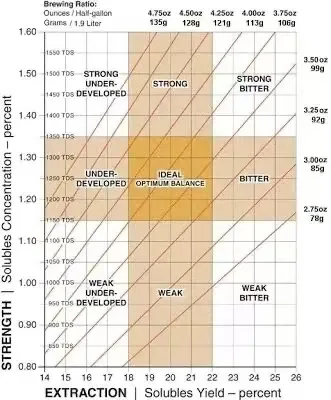
In discussions about pour-over coffee, the 1:16 coffee-to-water ratio is often crowned the "golden ratio," while the 1:15 that Front Street uses daily surprises some friends. Behind this is actually the Golden Cup extraction theory—Dr. Lockhart's research points out that most people prefer coffee with a concentration between 1.15% and 1.35%, and an extraction yield between 18% and 22%. The Golden Cup extraction chart intuitively shows the relationship between coffee-to-water ratio, concentration, and extraction yield, and 1:16 happens to be a ratio that easily falls into the ideal range. But the Golden Cup standard is only a reference, not an absolute rule: tastes vary from person to person—1:14 or even 1:10 suits those who prefer a bolder cup, while 1:17~1:20 is better for those who like a lighter taste. Front Street chooses 1:15 to make the flavors more concentrated and the mouthfeel more substantial, and will adjust water temperature and grind based on the roast level. This article will fully explain the origin of the golden coffee-to-water ratio, what Golden Cup extraction really means, and Front Street's specific brewing parameters for beans such as Huakui, Geisha, Queen's Estate, and Golden Mandheling.
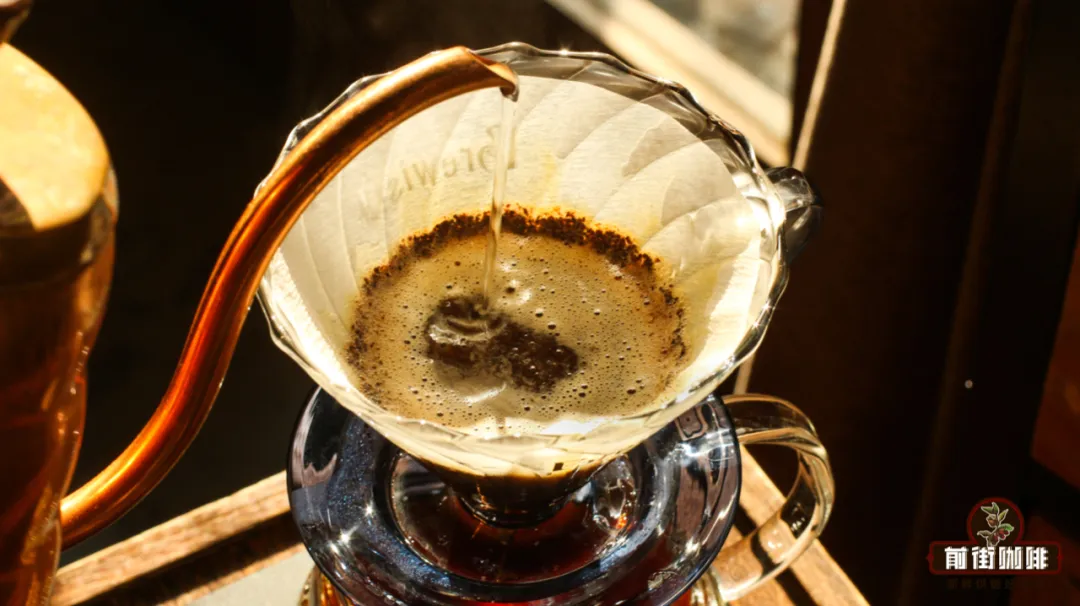
Every time Front Street mentions the 1:15 coffee-to-water ratio, some friends are always surprised, because many coffee shops more often use 1:16 when brewing. Just yesterday, for example, a friend left a comment saying: I see everyone using 1:16, and I've always thought 1:16 was the golden coffee-to-water ratio for pour-over coffee.
Actually, from a certain angle, 1:16 can indeed be considered the golden coffee-to-water ratio. Not long ago, Front Street just talked with everyone about the concept of "Golden Cup Extraction," so here's a brief recap—those interested can click the link to read it themselves. As we know, the soluble substances that can be extracted from coffee beans are limited, accounting for only 30% of the bean weight. Based on this finding, Dr. Lockhart conducted research and found that for the coffee most people like, both the extraction yield and concentration fall within a certain range: concentration is roughly 1.15%~1.35%, and extraction yield is between 18% and 22%. Therefore, an extraction method that can control the coffee's concentration and extraction yield within this range is called Golden Cup extraction, and a cup of coffee brewed this way can be called Golden Cup coffee.

Later, people drew the Golden Cup extraction chart based on this guideline, and this chart clearly marks the corresponding relationship between coffee-to-water ratio, concentration, and extraction yield. Simply put, we can see from the chart what coffee-to-water ratio is most likely to brew Golden Cup coffee.
And the 1:16 coffee-to-water ratio is exactly one of the ratios shown in the chart that can easily brew Golden Cup coffee with satisfactory concentration and extraction yield, so 1:16 naturally earned the name of the golden coffee-to-water ratio. But we need to understand that, just as Front Street has always emphasized, the concept of Golden Cup extraction can only serve as a reference and cannot be copied completely. Coffee that falls within the Golden Cup extraction range is not necessarily delicious, and coffee that falls outside the Golden Cup extraction range is not necessarily bad. The same principle applies to coffee-to-water ratios.
The coffee-to-water ratio mainly affects coffee concentration. Under the premise of the same extraction yield, the larger the ratio number, the stronger the coffee; the smaller the ratio number, the weaker the coffee. Everyone's taste preferences differ, so it can be said that everyone's idea of the golden coffee-to-water ratio is different. For example, some friends prefer coffee with a lower concentration that is easier to drink, so a coffee-to-water ratio of 1:17~1:20 suits them better; while some friends like coffee with a higher concentration and more concentrated flavors, so for them, a coffee-to-water ratio of 1:14 or 1:10, or even espresso's 1:2 coffee-to-liquid ratio, would be more suitable.
The reason Front Street chooses a 1:15 coffee-to-water ratio is that coffee brewed at this ratio has a slightly higher concentration, and the coffee's flavors and taste are more concentrated, so we can better taste the flavor characteristics in the coffee. In addition, a higher concentration can also enhance the coffee's mouthfeel, making the coffee taste more substantial and giving it a better texture—Front Street personally prefers coffee like this. But the coffee-to-water ratio alone cannot brew a delicious cup of coffee; it also needs to be combined with other parameters to achieve a suitable extraction efficiency, thereby brewing a cup of coffee with both suitable concentration and extraction yield.
Taking Front Street as an example, in most cases Front Street uses a coffee-to-water ratio of 1:15 when brewing coffee, and then adjusts other extraction parameters according to the different roast levels of the beans. For example, when brewing medium-light roasted coffees such as Front Street Ethiopia Huakui and Panama Boquete Geisha from the bean list, Front Street uses 92°C hot water, a No. 20 sieve with a 75%~80% passing rate (fine granulated sugar), and controls the extraction time at 2 minutes. Coffee brewed this way not only has just the right concentration, but also just the right extraction yield, and when drinking it you can clearly taste the floral and fruity notes in the coffee.
If what you're brewing is Brazil Queen's Estate or Sumatra Golden Mandheling from the Front Street bean list, then you need to lower the water temperature to 88°C and coarsen the grind to a No. 20 sieve with a 70%~75% passing rate, while the rest of the ratio and time remain the same as above. Dark-roasted coffee brewed this way not only lets you clearly taste dark-roast coffee flavors such as chocolate, hazelnut, and caramel, but after swallowing we can also taste a distinct sweet aftertaste, which is very pleasant.
So that's everything Front Street shared this time. In short, as long as you like it, then no matter what coffee-to-water ratio it is, it will be the best golden coffee-to-water ratio for you! It's that simple~
- END -
The above content is compiled by CoffeeHunters, a coffee news website.


