







Why Do Coffee Grounds Sink and Leave Water Floating on Top?
Ground-water separation—when all the grounds sink to the bottom of the dripper while hot water pools on top—has four main causes: high-density, hard beans (usually high-grown light roasts), grinding too fine with excessive fines, stale coffee, and pouring faster than the coffee can drain. The sunken bed blocks the water's downward path, so water keeps accumulating in the dripper and extraction drags on beyond the usual two minutes.
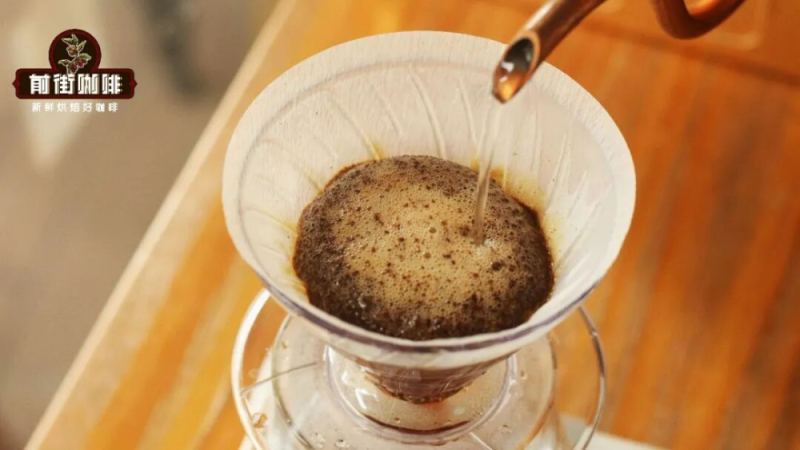
A healthy pour-over looks different: after the bloom, the coffee bed tumbles, golden foam covers the surface, and a neat wall of grounds forms along the dripper's inner edge. Front Street Coffee, which has received many reports of the problem, uses several of its high-altitude coffees to show how a coffee enthusiast can identify the cause—bean density, grind fineness, freshness, or pour speed—and adjust for a balanced extraction.
After the bloom, an ideal pour-over should show the water flow driving the coffee grounds to tumble, a golden foam covering the top layer, and an orderly wall of grounds forming along the edge of the dripper. Yet many coffee enthusiasts notice during the middle and latter stages of brewing that all the grounds sink to the bottom while the hot water floats on top, and after dripping finishes, only a flat bed of grounds remains—this is what is often called "ground-water separation." This article focuses on this phenomenon, analyzing one by one the four causes: high-density light-roast beans, overly fine grinding with excessive fines, stale coffee beans, and improper pouring technique. Combined with several high-altitude beans from Front Street Coffee, it offers specific methods for diagnosis and adjustment ideas, helping coffee enthusiasts understand the root of an imbalanced extraction rhythm and find actionable improvements.
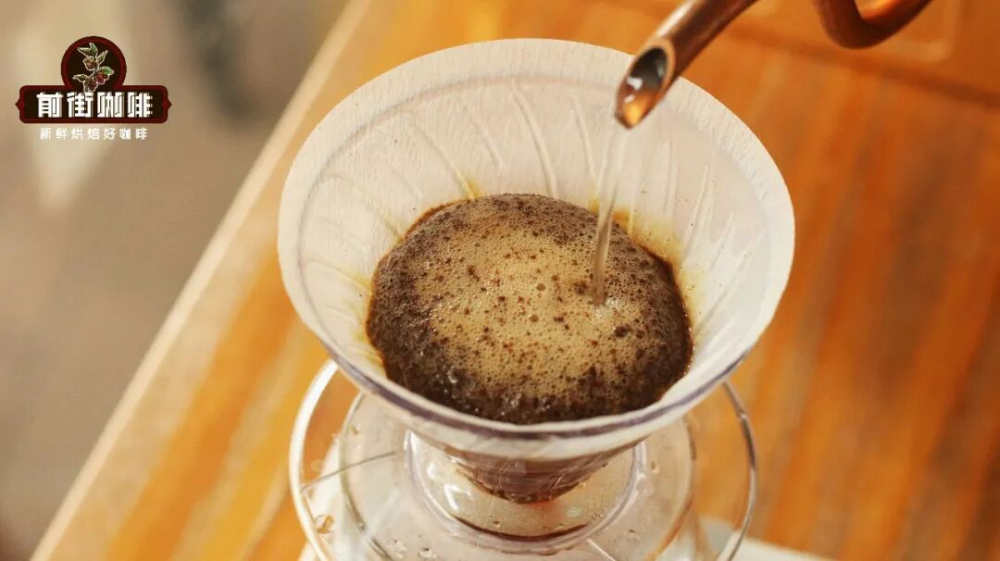
Normally, after the bloom is complete, as the water flow stirs the coffee bed, the surface becomes covered with a thick layer of golden foam, while a neat wall of grounds gradually builds up along the inner wall of the dripper. This state indicates that the entire extraction process is proceeding steadily.
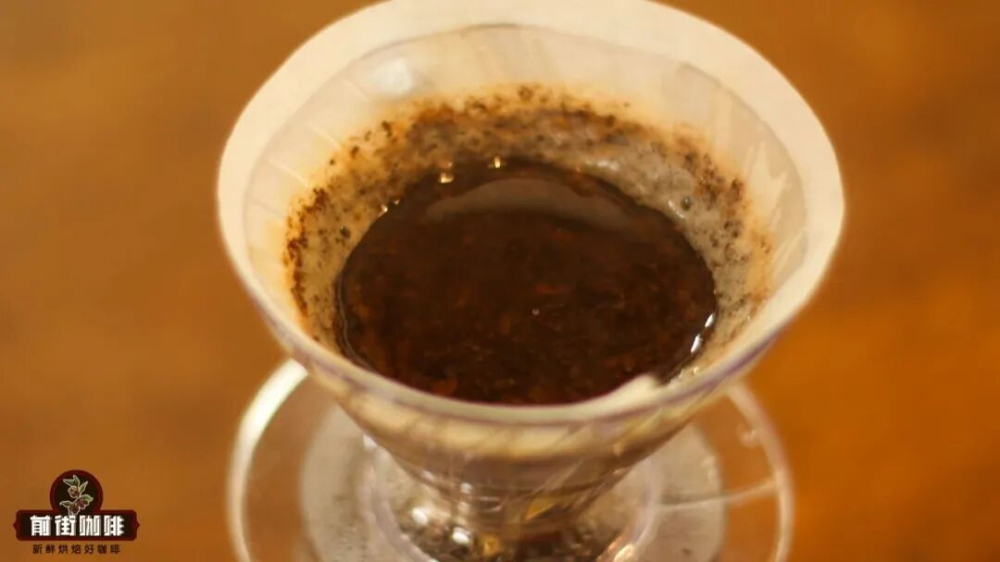
However, many enthusiasts observe a different scene during the middle and latter stages of brewing: all the coffee grounds keep settling to the bottom, while the hot water clearly floats on top, with only scattered foam clinging to the surface. After the coffee liquid has fully dripped through, only a flat, featureless bed of grounds remains in the dripper. This is the "ground-water separation" phenomenon that quite a few friends have reported to Front Street Coffee, and they want to know the cause as well as how to deal with it.
When is "ground-water separation" likely to occur?
Usually, to keep the extraction time within a reasonable range (about two minutes), the pouring speed needs to roughly match the speed at which the coffee liquid falls into the server. Once the coffee grounds and hot water separate into layers—precisely speaking, grounds below and water above—it means the downward passage for the hot water is blocked, the amount of water poured far exceeds the amount draining down, water accumulates continuously in the dripper, and the extraction time is forced to drag on. The causes of this situation can be grouped into the following four categories:
1. Coffee bean density is on the high side
High-density beans are characterized by a dense structure and hard texture, usually coming from high-altitude growing regions and having undergone a light roast. Because of their high density, they tend to sink to the bottom during brewing, thereby blocking the downward flow of hot water.
2. Grinding too fine or too many fines
Front Street Coffee often reminds people that when brewing light-roast beans, in order to highlight floral and fruity aromas, the extraction yield needs to be increased, so a finer grind is recommended, with particles naturally finer than those for medium-dark roast beans.
When brewing high-altitude light-roast beans, which are inherently harder, the "crushing" process also produces more fines. For example, Front Street Coffee Sun-Dried Huakui (2250m, strawberry, berry), Front Street Coffee Sidamo Hamasho (1920m, magnolia, guava), and Front Street Coffee Gotiti (2000m, citrus, green tea)—these beans frequently exhibit ground-water separation.
In addition, the amount of fines also depends on the grinding quality of the grinder; the poorer the precision of the equipment, the higher the proportion of fines. When the finer powder is the first to clog the gaps in the filter paper fibers, water accumulation follows.
If you are often troubled by this problem and want to improve your brewing, it is advisable to consider upgrading your equipment before buying good beans. The way to judge is to observe the spent coffee grounds after brewing: if they contain both coarse particles and muddy fines, it means the grinding quality of your grinder is inadequate, and the best solution is to replace it with a more precise grinder.
3. Coffee beans are not fresh enough
The fresher the coffee beans and the darker the roast, the more pronounced the expansion and degassing during the bloom stage; conversely, when the beans are stale, there is almost no visible reaction during the bloom and extraction, because the coffee grounds no longer release gas, the water flow struggles to move the coffee bed, and it can only stay on the surface, while the brewed coffee also noticeably lacks aroma. However, compared with the previous two points, this situation is easy to troubleshoot—a roast date more than 50 days ago means the beans are no longer fresh.
4. Improper pouring technique
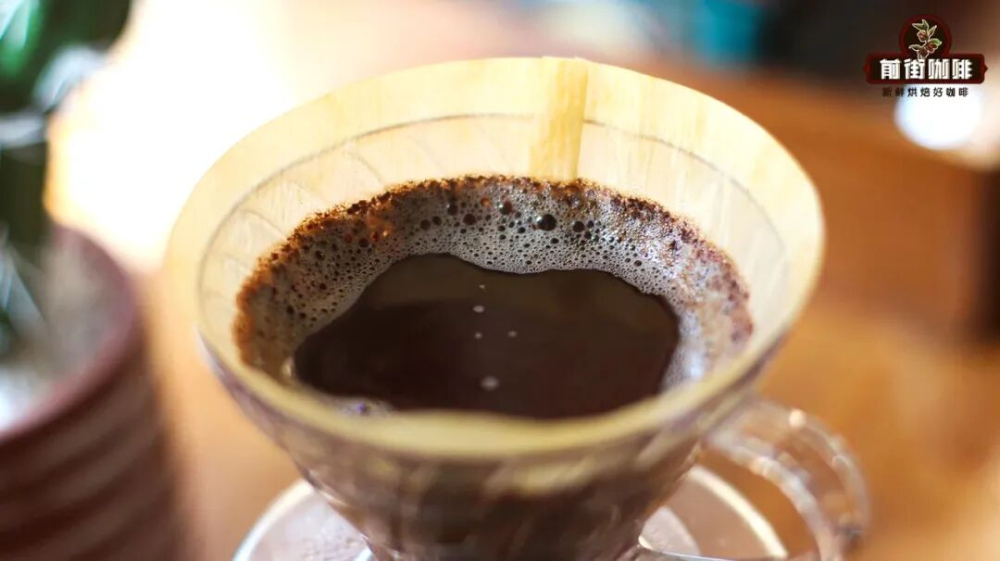
If you notice that the flow rate is smooth in the early stage of brewing and becomes slower and slower as it goes on, until finally you can only watch the time exceed two minutes, this is usually because the water flow in the early stage was too small. Especially when brewing light-roast beans, if the coffee bed is not lifted after the bloom, the coffee grounds clog the bottom of the dripper in the later stage, and at that point no matter how much you increase the pouring force, it is very difficult to "rescue" the flow rate.
For this, Front Street Coffee recommends that when brewing light-roast beans, after the bloom is finished, the first pour should be a circle pour with a strong stream, forcefully penetrating the entire coffee bed until the liquid level reaches two-thirds of the dripper. This can drive all the particles to tumble, allowing the coffee grounds and hot water to make fuller contact, while preventing fines from settling at the bottom, thereby reducing the probability of clogging.
The above content is compiled by CoffeeHunters, a coffee news website.


