







What Separates Sun Dried Coffee Beans From Honey Process?
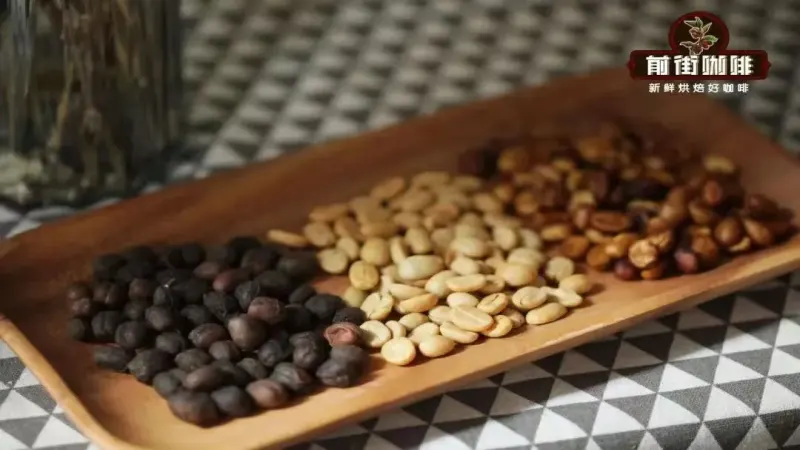
Natural processing and honey processing are the two methods most often compared in coffee. Sun dried coffee beans are dried whole on raised beds or patios for about three weeks, with the fruit fermenting around the seed, which builds heavier body and layered, complex flavors. Honey processing instead removes skin and pulp but leaves mucilage to dry.
Honey processing, first used in Costa Rica, shortens drying time and yields ripe fruit notes with solid acidity. The processing of coffee beans differs mainly in how much fermentable material stays on the seed and how long drying lasts: light fermentation gives fresh fruit, heavier fermentation brings tropical sweetness and a faint alcohol-like aroma. White, yellow, red, and black honey refer to how much mucilage remains.
Natural and honey processing are two common yet distinctly characteristic methods of coffee post-processing. The natural method has the longest history and relies on ample sunlight, with the whole fruit participating in fermentation and a drying period that can last over three weeks, resulting in richer, more layered flavors; honey processing originated in Costa Rica and involves removing the skin and pulp while retaining varying proportions of mucilage for drying, which shortens the time and also develops ripe fruit notes and solid acidity. This article compares the differences between the two, from processing steps, amount of fermentable material, and drying duration to the subdivisions of white, yellow, red, and black honey, and explores what factors actually determine coffee sweetness, while recommending representative natural and honey-processed coffees from the Front Street Coffee bean list.
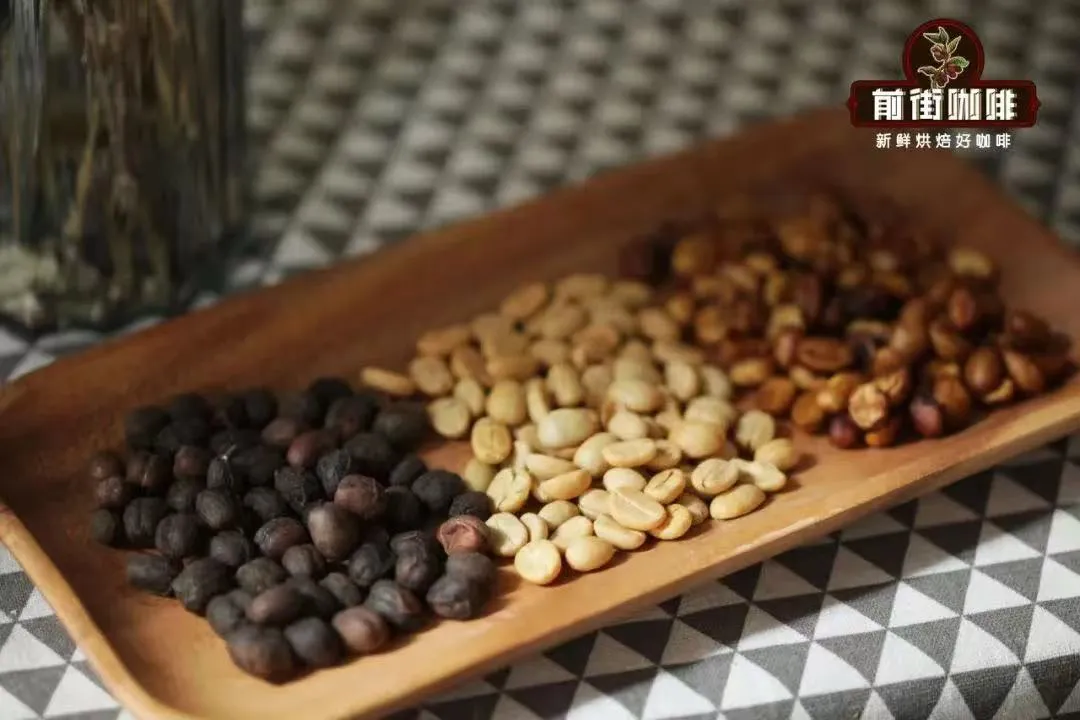
Today Front Street Coffee wants to chat with you about what differences actually exist between natural processing and honey processing.
Natural Processing
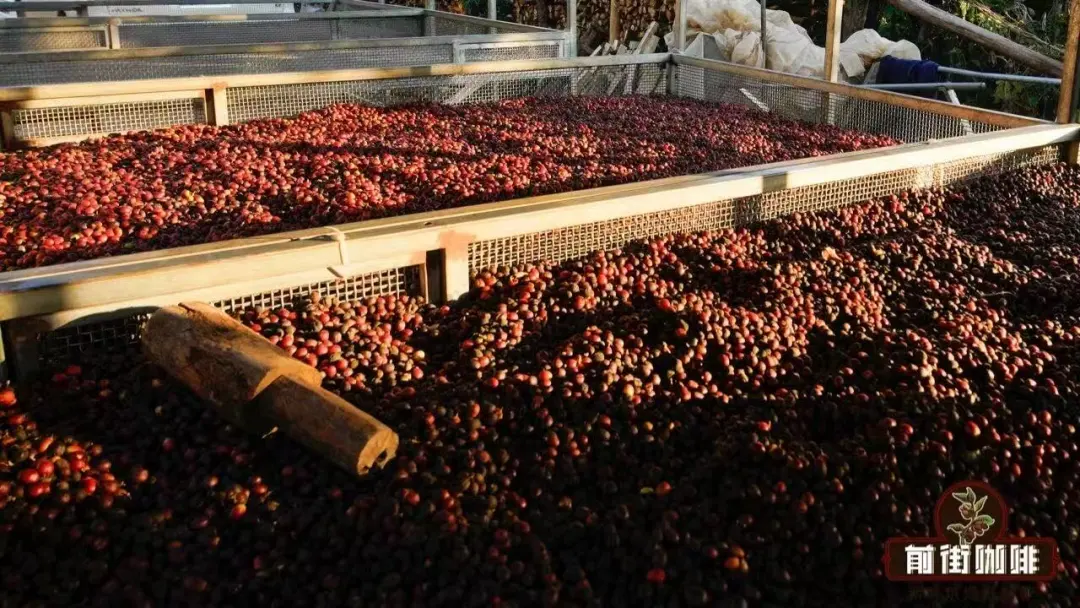
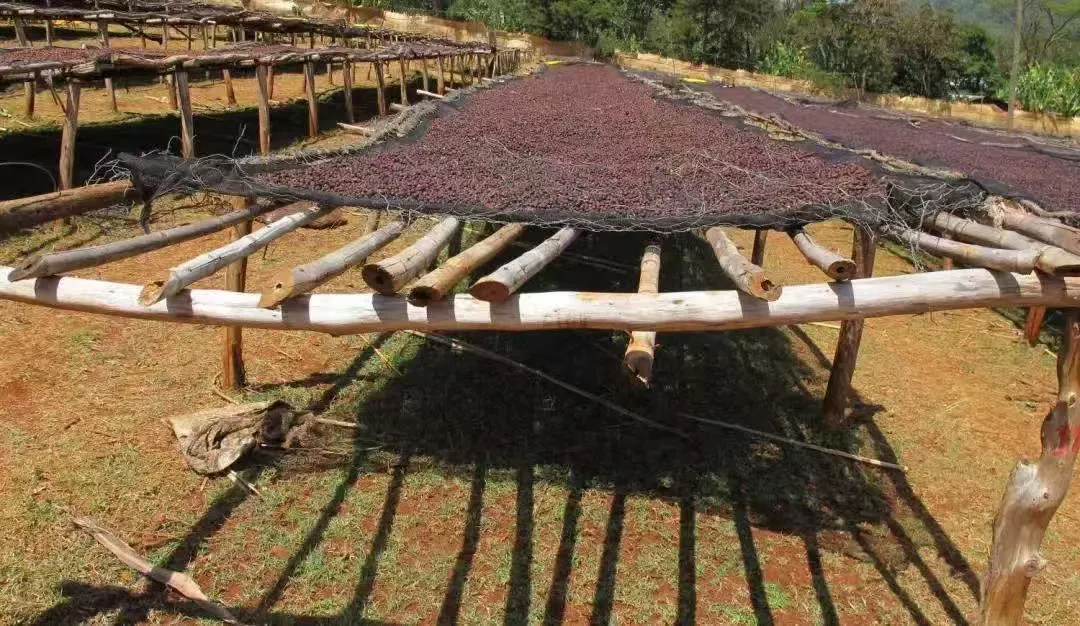
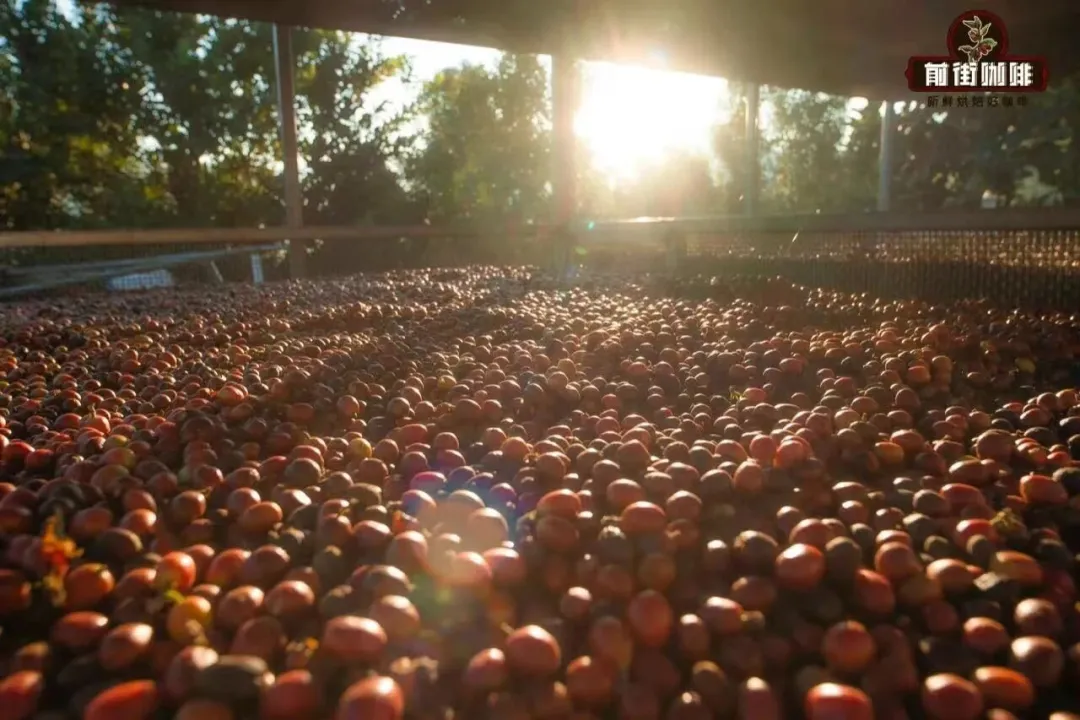
Among all coffee post-processing methods, the natural method has the widest range of application and is also the one with the longest history. Compared with other processing methods, the steps and conditions required for natural processing are relatively simple—as long as the producing region has enough sunlight, it can be done. Specifically, whole coffee cherries are spread flat on African raised drying beds, concrete patios, or any flat surface such as a home rooftop or balcony, and left until the fruit has been sun-dried to a certain degree.
Because what is put out to dry in natural processing is the whole coffee cherry, the moisture content is relatively high, so the drying process is quite long. Even under ideal sunlight conditions, it generally takes about three weeks to dry completely.
From a flavor perspective, natural processing allows the skin, pulp, mucilage, and coffee beans to undergo drying together, which gives the coffee richer aromas and a heavier taste. The more material involved in fermentation, the more complex volatile compounds can naturally be produced, especially esters.
Moreover, different degrees of fermentation lead to corresponding changes in the final flavor. When fermentation is lighter, the coffee's fruit notes tend toward a light, fresh style; when fermentation is heavier, it easily develops a sweetness like ripe tropical fruit, along with a slight fermentation aroma similar to alcohol. Precisely for this reason, some producing regions deliberately adjust the processing to control fermentation.
For example, in Central America, some estates with suitable conditions build shade-equipped drying sheds to extend the coffee's drying cycle, allowing the beans to develop flavors from different degrees of fermentation. This slow natural drying usually takes four to five weeks for the coffee to dry completely, which is more time-consuming, but the flavor also differs as a result.
Honey Processing
As Front Street Coffee mentioned earlier, natural processing takes a relatively long time to dry and depends heavily on the weather, which is not ideal for many coffee-producing regions with insufficient sunlight. As a result, many producing regions developed various processing methods based on their own conditions to shorten the sun-drying time, such as washed, semi-natural, and honey processing.
Honey processing is translated from the English "Honey Process," also called Miel Process. It originated in Costa Rica, and its predecessor was Brazil's semi-natural processing.
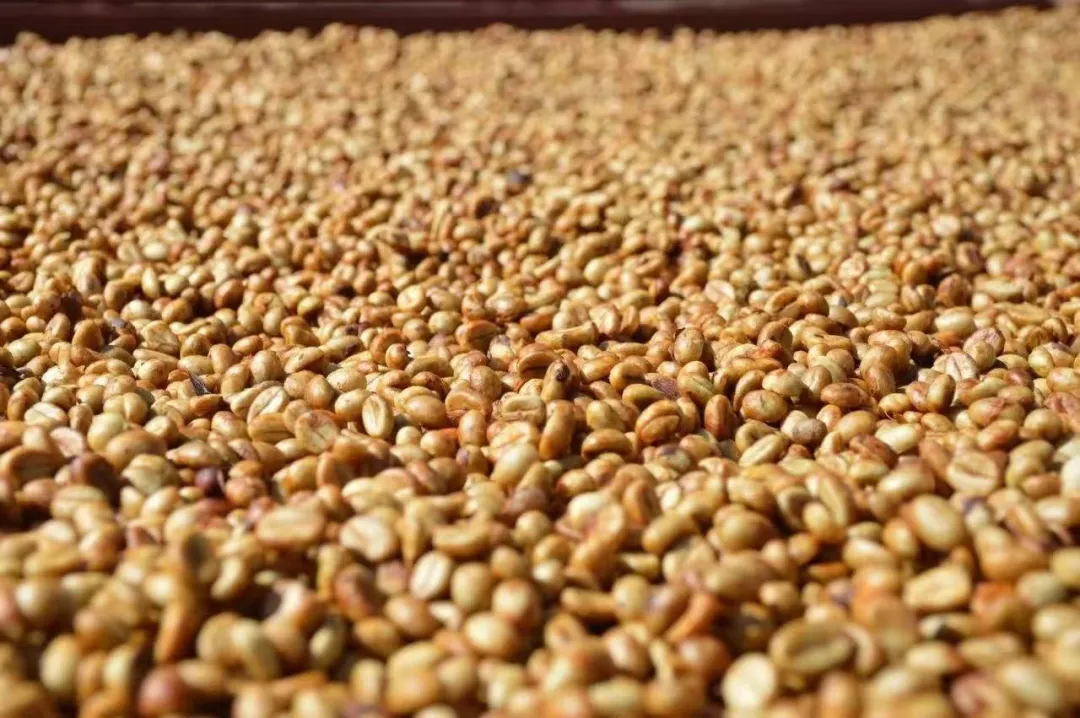
Although the honey processing flow is slightly more cumbersome than natural processing, it is still a relatively simple type among many processing methods. We only need to remove the skin and pulp of high-quality coffee cherries after flotation, and then dry the coffee beans with mucilage still attached to a certain degree.
This approach has two obvious advantages: first, it can develop rich flavors; second, it can shorten the time required for sun drying.
In addition, because the skin and pulp have already been removed before drying, honey-processed coffee has a relatively shorter sun-drying time, usually about two weeks, depending specifically on how much mucilage is retained.
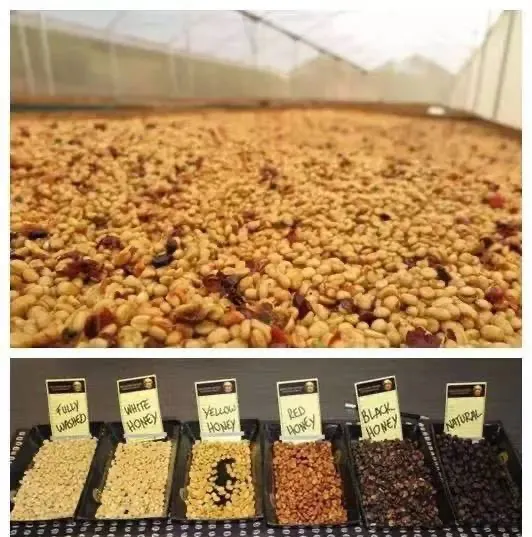
Like natural processing, honey processing also has many subtypes. The ones we often hear about are white honey, yellow honey, red honey, and black honey, which respectively represent honey-processed coffees with different amounts of retained mucilage. The "honey" in honey processing refers to coffee mucilage, because mucilage is rich in sugar, turns yellow after oxidation, and has a sticky texture that looks very much like honey. Therefore, the method in which coffee beans are covered during processing by mucilage similar to "honey" was named honey processing.
White honey retains the least mucilage, followed by yellow honey, red honey, and black honey retains the most. As Front Street Coffee said, the more material involved in fermentation, the more flavor compounds coffee fermentation relatively produces. From this we can see that white, yellow, red, and black honey processing differ not only in drying time, but also in the coffee flavors they develop.
Generally speaking, the flavor of honey-processed coffee is often between that of natural and washed coffee, but most of the time it leans more toward the aroma direction of natural coffee, often with ripe fruit flavors, accompanied by solid and bright acidity, and a relatively clean mouthfeel.
Which is sweeter, natural coffee or honey-processed coffee?
Having discussed the differences in process between natural and honey processing, we come to the question everyone cares about most: which is sweeter, honey-processed or natural coffee?
To be honest, as Front Street Coffee often shares, the sweetness of coffee follows the same principle as the sweetness value of fruit—it is not determined by a single factor. The sweetness level of a cup of coffee is affected by many aspects: variety, cultivation, processing, roasting, and brewing. For example, ripe fully red cherries receive more sugar in the coffee body than unripe cherries; coffee grown at high altitude also stores more substances than coffee grown at low altitude... Of course, processing method is also one part of it. This is because the processing method determines how much material participates in fermentation and also affects the degree of chemical reaction in the coffee beans during roasting.
But it does not stop there. The sweetness expression of coffee also depends on the flavor description from taste and smell when drinking, and moreover coffee's sweetness does not exist independently—we need the coordination of bitterness, acidity, and aroma to associate it with sweetness. Therefore, we cannot directly assert that honey processing is sweeter than natural processing, or that natural coffee is sweeter than honey-processed coffee.
If everyone is very interested, you might want to learn about the coffee beans in the Front Street Coffee bean list. There are many natural and honey-processed coffees to choose from. For example, in the Front Street Coffee bean list, Front Street Ethiopia ALO, Front Street Ethiopia Hamasho, or Front Street Ethiopia Huakui, Red Cherry, etc.—they are all naturally processed coffee beans, and the brewed coffee has very rich tropical fruit flavors, such as mango, pineapple, guava, lychee, etc., with a slight fermentation aroma and very rich layers.
For a representative honey-processed option, you can choose Costa Rican coffee beans, such as Front Street Costa Rica Blackberry, which Front Street Coffee recently added to the lineup. It is a black honey-processed coffee bean, and the brewed coffee's flavor is mainly grapes, berries, and floral notes, with a little fermentation aroma and relatively high sweetness. It is also very good.
So that is all for this Front Street Coffee sharing. In summary, natural processing involves more material in fermentation and a longer fermentation time, so natural coffee usually has richer flavors with fermentation aroma; while honey processing involves relatively less material in fermentation, so honey-processed coffee is not as rich as natural coffee, but its cleanliness is higher. Each has its own advantages.
- END -
The above content is compiled by CoffeeHunters, a coffee news website.


