







How Long Should Espresso Coffee Beans Rest After Roasting?
Espresso coffee beans need a longer resting period than pour-over beans because of two things. They are usually roasted darker, so more carbon dioxide builds up inside, and espresso is pulled under pressure with a very fine grind in a short time, so trapped gas distorts the shot far more than it would a pour-over. Hand-brew beans are typically usable after three to seven days of resting.
The process of coffee beans does not stop at roasting. Beans keep releasing carbon dioxide for days, and how much they hold depends on roast level. Darker roasts carry more gas, which is why espresso rests several days longer than filter beans. Recommendations vary by bean and use, so a specific lot such as Front Street's Huakui comes with its own suggested resting window.
Should you brew coffee beans immediately after buying them? Why can hand-brew beans be used after just three to five days of resting, while espresso beans need to wait several more days? Behind this lie multiple factors: carbon dioxide emission, roast level, and extraction method. This article starts with the basic principles of the resting period, then explains one by one the two major reasons why espresso beans need a longer resting time: first, espresso beans are generally roasted darker, so they accumulate more carbon dioxide inside; second, espresso uses pressure extraction with an extremely fine grind and very short time, so inadequate degassing will noticeably amplify its interference with the extraction result. The article also uses specific beans such as Front Street Coffee's Huakui to give resting recommendations for different uses, helping you brew delicious coffee consistently at home.
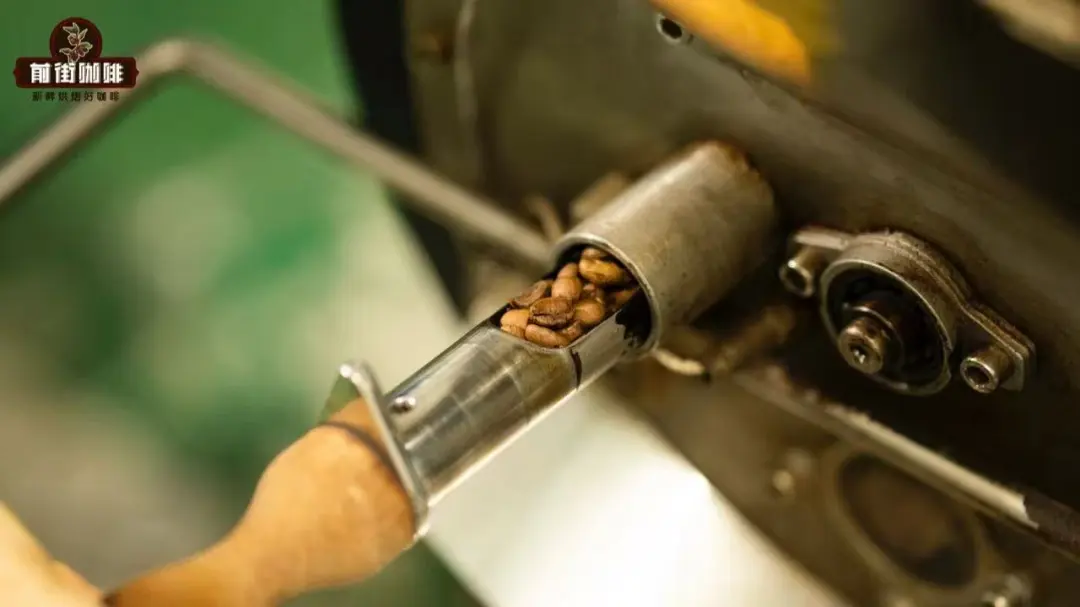
After coffee beans are roasted, they continuously generate and release carbon dioxide inside. Because of this, we can let the beans sit for a period of time so the gas gradually escapes. Once the residual carbon dioxide no longer noticeably interferes with extraction, brewing then makes it easier to get a satisfying cup of coffee. This period during which the coffee beans "breathe" is what everyone calls the resting period.
People who often buy beans and brew coffee at home have probably noticed: the resting time for hand-brew beans usually falls in the range of three to seven days, with the specific length depending on the roast level. But if you buy espresso coffee beans, then this time needs to be pushed back several more days.
Many friends are puzzled by this: they are all coffee beans, so why do beans for espresso coffee need to rest longer?

Why do espresso coffee beans need a longer resting period?
There are two layers of reasons behind this. The first is the issue of roast level. Front Street Coffee has also mentioned many times before that the beans used for espresso coffee are usually roasted darker than hand-brew beans. The reasoning is not complicated—doing so can enhance sweetness and flavor intensity while pressing down acidity.
Because espresso coffee is not only black coffee; it is also used to make milk drinks such as lattes, cappuccinos, and flat whites. If the beans are roasted too light, the coffee's own flavor will not be solid enough and can easily be covered up by the milk.

In addition, a light roast retains more acidic substances, and these acids do not pair well with milk, so the resulting milk coffee tastes a bit unbalanced. For this reason, many roasters now design different roasting curves for the same bean based on different extraction methods.
If this bean is mainly used for single-origin coffees such as hand brew and cold brew, the roast will be on the lighter side, with the aim of preserving as much floral and fruity aroma as possible so we can taste richer detailed flavors;
and if it is to be used for espresso coffee, the roast level will be appropriately darker. Only then can the coffee have enough flavor intensity to stand up to milk, while also blending more smoothly with the milk.
Take the Ethiopian Huakui often mentioned on Front Street Coffee's bean list. If you have bought this bean from Front Street Coffee's Taobao or Tmall store, you should notice that it has two roast levels to choose from: one is a light-medium roast for single-origin coffees such as hand brew, and the other is a medium roast for espresso.

The darker the roast, the more carbon dioxide accumulates inside the beans. So it follows naturally that darker-roasted espresso beans need a longer resting time to release the gas to a level that does not affect extraction.
At this point someone may ask: if the beans used for espresso and the beans used for hand brew are the same bean at the same roast level, is the resting time the same?
Front Street Coffee's suggestion is: it is still best to make it a bit longer. The reason is that carbon dioxide has a much greater impact on espresso coffee than on hand brew. The key to this difference is that espresso uses pressure extraction.
Whether it is hand brew, cold brew, French press, or siphon, their extraction is completed under normal pressure. Normal-pressure extraction is more controllable: we can adjust the dissolution of soluble substances through stirring and extraction time, and before brewing we can also control extraction efficiency through variables such as water temperature and grind size. The interference caused by carbon dioxide is actually relatively limited.

Espresso coffee is a completely different matter. With the help of pressure, it can complete extraction in an extremely short time while producing a cup of coffee with extremely high concentration.
But to achieve this, in addition to pressure, the grind must be very fine and the water temperature must also be relatively high, putting the entire extraction process in a rather extreme state. This makes extraction less controllable, while the impact caused by carbon dioxide is amplified.
Because the time is short and the liquid volume is small, espresso coffee has almost no sufficient degassing window, and the presence of a large amount of carbon dioxide is very unfavorable to it. When there is too much gas, it is not easy to make an espresso with complete extraction and good taste, and it often requires repeated adjustments to meet the standard. This process costs both time and beans, so the cost is not low.
Therefore, when a bean is definitely going to be used for espresso coffee, it is best to rest it for a few more days and wait until the carbon dioxide drops to a level that will not noticeably interfere with extraction before using it. This can avoid wasting too much cost on dialing in, and also let us more easily drink a delicious cup of espresso coffee~
- END -
The above content is compiled by CoffeeHunters, a coffee news website.


